Brief Report - (2025) Volume 14, Issue 6
Received: 01-Nov-2025, Manuscript No. jamk-25-177329;
Editor assigned: 03-Nov-2025, Pre QC No. P-177329;
Reviewed: 17-Nov-2025, QC No. Q-177329;
Revised: 24-Nov-2025, Manuscript No. R-177329;
Published:
29-Nov-2025
, DOI: 10.37421/2168-9601.2025.14.585
Citation: Al-Mansoori, Khalid. ”Decoding Modern Consumer Behavior and Purchase Decisions.” J Account Mark 14 (2025):585.
Copyright: © 2025 Al-Mansoori K. This is an open-access article distributed under the terms of the Creative Commons Attribution License, which permits unrestricted use, distribution and reproduction in any medium, provided the original author and source are credited.
User-generated content (UGC) significantly influences consumer behavior and purchase decisions across the entire buying process. A comprehensive meta-analysis has illuminated its profound impact, spanning from the initial stages of information search to the critical post-purchase evaluation phase. This research underscores UGC's pivotal role in cultivating consumer trust and actively shaping perceptions of products and brands. The implications derived from these findings are crucial for developing robust marketing strategies that effectively harness the authentic voices of consumers. [1].
The intention to purchase electric vehicles is significantly driven by a positive green brand image and the subsequent development of green brand trust. Empirical evidence from a recent study demonstrates that cultivating a strong green brand image directly contributes to fostering trust in environmentally friendly brands. This trust, in turn, serves as a powerful predictor of consumers' willingness to invest in electric vehicles. Such insights are indispensable for crafting effective sustainable marketing strategies within the highly competitive automotive sector. [2].
Artificial intelligence (AI) is rapidly transforming the landscape of consumer behavior, presenting both opportunities and challenges. A systematic review of existing literature has identified several key thematic areas, including the increasing prevalence of personalized recommendations, the automation of decision-making processes, and rising privacy concerns. This review meticulously synthesizes current research, highlighting the complex and multifaceted effects of AI on consumer choices and delineating essential directions for future scholarly inquiry. [3].
Augmented reality (AR) technology profoundly shapes consumer buying behavior in online retail environments. Research indicates that AR significantly enhances purchase intention, primarily by offering improved product visualization capabilities and substantially reducing perceived risks associated with online shopping. The efficacy of AR is notably moderated by factors such as product type, demonstrating particular benefits for complex items, and consumer self-efficacy, where confident users gain more from the immersive experience. [4].
Social media influencers play a substantial role in affecting consumer purchase intention, a process mediated by perceived authenticity and product involvement. A recent study reveals that the genuine nature of influencers and the intrinsic relevance of their content are critical factors. These elements collectively boost consumer engagement and significantly increase the likelihood of purchase, offering invaluable guidance for designing and executing highly effective influencer marketing campaigns in the digital age. [5].
Online reviews exert considerable influence on consumer decisions, especially within the context of the sharing economy. This phenomenon is heavily reliant on the trustworthiness attributed to the reviewer and the overarching trust placed in the platform itself. Studies confirm that credible reviews, coupled with a dependable platform, effectively mitigate perceived risks. This dual assurance consequently boosts consumers' willingness to engage with and utilize various sharing economy services. [6].
Sensory marketing significantly impacts consumer emotions and subsequent purchase intentions, as confirmed by a comprehensive meta-analytic review. This research provides robust evidence that multi-sensory stimuli, encompassing sight, sound, smell, taste, and touch, positively influence consumers' emotional responses. These favorable emotional states, in turn, act as powerful drivers of purchase intentions, underscoring the strategic importance of integrating diverse sensory elements into contemporary marketing strategies for enhanced effectiveness. [7].
Live streaming has emerged as a powerful medium for influencing consumer purchase intention, largely through the mediating roles of perceived interactivity and social presence. Studies illustrate that highly interactive and socially engaging live stream experiences are instrumental in significantly enhancing consumers' likelihood to make a purchase. These findings provide critical strategic insights for the evolving fields of e-commerce and digital marketing, emphasizing the value of real-time engagement. [8].
Brand authenticity is a critical determinant in fostering consumer engagement and driving purchase intention within the nuanced landscape of luxury markets. Research highlights that consumers' perceptions of a luxury brand's genuine and truthful nature significantly strengthen their emotional attachment to that brand. This enhanced emotional connection, in turn, directly correlates with an increased willingness to purchase, strongly suggesting that luxury brands must prioritize and articulate authentic brand narratives. [9].
Perceived privacy concerns profoundly affect various dimensions of online consumer behavior, including fundamental aspects like trust and purchase intention. An in-depth multi-group analysis reveals that such concerns act as significant deterrents to online engagement and actual purchases across diverse demographic segments. This necessitates that businesses bolster their data protection measures and enhance transparency, thereby fostering greater consumer confidence and mitigating anxieties in the digital realm. [10].
A meta-analysis has systematically examined the extensive influence of user-generated content (UGC) on consumer behavior and their subsequent purchase decisions. The study meticulously demonstrates how UGC exerts considerable sway across the entire consumer journey, starting from initial awareness and information gathering through to detailed post-purchase evaluations. This research firmly establishes UGC as an indispensable factor in cultivating brand trust and positively shaping consumer perceptions, offering vital guidance for advanced marketing strategies centered on genuine consumer endorsements. [1]. The drivers behind consumer purchase intentions for electric vehicles have been empirically investigated, focusing on the interplay of green brand image and green brand trust. Findings unequivocally indicate that cultivating a favorable green brand image acts as a potent catalyst, fostering significant trust in the brand's environmental commitments. This established trust subsequently emerges as a strong and reliable predictor of consumer purchasing behavior, providing actionable intelligence for developing effective sustainable marketing initiatives within the automotive industry. [2]. A systematic review has provided a comprehensive overview of artificial intelligence's (AI) evolving impact on consumer behavior, outlining significant areas of transformation. The review identifies key developments such as the proliferation of personalized recommendations, the automation of complex decision-making processes, and the concurrent rise of consumer privacy concerns. This synthesis not only elucidates AI's intricate effects on how consumers make choices but also outlines a robust agenda for future research to address emerging complexities and opportunities. [3]. The influence of augmented reality (AR) technology on consumer buying behavior within online retail settings has been meticulously explored. This investigation specifically considers how product characteristics and consumer self-efficacy modulate AR's effects. The study concludes that AR substantially enhances consumers' intent to purchase by offering superior product visualization and effectively diminishing perceived purchasing risks. These benefits are particularly pronounced for more intricate products and for consumers who possess higher levels of confidence in their own abilities. [4]. Research has elucidated the specific mechanisms through which social media influencers effectively sway consumer purchase intentions. This study particularly emphasizes the mediating roles played by perceived authenticity of the influencer and the degree of consumer product involvement. The findings clearly illustrate that when influencers are perceived as authentic and their content resonates with product relevance, consumer engagement dramatically increases, leading to a heightened probability of purchase. This offers strategic insights for maximizing the effectiveness of influencer marketing. [5]. The profound impact of online reviews on consumer purchasing decisions within the dynamic sharing economy has been rigorously analyzed. This research highlights the paramount importance of two factors: the perceived trustworthiness of the reviewer and the overall reliability of the platform itself. The evidence suggests that highly trustworthy reviews, complemented by a platform that engenders confidence, are instrumental in reducing consumer uncertainty and perceived risks, thereby significantly increasing their willingness to engage with sharing economy services. [6]. A meta-analytic review has synthesized existing research regarding the pervasive effects of sensory marketing on consumer emotions and subsequent purchase intentions. The findings decisively affirm that the strategic application of multi-sensory stimuli positively modulates consumers' emotional states. These favorable emotional responses are then shown to be direct and powerful antecedents of purchase intentions, furnishing compelling empirical support for the deliberate integration of various sensory elements into contemporary marketing frameworks. [7]. The study meticulously examines how live streaming technology exerts its influence on consumer purchase intention, specifically by investigating the mediating factors of perceived interactivity and social presence. Empirical observations confirm that live stream environments characterized by high levels of interaction and a strong sense of social presence significantly elevate consumers' propensity to make purchases. These insights are invaluable for optimizing e-commerce strategies and advancing digital marketing practices to capitalize on real-time engagement opportunities. [8]. An investigation into luxury markets reveals the critical function of brand authenticity in cultivating consumer engagement and stimulating purchase intention. The research indicates that when consumers perceive a luxury brand as genuinely authentic, it significantly deepens their emotional connection and attachment to that brand. This enhanced emotional bond directly translates into an increased willingness to acquire products from the brand, strongly advocating for luxury brands to articulate and maintain truly authentic brand narratives. [9]. The implications of perceived privacy concerns on various dimensions of online consumer behavior, including consumer trust and purchase intention, have been thoroughly explored through a multi-group analysis. The study conclusively demonstrates that elevated privacy concerns act as substantial barriers, significantly deterring online engagement and ultimately inhibiting purchasing activities across diverse consumer demographics. This research underscores the urgent need for businesses to enhance data security protocols and bolster transparency to rebuild and sustain consumer confidence online. [10].
Recent academic inquiries extensively explore the diverse factors influencing consumer behavior and purchase decisions across digital and traditional landscapes. Key themes include the profound impact of user-generated content, social media influencers, and online reviews on trust and purchase intention. Technological advancements like artificial intelligence, augmented reality, and live streaming are critically examined for their roles in personalizing experiences, enhancing product visualization, and fostering interactive engagement. Furthermore, intrinsic brand attributes such as green brand image, brand authenticity, and sensory marketing techniques are shown to significantly shape emotional responses and buying propensity. The pervasive influence of privacy concerns in online environments is also highlighted, emphasizing the need for robust data protection to build consumer confidence. Collectively, this body of research provides a multifaceted understanding of modern consumer dynamics, offering crucial insights for strategic marketing and business development.
None
None
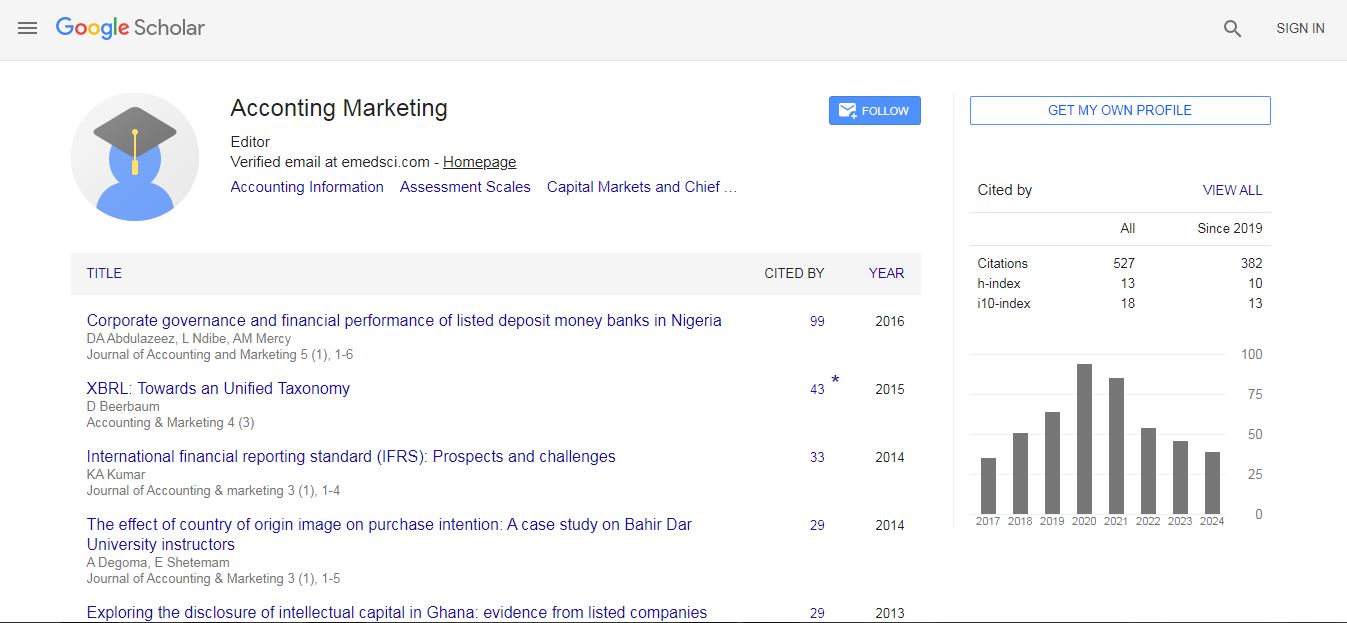
Accounting & Marketing received 487 citations as per Google Scholar report