Short Communication - (2025) Volume 14, Issue 5
Received: 01-Sep-2025, Manuscript No. jamk-25-177325;
Editor assigned: 03-Sep-2025, Pre QC No. P-177325;
Reviewed: 17-Sep-2025, QC No. Q-177325;
Revised: 22-Sep-2025, Manuscript No. R-177325;
Published:
29-Sep-2025
, DOI: 10.37421/2168-9601.2025.14.581
Citation: Lindstrom, Sofia. "CSR, Ethical Marketing: Trust for Brand Success." J Account Mark 14 (2025):581.
Copyright: © 2025 Lindstrom S. This is an open-access article distributed under the terms of the Creative Commons Attribution License, which permits unrestricted use, distribution and reproduction in any medium, provided the original author and source are credited.
This paper profoundly investigates the crucial link between corporate social responsibility (CSR) initiatives and consumer trust within the competitive telecommunication sector. It thoroughly explores how product and brand experiences act as significant mediating factors in shaping this complex relationship. The study empirically demonstrates that robust CSR efforts, when effectively combined with positive consumer experiences, substantially enhance trust, which is indispensable for cultivating lasting consumer relationships and fostering strong brand loyalty in a dynamic market environment. The findings underscore the strategic importance of meticulously integrating ethical practices with comprehensive experiential marketing strategies. [1].
This research meticulously examines how corporate social responsibility (CSR) and proactive customer engagement collectively influence brand loyalty, with particular emphasis on brand trust serving as a pivotal mediator. The study rigorously suggests that consumers' positive perceptions of a firm's social initiatives and their active involvement with a brand collaboratively foster a greater degree of trust. This enhanced trust, in turn, directly leads to stronger and more resilient brand loyalty, indicating that a coherent combination of ethical conduct and interactive customer relationships is paramount for achieving sustained brand success and market leadership. [2].
This article rigorously investigates the multifaceted influence of corporate social responsibility (CSR) on consumer purchase intention, introducing perceived brand globalness and brand prestige as critical mediating variables. The investigation unequivocally reveals that when consumers perceive a brand as both globally prominent and prestigious, a perception often cultivated through its dedicated CSR efforts, their intention to purchase products from that brand significantly escalates. This highlights how strategically implemented ethical marketing practices can effectively augment brand equity and substantially enhance consumer willingness to buy, by meticulously constructing powerful perceptions of international presence and high market standing. [3].
This study comprehensively explores how consumers' ethical awareness and corporate social responsibility (CSR) initiatives collectively impact green purchase intentions, especially within the context of developing countries. It empirically finds that both these influential factors significantly propel consumers towards environmentally friendly products, thereby indicating that ethical considerations play an increasingly crucial and determinant role in shaping purchasing decisions within these rapidly evolving markets. The research provides invaluable, actionable insights for companies committed to promoting sustainable consumption through strategically designed and ethically focused marketing campaigns, contributing positively to environmental stewardship. [4].
This paper meticulously investigates the intricate relationship between corporate social responsibility (CSR) and overall marketing performance, particularly emphasizing the significant mediating role of green marketing. It compellingly suggests that firms actively and genuinely engaged in CSR can substantially improve their marketing outcomes, especially when they thoughtfully integrate comprehensive green marketing strategies into their core operational frameworks. The profound implications of these findings are clear: ethical and environmentally conscious business practices can be strategically leveraged to significantly enhance market presence, amplify consumer appeal, and ultimately drive superior business performance and competitive advantage in modern markets. [5].
This research diligently explores how consumers' moral identity profoundly influences their responses to various ethical marketing claims. The study meticulously reveals that individuals who possess a strong sense of moral identity are considerably more receptive to and positively affected by ethical messaging, which consequently leads to heightened consumer engagement and a stronger intent to purchase. The insights derived from this study are invaluable for marketers, emphasizing the critical importance of tailoring ethical appeals to genuinely resonate with consumers' deeply held self-perceptions, thereby substantially enhancing the overall efficacy and impact of socially responsible advertising campaigns and fostering brand trust. [6].
This article meticulously examines the distinctive influence of corporate social responsibility (CSR) on consumer perceptions and purchase intentions, with a specific focus on the highly competitive luxury brand sector. It strongly suggests that carefully executed CSR initiatives possess the remarkable capacity to augment the desirability of luxury products by cultivating highly positive consumer perceptions among target demographics. This positive effect is observed even in brand contexts where an exclusive image is traditionally paramount. The research critically highlights the evolving and increasingly significant role of ethics in luxury marketing, demonstrating conclusively that genuine social responsibility can indeed serve as a powerful and valuable differentiator in a highly selective market. [7].
This paper comprehensively explores the profound influence of corporate social responsibility (CSR) on consumer trust within the sensitive food sector, deliberately moving beyond the traditional scope of conventional green marketing. It unequivocally reveals that broad-ranging and authentic CSR practices, which thoughtfully encompass diverse ethical and social dimensions, are exceptionally effective in building and substantially strengthening consumer trust in food brands. The findings powerfully underscore the critical importance of implementing genuine and extensive social responsibility initiatives for fostering robust consumer confidence within this highly sensitive industry, where trust is paramount for longevity and market acceptance. [8].
This systematic literature review meticulously investigates the intricate intersection of corporate social responsibility (CSR) and contemporary marketing strategy in the rapidly evolving digital era. It synthesizes a wealth of current research, vividly highlighting how various digital platforms create unprecedented opportunities for novel forms of ethical communication and facilitate deeper, more meaningful consumer engagement with CSR initiatives. The review meticulously identifies prevailing key trends and persistent challenges within this dynamic domain, unequivocally emphasizing the crucial necessity for seamlessly integrated digital marketing strategies to effectively convey and significantly amplify social responsibility efforts to a global audience. [9].
This systematic review meticulously delves into the profound ethical considerations surrounding the burgeoning field of AI-driven marketing. It rigorously identifies several critical areas, including privacy concerns, transparency deficits, inherent algorithmic bias, and potential consumer manipulation, as central and pressing ethical challenges that demand immediate attention. The review provides a robust framework for effectively understanding and proactively addressing these complex issues, emphatically underscoring the imperative for marketers to develop stringent ethical guidelines and implement highly responsible artificial intelligence practices. These measures are crucial for diligently maintaining consumer trust and steadfastly upholding social responsibility in the rapidly evolving digital landscape. [10].
Ali, Anwar, and Mahmood (2021) conducted a pivotal investigation into the intricate dynamics between corporate social responsibility (CSR) initiatives and consumer trust, specifically within the highly competitive telecommunication sector. Their extensive findings indicate that positive product and brand experiences serve as crucial mediating variables in this relationship. The research posits that strong CSR commitments, when reinforced by exceptional consumer experiences, significantly enhance trust, which is fundamental for nurturing enduring customer relationships and ensuring steadfast brand loyalty. This underscores the strategic imperative of aligning ethical practices with experiential marketing frameworks. [1]. Kim, Kim, and Kim (2022) extensively explored the combined influence of corporate social responsibility (CSR) and customer engagement on fostering brand loyalty. Their study rigorously establishes brand trust as a key mediating factor in this complex interplay. The authors demonstrate that favorable consumer perceptions of a firm's social initiatives, coupled with active and meaningful brand involvement, effectively cultivate greater trust among consumers. This heightened trust subsequently translates into stronger and more sustained brand loyalty, emphasizing that both ethical organizational conduct and interactive customer relationships are indispensable for achieving long-term brand success in dynamic markets. [2]. Kim, Choi, and Lee (2020) conducted comprehensive research elucidating how corporate social responsibility (CSR) impacts consumer purchase intention, identifying perceived brand globalness and brand prestige as significant mediators. Their study reveals that when consumers perceive a brand as possessing both global prominence and high prestige, attributes often developed through diligent CSR efforts, their propensity to purchase products from that brand increases considerably. This investigation highlights the strategic power of ethical marketing in augmenting brand equity and enhancing consumer willingness to buy, by effectively shaping perceptions of an international presence and superior market standing. [3]. Javed, Hanan, and Tariq (2023) undertook a crucial study examining the influence of consumers' ethical awareness and corporate social responsibility (CSR) initiatives on green purchase intentions, particularly focusing on developing countries. Their findings clearly demonstrate that both ethical considerations and CSR efforts are potent drivers encouraging consumers to choose environmentally friendly products. This research highlights the burgeoning role of ethics in shaping purchasing decisions within these markets, providing valuable insights for companies committed to promoting sustainable consumption. It suggests tailored ethical marketing approaches can significantly boost environmentally conscious purchasing behavior. [4]. Al-Gamrh, Al-Sartawi, and Al-Maqbali (2021) meticulously investigated the relationship between corporate social responsibility (CSR) and overall marketing performance, accentuating the pivotal mediating role of green marketing. Their research indicates that firms demonstrating active engagement in CSR can significantly enhance their marketing outcomes, especially through the strategic integration of robust green marketing strategies. The study implies that ethical and environmentally conscious practices are not merely regulatory compliance but valuable assets that can be leveraged to substantially improve market presence, amplify consumer appeal, and ultimately drive superior business performance and competitive advantage in the modern marketplace. [5]. White, Hardisty, and Reczek (2020) provided insightful research exploring the profound influence of consumers' moral identity on their responses to various ethical marketing claims. Their study reveals that individuals with a robust moral identity are markedly more receptive to and positively influenced by ethical messaging, leading to increased engagement and a stronger purchase intent. This investigation offers practical insights for marketers, underscoring the importance of meticulously tailoring ethical appeals to genuinely resonate with consumers' intrinsic self-perceptions, thereby significantly enhancing the overall effectiveness and reach of socially responsible marketing campaigns. [6]. Seo, Kim, and Lee (2023) thoroughly examined the impact of corporate social responsibility (CSR) on consumer perceptions and purchase intentions within the distinct context of luxury brands. Their article suggests that CSR initiatives possess the unique ability to enhance the desirability of luxury products by cultivating favorable consumer perceptions, even in a sector where exclusivity is traditionally paramount. This research sheds light on the evolving importance of ethics in luxury marketing, unequivocally demonstrating that genuine social responsibility can serve as a powerful and valuable differentiator, contributing to brand equity and consumer willingness to invest in premium offerings. [7]. Rahman, Rashid, and Hossain (2020) critically explored the comprehensive influence of corporate social responsibility (CSR) on consumer trust, specifically within the sensitive food sector, extending beyond conventional green marketing paradigms. Their research reveals that extensive CSR practices, which encompass a broad spectrum of ethical and social dimensions, are highly effective in building and reinforcing consumer trust in food brands. The findings underscore the critical importance of implementing authentic and wide-ranging social responsibility initiatives for fostering robust consumer confidence within this highly scrutinized industry, where transparency and reliability are paramount for long-term success. [8]. Pop, CÄ?toiu, and Pop (2022) conducted a systematic literature review analyzing the intricate intersection of corporate social responsibility (CSR) and marketing strategy in the digital era. Their comprehensive review synthesizes contemporary research, illustrating how digital platforms facilitate innovative forms of ethical communication and foster enhanced consumer engagement with CSR initiatives. The review identifies significant trends and persistent challenges, emphasizing the critical necessity for seamlessly integrated digital marketing strategies to effectively convey and amplify social responsibility efforts, thereby maximizing their impact and reach in a globally connected environment. [9]. Al-Aani, Rahman, and Hossain (2024) presented a systematic review meticulously investigating the ethical considerations pertinent to the rapidly expanding field of AI-driven marketing. Their comprehensive work identifies critical challenges, including concerns regarding privacy, transparency, inherent algorithmic bias, and the potential for consumer manipulation, as central ethical dilemmas. The review offers a foundational framework for understanding and addressing these complex issues, underscoring the imperative for marketers to develop stringent ethical guidelines and implement highly responsible AI practices. These measures are crucial for diligently maintaining consumer trust and upholding social responsibility in the evolving digital landscape. [10].
The aggregated research consistently demonstrates the profound impact of corporate social responsibility (CSR) and ethical marketing on consumer behavior and brand performance. A central theme is the critical role of CSR in building and maintaining consumer trust, which is a pivotal mediator for enhancing brand loyalty and influencing purchase intentions across diverse sectors like telecommunications, food, and luxury goods. These positive outcomes are frequently reinforced by strong product and brand experiences, active customer engagement, and a perception of global prominence linked to ethical practices. Furthermore, the studies highlight the growing importance of ethical considerations in specific marketing strategies, such as green marketing, which leverages consumer ethical awareness to drive sustainable consumption, particularly in developing economies. The digital transformation also presents both opportunities for communicating CSR effectively and new ethical challenges, notably in AI-driven marketing concerning privacy, algorithmic bias, and transparency. Collectively, the literature underscores that integrating genuine ethical conduct and social responsibility into core business and marketing strategies is essential for fostering robust consumer relationships, building enduring brand equity, and achieving sustainable competitive advantage in the modern global marketplace.
None
None
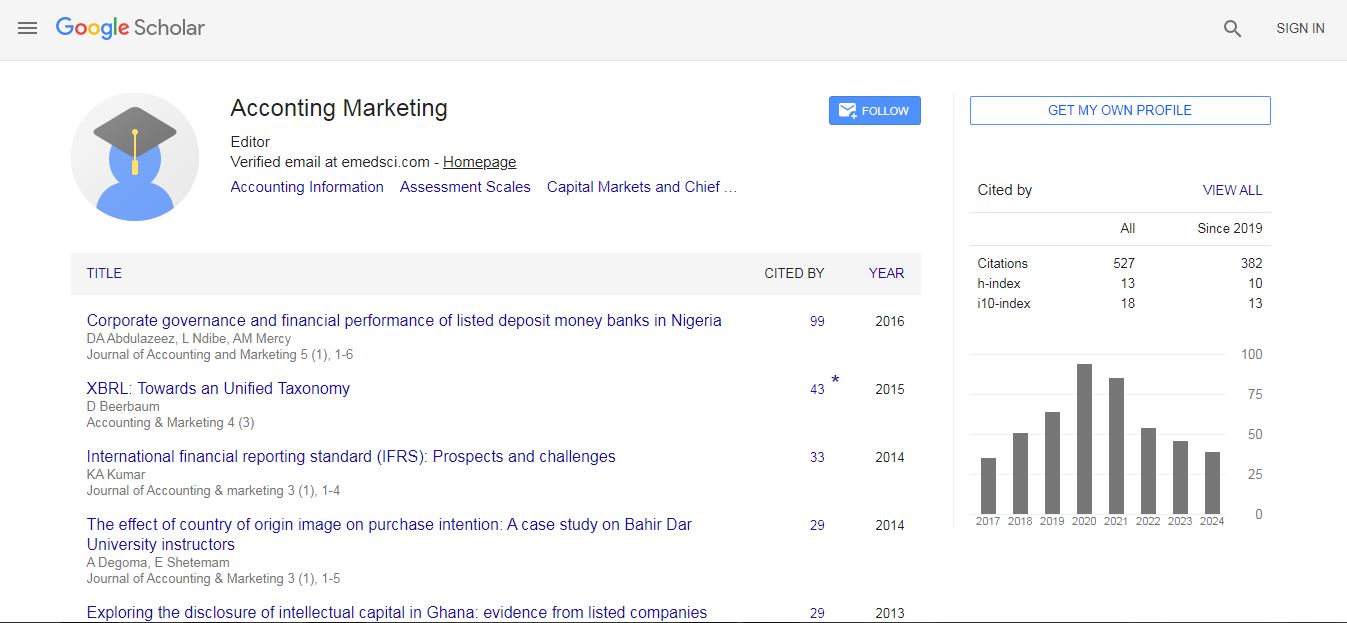
Accounting & Marketing received 487 citations as per Google Scholar report