Opinion - (2025) Volume 14, Issue 3
Received: 01-May-2025, Manuscript No. VTE-26-180082;
Editor assigned: 05-May-2025, Pre QC No. P-180082;
Reviewed: 19-May-2025, QC No. Q-180082;
Revised: 22-May-2025, Manuscript No. R-180082;
Published:
29-May-2025
, DOI: 10.37421/2376-1318.2025.14.370
Citation: Fournier, Isabelle. ”Vitamin D’s Broad Health Benefits and Disease Prevention.” Vitam Miner 14 (2025):370.
Copyright: © 2025 Fournier I. This is an open-access article distributed under the terms of the Creative Commons Attribution License, which permits unrestricted use, distribution and reproduction in any medium, provided the original author and source are credited.
Vitamin D, long recognized for its crucial role in calcium homeostasis and bone health, is now understood to possess a far broader spectrum of action influencing numerous physiological processes and contributing to overall human health [1].
Emerging scientific inquiry is continually expanding our comprehension of this vital nutrient, revealing its intricate involvement in various bodily functions beyond its well-established skeletal benefits. The exploration into Vitamin D's multifaceted roles highlights its significant impact on systemic health, prompting a re-evaluation of its importance in preventive and therapeutic strategies. This fat-soluble vitamin acts as a potent immunomodulator, impacting both innate and adaptive immune responses, which is particularly relevant in the context of infectious diseases. Research demonstrates how adequate Vitamin D levels can bolster the body's defenses against various pathogens, underscoring its significance in maintaining immune resilience and responding to health challenges such as respiratory infections [2].
The intricate relationship between Vitamin D and cardiovascular health is a growing area of research, investigating the mechanisms through which it may influence critical risk factors. Studies are exploring its potential to mitigate issues like hypertension, dyslipidemia, and endothelial dysfunction, suggesting a protective role for sufficient Vitamin D levels in cardiovascular well-being [3].
Furthermore, Vitamin D plays a substantial role in cancer prevention and treatment. Its active metabolite, calcitriol, is known to influence cell proliferation, differentiation, and apoptosis, processes vital in inhibiting tumor development and progression. Research synthesis indicates associations between low Vitamin D levels and increased cancer risks, prompting further investigation into its therapeutic potential [4].
Beyond its metabolic functions, the genetic underpinnings of Vitamin D metabolism and responsiveness are becoming increasingly apparent. Polymorphisms in genes encoding the Vitamin D receptor and enzymes involved in its synthesis and breakdown can significantly impact an individual's Vitamin D status and susceptibility to related diseases, emphasizing the need for personalized approaches [5].
In older adults, the efficacy of Vitamin D supplementation in preventing fractures is a critical area of investigation. Systematic reviews and meta-analyses are evaluating its impact, providing robust evidence on dose-response relationships and optimal intervention strategies, particularly when combined with calcium, to reduce fracture risk [6].
The link between Vitamin D deficiency and endocrine-metabolic disorders, notably type 2 diabetes, is also a significant area of focus. Vitamin D's role in insulin secretion and sensitivity suggests that its deficiency can contribute to the development and progression of diabetes and its associated complications, driving research into its therapeutic applications in glycemic control [7].
Neurological health stands to benefit from adequate Vitamin D levels, with research exploring its neuroprotective effects. The presence of Vitamin D receptors in the brain suggests mechanisms by which it may combat neurodegeneration, potentially reducing the risk of conditions like Alzheimer's and Parkinson's diseases [8].
For postmenopausal women, Vitamin D's impact on bone mineral density and fracture risk is paramount. Clinical trials are assessing the effectiveness of Vitamin D and calcium supplementation in maintaining bone health and preventing osteoporosis-related complications, contributing to a nuanced understanding of optimal strategies [9].
Finally, Vitamin D's influence on inflammatory processes is central to its broad systemic effects. Its ability to modulate inflammation, suppress pro-inflammatory cytokines, and promote anti-inflammatory mediators positions it as a key player in managing chronic inflammatory conditions, highlighting its comprehensive impact on human health [10].
The multifaceted roles of Vitamin D extend far beyond its classical function in calcium homeostasis, impacting a wide array of physiological processes and contributing significantly to human health. Emerging evidence increasingly links Vitamin D deficiency to an elevated risk of various chronic diseases, including autoimmune disorders, cardiovascular conditions, certain types of cancer, and infectious diseases. The review also elucidates the intricate mechanisms governing Vitamin D metabolism, from its synthesis in the skin and dietary absorption to its hepatic and renal hydroxylation, underscoring how genetic and environmental factors can influence these critical pathways. Furthermore, the therapeutic potential of Vitamin D supplementation in both disease prevention and management is actively being explored, signaling a broader appreciation for its systemic importance [1].
The interplay between Vitamin D status and immune function, particularly within the context of infectious diseases, is a significant area of research. Vitamin D acts as a crucial immunomodulator, influencing both the innate and adaptive immune responses. Compelling data suggest that maintaining adequate Vitamin D levels can enhance the body's defense mechanisms against respiratory infections, including influenza and COVID-19, by upregulating antimicrobial peptides and modulating inflammatory cytokine production. This highlights the potential of Vitamin D for both prophylaxis and adjunctive therapy in managing infectious outbreaks [2].
Investigating the link between Vitamin D and cardiovascular health involves examining the mechanisms by which it may positively influence risk factors such as hypertension, dyslipidemia, and endothelial dysfunction. Evidence from both observational studies and clinical trials suggests a protective role for sufficient Vitamin D levels in the prevention of cardiovascular events. The authors delve into how Vitamin D might exert its beneficial effects through pathways involving the renin-angiotensin system, inflammation modulation, and vascular smooth muscle cell proliferation, exploring the implications for public health strategies aimed at improving cardiovascular outcomes [3].
This comprehensive review addresses the significant role of Vitamin D in cancer prevention and treatment. It explores how Vitamin D and its active metabolite, calcitriol, can influence critical cellular processes such as proliferation, differentiation, and apoptosis, thereby potentially inhibiting tumor development and progression. The article synthesizes findings from extensive epidemiological studies and preclinical research, highlighting associations between low Vitamin D levels and an increased risk of common cancers, including colorectal, breast, and prostate cancer. It also discusses the ongoing research into Vitamin D's potential as an adjuvant therapy to enhance the efficacy of conventional cancer treatments [4].
The genetic determinants of Vitamin D metabolism and responsiveness are crucial for understanding individual variations in Vitamin D status and disease susceptibility. Research focusing on polymorphisms in genes encoding the Vitamin D receptor (VDR) and key enzymes involved in its synthesis and catabolism has revealed how specific genetic variants can significantly influence an individual's Vitamin D levels and their predisposition to Vitamin D-related diseases, such as osteoporosis and multiple sclerosis. This work emphasizes the importance of a personalized approach to Vitamin D supplementation based on individual genetic profiles [5].
Systematic reviews and meta-analyses are critically evaluating the efficacy and safety of Vitamin D supplementation for fracture prevention in older adults. By analyzing data from numerous randomized controlled trials, these studies provide robust evidence regarding the dose-response relationship and optimal strategies for Vitamin D intervention. The findings suggest that Vitamin D supplementation, particularly when combined with calcium, can reduce the risk of fractures, although its effectiveness may vary depending on baseline Vitamin D status and individual characteristics, informing clinical guidelines and public health recommendations [6].
The bidirectional relationship between Vitamin D deficiency and endocrine-metabolic disorders, particularly type 2 diabetes, is a subject of intense investigation. The article examines how Vitamin D plays a role in insulin secretion and sensitivity, and how its deficiency can contribute to the development and progression of diabetes and its complications, including diabetic nephropathy and retinopathy. Clinical trials exploring the impact of Vitamin D supplementation on glycemic control and related outcomes offer insights into its potential therapeutic application in diabetes management [7].
Investigating the role of Vitamin D in neurological health and its potential in preventing neurodegenerative diseases is a critical area of research. The presence of Vitamin D receptors throughout the brain suggests proposed mechanisms by which Vitamin D might exert neuroprotective effects, including antioxidant, anti-inflammatory, and neurotrophic actions. Epidemiological data and preclinical studies link Vitamin D deficiency to an increased risk of conditions like Alzheimer's disease, Parkinson's disease, and multiple sclerosis, prompting exploration of Vitamin D supplementation as a preventive or therapeutic strategy [8].
A clinical trial focusing on the effect of Vitamin D and calcium supplementation on bone mineral density and fracture risk in postmenopausal women provides nuanced insights. By randomizing participants and assessing changes in bone density and fracture incidence, the study contributes to the ongoing debate about optimal Vitamin D dosing and its role in preventing osteoporosis-related complications, highlighting factors that may influence treatment outcomes [9].
This review article synthesizes current knowledge on Vitamin D metabolism and its profound impact on inflammatory processes, which are central to many chronic diseases. It details the intricate pathways of Vitamin D synthesis, activation, and degradation, and how these processes are modulated by various factors. The authors elaborate on the anti-inflammatory effects of Vitamin D, including its ability to suppress pro-inflammatory cytokines and promote the production of anti-inflammatory mediators, underscoring its potential as a modulator of chronic inflammation relevant to conditions such as rheumatoid arthritis, inflammatory bowel disease, and atherosclerosis [10].
Vitamin D is recognized for its extensive health benefits beyond bone health, impacting immune function, cardiovascular health, cancer prevention, and neurological well-being. Deficiency is linked to increased risks of chronic diseases, including autoimmune disorders, infections, and metabolic conditions like type 2 diabetes. Research explores Vitamin D's role as an immunomodulator, its influence on cardiovascular risk factors, and its mechanisms in inhibiting tumor development. Genetic variations can affect Vitamin D metabolism and response, suggesting personalized supplementation strategies. Studies also confirm its efficacy in fracture prevention, particularly in older adults and postmenopausal women, and highlight its anti-inflammatory properties. Overall, Vitamin D is a critical nutrient with broad systemic implications for health maintenance and disease management.
None
None
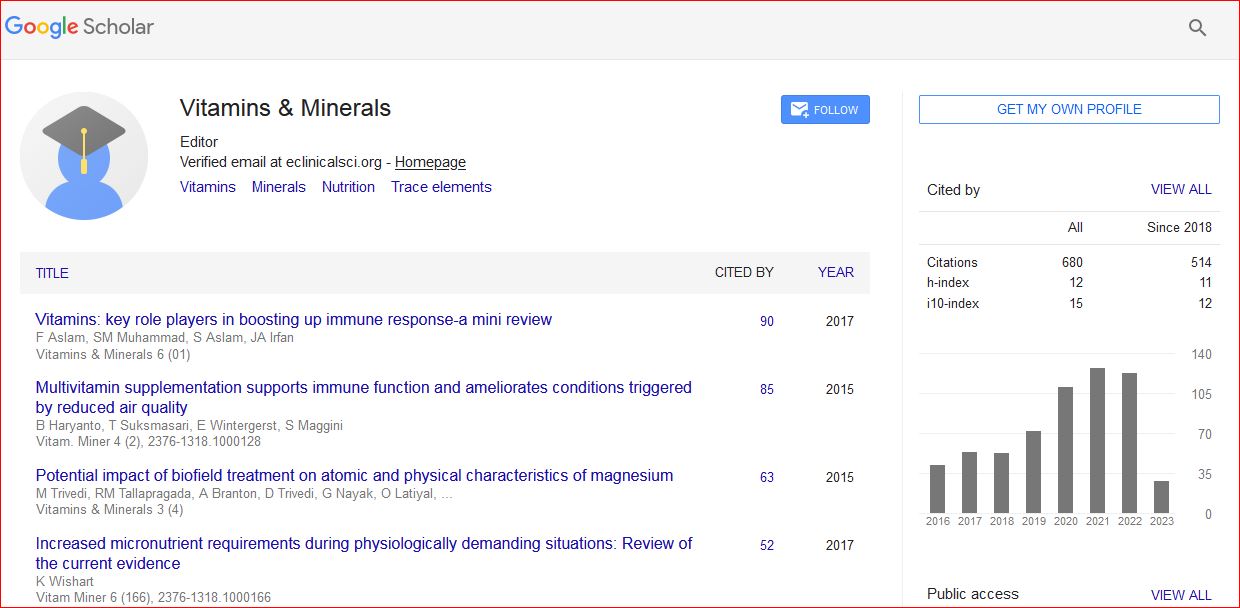
Vitamins & Minerals received 790 citations as per Google Scholar report