Research Article - (2022) Volume 13, Issue 5
Received: 21-Aug-2019, Manuscript No. JNMRT-19-1494;
Editor assigned: 26-Aug-2019, Pre QC No. P-1494;
Reviewed: 09-Sep-2019, QC No. Q-1494;
Revised: 22-Jul-2022, Manuscript No. R-1494;
Published:
17-Aug-2022
, DOI: 10.37421/ 2736-6189.2022.13.5.490
, QI Number: Q-1494
Citation: Awad, Ai-ka, Attieh Ola . "The Value of 18FFDG
PET/CT In Detecting Local Recurrence or Distant Metastases
In Patients With Renal Cell Carcinoma Who Underwent Radical
Nephrectomy". J Nucl Med Radiat Ther 13 (2022): 492.
Copyright: © 2022 Awad AA, et al. This is an open-access article distributed under the terms of the creative commons attribution license which permits unrestricted use,
distribution and reproduction in any medium, provided the original author and source are credited.
Aim: The aim of this study is to detect the value of 18F-FDG PET/CT in detecting local recurrence or distant metastases in patient who underwent radical nephrectomy for renal cell carcinoma.
Materials and Methods: This retrospective study includes 88 patients diagnosed to have renal cell carcinoma underwent radical nephrectomy. Both 18F-FDG PET/CT and CT scan were done in the post-operative period for follow up. Sites of the relapse were categorized into local recurrence and distant metastasis. The final diagnosis of disease status was made on subsequent follow up by conventional imaging CT and 18F-FDG PET/CT with histopathology confirmation for all of the cases.
Results: PET/CT was positive and detected recurrence in 48/88 patients, of which confirmed to be recurrence via biopsy 46/48 and was negative in 40/88 patients, 3 of them were falsely negative. 11/48 had local renal bed recurrence and 35/48 patients had distant metastases. PET/CT classified: 46/48 of cases to be true-positive, 2/48 false-positive and 3/40 false-negatives. Sensitivity, specificity, accuracy, positive predictive value, and negative predictive value were 93.9%, 94.9%, 94.3%, 95.8%, and 92.5%, respectively.
Conclusion: 18F-FDG PET/CT scan proved its efficiency in post-surgical renal cell carcinoma patients as a follow up tool in local recurrence and distant metastasis. In particular detection of renal bed recurrence and bone metastasis. This can be considered as a base for future studies with larger population number.
Renal cell carcinoma • Computed tomography • Positron emission tomography • Magnetic resonance imaging
Renal Cell Carcinoma (RCC) is considered the most common type of kidney cancer in adults and the 3rd most common cancer among urological malignances in urology cancer patients, with an estimated percentage of 3.7% of annually newly diagnosed cases and 2.4% of all cancer deaths in USA. Approximately one third of patients with RCC will develop metastases and around 30% of patients treated by radical nephrectomy with curative intent for localized RCC will develop metastatic disease on follow up [1].
In patients with renal cell the current practice includes contrastenhanced Computed Tomography (CT) of the thorax, abdomen and pelvis, Magnetic Resonance Imaging (MRI) and 99 mTc-MDP skeletal scintigraphy. But it is known the limited sensitivity of CT and MRI in patients with single kidney (after radical nephrectomy), especially that most of these patients will have an elevated serum creatinine levels which can be endangered by intravenous contrast [2]. In addition, the limited sensitivity of 99 mTc-MDP bone scintigraphy in assessing metastases with poor osteoblastic response has been reported. Also the limited sensitivity of bone scintigraphy in metastases with poor osteoblastic response has been reported.
Positron Emission Tomography/Computed Tomography (PET/CT) using 18F-Fluoro Deoxy Glucose (FDG) has proven its value in clinical oncology. In RCC, some studies have reported a high accuracy of FDG PET for primary diagnosis. On the other hand, other reports concluded that its role in the primary setting was limited due to high false-negative rates and due to renal FDG secretion. Authors concluded that the primary role of FDG in RCC is in the detection of distant metastases as well as in case of suspected tumor recurrence [3]. The aim of this study is to assess the value of 18F-FDG PET/CT in detecting local recurrence or distant metastases in patient who underwent radical nephrectomy for renal cell carcinoma and to compare the diagnostic performance of PET/CT with other imaging modalities (CT scan).
This 8-year retrospective study (October 2006 to September 2014), took place in King Hussein medical city. Where the files of 88 patients who underwent open radical nephrectomy for renal cell carcinoma were reviewed. Every one of our patients underwent nephrectomy due to RCC without metastasis anywhere. These patients underwent 18F-FDG PET/CT scans at the nuclear medicine section due to suspicion of tumor recurrence in their follow up visit to the outpatient clinic [4].
During follow up visit in the outpatient clinic, those patients who presented with complaints suggestive of tumor recurrence either as local recurrence or as distant metastasis were sent for imaging studies including both chest, abdomen and pelvic CT-scan with intravenous and oral contrast as all patients had normal kidney function test, and then for 18F-FDG PET/CT scan [5].
Imaging
Preparation of 18F-FDG: 18F-FDG was synthesized in house with a 16 MeV Cyclotron using GE fast lab methodology according to the manufacturer’s instructions. Before use, radiochemical were analyzed by HPLC for radiochemical identity and purity [6].
FDG was synthesized by cyclotron (ME-012, Siemens, Model RDS ECLIPSE; Germany). After fasting for at least 4 hours and with blood sugar levels less than 180 mg/dL, patients received intravenous administration of approximately 370 MBq. Whole body PET/CT images were acquired 60 min later.
PET/CT
PET/CT was performed on a PET/CT scanner (consisting of a lutetium oxyorthosilicate full-ring PET and a 64-slice spiral CT. 18FFDG (316 MBq ± 30 MBq) was injected intravenously [7]. After a period of 60 min, transmission data were acquired using contrastenhanced spiral CT (dose modulation with a quality reference of 210 mAs, 120 kV, a 512 × 512 matrix, 5 mm slice thickness, increment of 30 mm/s, rotation time of 0.5 s, and pitch index of 0.8) including the base of the skull to the proximal thighs. Consecutively, PET emission data was acquired in 3D-mode with a 200 × 200 matrix with 2 minutes emission time per bed position.
CT scanning
CT scanning was performed in our institution using multi-detector CT scanner. Based on the kidney function tests, a non-ionic iodinated contrast material (300 mg/ml) at 2.0 ml per kilogram body weight was injected [8].
Statistical analysis
Categorical data expressed in frequency and percentages, quantitative data expressed in mean ± SD, McNemar’s chi square test was used for comparison between paired nominal data.
The sensitivities, specificities, Positive Predictive Values (PPV), Negative Predictive Values (NPV), and accuracies were calculated, alpha level set at 0.05 two-sided considered statistically significant and SPSS version 22 was used to analyze data [9].
Written consents were routinely obtained from patients before studies and the local ethical committee has approved the evaluation of patients’ data which was retrospectively collected.
Total of 88 18F-FDG PET/CT Scans in 88 patients were evaluated. Where the CT reports were considered the reference for CT findings for these patients. The age of our patients was 27 to 80 years old (mean=60, SD=11.89), and the gender distribution was 65 male (74%) and 23 female (26%). 60% of cases were on the left side. The most common detected histopathology was clear cell RCC (78%), the remaining (22%) were of papillary cell, chromophobe collecting oncocytoma and unclassified subtypes). Out of 88 cases; PET/CT was positive and detected recurrence in 48/88 patients, of which confirmed to be true recurrence via biopsy 46/48 and was negative in 40/88 patients, 3 of them were falsely negative and biopsy showed true recurrence [10]. 18F-FDG PET/CT detected 11/48 cases of local renal bed recurrence, one of them just reported as a suspicious of metastases due to mild heterogeneous FDG uptake in site of nephrectomy which was confirmed later by biopsy. While 35/48 patients had distant metastases.
PET/CT classified: 46/48 of cases to be true-positive, 2/48 falsepositive and 3/40 false-negatives. Sensitivity, specificity, accuracy, positive predictive value, and negative predictive value were 93.9%, 94.9%, 94.3%, 95.8%, and 92.5%, respectively. On the other hand, out of 88 cases; CT was positive in 52/88 patients, of which confirmed to be true recurrence via biopsy 39/50, and was negative in 36/88 patients, 10 of them were falsely negative and biopsy showed true recurrence. CT detected 12/50 cases of local renal bed recurrence, while 34/50 patients had distant metastases.
CT classified: 39/52 of cases to be true-positive, (the most common detected histopathology was also clear cell RCC. 13/52 false-positive and 10/36 false-negatives. Sensitivity, specificity, accuracy, positive predictive value, and negative predictive value were 79.6%, 66.7%, 73.9%, 75%, and 72%, respectively (Table 1).
| Mcnemar test sig | |
|---|---|
| Pet scan X CT Scan | 0.03 |
| Pet scan X Biopsy | 0.18 |
| CT scan X Biopsy | 0.04 |
In the previous table, a significant difference between PET and CT classification of RCC patient’s status may exist right after they have undergone nephrectomy according to the Mcnemar chisquared test P=0.03.
PET scan and the biopsy were not statistically different in term of renal tumor classification based on Mcnemars results P=0.18. where a significant difference between CT and biopsy in term of renal tumor classification based on Mcnemars results P=0.04.
18F-FDG PET/CT showed better sensitivity (100%) in detecting bone metastasis (especially isolated single lesions), while CT scan showed limited potential in detecting the metastatic boney lesions (52.9%).
These missed observations were due to absence of a change in anatomical bone structure on CT scan (Table 2 and 3).
| Domain | PET bone | CT bone |
|---|---|---|
| Sensitivity | 1 | 0.529 |
| Specificity | 1 | 1 |
| NPP | 1 | 0.899 |
| PPV | 1 | 1 |
| Accuracy | 1 | 0.909 |
| TP | 17 | 9 |
| TN | 71 | 71 |
| FN | 0 | 8 |
| FP | 0 | 0 |
| Domain | PET local | CT local |
|---|---|---|
| sensitivity | 0.917 | 0.53 |
| Specificity | 100 | 0.918 |
| NPP | 0.987 | 0.905 |
| PPV | 1 | 0.57 |
| Accuracy | 0.989 | 0.85 |
| TP | 11 | 8 |
| TN | 76 | 67 |
| FN | 1 | 7 |
| FP | 0 | 6 |
Recurrence, while CT scan showed limited potential in assessing exact of nature of renal bed mass, its sensitivity was (52.9%).
These Results show false positive for 6 cases reported by CT scan as local recurrence but in fact it was post-operative soft tissue changes (Figure 1).
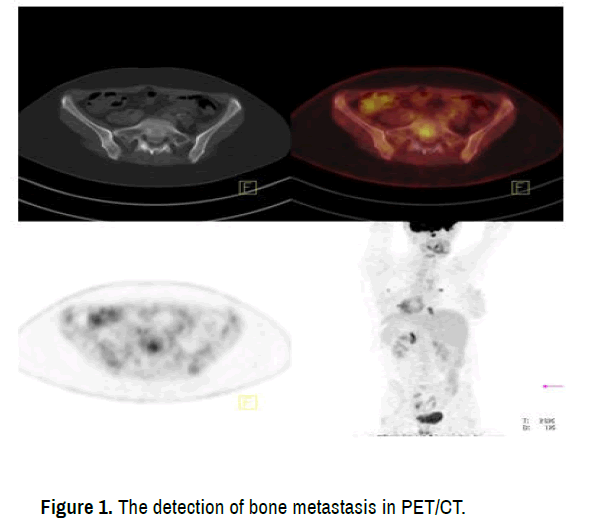
Figure 1. The detection of bone metastasis in PET/CT.
The following images demonstrate the CT results in comparison to the 18F-FDG PET/CT results for the same patient at the same time, showing the detection of bone metastasis in PET/CT images, which was not detected in CT scan (Figure 2).
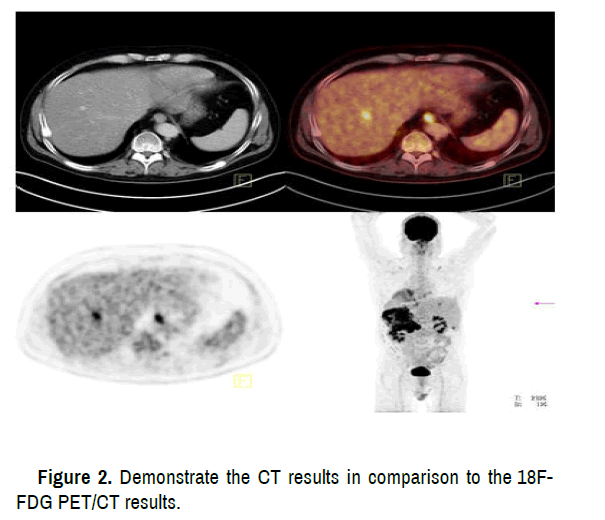
Figure 2. Demonstrate the CT results in comparison to the 18FFDG PET/CT results.
Although radical nephrectomy is considered as curative treatment for early stage Renal Cell Carcinoma (RCC), there are about 20%-30% of patients will develop metastasis after this procedure. The follow up monitoring of patients post-operatively should focus on postoperative complications, kidney function test.
Postoperative complications, kidney function, disease recurrence either locally or in the contralateral kidney and the presence of distant metastases [11]. The American urological association guidelines for patients who underwent partial or radical nephrectomy for renal cell carcinoma are follow up ultrasound, chest X-ray, CT scan and MRI after a period of 12 months according to the degree of risk providing that the patients had a baseline abdominal CT scan or MRI.
The ability of 18F-FDG PET imaging to detect cancer is based on the greater glucose metabolism of malignant cells than in normal cells. The increased expression of a Glucose Transporter Molecule (GLUT), mainly GLUT-1, on the cancer cell surface is the direct reason of enhanced glucose uptake of the cancer cells. FDG, which is a glucose analogue, after intracellular uptake is phosphorylated to FDG-6-phosphate by hexokinase; the metabolite, unlike glucose-6- phosphate, cannot be metabolized further and remains trapped in the cell. PET identifies this selective focal accumulation of positronemitting FDG in cancers [12]. The metabolic change precedes the anatomical change in most diseases, and this enables FDG PET to detect pathology such as local recurrence or distant metastasis earlier than anatomic imaging methods. The ability to obtain a safe and noninvasive metabolic image of the whole body is one of the advantages of PET.
RCC recurs locally in <5% of patients after radical nephrectomy, as detected by follow up CT. If this recurrence is diagnosed early it can be treatable. Several factors, such as migration of the adjacent normal organs into the renal fossa, postoperative scarring and artefacts from surgical clips, make interpretation of CT of the renal bed difficult. The metabolic activity of a tumor is not influenced by these factors. Therefore, FDG PET was found to be better for evaluating a local recurrence. In this study, 18F-FDG PET/CT showed higher diagnostic accuracy (94.3%) than CT scan (73.9%), while 18FFDG PET/CT was able to exclude local renal bed tumor recurrence with specificity (100%) compared to CT specificity (91.8%). In their study about restaging Clear Cell Renal Carcinoma with 18F-FDG PET/CT demonstrated good sensitivity and specificity of 18F-FDG PET/CT for the restaging of patients affected by clear cell RCC after primary treatment. And the use of 18F-FDG PET/CT in the restaging of RCC is feasible because the number of false-negative cases is limited. 18F-FDG PET/CT could be useful in assessing the number and sites of metastasis, as a baseline for future re-treatments and to address curative PET/CT-guided treatments in patients showing oligometastatic disease [13]. In their study regarding using CT scan and MRI in the evaluation of patients in the post radical nephrectomy period reported that 60% of the abnormal studies were then downgraded to normal, mentioning that both modalities after partial nephrectomy can be deferred until one year after surgery. In their study about the benefits and limitations of PET/CT in renal cell carcinoma reported that although PET/CT can be considered as a conflicting modality in the diagnosis of renal cell carcinoma, it can be used as an effective mode for the detecting of distant metastases. In their study about the diagnostic value of 18F-FDG PET/CT for local and distant disease relapse surveillance in surgically treated RCC patients, found that FDG PET/CT appears to be a very efficient tool in post-surgical patients with RCC with notable ability to probe even uncommon sites of distant recurrence encouraging its introduction to the follow-up protocol of post-surgically treated RCC patients.
18F-FDG PET/CT scan proved its efficiency in post-surgical renal cell carcinoma patients as trusted follow up tool in RCC patients with the suspicion of tumor local recurrence or distant metastasis after initial nephrectomy. It was found that 18F-FDG PET/CT can be superior to CT scan in detecting local recurrence and distant metastasis in particular the detection of bone metastasis. This can be considered as a base for future studies with larger population number.
Nuclear Medicine & Radiation Therapy received 706 citations as per Google Scholar report