Opinion - (2025) Volume 15, Issue 2
Received: 02-Jun-2025, Manuscript No. jpdbd-25-164659;
Editor assigned: 04-Jun-2025, Pre QC No. P-164659;
Reviewed: 16-Jun-2025, QC No. Q-164659;
Revised: 23-Jun-2025, Manuscript No. R-164659;
Published:
30-Jun-2025
, DOI: 10.37421/2153-0769.2025.15.416
Citation: Krista, Schmidt. “Human Metabolomics Understanding the Body's Chemical Signatures.” Metabolomics 15 (2025): 416.
Copyright: © 2025 Krista S. This is an open-access article distributed under the terms of the Creative Commons Attribution License, which permits unrestricted use, distribution, and reproduction in any medium, provided the original author and source are credited.
In recent years a growing body of research has illuminated the complex interplay between human health and the thousands of small molecules that circulate through our bodies. These molecules collectively known as metabolites form a vast chemical landscape that reflects not only our genetic makeup but also our diet lifestyle environmental exposures and interactions with the microbiome. The study of these molecules through a field known as metabolomics has emerged as a powerful approach to decipher the intricate language of health and disease. Unlike genomics which provides a blueprint or transcriptomics which reveals gene expression patterns metabolomics offers a direct snapshot of physiological states as they are happening in real time.
At its core metabolomics is the systematic identification and quantification of the small molecules present in cells tissues and biofluids. These metabolites include amino acids lipids sugars nucleotides and many other chemical compounds. Because they are the end products of cellular processes their levels often provide the most accurate reflection of what is happening within the body at any given moment. This is why metabolomics has become increasingly relevant in the quest to understand health from a more dynamic and personalized perspective. The metabolome which refers to the complete set of metabolites in a biological sample is extraordinarily sensitive to change. Even small shifts in diet exercise sleep or exposure to toxins can significantly alter the chemical profile of an individual. This sensitivity makes the metabolome a valuable readout of health status but also poses a challenge for researchers who must account for variability and complexity in their analyses. Still by capturing and interpreting these chemical fluctuations scientists can identify biomarkers of health monitor disease progression and evaluate the effects of therapeutic interventions [1].
One of the most promising applications of metabolomics is in the area of early disease detection. Traditional diagnostic methods often rely on clinical symptoms or imaging results which may appear only after a disease has progressed significantly. In contrast metabolomics can detect subtle biochemical changes that occur long before symptoms become apparent. For example studies have shown that changes in lipid and amino acid profiles can precede the onset of type 2 diabetes by several years. Similarly alterations in certain metabolites in the blood or cerebrospinal fluid have been linked to the early stages of neurodegenerative diseases such as Alzheimer's and Parkinson's. By identifying these early warning signs clinicians may be able to intervene sooner improving outcomes and potentially preventing disease altogether [2].
Another key advantage of metabolomics is its potential to capture the individuality of health. While genomic information is largely fixed the metabolome is dynamic and reflects the current state of an individual. This makes it ideally suited for personalized medicine where treatments are tailored to the unique biological makeup of each person. For instance two individuals with the same diagnosis may have very different metabolic profiles suggesting that they may respond differently to the same therapy. By analyzing these profiles clinicians can design more effective and personalized treatment plans minimizing side effects and maximizing benefits [3].
The connection between metabolism and the gut microbiome is also a major focus of metabolomic research. The human gut is home to trillions of microbes that play crucial roles in digestion immune function and overall health. These microbes produce a wide range of metabolites that can enter the bloodstream and influence host physiology. For example short chain fatty acids produced by the fermentation of dietary fiber have anti-inflammatory effects and are linked to reduced risk of chronic diseases. Conversely imbalances in microbial metabolites have been implicated in conditions such as obesity diabetes and inflammatory bowel disease. By studying these microbial signatures scientists can gain insights into how diet and microbiota interact to shape health outcomes.
Dietary influences on the metabolome are another area of active investigation. Food provides not only energy and essential nutrients but also a variety of bioactive compounds that can affect metabolic pathways. Metabolomics allows researchers to trace how specific foods or dietary patterns influence the chemical composition of blood and tissues. For example a Mediterranean diet rich in fruits vegetables whole grains and healthy fats has been associated with a distinct metabolic signature characterized by higher levels of antioxidants and anti-inflammatory compounds. Such findings support the idea that health is not determined solely by genetic predisposition but is deeply influenced by lifestyle choices that leave a measurable imprint on the body's chemical landscape [4].
Physical activity is another modulator of the metabolome. Exercise induces widespread changes in metabolism from increased energy utilization to enhanced mitochondrial function. These changes are reflected in the concentrations of various metabolites including lactate creatine and ketone bodies. Metabolomic studies of athletes and sedentary individuals have revealed distinct metabolic patterns associated with different levels and types of activity. Understanding these patterns can inform strategies to optimize performance recovery and long term health. Moreover metabolomics can help identify individuals who are at risk of overtraining or who may benefit from tailored exercise regimens based on their metabolic responses [5].
Google Scholar Cross Ref Indexed at
Google Scholar Cross Ref Indexed at
Google Scholar Cross Ref Indexed at
Google Scholar Cross Ref Indexed at
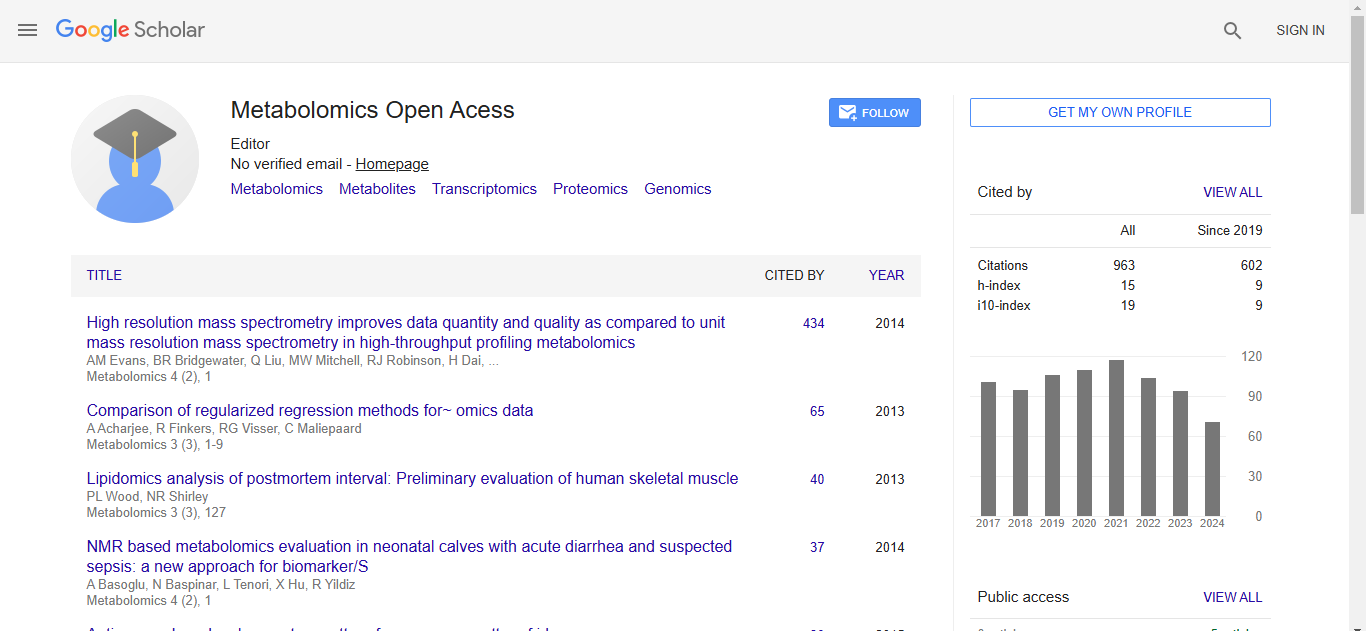
Metabolomics:Open Access received 895 citations as per Google Scholar report