Perspective - (127) Volume 16, Issue 1
Received: 01-Jan-2026, Manuscript No. jnt-26-191276;
Editor assigned: 05-Jan-2026, Pre QC No. P-191276;
Reviewed: 19-Jan-2026, QC No. Q-191276;
Revised: 22-Jan-2026, Manuscript No. R-191276;
Published:
29-Jan-2026
, DOI: 10.37421/2161-0959.2026.16.609
Citation: Ortega, Javier. ”Targeting Inflammation, Fibrosis, and Microbiota in CKD.” J Nephrol Ther 16 (2026):609.
Copyright: © 2026 Ortega J. This is an open-access article distributed under the terms of the Creative Commons Attribution License, which permits unrestricted use, distribution and reproduction in any medium, provided the original author and source are credited.
Chronic kidney disease (CKD) is a significant global health concern, characterized by a persistent inflammatory milieu and progressive fibrosis, ultimately leading to irreversible kidney damage and failure. Emerging therapeutic strategies are increasingly focusing on these key pathological processes, aiming to halt or reverse the disease progression. This article explores novel targets within the inflammatory and fibrotic pathways, highlighting how modulating these mechanisms could offer new avenues for treatment in CKD. The emphasis is on understanding the intricate interplay between inflammation and fibrosis and identifying specific molecular targets for intervention, such as targeting inflammatory cytokines, growth factors, and cellular signaling pathways involved in fibroblast activation and extracellular matrix deposition [1].
Targeting the NLRP3 inflammasome has emerged as a particularly promising strategy for mitigating the detrimental inflammation that drives CKD. Dysregulation of this multiprotein complex is known to drive the release of pro-inflammatory cytokines such as IL-1β and IL-18, which are critically implicated in the pathogenesis of renal fibrosis. Recent studies provide compelling evidence that inhibiting NLRP3 activation can effectively reduce inflammatory cell infiltration into the kidney and attenuate myofibroblast differentiation, thereby showing considerable potential in slowing CKD progression. This targeted approach holds promise for a more specific and effective anti-inflammatory therapy in kidney disease [2].
The role of aberrant transforming growth factor-beta (TGF-β) signaling in driving renal fibrosis is well-established and extensively documented. Consequently, new therapeutic targets are actively being developed to modulate this critical pathway. Inhibitors that target TGF-β receptors or downstream effectors are currently under investigation for their potential to suppress myofibroblast activation and reduce extracellular matrix accumulation, key features of fibrotic kidneys. A thorough understanding of the nuanced regulation of TGF-β signaling in the context of CKD is therefore crucial for the successful development of effective anti-fibrotic therapies [3].
Fibroblast activation protein (FAP) is a transmembrane serine protease that is notably upregulated in activated fibroblasts and myofibroblasts, which are the primary cellular drivers of fibrosis in various chronic diseases, including CKD. Consequently, targeting FAP represents a novel and potentially powerful approach to combat renal fibrosis. Strategies under investigation include the development of FAP-specific inhibitors for therapeutic intervention and FAP-targeted imaging agents for diagnostic applications, offering potential for both treatment and monitoring of fibrotic disease progression [4].
The role of sodium-glucose cotransporter 2 (SGLT2) inhibitors in mitigating inflammation and fibrosis in CKD is increasingly recognized, extending beyond their well-known glycemic control effects. These drugs appear to exert significant renoprotective effects through multiple pleiotropic mechanisms, including the reduction of oxidative stress, modulation of inflammation, and inhibition of tubular interstitial fibrosis. Their multifaceted actions make them valuable therapeutic agents in managing CKD progression [5].
Targeting specific inflammatory cytokines, such as tumor necrosis factor-alpha (TNF-α) and interleukin-6 (IL-6), is a well-explored strategy aimed at dampening the pro-inflammatory cascade that contributes to CKD. While broad systemic blockade of these cytokines can be associated with significant side effects, research is actively pursuing more targeted approaches or combination therapies. The goal is to effectively reduce inflammation and subsequent fibrosis without compromising the body's essential immune functions [6].
The development of fibrosis in CKD is intrinsically linked to the complex process of epithelial-to-mesenchymal transition (EMT). Therefore, inhibiting key EMT pathways, including those mediated by Wnt/β-catenin and Notch signaling, presents a promising therapeutic avenue. By modulating these signaling pathways, it may be possible to prevent the pathological transformation of renal epithelial cells into fibrotic myofibroblasts, thereby substantially reducing the accumulation of scar tissue within the kidneys [7].
The influence of the gut microbiota on modulating inflammation and fibrosis in CKD is an area of rapidly expanding research and significant interest. Dysbiosis, characterized by an imbalance in the composition and function of gut bacteria, has been implicated in contributing to systemic inflammation and exacerbating kidney damage. Consequently, strategies aimed at restoring the balance of the gut microbiome, such as the use of probiotics and prebiotics, are being explored as potentially valuable adjunctive therapies for managing CKD [8].
Extracellular vesicles (EVs), a diverse group of cell-derived nanoparticles including exosomes, play a multifaceted role in the pathogenesis of CKD by mediating inflammatory and fibrotic signaling between various kidney cells. Emerging therapeutic strategies are now focusing on targeting different aspects of EV biology, including their production, cargo content, or cellular uptake mechanisms, as novel ways to interfere with disease progression. A deeper understanding of EV communication networks holds the potential to unlock entirely new treatment modalities for CKD [9].
The intricate interplay between metabolic dysregulation and the development of renal fibrosis is a significant factor in the progression of CKD. Targeting metabolic pathways that contribute to chronic inflammation and oxidative stress, such as those involving aberrant lipid metabolism or impaired glucose handling, offers another promising avenue for therapeutic intervention. Approaches that focus on improving mitochondrial function and reducing cellular damage are currently being investigated as potential strategies to ameliorate fibrotic processes [10].
Chronic kidney disease (CKD) is fundamentally characterized by a persistent inflammatory environment and progressive fibrosis, processes that inevitably lead to irreversible kidney damage and failure. Consequently, current research and emerging therapeutic strategies are increasingly targeting these central pathological mechanisms. This review delves into novel targets within the complex inflammatory and fibrotic pathways, illuminating how the modulation of these pathways can open up new therapeutic avenues for managing CKD. A key focus lies in comprehending the intricate relationship between inflammation and fibrosis and identifying specific molecular targets for therapeutic intervention. These include inflammatory cytokines, growth factors, and crucial cellular signaling pathways implicated in fibroblast activation and the subsequent deposition of extracellular matrix [1].
A particularly promising strategy for mitigating the detrimental inflammation observed in CKD involves targeting the NLRP3 inflammasome. This protein complex plays a crucial role in initiating inflammatory responses, and its dysregulation leads to the release of key cytokines like IL-1β and IL-18, which are strongly implicated in driving renal fibrosis. Recent scientific investigations suggest that inhibiting the activation of NLRP3 can effectively reduce the infiltration of inflammatory cells into the kidney and suppress myofibroblast differentiation, thereby offering a potential means to slow down the progression of CKD. This approach represents a significant step towards developing more targeted anti-inflammatory therapies for kidney diseases [2].
The critical role of aberrant TGF-β signaling in promoting renal fibrosis is a well-established fact in nephrology. Accordingly, significant efforts are being directed towards identifying and developing new therapeutic targets that can modulate this pivotal pathway. Current research is investigating inhibitors that target either the TGF-β receptors themselves or downstream effector molecules. The aim is to suppress myofibroblast activation and reduce the excessive accumulation of extracellular matrix, which are hallmarks of fibrotic kidneys. A comprehensive understanding of the subtle and complex regulation of TGF-β in the context of CKD is paramount for the successful development of effective anti-fibrotic treatments [3].
Fibroblast activation protein (FAP), a transmembrane serine protease, is significantly upregulated in activated fibroblasts and myofibroblasts, the principal cellular contributors to fibrosis in CKD. Therefore, targeting FAP is emerging as a novel and potentially impactful strategy for combating renal fibrosis. The therapeutic approaches being explored include the development of highly specific FAP inhibitors for direct therapeutic intervention, as well as FAP-targeted imaging agents for diagnostic purposes, offering dual benefits in both treatment and disease monitoring [4].
The renoprotective effects of SGLT2 inhibitors in CKD are increasingly understood to extend beyond their primary role in glycemic control. These medications appear to confer significant benefits to the kidneys through a variety of pleiotropic mechanisms. Key among these are the reduction of oxidative stress, modulation of inflammatory processes, and the inhibition of tubular interstitial fibrosis. These multifaceted actions collectively contribute to their value as therapeutic agents in managing the progression of CKD [5].
Strategies aimed at blocking specific inflammatory cytokines, such as TNF-α and IL-6, are being actively investigated as methods to dampen the inflammatory cascade that exacerbates CKD. While systemic administration of cytokine blockers can lead to unwanted side effects, ongoing research is exploring more precise targeting strategies and combination therapies. The objective is to effectively reduce inflammation and subsequent fibrosis without compromising the body's vital immune functions [6].
The pathological development of fibrosis in CKD is intimately connected to the process of epithelial-to-mesenchymal transition (EMT). Consequently, inhibiting critical EMT signaling pathways, including those regulated by Wnt/β-catenin and Notch, represents a promising therapeutic avenue. By intervening in these pathways, it may be possible to prevent the aberrant transformation of renal epithelial cells into fibrotic myofibroblasts, thereby reducing the formation of detrimental scar tissue within the kidney [7].
The profound influence of the gut microbiota on the pathogenesis of CKD, particularly its role in modulating inflammation and fibrosis, is a rapidly evolving and exciting area of research. An imbalance in gut bacteria, known as dysbiosis, can contribute significantly to systemic inflammation and worsen kidney damage. Therefore, therapeutic strategies focused on restoring the gut microbiome's equilibrium, such as the administration of probiotics and prebiotics, are being explored as potential adjunctive treatments for CKD patients [8].
Extracellular vesicles (EVs), encompassing nanoparticles like exosomes, exert a complex and multifaceted influence on CKD pathogenesis. They act as key mediators of inflammatory and fibrotic signaling between various cell types within the kidney. Current therapeutic research is exploring novel strategies that target the production of EVs, their molecular cargo, or their mechanisms of cellular uptake. These approaches aim to disrupt the disease-promoting signaling networks mediated by EVs and offer new avenues for treatment [9].
The significant interplay between metabolic dysfunction and the progression of renal fibrosis in CKD necessitates the exploration of therapeutic targets within metabolic pathways. Interventions aimed at modulating metabolic processes that fuel inflammation and oxidative stress, such as aberrant lipid metabolism or impaired glucose handling, present another important therapeutic opportunity. Research is actively investigating approaches that enhance mitochondrial function and reduce overall cellular damage as strategies to mitigate renal fibrosis [10].
Chronic kidney disease (CKD) is characterized by inflammation and fibrosis, leading to kidney damage. Emerging therapies focus on targeting these processes. Novel approaches include modulating inflammatory pathways like the NLRP3 inflammasome and targeting cytokines such as TNF-α and IL-6. Anti-fibrotic strategies involve targeting TGF-β signaling, fibroblast activation protein (FAP), and pathways like epithelial-to-mesenchymal transition (EMT). SGLT2 inhibitors show renoprotective effects beyond glycemic control. The gut microbiota's role in CKD is being explored, with probiotics and prebiotics as potential interventions. Extracellular vesicles (EVs) are implicated in disease pathogenesis, and targeting them is a new therapeutic avenue. Metabolic dysregulation also contributes to fibrosis, suggesting therapies that improve metabolic pathways and mitochondrial function. Understanding the complex interplay between these factors is key to developing effective CKD treatments.
None
None
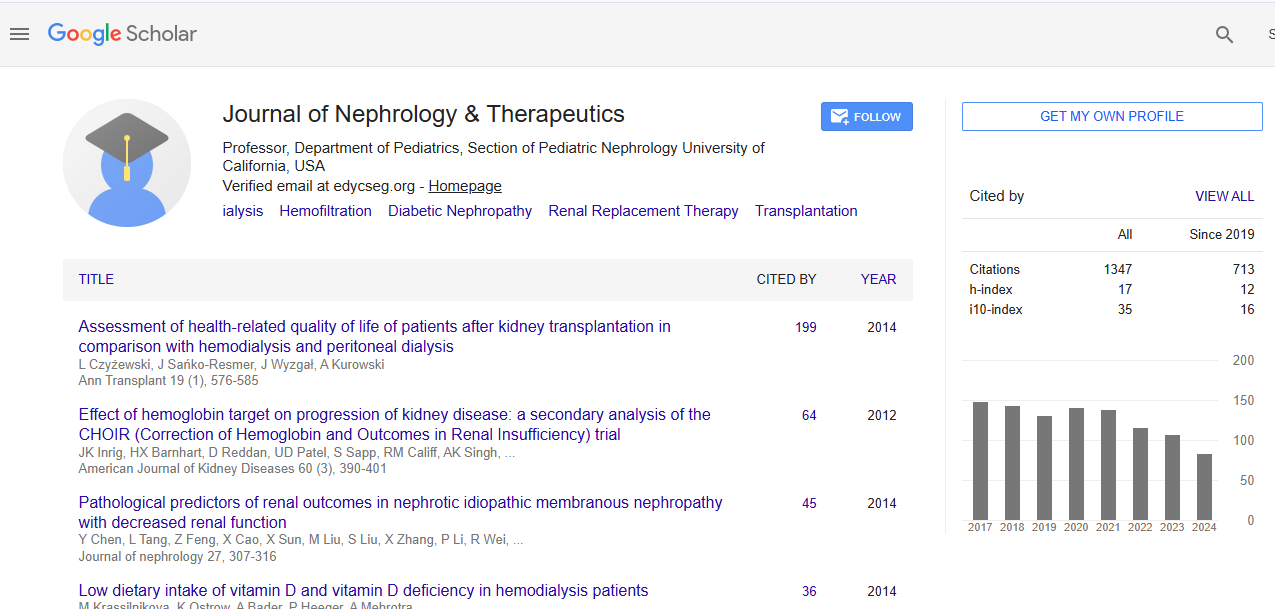
Journal of Nephrology & Therapeutics received 784 citations as per Google Scholar report