Commentary - (2025) Volume 14, Issue 6
Received: 01-Dec-2025, Manuscript No. jees-26-187944;
Editor assigned: 03-Dec-2025, Pre QC No. P-187944;
Reviewed: 17-Dec-2025, QC No. Q-187944;
Revised: 22-Dec-2025, Manuscript No. R-187944;
Published:
29-Dec-2025
, DOI: 10.37421/2332-0796.2025.14.208
Citation: Khalid, Salma. ”Smart Buildings: AI, IoT, And EMS For
Efficiency.” J Electr Electron Syst 14 (2025):208.
Copyright: © 2025 Khalid S. This is an open-access article distributed under the terms of the Creative Commons Attribution License, which permits unrestricted use, distribution
and reproduction in any medium, provided the original author and source are credited.
The integration of advanced Energy Management Systems (EMS) into smart buildings represents a significant paradigm shift in how we approach building operations and energy consumption. These systems are engineered to meticulously monitor, analyze, and control energy usage in real-time, thereby optimizing performance and minimizing waste. The focus is on creating intelligent environments that are both energy-efficient and occupant-centric, leading to substantial cost reductions and enhanced comfort levels [1].
The application of sophisticated machine learning algorithms has become instrumental in the predictive capabilities of smart building energy management. By learning from historical data and an array of environmental factors, these systems can forecast energy demands with remarkable accuracy. This predictive power allows for proactive adjustments to building systems such as HVAC and lighting, thereby curtailing energy waste and bolstering the overall efficiency of the building's energy infrastructure, promoting greater sustainability [2].
A novel framework for intelligent energy management in smart commercial buildings has been presented, emphasizing a distributed control architecture. This framework ingeniously incorporates occupancy sensing and predictive scheduling to fine-tune energy usage across various zones within a building. The demonstrated effectiveness of this system lies in its ability to significantly reduce peak demand and operational costs, all while maintaining optimal occupant comfort [3].
The impact of Internet of Things (IoT) enabled sensors and sophisticated building automation systems on energy efficiency within smart residential buildings is a subject of considerable evaluation. The real-time data acquisition capabilities offered by these sensors facilitate dynamic adjustments to crucial systems like lighting, heating, and cooling. The findings consistently indicate a substantial potential for energy savings, alongside improvements in indoor environmental quality, through the seamless integration of these smart building technologies [4].
Deep reinforcement learning (DRL) presents a compelling approach for the optimization of energy consumption within smart buildings. This methodology enables systems to autonomously learn optimal control policies for systems such as HVAC and lighting through continuous interaction with the building's environment. The primary objective is to minimize energy expenditures while strictly adhering to thermal and visual comfort constraints, with results demonstrating superior energy performance compared to conventional methods [5].
The integration of renewable energy sources into existing energy management systems within smart buildings is a critical area of research. Strategies are being developed to maximize the on-site utilization of solar and wind energy, thereby diminishing a building's reliance on the conventional grid and substantially lowering its carbon footprint. The emphasis is on intelligent control mechanisms to effectively balance local energy generation, storage, and consumption needs [6].
Demand-side management (DSM) strategies are being actively explored and implemented in smart buildings through the deployment of advanced energy management systems. The focus is on employing load shifting and peak shaving techniques, facilitated by intelligent control and robust communication technologies. These systems are designed to enhance grid stability and reduce electricity costs for building occupants by dynamically responding to grid signals [7].
The effectiveness of cloud-based energy management systems in optimizing the energy performance of smart buildings is undergoing rigorous evaluation. These systems offer the distinct advantage of centralized data processing and analytics, which are crucial for comprehensively monitoring energy consumption, pinpointing inefficiencies, and implementing targeted energy-saving measures. Scalability and accessibility are highlighted as key benefits of these cloud-based solutions [8].
Building occupants play a pivotal role in the overall performance and efficacy of smart building energy management systems. Research is actively exploring how to effectively integrate user behavior and individual preferences into EMS to achieve enhanced energy savings and, crucially, greater occupant satisfaction. The findings underscore the importance of personalized control mechanisms and effective feedback systems for successful energy management [9].
The synergy between the Internet of Things (IoT) and artificial intelligence (AI) is paving the way for advanced energy management in smart buildings. The development of integrated systems that leverage AI to analyze real-time IoT data is crucial for optimizing energy consumption, detecting faults, and enabling predictive maintenance. This integrated approach significantly enhances a building's operational efficiency and overall sustainability [10].
Energy Management Systems (EMS) are at the forefront of optimizing energy consumption in smart buildings, focusing on enhancing operational efficiency and reducing environmental impact. They utilize advanced control strategies and data analytics to achieve real-time monitoring, analysis, and management of energy usage, which translates into significant cost savings and improved occupant comfort. The incorporation of IoT devices and AI algorithms further enables the creation of adaptive and responsive building environments [1].
Machine learning algorithms are being employed to predict energy consumption in smart buildings, a critical function for proactive energy management. These systems analyze historical data and environmental factors to forecast energy demand, allowing for timely adjustments to HVAC and lighting. This predictive capability is vital for minimizing energy waste and improving the overall performance of a building's energy infrastructure, contributing to a more sustainable operational model [2].
A novel framework for intelligent energy management in smart commercial buildings is characterized by its distributed control architecture. This design integrates occupancy sensing and predictive scheduling to optimize energy consumption across different zones. The framework's success is measured by its ability to effectively reduce peak demand and operational costs while ensuring that occupant comfort levels are consistently maintained [3].
The evaluation of IoT-enabled sensors and building automation highlights their substantial impact on energy efficiency in smart residential buildings. The real-time data collected from these sensors allows for dynamic modifications to lighting, heating, and cooling systems. Consequently, significant energy savings are achievable, coupled with an enhancement of the indoor environmental quality through the integrated application of smart building technologies [4].
Deep reinforcement learning (DRL) offers a sophisticated method for optimizing energy consumption in smart buildings. By interacting with the building's environment, DRL systems learn optimal control strategies for HVAC and lighting, aiming to reduce energy costs while preserving thermal and visual comfort. The demonstrated effectiveness of DRL shows its capacity to achieve superior energy performance compared to traditional control methods [5].
The integration of renewable energy sources with energy management systems in smart buildings is a growing area of focus. Research explores strategies to maximize the use of on-site solar and wind power, thereby reducing dependence on the grid and lowering carbon emissions. Effective intelligent control is paramount for balancing the generation, storage, and consumption of renewable energy within the building's ecosystem [6].
Demand-side management (DSM) in smart buildings is being enhanced through advanced EMS, particularly focusing on load shifting and peak shaving. These strategies are enabled by intelligent control and communication technologies, allowing buildings to respond dynamically to grid signals. The objective is to improve grid stability and reduce electricity costs for occupants [7].
Cloud-based energy management systems are being assessed for their ability to optimize energy performance in smart buildings. The centralized processing and analysis of data from cloud platforms aid in monitoring consumption, identifying inefficiencies, and implementing energy-saving measures. Key advantages include improved scalability and accessibility of energy management functions [8].
The influence of occupant behavior on the performance of smart building energy management systems is a critical consideration. Integrating user behavior and preferences into EMS is essential for achieving substantial energy savings and ensuring occupant satisfaction. Personalized control options and feedback mechanisms are identified as crucial components for effective energy management [9].
The combination of IoT and artificial intelligence (AI) is central to advanced energy management in smart buildings. These integrated systems use AI to interpret IoT data for real-time energy optimization, fault detection, and predictive maintenance. This approach significantly boosts building operational efficiency and contributes to greater sustainability [10].
Smart buildings are leveraging advanced Energy Management Systems (EMS) to optimize energy consumption, enhance operational efficiency, and reduce environmental impact. These systems utilize real-time monitoring, data analytics, advanced control strategies, and technologies like IoT and AI to achieve significant cost savings and improve occupant comfort. Machine learning and deep reinforcement learning are employed for predictive energy consumption and optimizing control policies for HVAC and lighting. Novel frameworks integrate occupancy sensing and predictive scheduling for commercial buildings, while IoT sensors and automation are vital for residential buildings. The integration of renewable energy sources and demand-side management strategies like load shifting and peak shaving further contribute to sustainability and grid stability. Cloud-based solutions offer scalability and accessibility, while understanding and integrating occupant behavior is crucial for maximizing energy savings and occupant satisfaction. The synergy of IoT and AI is key to advanced energy management, enabling real-time optimization, fault detection, and predictive maintenance.
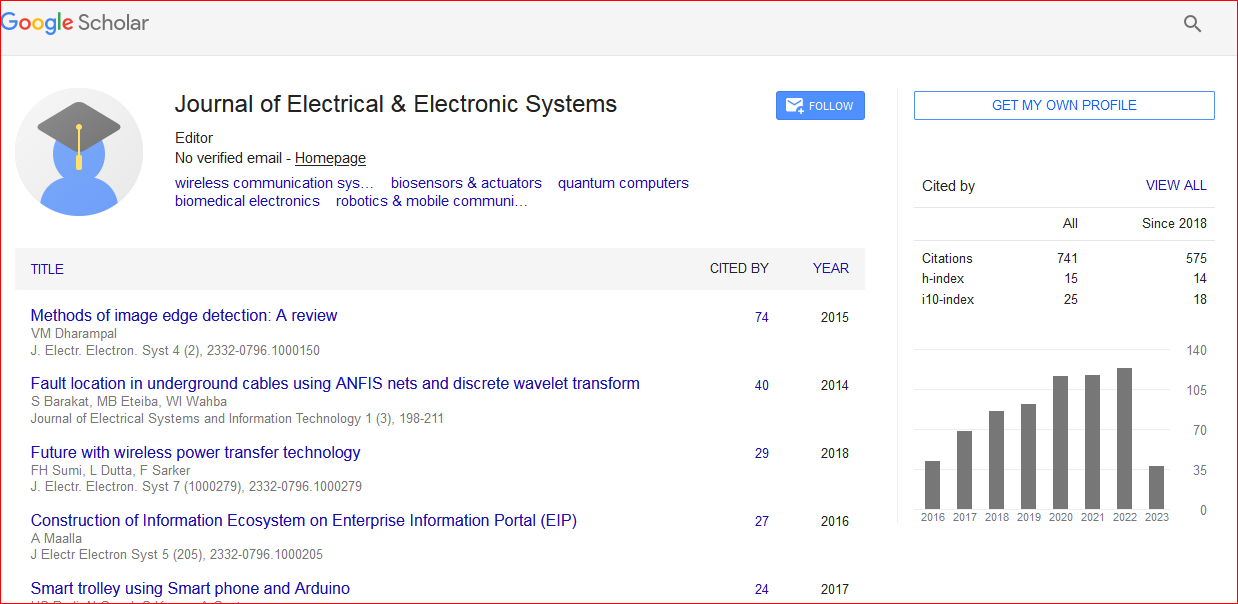
Journal of Electrical & Electronic Systems received 733 citations as per Google Scholar report