Research Article - (2025) Volume 16, Issue 3
Received: 02-Oct-2024, Manuscript No. JAR-24-149415;
Editor assigned: 07-Oct-2024, Pre QC No. JAR-24-149415 (PQ);
Reviewed: 22-Oct-2024, QC No. JAR-24-149415;
Revised: 03-Jun-2025, Manuscript No. JAR-24-149415 (R);
Published:
10-Jun-2025
, DOI: 10.37421/2155-6113.2025.16.970
Citation: Keleb, Godada, and Awoke Seyoum Tegegne. "Predictors for the Death of Preterm Neonates Admitted in Neonatal Intensive Care Unit (NICU) at Felege Hiwot Teaching and Specialized Hospital, North West Ethiopia." AIDS Clin Res 16 (2025): 970.
Copyright: © 2025 Keleb G, et al. This is an open-access article distributed under the terms of the creative commons attribution license which permits unrestricted use, distribution and reproduction in any medium, provided the original author and source are credited.
Sources of funding : Not applicable.
Objective: Preterm birth refers to the birth of a baby that occurs before 37 completed weeks of gestation. The main objective of current study was to identify predictors for the death of preterm neonates admitted to neonatal intensive care unit at Felege Hiwot Teaching and Specialized Hospital, North-West Ethiopia.
Methods: Institutional retrospective secondary data was conducted on 300 neonates admitted in the neonatal intensive care unit. Specific death rate and binary logistic regression models were used for data analysis.
Results: The current investigation revealed that; the stay in hours in NICU (AOR= 0.960, p-value=0.028), preterm neonates delivered in hospitals (AOR=0.329, p-value=0.029), preterm birth delivered at health facility (HC, HP) (AOR=0.435), weight of preterm neonates (AOR=0.141, p-value=0.000), a preterm neonate born from multiple pregnancy mothers (AOR=1.104), and HIV infected preterm neonate (AOR=1.328, p-value=0.002) were statistically significant predictors for the death of preterm neonates in NICU.
Conclusions: Small weight neonates, very preterm gestation age, short waiting time of neonates in neonatal intensive care unit and neonates born from mother with multiple pregnancies, HIV infected neonates and those lived in rural areas are risk groups and more attention should be given for such groups.
Specific death rate • Binary logistic regression model • Preterm neonates • Neonatal intensive care unit
In the world, about 3 million neonates die each year because of inappropriate care [1]. The highest (98 %) of such neonatal death belongs to the low and middle-income countries and Sub-Saharan Africa is among the regions showing the low reducing neonatal mortality rate [2]. One of the cases for these deaths is premature or preterm birth [3]. However, the issue of death of pre-preterm remained a current agenda in developing countries [4]. The estimated incidence of preterm birth is 9.6%of all births in worldwide, and the phenomenon is of great interest in developed and developing countries. Currently, preterm birth rates in the world are increasingly and are accountable for 35% of the world’s neonatal death which is the second-leading cause of death for children under five next to pneumonia [5].
Preterm birth contributes to 62% of neonatal mortality [6]. Among 15 million preterm births occurred worldwide each year, 1.1 million do not survive due to preterm birth-related complications, and many of the new born neonates will suffer from life-long disabilities, particularly, visual and hearing disorders [7]. One of the previous researches reported that the overall estimates of preterm birth rates range from 5% in high income countries to 25% in low income countries [8].
Ethiopia is one of the low-income countries with the highest rate of neonatal mortality (37 deaths per 1000 live births) with very slow progress and the challenge of neonatal mortality is still difficulty [8,9].
Preterm birth accounts for 3.1% of all Disability Adjusted Life Years (DALYs) in the Global Burden of Disease next to HIV and malaria [8,9]. Preterm neonates share similar risk for death, weight, size and strength, which are still at higher risk for health and developmental problems [10]. Premature birth is the major cause of prenatal morbidity and mortality of all over the world [11]. In order to achieve the fourth Millennium Development Goal (MDG4), there should be a substantial reduction of two-third of the under-five mortality rates especially those deaths related to prematurity [12].
In Ethiopia, 320,000 preterm neonates are occurred in each year and 24,400 children under five die due to preterm complications. According to report of UNICEF, in Ethiopia including the catchment area of Felege Hiwot Teaching and Specialized Hospital, one of the main causes of neonatal death is preterm birth which accounts for 23% of all other causes [4].
Preterm birth has multiple factors; therefore, solutions will not come through a single discovery rather from an array of discoveries addressing multiple biological, clinical, and social risk factors [13]. The status of neonatal death related to preterm is one of the best quality indicators for health care providers as well as an indicator for population social and economic welfare [12]. Therefore, the main objective of current study was to identify predictors for the death of preterm neonates admitted to neonatal intensive care unit at Felege Hiwot Teaching and Specialized Hospital. The scarcity of recent investigations in the study area magnifies the necessity of current research.
Study area and design
The study was conducted at Felege Hiwot Teaching and Specialized Hospital, North Western Ethiopia; it is one of the largest hospitals in the country served as Teaching, Specialized and Referral hospital for many patients referred from different zonal and district hospitals. Institutional based cross sectional study design was conducted on 300 preterm neonates admitted in NICU in the hospital from January 1, 2016 to December 30, 2017.
Variables included under current investigation
Response variable: The death of preterm neonates in the hospital admitted to NICU and it is categorized as 0=death (yes) and 1=no.
Explanatory variables: Place of residence (urban, rural), place of delivery (health facility, home), gestational age (very preterm, moderate preterm, late preterm), sex (male, female), mode of delivery (SVD, CS), birth weight in kg, age at the time of admission in hours, apgar score at 1 min, Apgar score at 10 min, multiple pregnancies (yes, no) and HIV status (negative, positive).
Eligibility criteria: Preterm neonates who were born before 37 weeks and admitted to neonatal intensive care unit at the hospital were included. Preterm infants who were not admitted to neonatal intensive care unit and full term infants admitted to neonatal intensive care unit were excluded from the study.
Sample size and sampling procedures: The sample size was determined by using the single population proportion formula having assumptions of 95% confidence interval, 5% of marginal error. The total sample size was 300 preterm neonates.
Data collection procedure: First the preterm neonates’ identification numbers were extracted from the main recording data base agenda, then socio-demographic characteristics, laboratory measurements, treatment out comes, in general the required information were extracted from the preterm neonates’ chart.
Data quality assurance: The quality of data was controlled by pediatric section in the hospital. Data collectors from the preterm neonates’ charts got introductions about the variables that should be included in the investigation. The data extraction tools and variables included in the analysis were pre-tested for consistency of understanding, review of tools and completeness of data items on 45 random charts. Based on the pilot data result, the necessary amendments were made on the final data extraction format. The retrieval process was closely monitored by the principal investigator throughout the data collection period. Both predictor and response variables were checked regularly for completeness of information. Any problem traced was immediately communicated to data collectors for giving corrections.
Data processing and analyses procedures: Data were coded and entered in to computer using SPSS version 23 software. Logical and consistency error identified during data entry (coding) was corrected as soon as it identified.
Descriptive statistics including frequency, summery statistics and cross tabulation were conducted for estimation of neonate’s death in NICU at the hospital. Univariate and Bivariate analysis tests were also employed for selecting statistically significance variables affecting death of preterm neonates admitted to NICU in the hospital.
Age Specific Death Rate (Age SDR): The age specific death rate for age group between x to x+n usually denoted by nm x is given by [14].

where nD x is the total death of individuals whose age is between x and x+n and nP x is total population whose ages are between x and x +n.
To be more specific, the age specific death rate for males is given by [15]

and the age specific death rate for females is given by

Binary logistic regression models: Logistic distribution (logit) has got advantage over the others in the analysis of dichotomous outcome variable in that it is extremely flexible and easily used model from mathematical point of view and results in a meaningful interpretation. In statistics, logistic regression, or logit regression, or logit model is a regression model where the dependent variable is categorical/binary dependent variable (most commonly called dummy variables) that is, where it can take only two values, "0" and "1", which represent outcomes death and survival.
The binary logistic model is used to estimate the probability of a binary response based on one or more predictor (or independent) variables (features). It allows one to say that the presence of a risk factor increases the probability of a given outcome by a specific percentage.
In a binary response model, interest lies primarily in the response probability [16]:

Where, p (y=1| x) is the probability that y=1 (death) given x (independent variable), To avoid the LPM limitations, let us consider a class of binary response models of the form:

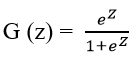
Where, G is a link function taking on values strictly between 0 and 1. This is defined as 0<G(z)<1,for all real numbers z. This ensures that the estimated response probabilities are strictly between 0 and 1. β is a parameter and X matrix. Xβ can be written as Xβ=β1 x1 + … + βn Xn. Logistic function is a nonlinear function that is used for the function G in order to make sure that the probabilities are between zero and one. In the logit model, G is the logit link function which is between zero and one for all real numbers z. This is the cumulative distribution function for a standard logistic random variable:
Descriptive analysis of the data
A descriptive analysis was made for the initiation of subsequent findings and indicated in Table 1.
Table 1 indicates that, from the total observation of 300 neonates, 75 (25%) were died in NICU, the majority of them (60%) were rural residents, 25 (8.3%) of them were delivered in their home without health professionals. Among the preterm neonates, 84 (28%) were very preterm whose gestation age were 28-32 weeks, 1.7% of the neonates were HIV infected and 33% of these neonates were born from multiple pregnancy mothers. Table 1 indicates that the average waiting time in days of neonates in NICU was 11.65 days, the average weight of neonates was 1.64 grams, and the average age of mothers was 27.6 years.
| Categorical variables | Continuous variables | |||||||
| Variables | Categories | F | % | Variable | Min value | Max value | Mean | Std deviation |
| Death | Yes | 75 | 25 | Waiting time in days in NICU | 1 day | 350 days | 11.65 | 24.3 |
| No | 225 | 75 | ||||||
| Place of residence | Urban | 120 | 40 | Birth weight in kg | 0.7 | 3.5 | 1.64 | 0.47 |
| Rural | 180 | 60 | ||||||
| Place of delivery | Health facility | 275 | 91.7 | Apgar score in 1 minute | 2 | 9 | 6.67 | 1.29 |
| Home | 25 | 8.3 | ||||||
| Age of gestation | Very preterm | 84 | 28 | Apgar score in 10 minute | 2 | 20 | 8.16 | 1.32 |
| Moderate preterm | 76 | 25.3 | Age of neonates at the time of admission in hrs | 1 | 2160 | 30.02 | 137.36 | |
| Late preterm | 140 | 46.7 | ||||||
| Mode of delivery | SVD | 259 | 86.3 | Mother’s age | 16 | 45 | 27.57 | 5.24 |
| CS | 41 | 13.7 | ||||||
| Sex of neonates | Male | 165 | 55 | |||||
| Female | 135 | 45 | ||||||
| HIV status | Negative | 295 | 98.3 | |||||
| Positive | 5 | 1.7 | ||||||
| Multiple- pregnancies | Yes | 99 | 33 | |||||
| No | 201 | 67 | ||||||
Table 1. Baseline characteristics of respondents.
To compare the Specific Death Rate (SDR) of neonates, death rate for each categorical covariate were computed and summarized in Table 2.
| Variables | Categories | Death status | Specific Death Rate (SDR) | |
| No | Yes | |||
| Place of residence | Urban | 102 | 18 | 150 |
| Rural | 123 | 57 | 316.7 | |
| Age of gestation | Very preterm (28-32) | 46 | 38 | 452.4 |
| Moderate preterm (32-34) | 56 | 20 | 263.2 | |
| Late preterm (34-36) | 123 | 17 | 121.4 | |
| Sex neonates | Male | 128 | 37 | 224.2 |
| Female | 97 | 38 | 281.5 | |
| Mode of delivery | SVD | 191 | 68 | 262.5 |
| CS | 34 | 7 | 170.7 | |
| HIV status | Negative | 222 | 73 | 247.5 |
| Positive | 3 | 2 | 400 | |
| Place of delivery | H/Facility | 222 | 53 | 192.7 |
| Home | 3 | 22 | 880 | |
| Multiple pregnancies | Yes | 63 | 36 | 363.6 |
| No | 162 | 39 | 194 | |
Table 2. Summary statistics of death status and SDR of neonates with categorical socio-demographic variables.
Table 2 indicates that the highest SDR was obtained for neonates delivered at home (880). The next highest death rate was registered for very preterm neonates (542.4). The lowest SDR was occurred at urban resident preterm neonates. The association between death of neonates and socio-demographic and clinical factors are indicated in Table 3.
| Variables | Pearson Chi-square | Df | Asymptotic significance (2-sided) |
| death × place of residence | 12.018a | 1 | 0.044 |
| death × place of delivery | 8.104a | 2 | 0.017 |
| death × age of gestation | 30.762a | 2 | 0 |
| death × sex of neonates | 1.297a | 1 | 0.255 |
| death × mode of delivery | 4.591a | 1 | 0.02 |
| death × HIV status | 3.610a | 1 | 0.035 |
| death × multiple pregnancies | 10.176a | 1 | 0.001 |
Table 3. The Chi-square test of association between death of neonates and socio-demographic and clinical factors.
Table 3 indicates that residence area, place of delivery, age of gestation, mode of delivery, HIV status of neonates and multiplepregnancies were significantly associated with the death of neonates in the NICU.
To determine the predictors of death of neonates in the NICU at the hospital, Binary logistic regression analysis was employed and the result of the model is indicated in Table 4.
The logistic regression model in Table 4, indicates that as the waiting time in NICU increased by one day, the logit of death of neonates in NICU decreased by 4% (AOR=0.960, 95% CI: (0.926, 0.996), p-value=0.028) given that the other variables remains constant. Comparing neonates in NICU who were born in the health facilities with those born in home, the logit of death of neonates born in health facilities was decreased by 67% (AOR=0.329, 95% CI=0.041, 0.645); p-value=0.029) as compared to those neonates born in home, given that the other things remains constant.
| Variables | B | S.E. | Wald | Sig. | AOR | 95% C.I. for AOR | |
| Lower | Lower | ||||||
| Waiting time in days | -0.041 | 0.018 | 4.855 | 0.028 | 0.96 | 0.926 | 0.996 |
| Delivery of place (Ref=Home) | |||||||
| Heath facility | -1.112 | 1.063 | 1.093 | 0.029 | 0.329 | 0.041 | 0.645 |
| Gestational age (Ref.=Late preterm) | |||||||
| Very preterm | 1.155 | 0.38 | 9.231 | 0.002 | 3.175 | 1.861 | 4.26 |
| Moderate preterm | 0.65 | 0.408 | 2.536 | 0.111 | 1.915 | 0.054 | 1.368 |
| Weight in gm | -1.956 | 0.487 | 16.11 | 0 | 0.141 | 0.059 | 0.26 |
| Mode of delivery (Ref=CS) | |||||||
| SVD | 0.146 | 0.51 | 0.082 | 0.774 | 1.158 | 0.62 | 1.285 |
| Apgar score (Ref=One min) | |||||||
| Apgar score in 10 min | -0.093 | 0.166 | 0.316 | 0.574 | 0.911 | 1.3 | 4.639 |
| Mothers’ age | -0.004 | 0.03 | 0.019 | 0.889 | 0.996 | 0.926 | 0.996 |
| Residence area (Ref.=Urban) | |||||||
| Rural | 0.242 | 0.251 | 5.452 | 0.032 | 1.274 | 1.084 | 2.352 |
| Sex of neonates (Ref.=Male) | |||||||
| Female | 0.164 | 0.364 | 0.543 | 0.764 | 1.178 | 0.943 | 2.456 |
| Multiple pregnancies (Ref.= No) | |||||||
| Yes | 0.099 | 0.324 | 7.668 | 0.006 | 1.104 | 1.345 | 4.325 |
| HIV status of neonates (Ref.=No) | |||||||
| Yes | 0.285 | 0.342 | 154.32 | 0.002 | 1.328 | 1.0432 | 3.126 |
| Constant | 3.86 | 1.93 | 4.002 | 0.045 | 47.481 | 0.054 | 3.484 |
Table 4. Binary logistic regression for identifying predictors of death of neonates.
Weight had also significant effect on the variable of interest. Hence, as weight of neonates increased by one kg, the logit of death of neonates in the NICU decreased by 86%(AOR=0.141, 95% CI: (0.059, 0.260), p-value=0.000). The logit of death of a neonate born from mothers with multiple gestations was increased 10.4% (AOR=1.104, 95% CI: (1.345, 4.325) given the other thing remains constant. Finally, the death rate of HIV infected preterm neonates admitted to NICU was increased by 32.8% as compared to those HIV negative preterm neonates. The logit of death of preterm neonates lived in rural area was increased by 27.4% (AOR=1.274, 95% CI: (1.084, 2.352) as compared to urban residents keeping the other variables constant.
The overall goodness of fit of the model was assessed using the Hosmer-Lemeshow goodness-of-fit test. The value of the Hosmer- Lemeshow goodness-of-fit statistic and the corresponding p-value computed from the Chi-square distribution with 8 degrees of freedom, p-value=0.749 revealed that the model was good.
In current investigation, covariates like waiting time in NICU, age of gestations, weight of neonates, multiple pregnancy, stay of length in days in NICU, residence area and HIV status were significantly affected the death of neonates at intensive care unit. Late and moderate gestational period neonates had smaller probability of death as compared to very preterm neonates. The possible reason for this is that matured neonates at delivery time can survive the new environment as compared to very preterm one. This result is supported by one of the previous research [17] and contradicted by another previous investigation [1].
The increase of weight in most cases is associated with the age of gestation and this further leads for good resistance of the new environment. This result is consistent with previous researches [18,19]. The preterm neonates delivered at health facilities like hospitals, health centers, health posts have more probability of getting better care services by health professionals to get waiting room that keeps the environment moderate for it as compared to those preterm neonates delivered at home. This result is consistent with previous research [20]. The longer of waiting of preterm neonates in NICU, getting the better services also increase and this further helps to survive the preterm neonates. The waiting tin in NICU in the hospital may be associated with the time ratio for blood glucose concentrations of >150 mg/dL through interaction with birth weight and the average highest daily percentage of inspired oxygen [19]. In addition, the current community based interventions by health professionals might contribute to the reduction of traditional cord care practices in the study area. This result is also consistent with one of the previous researches.
HIV infected preterm neonates has less probably of surviving the new environment as compared to HIV negative preterm neonates. The potential reason for this might be that in addition to gestation age, the HIV has also significant contribution for the preterm neonates to be died. This result is supported by the previous study.
The covariate, waiting time of neonates in NICU is significant for the variation of death of neonates in the intensive care unit. The death of neonates with short waiting time in NICU is greater than those have longer waiting time. There is a significant effect of maternal multiple pregnancies on birth outcomes and one of the effects is that those mothers with multiple gestations should give care for the previous born children and attention of giving care for current gestation may be low as compared to those single gestations. This result is consistent with results obtained in Stoll BJ, et al. and contradict with another research.
According to our findings, gestational age, place of delivery, weight of neonates, HIV status, multiple pregnancies, stay of length in NICU and residence area have a significant effect for the death of preterm neonates admitted in neonatal intensive care unit. Neonates with different ages at delivery, neonates with different weight at delivery, whether or not neonates born from mothers have multiple gestations have different probability of surviving in NICU. The death of preterm neonates in NICU is also varied based on the waiting time of neonates in NICU.
The way forward: An integrated intervention is needed for reducing the death of preterm neonates admitted at neonates’ intensive care units. Such intervention should be given for preterm neonates with low birth weight, those neonates delivered at home, neonates delivered at very preterm gestation period, and HIV infected neonates, neonates with rural residents and preterm neonates born from mothers with multiple pregnancies.
The authors acknowledged the Amhara region health research and laboratory center at Felege Hiwot Referral Hospital, Ethiopia, for the data they supplied for the success of this research.
This is not applicable as this manuscript does not include details, images, or videos relating to individual participants. However, the authors got ethical approval certificate from the ethical committees namely; Bahir Dar University ethical committee, Ethiopia with Ref≠ RCS/1412/2017. The ethical clearances certificate can be attached up on request. At the time, the study was conducted; informed consent forms were not obtained from participants for publication of the dataset.
The data supporting these findings will not be made available publically due to concerns about protecting participants’ identity and respecting their rights to privacy.
The data supporting these findings are available with corresponding author.
As no individual or institution funded this research, there was no conflict of financial interest between author and institutions.
Not applicable.
[Crossref] [Google Scholar] [PubMed]
[Crossref] [Google Scholar] [PubMed]
[Crossref] [Google Scholar] [PubMed]
[Crossref] [Google Scholar] [PubMed]
[Crossref] [Google Scholar] [PubMed]
[Crossref] [Google Scholar] [PubMed]
[Google Scholar] [PubMed]
[Crossref] [Google Scholar] [PubMed]
[Crossref] [Google Scholar] [PubMed]
[Crossref] [Google Scholar] [PubMed]
[Crossref] [Google Scholar] [PubMed]
[Crossref] [Google Scholar] [PubMed]
[Crossref] [Google Scholar] [PubMed]
[Crossref] [Google Scholar] [PubMed]
[Crossref] [Google Scholar] [PubMed]
Journal of AIDS & Clinical Research received 5264 citations as per Google Scholar report