Commentary - (2025) Volume 15, Issue 4
Received: 02-Aug-2025, Manuscript No. jeat-26-188639;
Editor assigned: 04-Aug-2025, Pre QC No. P-188639;
Reviewed: 18-Aug-2025, QC No. Q-188639;
Revised: 25-Aug-2025, Manuscript No. R-188639;
Published:
01-Sep-2025
, DOI: 10.37421/2161-0525.2025.15.860
Citation: Youssef, Hassan Ben. ”Plastic Additives: A Toxic
Aquatic Threat.” J Environ Anal Toxicol 15 (2025):860.
Copyright: © 2025 Youssef B. Hassan This is an open-access article distributed under the terms of the Creative Commons Attribution License, which permits unrestricted use,
distribution and reproduction in any medium, provided the original author and source are credited.
The pervasive issue of plastic additives leaching into aquatic environments and their subsequent toxicological effects is a growing concern within environmental science [1].
This phenomenon poses significant threats to the health and stability of these vital ecosystems. Common additives, such as phthalates and bisphenols, are known to disrupt endocrine systems in various aquatic organisms, including fish and invertebrates, thereby impacting critical processes like reproduction and development [1].
The potential for these chemicals to bioaccumulate within organisms and move up the food chain further amplifies the environmental risk [1].
Consequently, there is an urgent need for improved waste management strategies and stricter regulations on plastic production to mitigate these widespread environmental threats [1].
Investigating the impact of specific compounds like bisphenol A (BPA) and its analogs is crucial for understanding their effects on reproductive health in freshwater organisms [2].
Studies have revealed significant endocrine-disrupting effects, leading to alterations in sex ratios and reductions in egg production in model aquatic species [2].
The widespread contamination of freshwater bodies by BPA derivatives underscores the pressing need to comprehend their synergistic toxicities and broader ecological implications [2].
Phthalate esters, widely employed as plasticizers, have also demonstrated adverse effects on the development of aquatic invertebrates [3].
Research indicates that exposure to common phthalates, such as DEHP and DBP, can impair larval development and metamorphosis, resulting in increased mortality rates [3].
The long-term consequences of microplastic-associated phthalate pollution on the structural integrity and functional capacity of aquatic food webs are a significant area of concern [3].
Furthermore, the combined toxic effects of various plastic additives, including flame retardants and UV stabilizers, on marine fish are being actively investigated [4].
These studies highlight synergistic toxicity, where mixtures of chemicals can induce more profound oxidative stress and DNA damage than individual compounds [4].
Understanding these complex risks associated with multiple additive exposures in polluted marine environments is crucial for comprehensive ecological risk assessment [4].
The quantification of release rates of critical additives like bisphenol A (BPA) and phthalates from different types of plastic debris under simulated freshwater conditions provides valuable insights [5].
This research reveals that weathered plastics, particularly those subjected to UV radiation, release these additives at significantly higher rates [5].
This finding emphasizes the ongoing vulnerability of aquatic ecosystems to aged plastic pollution and the continuous input of toxic additives [5].
Assessing the bioaccumulation and biomagnification of both legacy and emerging plastic additives within marine food webs is essential for understanding their long-term fate and impact [6].
Persistent additives, such as brominated flame retardants, have been found to accumulate significantly in higher trophic levels, posing substantial risks to top predators [6].
This necessitates a broader monitoring approach for a wider range of additives and a deeper understanding of their trophic transfer dynamics [6].
Beyond developmental and reproductive impacts, the neurological effects of phthalates and their metabolites on aquatic organisms are also being explored [7].
Exposure has been linked to altered neurotransmitter levels and behavioral changes, suggesting potential neurotoxicity [7].
These findings illuminate a less understood aspect of plastic additive toxicity and highlight the need for further research into their impact on the nervous systems of aquatic life [7].
UV stabilizers, including benzotriazoles, play a significant role in plastic pollution and exert toxic effects on vital aquatic organisms like algae and zooplankton [8].
Studies demonstrate that these additives can inhibit algal growth and impair zooplankton reproduction, thereby affecting the foundational components of the aquatic food web [8].
This underscores the importance of considering the full spectrum of plastic additives and their far-reaching ecological consequences [8].
The immunotoxicity of plasticizers, specifically DEHP and DINP, on the immune system of freshwater fish is another critical area of research [9].
Findings indicate that these additives can suppress immune responses, rendering fish more vulnerable to infections [9].
This highlights the chronic, sublethal impacts that plastic additives can have on aquatic fauna and their broader ecological implications [9].
Finally, a comprehensive review of the toxicological impacts of flame retardants (FRs) leached from plastics in aquatic systems is vital [10].
This work discusses the persistence, bioaccumulation, and endocrine-disrupting properties of various FRs, such as PBDEs, and their adverse effects on fish and invertebrates [10].
The authors strongly emphasize the critical need for improved risk assessment methodologies and more effective regulatory measures for these pervasive environmental pollutants [10].
The environmental burden of plastic additives leaching into aquatic ecosystems and their resultant toxicological effects is a complex and multifaceted issue demanding comprehensive scientific attention [1].
These substances, including widely used compounds like phthalates and bisphenols, exhibit a notable capacity to interfere with the endocrine systems of aquatic fauna, compromising vital reproductive and developmental processes in species ranging from fish to invertebrates [1].
The insidious nature of bioaccumulation, where these chemicals concentrate within organisms and can be transferred up the food chain, exacerbates the potential for widespread ecological disruption [1].
Consequently, there is an pressing and undeniable imperative to enhance global waste management protocols and to implement more stringent regulations governing the production of plastics to effectively mitigate these pervasive environmental threats [1].
Further detailed investigations into the specific impacts of bisphenol A (BPA) and its structural analogs on the reproductive well-being of freshwater organisms are essential for a nuanced understanding of their ecotoxicity [2].
Such studies have consistently identified significant endocrine-disrupting activities, which manifest as detrimental alterations in sex ratios and substantial reductions in egg production rates within representative aquatic species [2].
The pervasive presence of BPA derivatives in aquatic environments serves as a stark indicator of the urgent need to elucidate their potential synergistic toxicities and their broader implications for ecosystem health [2].
The detrimental effects of phthalate esters, predominantly utilized as plasticizers in the manufacturing of various plastic products, on the developmental trajectories of aquatic invertebrates are a significant area of concern [3].
Empirical evidence demonstrates that exposure to commonly encountered phthalates, including but not limited to DEHP and DBP, can lead to marked impairments in larval development and the complex process of metamorphosis, ultimately resulting in elevated rates of mortality [3].
The long-term ecological ramifications of microplastic-associated phthalate pollution on the structural integrity and functional dynamics of aquatic food webs are a critical focus of ongoing research [3].
Moreover, the synergistic toxic interactions arising from the combined exposure to a spectrum of plastic additives, encompassing flame retardants and UV stabilizers, within marine fish populations are actively being scrutinized [4].
The findings from such research consistently reveal instances of synergistic toxicity, wherein the presence of a mixture of these chemicals elicits a more pronounced adverse response, characterized by increased oxidative stress and DNA damage, compared to exposure to individual compounds [4].
A thorough comprehension of these intricate risks, stemming from multiple additive exposures within contaminated marine environments, is indispensable for robust ecological risk assessment frameworks [4].
The precise quantification of the release rates of critical additives, such as bisphenol A (BPA) and various phthalates, from diverse categories of plastic debris under controlled, simulated freshwater conditions provides invaluable empirical data [5].
This line of research has elucidated that plastic materials that have undergone weathering, particularly those exposed to ultraviolet (UV) radiation, exhibit significantly elevated rates of additive leaching [5].
This observation critically underscores the sustained vulnerability of aquatic ecosystems to the continuous influx of toxic additives from aging plastic pollution [5].
A thorough assessment of the bioaccumulation patterns and biomagnification potential of both historical (legacy) and newer (emerging) plastic additives within the intricate architecture of marine food webs is paramount for understanding their ecological fate and impact [6].
Persistent additives, exemplified by certain brominated flame retardants, have been observed to accumulate to significant levels in organisms occupying higher trophic positions, thereby posing considerable risks to apex predators [6].
This finding necessitates the expansion of monitoring efforts to encompass a broader array of additives and a deeper understanding of their complex dynamics of trophic transfer [6].
Beyond the well-documented impacts on development and reproduction, the neurological consequences of phthalates and their metabolic byproducts on aquatic organisms are increasingly being investigated [7].
Exposure to these compounds has been associated with notable alterations in neurotransmitter levels and observable behavioral changes, strongly suggesting the potential for neurotoxicity [7].
These discoveries shed light on a less explored facet of plastic additive toxicity, emphasizing the critical need for expanded research into their specific effects on the nervous systems of aquatic species [7].
The role of UV stabilizers, such as benzotriazoles, in contributing to plastic pollution and their subsequent toxic effects on foundational aquatic organisms, including algae and zooplankton, is a subject of significant study [8].
Research in this area has demonstrated that these additives can effectively inhibit algal growth and adversely affect zooplankton reproduction, thereby impacting the primary producers and consumers at the base of the aquatic food web [8].
This highlights the critical importance of considering the full spectrum of plastic additives and their cascading ecological consequences [8].
The immunotoxicity of specific plasticizers, namely DEHP and DINP, on the immune system of freshwater fish represents another crucial area of ecotoxicological investigation [9].
The research findings indicate a capacity for these additives to suppress immune responses in fish, rendering them more susceptible to opportunistic infections [9].
This observation underscores the potential for chronic, sublethal impacts of plastic additives on aquatic fauna, with significant implications for the health and stability of aquatic populations [9].
Finally, a comprehensive synthesis of the current scientific knowledge regarding the toxicological impacts of flame retardants (FRs) that leach from plastic materials into aquatic systems provides a vital overview [10].
This review thoroughly discusses the inherent persistence, propensity for bioaccumulation, and endocrine-disrupting properties characteristic of various FRs, such as PBDEs, and details their adverse effects on both fish and invertebrates [10].
The authors strongly advocate for the urgent development and implementation of improved risk assessment methodologies and more robust regulatory frameworks to effectively manage these ubiquitous environmental pollutants [10].
Plastic additives are a significant environmental concern, leaching into aquatic ecosystems and causing toxicological effects. Common additives like phthalates and bisphenols disrupt endocrine systems, impacting reproduction and development in aquatic organisms such as fish and invertebrates. These chemicals can bioaccumulate, posing risks up the food chain. Research highlights the release of additives from weathered plastics and the synergistic toxicity of additive mixtures. Specific concerns include the neurotoxicity and immunotoxicity of phthalates, as well as the harmful effects of UV stabilizers and flame retardants on aquatic life. The findings emphasize the urgent need for better waste management, regulation of plastic production, and comprehensive risk assessment to mitigate these environmental threats.
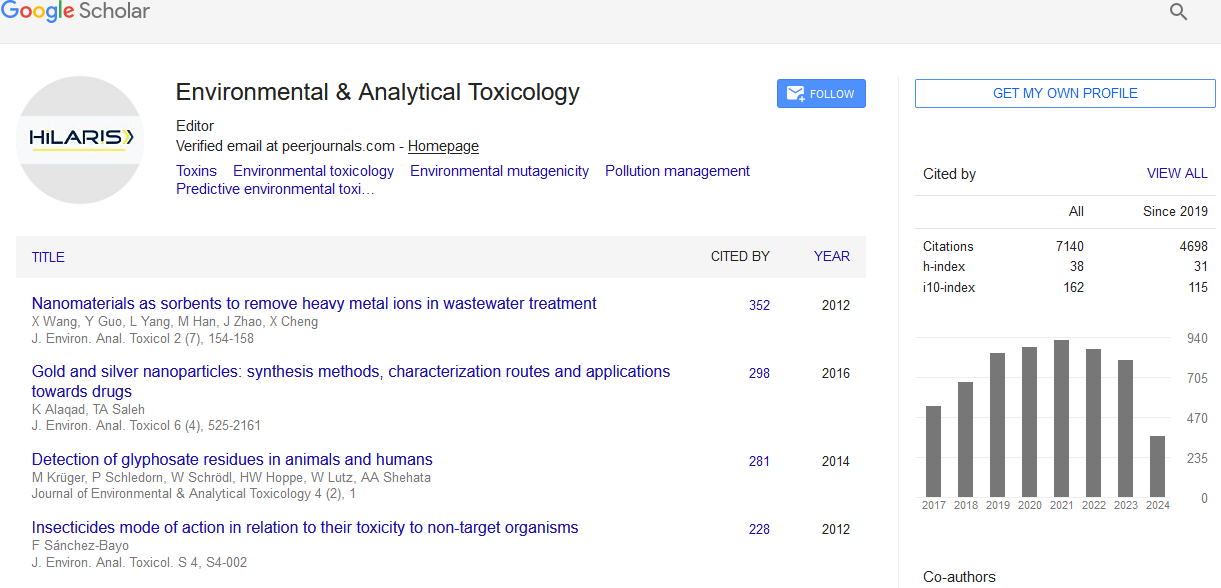
Environmental & Analytical Toxicology received 6818 citations as per Google Scholar report