Commentary - (127) Volume 14, Issue 2
Received: 02-Mar-2025, Manuscript No. VTE-26-180075;
Editor assigned: 04-Mar-2025, Pre QC No. P-180075;
Reviewed: 18-Mar-2025, QC No. Q-180075;
Revised: 24-Mar-2025, Manuscript No. R-180075;
Published:
30-Mar-2025
, DOI: 10.37421/2376-1318.2025.14.364
Citation: Hassan, Amina. ”Micronutrient Imbalances: Key to Chronic Disease Risk.” Vitam Miner 14 (2025):364.
Copyright: © 2025 Hassan A. This is an open-access article distributed under the terms of the Creative Commons Attribution License, which permits unrestricted use, distribution and reproduction in any medium, provided the original author and source are credited.
This review systematically examines the multifaceted relationship between micronutrient imbalances and the incidence and progression of a spectrum of chronic diseases. The intricate web connecting deficiencies and excesses of essential vitamins and minerals to conditions such as cardiovascular disease, type 2 diabetes, and various cancers is elucidated, underscoring the critical need for optimal nutrient status in disease prevention [1].
The pervasive issue of vitamin D deficiency is explored in the context of metabolic health, with a specific focus on its association with insulin resistance and the subsequent development of type 2 diabetes mellitus. Evidence suggests that widespread insufficiency may profoundly impact glucose metabolism and elevate diabetes risk [2].
Furthermore, the vital role of magnesium in mitigating cardiovascular disease risk factors is investigated. The paper delves into magnesium's essential functions in regulating blood pressure, maintaining vascular tone, and influencing lipid profiles, highlighting how its deficiency can compromise cardiovascular well-being [3].
The potent antioxidant capabilities of vitamin E are presented in relation to cancer prevention. Mechanisms by which tocopherols and tocotrienols exert protective effects against oxidative stress, a known contributor to oncogenesis, are discussed, emphasizing dietary strategies for risk reduction [4].
Zinc's indispensable contribution to immune system integrity and its implications for chronic inflammatory diseases are also critically reviewed. The micronutrient's role in the development and functionality of immune cells is detailed, illustrating how deficiency compromises immunity and potentiates inflammatory responses [5].
Additionally, the intricate connection between selenium status and thyroid hormone metabolism is examined. The review highlights selenium's essentiality in the formation of selenoproteins that govern thyroid hormone synthesis and function, and how imbalances can lead to thyroid dysfunction [6].
The detrimental impact of iron deficiency on cognitive function and its association with neurodevelopmental disorders are thoroughly investigated. Iron's critical involvement in neurotransmitter synthesis and myelination is underscored, with findings pointing to persistent cognitive deficits from early-life deficiency [7].
Concurrently, the fundamental role of calcium in maintaining bone health and preventing osteoporosis is addressed. The indispensable nature of calcium for bone mineralization and structural integrity is emphasized, particularly in conjunction with vitamin D's role in absorption [8].
Moreover, the article explores the implications of copper's involvement in enzymatic processes for cardiovascular health. The paper discusses how both deficiency and excess of copper can disrupt blood pressure regulation and lipid metabolism, thereby influencing the risk of hypertension and atherosclerosis [9].
Finally, the potential therapeutic implications of chromium in glucose metabolism, especially for type 2 diabetes, are critically reviewed. While chromium's role in carbohydrate and lipid metabolism is acknowledged, the need for further robust clinical evidence regarding its efficacy as a standalone treatment is highlighted [10].
This article provides a comprehensive overview of how micronutrient imbalances, encompassing both deficiencies and excesses, are intrinsically linked to the pathogenesis and advancement of major chronic diseases, including cardiovascular disease, type 2 diabetes, and specific forms of cancer. It elucidates the complex mechanisms by which vitamins and minerals interact with cellular processes, stressing that maintaining optimal levels is paramount for preventing oxidative stress, inflammation, and compromised immune function, all characteristic of chronic conditions. The review advocates for a balanced dietary approach and the judicious use of targeted supplementation under professional supervision [1].
The metabolic implications of vitamin D are thoroughly examined, focusing on its association with insulin resistance and the development of type 2 diabetes. The study posits that widespread vitamin D deficiency could contribute to impaired glucose metabolism and an increased susceptibility to diabetes, suggesting that adequate vitamin D levels are crucial for preserving pancreatic beta-cell function and enhancing insulin sensitivity. Monitoring vitamin D levels is recommended, particularly for high-risk individuals [2].
Furthermore, the significant impact of magnesium deficiency on cardiovascular disease risk factors, such as hypertension and dyslipidemia, is investigated. The paper underscores magnesium's critical functions in the regulation of blood pressure, vascular tone, and lipid profiles. The findings indicate that insufficient magnesium intake can exacerbate endothelial dysfunction and contribute to the development of heart disease, emphasizing the importance of dietary strategies to ensure adequate magnesium consumption [3].
This research highlights the antioxidant properties of vitamin E and its protective role against oxidative stress, which is implicated in the etiology of cancer. The study elaborates on how tocopherols and tocotrienols can effectively neutralize free radicals, thereby preventing DNA damage and inhibiting oncogenesis. The importance of dietary vitamin E sources for cancer prevention and mitigation is strongly supported [4].
The crucial role of zinc in immune function and its ramifications for chronic inflammatory diseases are critically reviewed. The article details how zinc is essential for the maturation and operation of immune cells, and how a deficiency can lead to a weakened immune system, increasing vulnerability to infections and intensifying inflammation. The necessity of sufficient zinc intake for a resilient immune system and the mitigation of chronic inflammation is emphasized [5].
The study also delves into the connection between selenium status and thyroid hormone metabolism, illuminating its importance for thyroid health and potential links to chronic conditions if imbalanced. It explains how selenium is a key component of selenoproteins that regulate thyroid hormone synthesis and function. The research suggests that suboptimal selenium levels can lead to thyroid dysfunction, affecting overall metabolic health [6].
This article meticulously investigates the consequences of iron deficiency on cognitive function and its correlation with neurodevelopmental disorders. It details iron's vital role in the synthesis of neurotransmitters and in myelination processes. The findings suggest that iron deficiency, especially during early developmental stages, can result in enduring cognitive deficits, thereby underscoring the critical importance of maintaining adequate iron status for lifelong brain health [7].
Simultaneously, the research explores the relationship between dietary calcium intake and bone health, with a primary focus on the prevention of osteoporosis. The article stresses calcium's indispensable contribution to bone mineralization and its ongoing maintenance. The study emphasizes that insufficient calcium intake, particularly when combined with vitamin D deficiency, substantially elevates the risk of fractures and bone fragility in aging populations [8].
Moreover, a review discusses the role of copper in various enzymatic pathways and its direct implications for cardiovascular health. The paper examines how both copper deficiency and excess can adversely affect blood pressure regulation and lipid metabolism, thereby increasing the risk of hypertension and atherosclerosis. The importance of maintaining optimal copper levels for vascular integrity and overall function is highlighted [9].
Finally, the study investigates the role of chromium in glucose metabolism and its potential utility in managing type 2 diabetes. It explores the mechanisms by which chromium may potentiate insulin action and improve glycemic control. The findings suggest that while chromium is indeed involved in carbohydrate and lipid metabolism, its effectiveness as a standalone therapeutic agent for diabetes warrants further rigorous clinical investigation [10].
Micronutrient imbalances, including deficiencies and excesses of vitamins and minerals, are closely linked to chronic diseases such as cardiovascular disease, type 2 diabetes, and cancer. Optimal nutrient levels are crucial for preventing oxidative stress, inflammation, and immune dysfunction. Specific micronutrients like vitamin D, magnesium, vitamin E, zinc, selenium, iron, calcium, copper, and chromium play vital roles in metabolic health, cardiovascular function, immune response, cognitive development, bone health, and glucose regulation. While research highlights their importance, further clinical investigation is often needed to establish definitive therapeutic roles, especially for supplementation. Maintaining a balanced diet and consulting professionals for supplementation are recommended to ensure adequate nutrient status and mitigate the risk of chronic diseases.
None
None
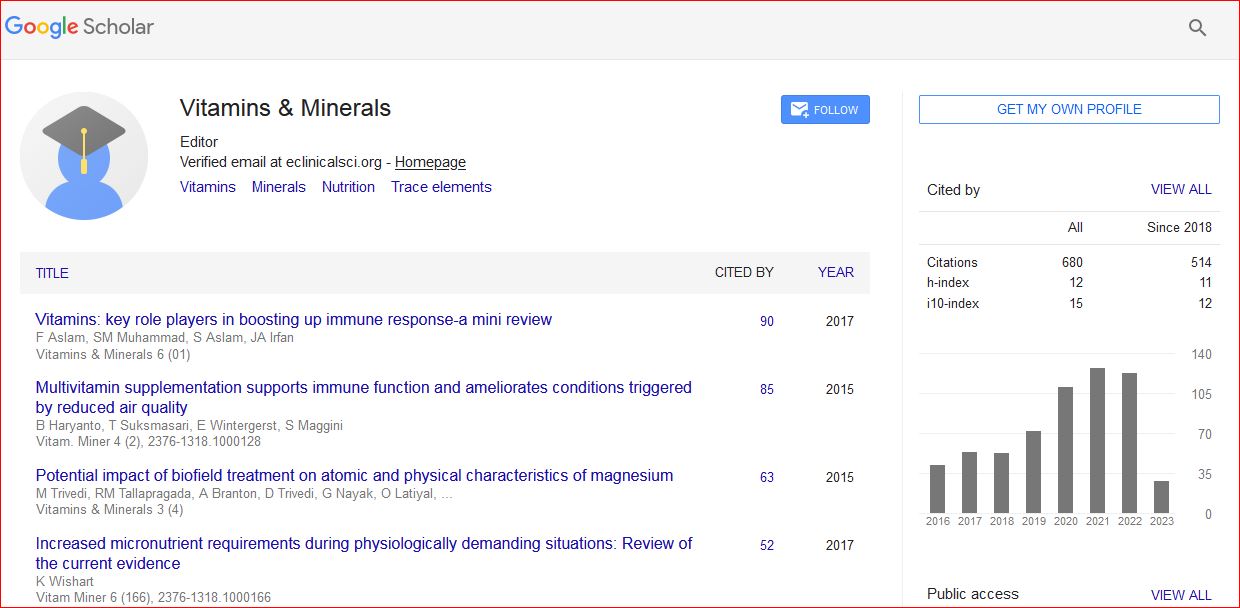
Vitamins & Minerals received 790 citations as per Google Scholar report