Commentary - (2025) Volume 15, Issue 2
Received: 02-Mar-2025, Manuscript No. jnt-26-178925;
Editor assigned: 04-Mar-2025, Pre QC No. P-178925;
Reviewed: 18-Mar-2025, QC No. Q-178925;
Revised: 24-Mar-2025, Manuscript No. R-178925;
Published:
31-Mar-2025
, DOI: 10.37421/2161-0959.2025.15.555
Citation: Wright, Samuel. ”Inflammation and Oxidative Stress Drive Kidney Disease Progression.” J Nephrol Ther 15 (2025):555.
Copyright: © 2025 Wright S. This is an open-access article distributed under the terms of the Creative Commons Attribution License, which permits unrestricted use, distribution and reproduction in any medium, provided the original author and source are credited.
Inflammation and oxidative stress represent fundamental pathophysiological processes that significantly contribute to the development and progression of a wide array of kidney diseases, encompassing both chronic kidney disease (CKD) and acute kidney injury (AKI). These intertwined mechanisms instigate cellular damage, promote fibrotic remodeling, and ultimately lead to a decline in kidney function, underscoring the critical need for targeted interventions [1].
The complex interplay between inflammatory cascades and oxidative stress in the context of kidney injury is a hallmark of its pathogenesis. This interaction is characterized by the activation of key inflammatory signaling pathways, such as nuclear factor-kappa B (NF-κB), and a heightened generation of reactive oxygen species (ROS). The resultant cellular damage manifests as endothelial dysfunction, podocyte injury, and tubular damage, collectively impairing renal homeostasis [2].
Specific inflammatory mediators, including pro-inflammatory cytokines like tumor necrosis factor-alpha (TNF-α) and interleukin-6 (IL-6), as well as various chemokines, play a substantial role in driving the advancement of kidney fibrosis. Concurrently, mitochondrial dysfunction and the activation of NADPH oxidase serve as principal endogenous sources of ROS, thereby amplifying cellular injury and perpetuating the pathological cascade [3].
Therapeutic strategies that aim to attenuate inflammation and oxidative stress, such as the administration of antioxidant therapies and anti-inflammatory drugs, hold considerable promise for retarding or potentially reversing the progression of kidney damage. Nevertheless, establishing their definitive efficacy and determining the optimal clinical application necessitates further rigorous investigation [4].
The glomerular filtration barrier, a critical component of the nephron, exhibits a particular vulnerability to injury induced by inflammatory processes and oxidative stress. This susceptibility can lead to the development of proteinuria and a subsequent exacerbation of functional decline, especially in the context of conditions such as diabetic nephropathy and glomerulonephritis [5].
Tubulointerstitial inflammation and the resultant oxidative damage are recognized as primary drivers of progressive kidney fibrosis, a key feature of CKD. Consequently, targeting inflammatory pathways and mitigating ROS production specifically within tubular cells has emerged as a crucial objective for developing effective therapeutic interventions [6].
Oxidative stress contributes significantly to endothelial dysfunction within the kidney by diminishing the bioavailability of nitric oxide (NO) and concurrently promoting inflammatory responses. This dual action leads to impaired renal blood flow and further compromises overall kidney function [7].
Mitochondrial dysfunction represents a substantial endogenous source of ROS generation within the kidney. This dysfunction not only impairs ATP production, vital for cellular energy, but also exacerbates inflammatory responses, creating a detrimental positive feedback loop that accelerates disease progression [8].
Novel therapeutic approaches are actively being explored to modulate the activity of the inflammasome, a multiprotein complex involved in inflammation, and to effectively reduce elevated ROS levels. These innovative strategies offer potential benefits for patients suffering from a diverse range of kidney disorders [9].
The involvement of specific immune cells, including macrophages and neutrophils, is pivotal in orchestrating the inflammatory and oxidative stress responses observed within the kidney. A comprehensive understanding of their roles is essential for elucidating disease progression mechanisms and for the development of targeted therapeutic interventions [10].
Inflammation and oxidative stress are identified as central players in the pathogenesis of numerous kidney diseases, such as chronic kidney disease (CKD) and acute kidney injury (AKI). These processes are known to induce cellular damage, promote fibrogenesis, and ultimately impair kidney function, highlighting the therapeutic potential of targeting these pathways [1].
The intricate relationship between inflammation and oxidative stress in the context of kidney injury is marked by the activation of inflammatory signaling pathways, for example, NF-κB, and the increased production of reactive oxygen species (ROS). This leads to detrimental effects including endothelial dysfunction, podocyte injury, and tubular damage, all contributing to the overall decline in renal health [2].
Certain inflammatory mediators, such as cytokines like TNF-α and IL-6, and chemokines, significantly contribute to the advancement of renal fibrosis. Simultaneously, impaired mitochondrial function and the activation of NADPH oxidase are recognized as major sources of ROS, which in turn worsen cellular damage [3].
Therapeutic strategies designed to mitigate inflammation and oxidative stress, including antioxidant therapies and anti-inflammatory medications, demonstrate considerable promise in slowing or even reversing kidney damage. However, further research is required to fully ascertain their effectiveness and establish optimal treatment protocols [4].
The glomerular filtration barrier is particularly vulnerable to damage caused by inflammation and oxidative stress. This damage can result in proteinuria and a worsening of kidney function in conditions like diabetic nephropathy and glomerulonephritis [5].
Tubulointerstitial inflammation and oxidative damage are key contributors to the progressive fibrosis seen in CKD. Therefore, targeting inflammatory pathways and ROS production within tubular cells is considered a critical goal for therapeutic development [6].
Oxidative stress exacerbates endothelial dysfunction in kidney disease by reducing the availability of nitric oxide and promoting inflammation, which collectively impairs renal blood flow and overall kidney function [7].
Mitochondrial dysfunction is a significant source of ROS in kidney disease, leading to reduced ATP production and intensified inflammatory responses. This creates a detrimental cycle that amplifies kidney damage [8].
Emerging therapeutic approaches are being investigated to modulate inflammasome activation and decrease ROS levels, offering potential benefits for individuals with various kidney disorders [9].
The role of specific immune cells, such as macrophages and neutrophils, in orchestrating the inflammatory and oxidative stress responses within the kidney is crucial for understanding disease progression and for designing effective interventions [10].
Inflammation and oxidative stress are key drivers of kidney diseases like CKD and AKI, causing cellular damage, fibrosis, and impaired function. These processes involve inflammatory pathways like NF-κB and the generation of ROS, leading to damage in glomeruli, tubules, and the endothelium. Specific mediators like cytokines and mitochondrial dysfunction exacerbate these effects. While therapeutic strategies targeting these pathways show promise, further research is needed. The involvement of immune cells such as macrophages and neutrophils is critical for disease progression and intervention development.
None
None
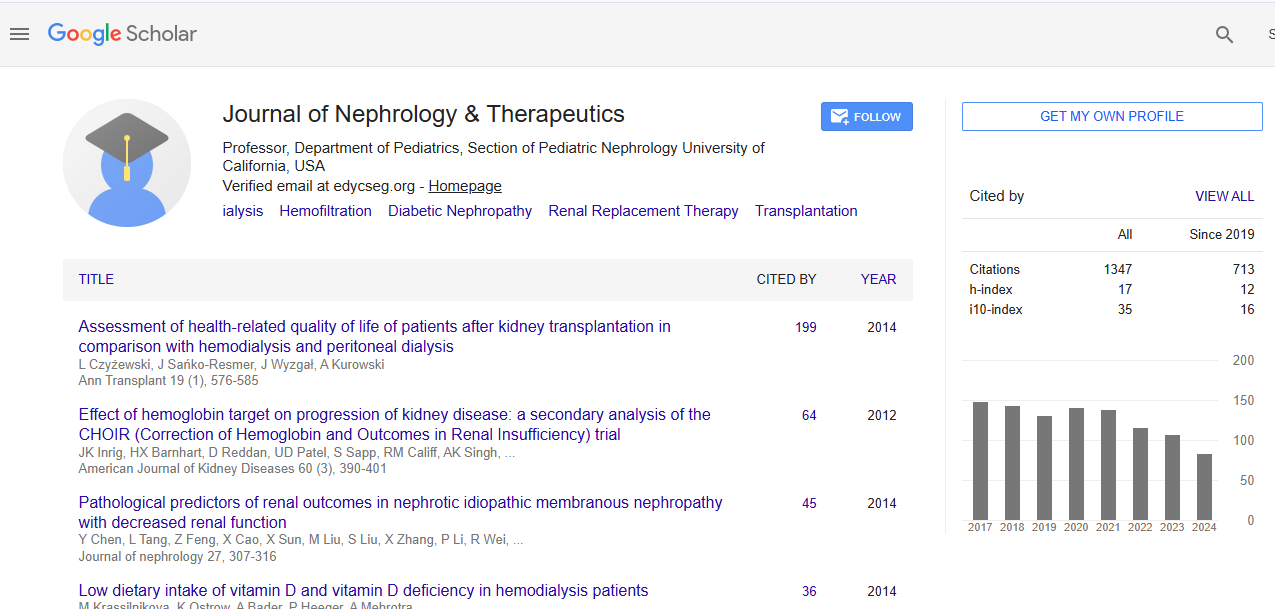
Journal of Nephrology & Therapeutics received 784 citations as per Google Scholar report