Commentary - (127) Volume 14, Issue 4
Received: 01-Jul-2025, Manuscript No. VTE-26-180100;
Editor assigned: 03-Jul-2025, Pre QC No. P-180100;
Reviewed: 17-Jul-2025, QC No. Q-180100;
Revised: 22-Jul-2025, Manuscript No. R-180100;
Published:
29-Jul-2025
, DOI: 10.37421/2376-1318.2025.14.383
Citation: Petrov, Victor. ”High-Dose Vitamins: Diverse Therapeutic Applications Explored.” Vitam Miner 14 (2025):383.
Copyright: © 2025 Petrov V. This is an open-access article distributed under the terms of the Creative Commons Attribution License, which permits unrestricted use, distribution and reproduction in any medium, provided the original author and source are credited.
High-dose vitamin supplementation has emerged as a significant area of therapeutic exploration, targeting a range of specific medical conditions where conventional approaches may fall short. This approach leverages the biological activity of vitamins at concentrations exceeding typical dietary recommendations, aiming to influence physiological processes more profoundly. The potential benefits are being investigated across various vitamin groups, each with unique mechanisms and applications. For instance, high-dose vitamin D is being rigorously studied for its immunomodulatory capabilities, particularly in the context of autoimmune diseases and chronic inflammatory conditions. Its role extends beyond bone health, suggesting an influence on cellular processes that regulate immune responses and inflammation [1].
Similarly, elevated levels of B vitamins, notably B12 and folate, are proving critical in managing certain neurological disorders and specific types of anemia. These interventions address fundamental biochemical pathways that, when disrupted, lead to significant health impairments. The intricate roles of these vitamins in neurotransmitter synthesis and DNA repair make them prime candidates for high-dose therapeutic strategies aimed at restoring neurological function and red blood cell production [1].
Vitamin E, specifically alpha-tocopherol, is under scrutiny for its potent antioxidant properties, with research focusing on its high-dose application in conditions characterized by substantial oxidative stress. This includes exploring its potential benefits in mitigating the progression of neurodegenerative diseases and cardiovascular complications, where free radical damage plays a significant pathogenic role [5].
Intravenous administration of high-dose vitamin C is garnering attention as an adjunct in cancer treatment. The rationale behind this application involves harnessing its dual nature as a pro-oxidant at high concentrations, potentially inducing cancer cell death, while maintaining antioxidant effects at lower levels. Its potential to improve patient quality of life and alleviate fatigue during chemotherapy is also a key area of investigation [3].
High-dose B vitamin combinations, particularly B6, B12, and folate, are demonstrating promise in the management of hyperhomocysteinemia. This condition, a known risk factor for both cardiovascular and neurological diseases, is directly influenced by the metabolic role of these vitamins. Studies are evaluating their efficacy in reducing the incidence of neurological deficits and as supportive therapy for peripheral neuropathies [4].
Beyond its well-established lipid-lowering effects, high-dose niacin (Vitamin B3) is being explored for its potential neuroprotective roles and its influence on cellular energy metabolism. While its efficacy in managing dyslipidemia is recognized, ongoing research seeks to broaden its therapeutic applications, provided safety concerns like flushing and potential liver toxicity are carefully managed [6].
High-dose vitamin K, especially K2, is being investigated for its impact on vascular calcification and osteoporosis. Unlike its primary role in coagulation, vitamin K2 is being studied for its ability to influence calcium deposition, promoting bone health while potentially preventing arterial calcification. Research is actively seeking to define optimal dosages and forms for these non-coagulatory applications [7].
Emerging research also highlights the potential of high-dose biotin (Vitamin B7) in addressing neurological and dermatological conditions. Its proposed role in nerve myelin sheath regeneration and keratin production makes it a subject of interest for treating conditions like multiple sclerosis, hair loss, and nail disorders, though further investigation into safety and efficacy at very high doses is warranted [8].
While vitamin K3 (menadione) has limited use in human medicine due to toxicity concerns, preclinical research continues to explore its mechanisms. Investigations are focusing on its role in oxidative stress and its potential to induce apoptosis in cancer cells, with an ultimate goal of developing safer analogues for human therapeutic applications [9].
Finally, high-dose thiamine (Vitamin B1) remains a cornerstone in treating severe deficiencies like Wernicke-Korsakoff syndrome and beriberi. Its therapeutic importance extends to supporting metabolic pathways in critical illness and certain neurological conditions, often requiring intravenous administration to ensure prompt and effective delivery [10].
The therapeutic landscape of high-dose vitamin supplementation is continually expanding, offering novel approaches to managing complex health issues. Vitamin D, when administered at high doses, is being scrutinized for its profound immunomodulatory effects, showing promise in the management of autoimmune diseases. Studies are investigating its ability to modulate immune cell function and reduce inflammation, extending its known benefits beyond bone metabolism [2].
High doses of B vitamins, particularly B12 and folate, are essential in addressing specific metabolic derangements that underlie neurological disorders and certain types of anemia. Their role as cofactors in crucial biochemical reactions makes them vital for neuronal health and red blood cell production, offering therapeutic potential for conditions previously considered difficult to treat [1].
Vitamin E, in its alpha-tocopherol form, is being explored at high doses for its potent antioxidant capabilities. This avenue of research targets conditions exacerbated by oxidative stress, such as neurodegenerative diseases and cardiovascular complications, where mitigating free radical damage is paramount. Careful consideration of the benefit-risk profile, including potential pro-oxidant effects at very high doses and interactions with other medications, is crucial [5].
Intravenous administration of high-dose vitamin C is being investigated as an adjuvant therapy in oncology. This approach capitalizes on vitamin C's dual action: inducing oxidative stress in cancer cells at high concentrations while acting as an antioxidant at lower levels. Its potential to improve patient outcomes and quality of life during chemotherapy is a significant focus of current research [3].
The management of hyperhomocysteinemia, a risk factor for serious cardiovascular and neurological conditions, is being significantly addressed by high-dose B vitamin supplementation, specifically B6, B12, and folate. These vitamins are critical for the metabolic pathways involved in homocysteine regulation, and studies are examining their impact on reducing neurological deficits and aiding in the treatment of peripheral neuropathies [4].
Niacin (Vitamin B3) at high doses is not only a recognized treatment for dyslipidemia but is also being explored for its potential neuroprotective properties and its role in cellular energy metabolism. While effective in managing lipid profiles, careful monitoring for side effects such as flushing and potential hepatotoxicity is essential, especially when therapeutic doses are used for metabolic interventions [6].
Emerging research is highlighting the potential of high-dose vitamin K, particularly K2, in addressing vascular calcification and osteoporosis. Beyond its established role in blood clotting, vitamin K2 is being studied for its ability to direct calcium towards bone formation and away from arterial walls. The focus is on identifying optimal dosages and delivery forms for these non-coagulatory applications [7].
High-dose biotin (Vitamin B7) is a subject of increasing interest for its potential therapeutic benefits in neurological and dermatological conditions. It is being investigated for its possible role in promoting nerve myelin sheath regeneration and enhancing keratin production, suggesting applications in conditions like multiple sclerosis and hair and nail disorders. Further studies are needed to fully elucidate its efficacy and safety at very high doses [8].
Vitamin K3 (menadione) is largely confined to veterinary use due to toxicity concerns in humans. However, ongoing research continues to explore its mechanisms, particularly its interaction with oxidative stress and its potential to induce apoptosis in cancer cells. The aim is to develop safer derivatives for potential human therapeutic use [9].
High-dose thiamine (Vitamin B1) remains a critical intervention for severe deficiencies such as Wernicke-Korsakoff syndrome and beriberi. Its therapeutic importance extends to supporting metabolic processes in critically ill patients and those with certain neurological disorders, often necessitating intravenous administration to ensure rapid and effective nutrient delivery [10].
High-dose vitamin supplementation is being explored for therapeutic applications across a spectrum of conditions. Vitamin D shows potential in autoimmune diseases, while B vitamins like B12 and folate are critical for neurological disorders and anemias. Vitamin E is studied for its antioxidant role in oxidative stress-related conditions, and intravenous vitamin C is being investigated as an adjunct cancer therapy. High-dose B vitamin combinations help manage hyperhomocysteinemia, a risk factor for cardiovascular and neurological issues. Niacin's applications are expanding beyond lipid management to neuroprotection and metabolism. Vitamin K2 is being researched for vascular health and osteoporosis, while biotin shows promise for neurological and dermatological conditions. Vitamin K3's potential is explored in preclinical cancer research, and high-dose thiamine is essential for severe deficiencies like Wernicke-Korsakoff syndrome.
None
None
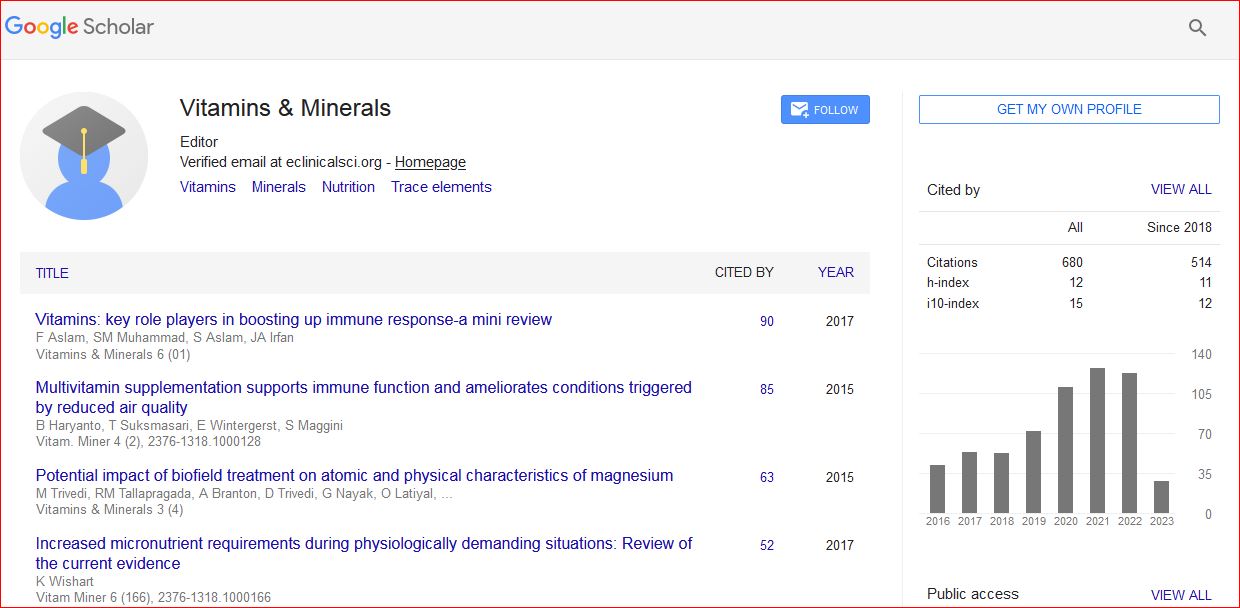
Vitamins & Minerals received 790 citations as per Google Scholar report