Perspective - (2025) Volume 15, Issue 2
Received: 01-Apr-2025, Manuscript No. jeat-26-188597;
Editor assigned: 03-Apr-2025, Pre QC No. P-188597;
Reviewed: 17-Apr-2025, QC No. Q-188597;
Revised: 22-Apr-2025, Manuscript No. R-188597;
Published:
29-Apr-2025
, DOI: 10.37421/2161-0525.2025.15.838
Citation: Martinez, Sofia. ”Heavy Metals’ Pervasive Threat to
Aquatic Ecosystems.” J Environ Anal Toxicol 15 (2025):838.
Copyright: © 2025 Martinez S. This is an open-access article distributed under the terms of the Creative Commons Attribution License, which permits unrestricted use,
distribution and reproduction in any medium, provided the original author and source are credited.
The pervasive presence of heavy metals in aquatic environments poses a significant threat to the health and integrity of freshwater ecosystems. Among these toxic substances, cadmium and lead have been identified as particularly harmful, exerting detrimental effects on the physiological and biochemical processes of freshwater fish species. Chronic exposure to these metals has been shown to induce oxidative stress, damage DNA, and impair reproductive capabilities, underscoring the urgent need for stringent environmental regulations to safeguard these vital habitats [1].
In contrast, marine ecosystems face their own set of challenges, with mercury bioaccumulation in marine invertebrates being a primary concern. Studies focusing on bivalve mollusks have revealed significant correlations between mercury concentrations in the water column and those found within organism tissues. This bioaccumulation pattern highlights the crucial role of these organisms as bioindicators and points to the potential for biomagnification through marine food webs [2].
The neurotoxic potential of heavy metals is another critical area of research, with copper exposure in zebrafish serving as a model for understanding these effects. Elevated copper levels have been observed to disrupt normal swimming patterns, feeding responses, and neurotransmitter levels. These findings suggest significant neurotoxic impacts that can compromise the survival and ecological interactions of aquatic organisms [3].
Aquatic insects, vital components of freshwater food webs, are also highly vulnerable to heavy metal contamination. Arsenic, a pervasive pollutant, has been shown to have chronic effects on the growth and reproduction of these insects. Studies indicate that arsenic exposure impedes larval development, reduces adult emergence rates, and negatively affects egg viability, thus threatening insect populations [4].
The immune system of fish is another critical target for heavy metal toxicity, with zinc pollution specifically impacting rainbow trout. Elevated zinc levels have been demonstrated to suppress immune responses, increase susceptibility to pathogens, and alter cytokine expression, signifying a substantial disruption of the fish's defense mechanisms [5].
The combined effects of multiple heavy metals can be particularly devastating, as seen in the synergistic toxicity of lead and cadmium on tadpoles. Research indicates that the simultaneous presence of these metals leads to more severe deformities and reduced survival rates compared to individual exposures, emphasizing the complex and often amplified toxicological interactions within polluted waters [6].
Beyond animal life, aquatic macrophytes, the primary producers in many freshwater ecosystems, are also susceptible to heavy metal pollution. Chronic nickel exposure, for instance, has been shown to significantly reduce photosynthetic efficiency and chlorophyll content, thereby impairing primary productivity in these environments [7].
The genotoxic effects of heavy metals on aquatic invertebrates are a significant concern for biodiversity. Chromium, a known mutagen, has been shown to induce DNA strand breaks and chromosomal aberrations in species like Daphnia magna, confirming its potential to threaten aquatic biodiversity [8].
Endocrine disruption by heavy metals is another critical pathway of toxicity, particularly in amphibians. Lead contamination, for example, has been shown to interfere with thyroid hormone levels and reproductive hormone balance in amphibians, potentially leading to developmental abnormalities and reproductive failure [9].
Finally, the complex interplay of co-occurring pollutants can lead to exacerbated toxicological outcomes. The combined exposure of arsenic and mercury to marine phytoplankton has been observed to intensify oxidative stress, reduce cell growth, and compromise photosynthetic activity, illustrating the intricate toxicological interactions in polluted aquatic environments [10].
The detrimental effects of heavy metals, particularly cadmium and lead, on the physiological and biochemical processes of freshwater fish species are a significant environmental concern. Research has demonstrated that chronic exposure to these metals can induce a cascade of negative impacts, including oxidative stress, which is characterized by an imbalance between reactive oxygen species and the organism's antioxidant defenses. This oxidative damage can lead to cellular dysfunction and tissue damage. Furthermore, these heavy metals have been found to cause genotoxicity, manifesting as DNA damage, which can have long-term consequences for individual health and population genetics. Impaired reproductive capabilities, such as reduced fertility, developmental abnormalities in offspring, and altered spawning success, are also commonly observed. These findings collectively underscore the urgent necessity for the implementation and enforcement of stricter environmental regulations to effectively protect the delicate balance of aquatic ecosystems and the species that inhabit them [1].
In the realm of marine environments, the bioaccumulation patterns of mercury in marine invertebrates, specifically bivalve mollusks, present a critical ecological issue. These organisms, by virtue of their filter-feeding nature and sedentary lifestyle, are highly susceptible to accumulating heavy metals from the surrounding water. Studies have revealed statistically significant positive correlations between the concentrations of mercury found in the water column and those detected within the tissues of these invertebrates. This observation not only confirms their role as sensitive bioindicators of mercury pollution but also points towards the alarming potential for biomagnification. As mercury moves up the food web, its concentration can increase at each trophic level, posing a greater risk to apex predators, including humans who consume seafood [2].
The neurotoxic effects of heavy metals on aquatic organisms are a subject of ongoing investigation, with copper exposure in zebrafish providing valuable insights into these impacts. Zebrafish, a widely used model organism in ecotoxicology, exhibit marked behavioral and neurological alterations when exposed to elevated levels of copper. These disruptions include significant changes in swimming patterns, such as erratic movements or reduced activity, and a compromised feeding response, which can lead to malnutrition. Furthermore, copper exposure has been found to alter the levels of key neurotransmitters in the brain, impacting synaptic function and neuronal communication. Such neurotoxic effects can severely compromise an organism's ability to survive, forage, reproduce, and interact with its environment, ultimately affecting population dynamics [3].
Aquatic insects, despite their small size, play a crucial role in freshwater ecosystems as a food source for many animals and as indicators of water quality. Their susceptibility to heavy metal contamination, particularly arsenic, has been documented through studies examining chronic effects on their growth and reproductive success. Arsenic exposure has been observed to impede the normal development of larvae, leading to delayed metamorphosis or malformations. The rate at which adults emerge from the larval stage is also significantly reduced. Moreover, the viability of eggs produced by exposed insects is compromised, leading to a decline in the reproductive output of populations. These findings highlight the vulnerability of insect populations to pervasive pollutants like arsenic and the potential for cascading effects throughout the food web [4].
The immune system of fish is a vital defense mechanism that can be severely compromised by heavy metal pollution, as exemplified by the immunotoxic effects of zinc exposure on rainbow trout. When rainbow trout are subjected to elevated levels of zinc, their immune system function is significantly impaired. This impairment manifests as a suppression of immune responses, making the fish more vulnerable to infections by various pathogens, both bacterial and viral. Additionally, alterations in the expression of cytokines, which are crucial signaling molecules in the immune system, have been observed. These changes indicate a profound disruption of the fish's natural defense mechanisms, rendering them more susceptible to disease and reducing their overall fitness [5].
The synergistic toxicity of multiple heavy metals, rather than their individual effects, can present a more complex and severe threat to aquatic life. Research investigating the combined effects of lead and cadmium on the growth and developmental stages of tadpoles has revealed this phenomenon. Tadpoles exposed to a mixture of lead and cadmium exhibited significantly higher rates of deformities, such as skeletal abnormalities and organ malformations, and a marked reduction in survival rates compared to tadpoles exposed to either lead or cadmium alone. This synergistic toxicity emphasizes the importance of considering the combined impact of pollutants in risk assessments and environmental management strategies, as the whole can be more toxic than the sum of its parts [6].
Aquatic macrophytes, such as submerged and floating plants, are essential components of freshwater ecosystems, providing habitat, oxygenating the water, and forming the base of the food web. Their photosynthetic processes, crucial for primary productivity, can be severely impacted by heavy metal pollution. Chronic nickel exposure has been shown to negatively affect these vital functions. Specifically, it leads to a significant reduction in photosynthetic efficiency, meaning the plants are less able to convert light energy into chemical energy. Concurrently, chlorophyll content, the primary pigment responsible for light absorption, is diminished. These effects collectively suggest that nickel pollution impairs the ability of aquatic plants to grow and thrive, thus impacting the entire ecosystem's productivity [7].
The genotoxic potential of heavy metals, their ability to damage genetic material, poses a significant threat to aquatic biodiversity. Chromium, a metal widely recognized for its mutagenic properties, has been studied for its effects on the DNA of aquatic invertebrates, using Daphnia magna as a model organism. In vivo studies have demonstrated a notable increase in DNA strand breaks, which are direct indicators of DNA damage, following chromium exposure. Furthermore, chromosomal aberrations, which are structural changes in chromosomes, have been observed. These findings confirm the mutagenic potential of chromium and highlight its threat to the genetic integrity of aquatic organisms, which can have long-term implications for the health and evolution of populations [8].
Endocrine disruption by heavy metals is a growing concern, particularly its impact on hormonal regulation and reproductive health in aquatic vertebrates. Lead contamination, for instance, has been implicated in disrupting the delicate hormonal balance in amphibians. Research indicates that lead exposure interferes with the normal functioning of the thyroid gland, affecting thyroid hormone levels, which are critical for metabolism and development. Additionally, lead can disrupt the regulation of reproductive hormones, such as estrogen and testosterone, potentially leading to feminization in males or masculinization in females, developmental abnormalities in reproductive organs, and ultimately, reproductive failure [9].
Complex toxicological interactions can arise when aquatic organisms are exposed to multiple heavy metals simultaneously. The combined effects of arsenic and mercury co-exposure on the antioxidant defense system of marine phytoplankton illustrate this complexity. Phytoplankton are primary producers and form the base of marine food webs, making their health critical for ecosystem functioning. This co-exposure was found to exacerbate oxidative stress, a condition where the production of harmful reactive oxygen species overwhelms the organism's antioxidant capacity. This heightened stress leads to a significant reduction in cell growth and compromises overall photosynthetic activity, demonstrating how the combined presence of pollutants can have synergistic negative impacts on crucial physiological processes in marine organisms [10].
This collection of research highlights the widespread and varied impacts of heavy metal contamination on aquatic ecosystems. Studies reveal that metals like cadmium, lead, mercury, copper, arsenic, zinc, nickel, and chromium exert significant toxic effects across diverse aquatic organisms, including fish, invertebrates, insects, amphibians, and phytoplankton. These impacts range from physiological and biochemical disturbances such as oxidative stress and DNA damage to more specific effects like neurotoxicity, immunotoxicity, endocrine disruption, and impaired reproductive capabilities. The research also underscores the potential for bioaccumulation and biomagnification in food webs, the synergistic toxicity of combined metal exposures, and the threat to primary productivity and biodiversity. These findings collectively emphasize the critical need for robust environmental monitoring and regulatory measures to mitigate the pervasive threat of heavy metal pollution to aquatic life.
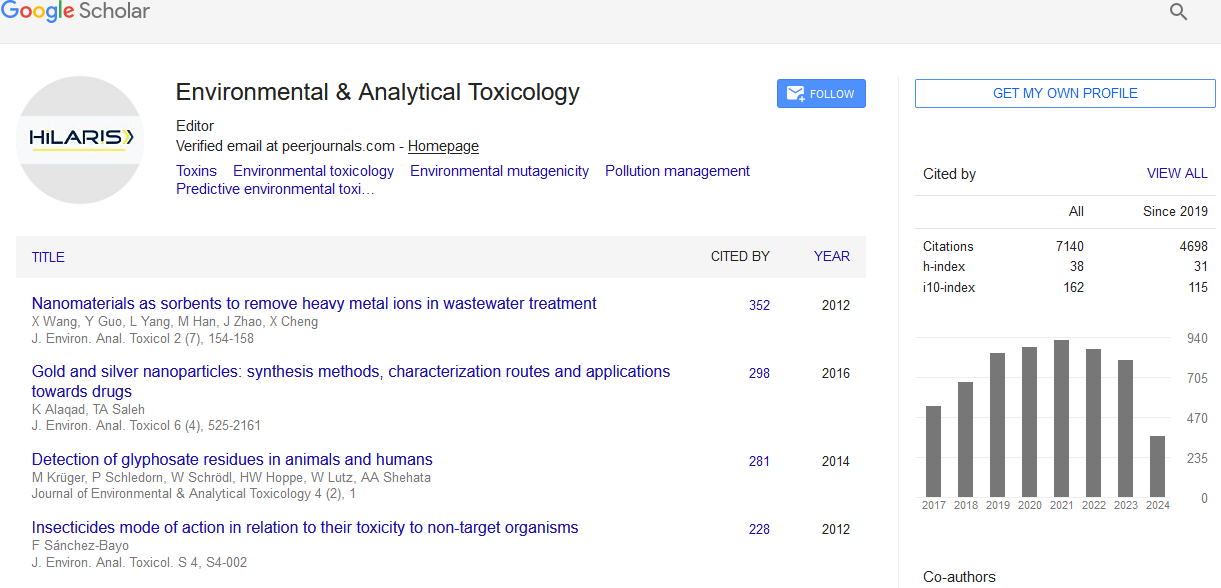
Environmental & Analytical Toxicology received 6818 citations as per Google Scholar report