Commentary - (127) Volume 15, Issue 3
Received: 01-May-2025, Manuscript No. jnt-26-178935;
Editor assigned: 05-May-2025, Pre QC No. P-178935;
Reviewed: 19-May-2025, QC No. Q-178935;
Revised: 22-May-2025, Manuscript No. R-178935;
Published:
29-May-2025
, DOI: 10.37421/2161-0959.2025.15.565
Citation: Ivanov, Pavel. ”Gut-Kidney Axis: A Vicious Cycle in CKD.” J Nephrol Ther 15 (2025):565.
Copyright: © 2025 Ivanov P. This is an open-access article distributed under the terms of the Creative Commons Attribution License, which permits unrestricted use, distribution and reproduction in any medium, provided the original author and source are credited.
The gutâ??kidney axis signifies a vital bidirectional communication pathway that profoundly impacts the progression of chronic kidney disease (CKD). Dysbiosis within the gut microbiome can precipitate the accumulation of uremic toxins, such as indoxyl sulfate and p-cresyl sulfate, which subsequently fuel renal inflammation, oxidative stress, and fibrosis. Conversely, compromised kidney function can exacerbate gut barrier dysfunction and alter microbial composition, thereby initiating a detrimental cycle that accelerates CKD. Therapeutic interventions targeting the gut microbiome, encompassing probiotics, prebiotics, and dietary modifications, demonstrate considerable promise in mitigating CKD progression by reducing uremic toxin levels and enhancing renal outcomes, highlighting the potential of modulating the gut microbiome as a novel therapeutic strategy in nephrology [1].
Uremic toxins originating from gut microbial metabolism stand as principal drivers of kidney damage. For instance, indoxyl sulfate and p-cresyl sulfate accumulate in CKD and exert pro-inflammatory and pro-fibrotic effects on renal cells. These toxins have the capacity to activate signaling pathways that precipitate podocyte injury, endothelial dysfunction, and interstitial fibrosis, consequently contributing to the decline in kidney function. A thorough understanding of the mechanisms through which these toxins inflict harm upon the kidneys is imperative for the development of targeted interventions [2].
In CKD, gut barrier integrity is often compromised, leading to heightened intestinal permeability. This condition, commonly referred to as a 'leaky gut,' permits the translocation of bacterial products and toxins into the bloodstream, thereby contributing to systemic inflammation and further renal injury. Factors such as altered gut motility, diminished mucus production, and modifications in tight junction proteins collectively contribute to this barrier dysfunction. Consequently, the restoration of gut barrier function emerges as a significant potential therapeutic target [3].
The composition and functionality of the gut microbiome are substantially altered in patients with CKD, a state characterized as dysbiosis. This alteration involves a reduction in beneficial bacteria and a concomitant increase in potentially pathogenic microorganisms. These shifts are instrumental in the overproduction of uremic toxins and inflammatory mediators, which collectively exert a negative influence on kidney health. The precise characterization of these microbial changes is crucial for elucidating their role in disease pathogenesis [4].
Probiotics and prebiotics present a promising avenue for therapeutic intervention in CKD through their capacity to modulate the gut microbiome. Probiotics, defined as live microorganisms that provide health benefits, can aid in re-establishing microbial balance, reducing uremic toxin production, and ameliorating gut barrier function. Similarly, prebiotics, which are non-digestible fibers that foster the growth of beneficial bacteria, can also yield positive outcomes. Ongoing clinical investigations are focused on evaluating their efficacy in decelerating CKD progression [5].
Dietary interventions, particularly those designed to modify the gut microbiome, are increasingly being recognized for their importance in CKD management. For example, low-protein diets can diminish the substrate available for gut bacterial protein fermentation, thereby reducing the production of uremic toxins. Conversely, plant-based diets, rich in fiber, can encourage the proliferation of beneficial microbes and enhance gut barrier function. The potential for personalized therapeutic benefits exists through the tailoring of dietary approaches based on individual gut microbiome profiles [6].
The inflammatory consequences stemming from the gutâ??kidney axis are particularly pronounced in CKD. Gut-derived lipopolysaccharides (LPS) can translocate into the systemic circulation, initiating chronic systemic inflammation by activating immune cells. This persistent low-grade inflammation contributes significantly to cardiovascular complications, anemia, and malnutrition, all of which are frequently observed in CKD patients. Targeting the gut to mitigate LPS translocation represents a potential strategy for dampening systemic inflammation [7].
Oxidative stress plays a pivotal role in the progression of CKD, and the gut microbiome is implicated in contributing to this burden. Microbial metabolites have the capacity to induce the generation of reactive oxygen species (ROS) within renal cells, leading to cellular damage and fibrosis. Furthermore, a diminished antioxidant capacity in CKD patients, potentially influenced by gut dysbiosis, can exacerbate oxidative damage. Interventions aimed at reducing the uremic toxin load may also concurrently alleviate oxidative stress [8].
The impact of the gutâ??kidney axis on renal fibrosis is a critical factor in the pathogenesis of CKD. Uremic toxins, such as indoxyl sulfate, have the ability to activate profibrotic signaling pathways within renal interstitial fibroblasts, leading to an increase in extracellular matrix deposition and subsequent scarring. By targeting these toxins or modulating the gut microbiome, it may be possible to attenuate renal fibrosis and preserve kidney function [9].
Therapeutic modulation of the gut microbiome represents a burgeoning frontier in the comprehensive management of CKD. Strategies such as fecal microbiota transplantation (FMT), although still in the nascent stages of investigation for kidney disease, aim to reinstate a healthy microbial ecosystem. Other innovative approaches include the development of specific microbial consortia or engineered bacteria designed to metabolize uremic toxins or bolster gut barrier function. These advanced therapies hold significant potential for fundamentally altering the trajectory of CKD [10].
The gutâ??kidney axis is characterized by a crucial bidirectional communication pathway that significantly influences the advancement of chronic kidney disease (CKD). Gut microbiome dysbiosis can lead to an increase in uremic toxins, including indoxyl sulfate and p-cresyl sulfate, which promote renal inflammation, oxidative stress, and fibrosis. Conversely, impaired kidney function can worsen gut barrier dysfunction and alter the microbial makeup, creating a self-perpetuating cycle that accelerates CKD. Therapeutic strategies focused on the gut microbiome, such as probiotics, prebiotics, and dietary interventions, show promise in slowing CKD progression by reducing uremic toxin levels and improving renal outcomes, underscoring the potential of gut microbiome modulation as a novel therapeutic approach in nephrology [1].
Uremic toxins originating from the metabolic activities of gut microbes are identified as key contributors to kidney damage. For example, indoxyl sulfate and p-cresyl sulfate accumulate in the context of CKD and exert pro-inflammatory and pro-fibrotic effects on renal cells. These toxins can activate signaling pathways that result in podocyte injury, endothelial dysfunction, and interstitial fibrosis, thereby contributing to the overall decline in kidney function. A deep understanding of the mechanisms by which these toxins adversely affect the kidneys is fundamental for developing effective, targeted interventions [2].
In CKD, the integrity of the gut barrier is compromised, leading to increased intestinal permeability. This condition, often termed 'leaky gut,' facilitates the translocation of bacterial products and toxins into the bloodstream, contributing to systemic inflammation and exacerbating kidney injury. Various factors, including altered gut motility, reduced mucus production, and changes in the expression of tight junction proteins, contribute to this compromised barrier function. Therefore, restoring gut barrier function emerges as a critical therapeutic target [3].
The composition and overall function of the gut microbiome undergo significant alterations in CKD patients, a phenomenon known as dysbiosis. This involves a decrease in the abundance of beneficial bacterial species and an increase in potentially harmful microorganisms. These shifts contribute to the excessive production of uremic toxins and inflammatory mediators, which adversely impact kidney health. Characterizing these specific microbial changes is essential for comprehending their precise role in the progression of the disease [4].
Probiotics and prebiotics represent a promising therapeutic strategy for CKD by enabling the modulation of the gut microbiome. Probiotics, which are live microorganisms known to confer health benefits, can assist in restoring microbial equilibrium, reducing the production of uremic toxins, and improving the functionality of the gut barrier. Prebiotics, consisting of non-digestible fibers that stimulate the growth of beneficial bacteria, can also exert positive effects. Clinical studies are actively investigating their effectiveness in decelerating the progression of CKD [5].
Dietary interventions, particularly those aimed at influencing the gut microbiome, are gaining increasing attention in the management of CKD. Low-protein diets, for instance, can reduce the availability of substrates for gut bacterial protein fermentation, thereby decreasing the production of uremic toxins. In contrast, plant-based diets, which are rich in fiber, can promote the growth of beneficial microbes and enhance the integrity of the gut barrier. Tailoring dietary approaches based on an individual's unique gut microbiome profile may offer personalized therapeutic benefits [6].
The inflammatory consequences arising from the gutâ??kidney axis are profound in the context of CKD. Gut-derived lipopolysaccharides (LPS), when translocated into the circulation, can trigger systemic inflammation by activating various immune cells. This chronic, low-grade inflammation is a significant contributing factor to cardiovascular complications, anemia, and malnutrition, which are common comorbidities in CKD patients. Targeting the gut to reduce LPS translocation presents a potential strategy for attenuating systemic inflammation [7].
Oxidative stress plays a substantial role in the progression of CKD, with the gut microbiome contributing to this burden. Microbial metabolites can stimulate the generation of reactive oxygen species (ROS) within renal cells, ultimately leading to cellular damage and fibrosis. Moreover, a reduction in antioxidant capacity observed in CKD patients, potentially influenced by gut dysbiosis, can exacerbate oxidative damage. Interventions that effectively reduce the uremic toxin burden may also concurrently alleviate oxidative stress [8].
The detrimental effect of the gutâ??kidney axis on renal fibrosis is a critical aspect of CKD progression. Uremic toxins, such as indoxyl sulfate, can activate profibrotic signaling pathways in renal interstitial fibroblasts, leading to an increase in extracellular matrix deposition and subsequent renal scarring. By targeting these specific toxins or modulating the gut microbiome, it may be possible to attenuate renal fibrosis and preserve residual kidney function [9].
The therapeutic modulation of the gut microbiome signifies a promising frontier in the management of CKD. Approaches like fecal microbiota transplantation (FMT), though still in the early stages of research for kidney disease, aim to re-establish a healthy microbial ecosystem. Other innovative therapies include the development of specialized microbial consortia or genetically engineered bacteria engineered to metabolize uremic toxins or enhance gut barrier function. These novel therapies hold significant potential for modifying the clinical course of CKD [10].
The gut-kidney axis plays a crucial role in chronic kidney disease (CKD) progression. Gut dysbiosis leads to uremic toxins that cause renal inflammation, oxidative stress, and fibrosis, while impaired kidney function worsens gut barrier issues, creating a vicious cycle. Therapies like probiotics, prebiotics, and dietary changes show promise by reducing toxins and improving kidney health. Uremic toxins such as indoxyl sulfate and p-cresyl sulfate directly damage kidney cells. A compromised gut barrier allows harmful substances into the bloodstream, fueling inflammation. Alterations in gut bacteria contribute to toxin overproduction. Modulating the gut microbiome through interventions like probiotics, prebiotics, specific diets, and potentially fecal microbiota transplantation offers novel therapeutic avenues to slow CKD progression and improve patient outcomes. Reducing systemic inflammation and oxidative stress via gut-targeted strategies is also a key focus.
None
None
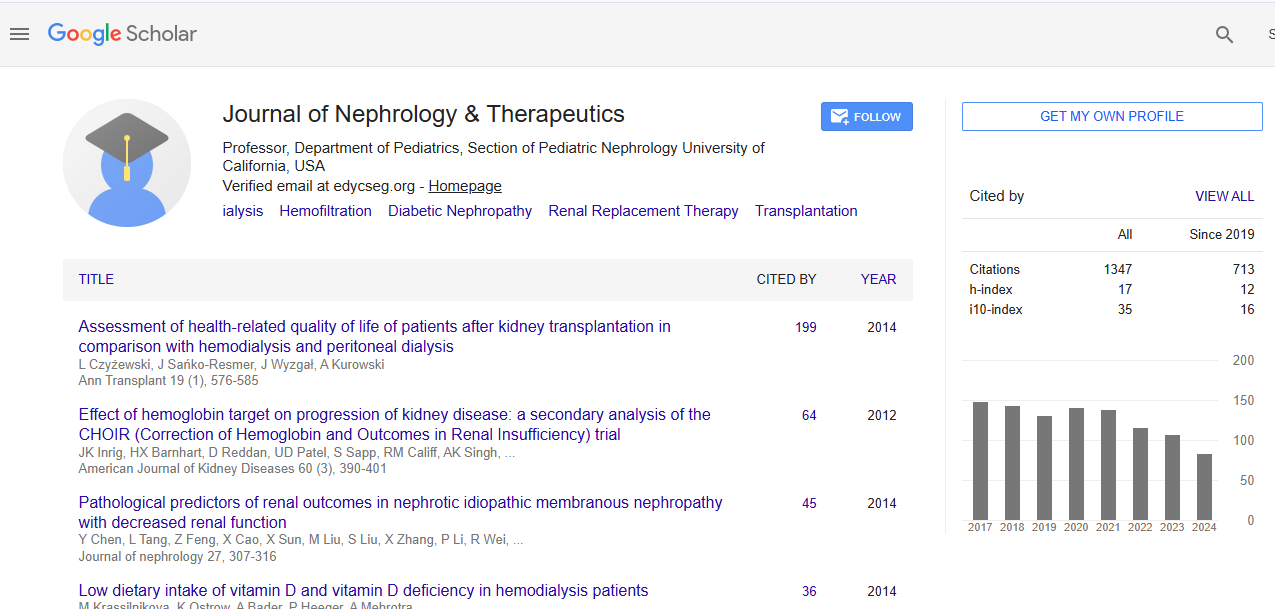
Journal of Nephrology & Therapeutics received 784 citations as per Google Scholar report