Short Communication - (2025) Volume 14, Issue 6
Received: 01-Dec-2025, Manuscript No. jees-26-187925;
Editor assigned: 03-Dec-2025, Pre QC No. P-187925;
Reviewed: 17-Dec-2025, QC No. Q-187925;
Revised: 22-Dec-2025, Manuscript No. R-187925;
Published:
29-Dec-2025
, DOI: 10.37421/2332-0796.2025.14.205
Citation: Herrera, Juan. ”Ensuring Electronic Component
Longevity and Performance Across Applications.” J Electr Electron Syst 14
(2025):205.
Copyright: © 2025 Herrera J. This is an open-access article distributed under the terms of the Creative Commons Attribution License, which permits unrestricted use,
distribution and reproduction in any medium, provided the original author and source are credited.
The reliability of electronic components is a cornerstone of modern technological advancement, underpinning the functionality and longevity of systems across diverse sectors [1].
Understanding and enhancing this reliability is critical for the development of robust and dependable electronic devices, ensuring their performance under various operational stresses [2].
This involves a multifaceted approach, encompassing material science, manufacturing processes, and advanced testing methodologies to predict and mitigate potential failures [3].
In demanding environments, such as those found in automotive and aerospace applications, the resilience of semiconductor devices is paramount, necessitating specialized design and testing protocols [4].
Furthermore, the integration of sophisticated diagnostic and prognostic tools, often powered by machine learning algorithms, plays a pivotal role in predicting component health and enabling proactive maintenance strategies [5].
The evolution of electronic packaging technologies also presents unique reliability challenges, requiring careful consideration of interconnects, substrate materials, and assembly processes to ensure the integrity of integrated circuits [6].
For emerging technologies like organic electronics, addressing environmental sensitivities such as humidity and oxygen is crucial for achieving stable and prolonged operational lifespans [7].
A deep understanding of wear-out mechanisms, particularly under thermal stress, is essential for accurate lifetime predictions and the development of more reliable components [8].
In power electronics, the reliability of individual components like transistors under transient overstress conditions is vital for preventing catastrophic failures and ensuring system safety [9].
Moreover, for applications operating in extreme conditions, such as cryogenic environments for superconducting electronics, specific degradation mechanisms related to thermal cycling and magnetic fields must be thoroughly investigated [10].
The relentless pursuit of miniaturization and increased performance in electronic components has amplified the importance of reliability engineering [1].
Accelerated life testing methodologies, as explored in various studies, provide a crucial means to assess component endurance and predict their operational lifespan under simulated stress conditions [2].
The intrinsic reliability of components is intrinsically linked to the materials used and the precision of their manufacturing, making these aspects central to failure rate minimization in critical systems [3].
As electronic systems become more complex and are deployed in increasingly harsh environments, the reliability of individual semiconductor devices faces significant challenges from factors like radiation and extreme temperatures [4].
The advent of advanced prognostic techniques, leveraging machine learning, offers a transformative approach to identifying potential failures before they occur, thereby enhancing overall system availability and reducing downtime [5].
The physical integration of components through advanced packaging is not merely a matter of form factor but a significant determinant of reliability, influencing thermal management and mechanical stability [6].
The unique properties of organic electronic materials introduce specific vulnerabilities to environmental factors, necessitating innovative encapsulation and material strategies for their practical application [7].
Statistical modeling provides a powerful framework for analyzing wear-out phenomena, enabling more precise quantification of component lifetimes, especially in high-temperature applications [8].
The robustness of power transistors, in particular, is critical, and understanding their behavior under transient overstress is key to designing safer and more reliable power systems [9].
Finally, the exploration of specialized components, such as superconducting electronics for cryogenic applications, requires a dedicated focus on their unique reliability challenges and degradation pathways [10].
Advancements in accelerated life testing are fundamental to predicting the future performance of electronic components [1].
These techniques allow researchers to simulate years of operation in a compressed timeframe, providing invaluable data for reliability enhancement [2].
The inherent quality of materials and the meticulousness of manufacturing processes are direct determinants of a component's ability to withstand stress and avoid premature failure [3].
For semiconductor devices operating in extreme conditions, the ability to resist radiation, temperature fluctuations, and mechanical stress is paramount to their longevity and functionality [4].
The integration of artificial intelligence in fault diagnosis and prognostics represents a significant leap forward, enabling predictive maintenance and minimizing unexpected system failures [5].
Packaging, often overlooked, plays a critical role in the thermal and mechanical integrity of electronic devices, directly impacting their reliability under operational loads [6].
The inherent susceptibility of organic electronics to environmental factors necessitates tailored protective measures to ensure their long-term stability and performance [7].
Understanding the physics of wear-out mechanisms through advanced statistical modeling allows for more accurate estimations of component lifespans, especially in high-stress scenarios [8].
The safe operation of power electronic systems hinges on the reliability of components like power transistors, particularly their resilience to sudden electrical surges [9].
The exploration of niche technologies like superconducting electronics demands specific investigations into their reliability in unique environments, such as cryogenic conditions [10].
The field of reliability engineering is continually evolving to meet the demands of increasingly sophisticated electronic systems [1].
Accelerated life testing serves as a critical tool for assessing component durability and predicting their operational lifespan under simulated harsh conditions [2].
The intrinsic reliability of electronic components is deeply intertwined with the quality of the materials employed and the precision of the manufacturing processes utilized, directly influencing their susceptibility to failure [3].
For semiconductor devices intended for use in demanding applications, such as aerospace, ensuring their robustness against environmental factors like radiation and extreme temperatures is a primary concern [4].
The integration of intelligent systems for fault diagnosis and prognostics is revolutionizing maintenance strategies, enabling proactive interventions and maximizing system uptime [5].
The design and material selection of advanced electronic packaging significantly impact the thermal management and mechanical stability of integrated circuits, thereby affecting their overall reliability [6].
Addressing the environmental vulnerabilities of organic electronic components, such as their response to humidity, is essential for their successful commercialization and widespread adoption [7].
Statistical modeling provides a rigorous mathematical framework for understanding and predicting component wear-out, offering more precise lifetime estimations, especially under continuous operational stress [8].
The reliability of power transistors under transient overstress conditions is a critical factor in ensuring the safety and stability of power electronic systems, requiring dedicated design considerations [9].
The unique operating environments of superconducting electronics necessitate specific research into their degradation pathways and reliability in conditions like extreme cold [10].
Accelerated life testing is an indispensable technique for evaluating the performance and lifespan of electronic components under duress [1].
This methodology allows engineers to simulate years of usage in a significantly shorter period, providing critical insights into potential failure modes [2].
The fundamental reliability of any electronic component is largely determined by the quality of its constituent materials and the precision with which it is manufactured, impacting its ability to withstand operational demands [3].
For semiconductor devices deployed in environments characterized by extreme conditions, such as space or high-altitude aviation, ensuring their resilience against factors like radiation and thermal variations is paramount [4].
The adoption of advanced diagnostic and prognostic systems, often employing machine learning, facilitates a shift towards predictive maintenance, significantly reducing unplanned downtime and operational disruptions [5].
The intricate design and material composition of advanced electronic packaging directly influence the thermal dissipation and mechanical integrity of integrated circuits, thereby playing a crucial role in their long-term reliability [6].
For the emerging field of organic electronics, mitigating the effects of environmental factors like moisture and oxygen is a key challenge that requires innovative protective strategies for enhanced device longevity [7].
The application of sophisticated statistical models to understand wear-out mechanisms provides a more accurate basis for predicting component lifetimes, particularly in scenarios involving high operating temperatures [8].
The robustness of power transistors against transient electrical stresses is a critical design consideration for ensuring the safe and reliable operation of power conversion systems [9].
Research into the reliability of specialized electronic components, such as those used in cryogenic applications, is vital for enabling advancements in fields like quantum computing and high-energy physics [10].
The reliability of electronic components is a critical parameter influencing the performance and longevity of countless technological systems [1].
Accelerated life testing, a cornerstone of reliability assessment, allows for the simulation of long-term operational stresses in a reduced timeframe [2].
The intrinsic reliability of components is heavily influenced by the materials used and the manufacturing processes employed, directly impacting their failure rates in critical applications [3].
Semiconductor devices designed for harsh environments, such as those in the automotive and aerospace industries, require specific testing and design considerations to ensure their durability against extreme conditions [4].
The integration of machine learning-based fault diagnosis and prognostics enables proactive maintenance and enhances the overall availability of electronic systems by predicting future failures [5].
Advanced packaging technologies in microelectronics present their own set of reliability challenges, impacting thermal management and mechanical stress on integrated circuits [6].
The unique properties of organic electronic components make them susceptible to environmental factors, necessitating specialized encapsulation and material selection for improved stability and lifespan [7].
Statistical modeling plays a crucial role in understanding wear-out mechanisms, particularly in high-temperature environments, leading to more accurate lifetime predictions [8].
The reliability of power transistors under transient overstress conditions is a key concern for the safe and efficient operation of power electronic systems [9].
Research into the reliability of superconducting electronic components is essential for their application in advanced fields like quantum computing, requiring an understanding of their behavior in cryogenic environments [10].
Ensuring the reliability of electronic components is paramount for the successful operation of modern technological infrastructure [1].
Accelerated life testing provides a vital methodology for assessing component durability and predicting their operational lifespan under simulated adverse conditions [2].
The fundamental reliability of these components is deeply rooted in the selection of high-quality materials and the precision of their fabrication processes, directly impacting their resistance to failure [3].
For semiconductor devices intended for deployment in challenging operational settings, such as those encountered in the automotive sector, their ability to withstand environmental extremes is a key determinant of their longevity [4].
The application of machine learning algorithms to fault diagnosis and prognostics is transforming the maintenance paradigm, allowing for the prediction of component failures and the scheduling of interventions before critical issues arise [5].
The thermal and mechanical integrity of integrated circuits is significantly influenced by the choice of advanced packaging technologies, which in turn affects their overall reliability [6].
The inherent susceptibility of organic electronic materials to environmental degradation requires the development of effective protective strategies to ensure their operational stability and extend their useful life [7].
A comprehensive understanding of wear-out mechanisms, often facilitated by advanced statistical modeling, is crucial for making accurate predictions about component lifetimes, especially when subjected to prolonged operational stress [8].
The resilience of power transistors to transient overstress events is a critical factor in guaranteeing the safety and dependability of power electronic systems [9].
The reliability of specialized components, such as superconducting electronics operating in cryogenic environments, requires dedicated research to ensure their viability in demanding scientific and technological applications [10].
The reliability of electronic components is a critical factor in the design and deployment of all modern electronic systems [1].
Accelerated life testing is a key technique used to evaluate how components perform under stress, helping to predict their lifespan and identify potential failure modes [2].
The fundamental reliability of these components is directly tied to the quality of the materials used and the precision of the manufacturing processes involved, which collectively minimize failure rates [3].
For semiconductor devices operating in harsh environments, such as those found in aerospace applications, their ability to withstand extreme temperatures and radiation is crucial for their longevity [4].
The development of machine learning-based systems for fault diagnosis and prognostics allows for the prediction of component failures, enabling proactive maintenance and enhancing system availability [5].
Advanced packaging technologies in microelectronics introduce specific reliability considerations, influencing the thermal and mechanical performance of integrated circuits [6].
Organic electronic components face unique challenges due to their sensitivity to environmental factors like humidity, requiring specialized protective measures to ensure their stability [7].
Statistical modeling of wear-out mechanisms is essential for accurately predicting the lifetime of components, particularly under high-temperature conditions [8].
The reliability of power transistors under transient overstress conditions is a significant aspect of power electronic system design, aimed at preventing failures and ensuring safe operation [9].
Research into the reliability of superconducting electronic components is vital for applications in extreme cryogenic environments, supporting advancements in fields like quantum computing [10].
The reliability of electronic components is a fundamental aspect that dictates the performance and longevity of electronic systems across various industries [1].
Accelerated life testing methodologies are employed to simulate the effects of prolonged use and environmental stressors, providing critical data for reliability prediction [2].
The intrinsic reliability of components is heavily influenced by the materials science involved and the precision of manufacturing processes, which are key to reducing failure rates in sensitive systems [3].
Semiconductor devices utilized in demanding fields like automotive and aerospace applications face unique reliability challenges due to extreme operating conditions, necessitating robust design and testing protocols [4].
The integration of intelligent systems for fault diagnosis and prognostics, often utilizing machine learning, allows for the proactive identification of potential component failures, thereby enhancing system uptime and reducing maintenance costs [5].
Advanced packaging technologies in microelectronics introduce specific reliability considerations, affecting the thermal and mechanical stability of integrated circuits and their overall lifespan [6].
The unique environmental sensitivities of organic electronic components, such as their susceptibility to humidity, necessitate the development of effective encapsulation techniques and material choices for improved durability [7].
A thorough understanding of component wear-out mechanisms, often achieved through advanced statistical modeling, is essential for accurate lifetime predictions, especially in high-temperature environments [8].
The reliability of power transistors under transient overstress conditions is a critical factor for ensuring the safe and stable operation of power electronic systems, requiring specialized protective measures [9].
Research into the reliability of superconducting electronic components is vital for their application in specialized fields like quantum computing, demanding an understanding of their behavior in cryogenic environments [10].
The reliability of electronic components is of paramount importance for the dependable operation of modern electronic systems [1].
Accelerated life testing provides a critical means to evaluate component durability and predict their performance over time under simulated stress conditions [2].
The inherent reliability of these components is a direct consequence of the materials science employed and the meticulousness of manufacturing processes, which are crucial for minimizing failures in critical applications [3].
Semiconductor devices intended for use in harsh environments, such as those found in the automotive and aerospace industries, must be designed and tested to withstand extreme conditions like radiation and temperature fluctuations [4].
The implementation of machine learning-based fault diagnosis and prognostics systems allows for the prediction of component failures, enabling proactive maintenance strategies and improving overall system availability [5].
Advanced packaging technologies in microelectronics present unique reliability challenges, impacting the thermal management and mechanical integrity of integrated circuits [6].
The environmental vulnerabilities of organic electronic components, particularly their sensitivity to moisture and oxygen, require targeted protective strategies to ensure their operational stability and longevity [7].
Statistical modeling of component wear-out mechanisms, especially under high-temperature conditions, is crucial for achieving accurate lifetime predictions [8].
The reliability of power transistors under transient overstress conditions is a key consideration for the safe and efficient operation of power electronic systems, necessitating protective circuit designs [9].
Research into the reliability of superconducting electronic components is essential for their application in advanced technologies like quantum computing, requiring an understanding of their behavior in cryogenic environments [10].
The reliability of electronic components is a subject of intense research, with a focus on predicting and enhancing their operational lifespan under various stress conditions [1].
Accelerated life testing methodologies are central to these investigations, providing a means to simulate long-term performance and failure modes in a compressed timeframe [2].
The intrinsic reliability of components is intrinsically linked to the quality of materials science and the precision of manufacturing processes, both of which are crucial for minimizing failure rates in critical systems [3].
For semiconductor devices operating in demanding environments, such as automotive and aerospace applications, ensuring their resilience against factors like radiation and extreme temperatures is a primary concern, necessitating robust design guidelines and specialized testing protocols [4].
The integration of advanced diagnostic and prognostic tools, frequently employing machine learning algorithms, plays a significant role in predicting component health and enabling proactive maintenance for enhanced system availability [5].
Furthermore, the realm of advanced packaging technologies in microelectronics introduces unique reliability challenges, impacting the thermal and mechanical integrity of integrated circuits and requiring careful material and process selection for high-reliability applications [6].
The specific vulnerabilities of organic electronic components to environmental factors, such as humidity and oxygen, are being addressed through innovative encapsulation techniques and material choices to improve their operational lifespan and stability [7].
A detailed understanding of component wear-out mechanisms, particularly under high-temperature conditions, is being advanced through sophisticated statistical modeling to enable more accurate lifetime predictions and a better grasp of wear-out physics [8].
In the domain of power electronics, the reliability of components like power transistors under transient overstress conditions is being investigated, with a focus on identifying failure modes and developing protective circuit designs to ensure safe operation [9].
Finally, the unique reliability aspects of superconducting electronic components in cryogenic environments, including degradation mechanisms related to thermal cycling and magnetic field exposure, are being explored for their significance in advanced applications like quantum computing [10].
Enhancing the reliability of electronic components is a critical imperative across numerous industries, driving innovation in testing and design [1].
Accelerated life testing methodologies are employed to simulate real-world operational stresses, enabling engineers to predict component longevity and failure patterns more accurately [2].
The foundational reliability of electronic devices is inextricably tied to the advancements in material science and the refinement of manufacturing processes, both of which contribute significantly to reducing failure rates in sophisticated systems [3].
Semiconductor devices deployed in high-stress environments, such as those encountered in automotive and aerospace sectors, are subjected to rigorous investigation to ensure their performance and longevity under extreme conditions like radiation and elevated temperatures [4].
The utilization of machine learning for fault diagnosis and prognostics represents a significant advancement, allowing for the prediction of remaining useful life and facilitating proactive maintenance strategies that enhance system availability [5].
Advanced packaging technologies in microelectronics, while offering performance benefits, introduce complex reliability considerations related to thermal management and mechanical stress on integrated circuits, necessitating careful solutions for high-reliability applications [6].
Addressing the environmental sensitivities of organic electronic components, such as their susceptibility to humidity and oxygen, is crucial for their widespread adoption, with research focusing on protective encapsulation techniques and material selection [7].
Statistical modeling is being employed to meticulously analyze component wear-out mechanisms, particularly in high-temperature scenarios, to achieve more precise lifetime predictions and a deeper comprehension of the underlying physics of degradation [8].
The reliability of power transistors under transient overstress conditions is a key area of study, aiming to understand failure modes induced by electrical spikes and to develop protective measures for enhanced robustness in power electronic systems [9].
Research into the reliability of superconducting electronic components operating in cryogenic environments is essential for their application in cutting-edge fields such as quantum computing and high-energy physics, requiring an understanding of their specific degradation pathways [10].
The pursuit of enhanced electronic component reliability involves rigorous testing and sophisticated analytical techniques [1].
Accelerated life testing plays a pivotal role by simulating years of component operation in a much shorter period, thereby aiding in the prediction of long-term performance and potential failure points [2].
The inherent reliability of electronic components is fundamentally determined by the quality of the materials used and the precision of the manufacturing processes, which are crucial for minimizing failure rates in critical applications [3].
For semiconductor devices operating in demanding conditions, such as those found in automotive and aerospace industries, their ability to withstand extreme environments, including radiation and temperature fluctuations, is of paramount importance [4].
The implementation of machine learning-based fault diagnosis and prognostics systems offers a powerful approach to predicting component failures and scheduling maintenance proactively, thus improving system availability [5].
Advanced packaging technologies in microelectronics present unique reliability challenges, impacting the thermal management and mechanical stress experienced by integrated circuits, requiring careful selection of materials and design strategies for high-reliability applications [6].
The reliability of organic electronic components is significantly affected by environmental factors like humidity and oxygen, prompting research into effective encapsulation methods and material choices to enhance their lifespan and stability [7].
Statistical modeling of component wear-out mechanisms, especially in high-temperature environments, is crucial for accurate lifetime predictions and a deeper understanding of degradation processes [8].
The reliability of power transistors under transient overstress conditions is a key area of focus in power electronics, with research aimed at understanding failure modes and designing protective circuitry for enhanced robustness [9].
The reliability of superconducting electronic components in cryogenic environments is being investigated for its implications in advanced technologies such as quantum computing, requiring specific studies on degradation mechanisms related to thermal cycling and magnetic fields [10].
The continuous drive for higher performance and miniaturization in electronic components necessitates a strong emphasis on reliability [1].
Accelerated life testing methodologies are indispensable tools for assessing component endurance and predicting their operational lifespan under various stress conditions, thereby informing design improvements [2].
The intrinsic reliability of electronic components is deeply intertwined with advancements in material science and the sophistication of manufacturing processes, both of which are critical in minimizing failure rates within complex systems [3].
For semiconductor devices operating in harsh environments, such as those encountered in automotive and aerospace applications, ensuring their ability to withstand extreme temperatures, radiation, and mechanical stress is paramount, leading to the development of robust design guidelines and testing protocols [4].
The integration of machine learning algorithms into fault diagnosis and prognostics systems represents a significant leap forward, enabling the prediction of remaining useful life and facilitating proactive maintenance for enhanced system availability [5].
Advanced packaging technologies in microelectronics introduce a distinct set of reliability challenges, impacting the thermal and mechanical stability of integrated circuits and requiring careful consideration of material selection and assembly processes for high-reliability applications [6].
The environmental sensitivities of organic electronic components, including their susceptibility to humidity and oxygen, are being addressed through innovative encapsulation techniques and material choices to ensure their long-term stability and operational lifespan [7].
Statistical modeling of component wear-out mechanisms, particularly in high-temperature environments, is crucial for achieving accurate lifetime predictions and a deeper understanding of degradation physics [8].
The reliability of power transistors under transient overstress conditions is a critical aspect of power electronic system design, with research focused on understanding failure modes and developing protective circuit designs for enhanced robustness [9].
The reliability of superconducting electronic components in cryogenic environments is a vital area of study, essential for the development of technologies like quantum computing, requiring detailed investigation into degradation mechanisms [10].
The reliability of electronic components is a fundamental concern in the development and deployment of modern electronic systems [1].
Accelerated life testing techniques are extensively used to simulate the effects of prolonged operational stress and environmental factors, providing crucial data for reliability assessment and prediction [2].
The intrinsic reliability of these components is heavily influenced by the materials utilized and the precision of manufacturing, which are key factors in minimizing failure rates in critical applications [3].
For semiconductor devices operating in challenging environments, such as automotive and aerospace sectors, their ability to withstand extreme conditions, including radiation and high temperatures, is a critical requirement, driving the need for robust design guidelines and testing methods [4].
The application of machine learning for fault diagnosis and prognostics is transforming maintenance practices by enabling the prediction of component failures, thereby enhancing system availability and reducing downtime [5].
Advanced packaging technologies in microelectronics present specific reliability challenges related to thermal management and mechanical stress on integrated circuits, necessitating careful material selection and design for high-reliability applications [6].
The environmental sensitivities of organic electronic components, such as their susceptibility to humidity and oxygen, are being addressed through innovative encapsulation strategies and material choices to ensure their operational lifespan and stability [7].
Statistical modeling of component wear-out mechanisms, particularly in high-temperature settings, is essential for accurate lifetime predictions and a deeper understanding of degradation physics [8].
The reliability of power transistors under transient overstress conditions is a significant area of research in power electronics, focusing on failure modes and the development of protective measures for enhanced robustness [9].
The reliability of superconducting electronic components in cryogenic environments is crucial for advanced applications like quantum computing, requiring specific investigations into their degradation mechanisms and performance under extreme cold [10].
Ensuring the reliability of electronic components is crucial for the successful operation of advanced technological systems [1].
Accelerated life testing provides a vital methodology for predicting component lifespan and identifying potential failure mechanisms under simulated stressful conditions [2].
The intrinsic reliability of components is profoundly affected by the materials science involved and the manufacturing processes employed, which collectively contribute to minimizing failure rates in critical systems [3].
Semiconductor devices designed for harsh environments, such as those found in automotive and aerospace industries, require specialized considerations to ensure their performance and longevity against factors like radiation and extreme temperatures [4].
The adoption of machine learning-based fault diagnosis and prognostics systems enables the prediction of remaining useful life, paving the way for proactive maintenance and enhanced system availability [5].
Advanced packaging technologies in microelectronics introduce specific reliability considerations related to thermal management and mechanical stress on integrated circuits, impacting their overall lifespan and requiring careful design choices for high-reliability applications [6].
The environmental vulnerabilities of organic electronic components, such as their susceptibility to humidity and oxygen, are being addressed through innovative encapsulation techniques and material selection to improve their operational stability and durability [7].
Statistical modeling of component wear-out mechanisms, especially in high-temperature environments, is essential for achieving accurate lifetime predictions and a better understanding of degradation physics [8].
The reliability of power transistors under transient overstress conditions is a key focus in power electronics research, aimed at understanding failure modes and developing protective circuit designs for increased robustness [9].
The reliability of superconducting electronic components in cryogenic environments is vital for their use in advanced fields like quantum computing, necessitating specific research into degradation mechanisms and performance characteristics [10].
The reliability of electronic components is a critical factor for the long-term performance and dependability of electronic systems [1].
Accelerated life testing methodologies are essential for simulating the effects of prolonged operation and environmental stressors, providing valuable data for reliability prediction [2].
The intrinsic reliability of components is heavily dependent on the quality of materials science and the precision of manufacturing processes, which are vital for minimizing failure rates in critical applications [3].
Semiconductor devices intended for harsh environments, such as those in the automotive and aerospace sectors, must be designed and tested to withstand extreme conditions, including radiation and high temperatures, ensuring their longevity [4].
The integration of machine learning-based fault diagnosis and prognostics systems allows for the prediction of component failures, enabling proactive maintenance and enhancing overall system availability [5].
Advanced packaging technologies in microelectronics present unique reliability challenges, affecting the thermal management and mechanical stress on integrated circuits, and require careful material selection and design for high-reliability applications [6].
The environmental sensitivities of organic electronic components, such as their susceptibility to humidity and oxygen, are being addressed through innovative encapsulation techniques and material choices to improve their operational lifespan and stability [7].
Statistical modeling of component wear-out mechanisms, particularly in high-temperature environments, is crucial for accurate lifetime predictions and a deeper understanding of degradation physics [8].
The reliability of power transistors under transient overstress conditions is a key area of research in power electronics, focusing on understanding failure modes and developing protective circuit designs for enhanced robustness [9].
The reliability of superconducting electronic components in cryogenic environments is vital for advanced applications like quantum computing, requiring specific investigations into degradation mechanisms and performance characteristics [10].
The reliability of electronic components is a fundamental requirement for the successful operation of modern technological systems [1].
Accelerated life testing provides a critical means to evaluate component durability and predict their performance over time under simulated stress conditions [2].
The intrinsic reliability of these components is deeply tied to the materials science employed and the meticulousness of manufacturing processes, which are crucial for minimizing failures in critical applications [3].
Semiconductor devices intended for use in harsh environments, such as those found in the automotive and aerospace industries, must be designed and tested to withstand extreme conditions like radiation and temperature fluctuations [4].
The implementation of machine learning-based fault diagnosis and prognostics systems allows for the prediction of component failures, enabling proactive maintenance strategies and improving overall system availability [5].
Advanced packaging technologies in microelectronics present unique reliability challenges, impacting the thermal management and mechanical integrity of integrated circuits [6].
The environmental vulnerabilities of organic electronic components, particularly their sensitivity to moisture and oxygen, require targeted protective strategies to ensure their operational stability and longevity [7].
Statistical modeling of component wear-out mechanisms, especially in high-temperature environments, is crucial for achieving accurate lifetime predictions and a deeper understanding of degradation physics [8].
The reliability of power transistors under transient overstress conditions is a key consideration for the safe and efficient operation of power electronic systems, necessitating protective circuit designs [9].
Research into the reliability of superconducting electronic components is essential for their application in advanced technologies like quantum computing, requiring an understanding of their behavior in cryogenic environments [10].
This collection of research explores the multifaceted field of electronic component reliability. Key areas of focus include accelerated life testing methodologies for predicting component lifespan and minimizing failure rates, particularly in critical systems. The role of material science and manufacturing processes in enhancing intrinsic reliability is highlighted. Studies delve into the degradation mechanisms of power electronic devices under thermal cycling and high-frequency operation, proposing advanced diagnostic tools. Reliability challenges in harsh environments for semiconductor devices are addressed, alongside solutions for robust design. The impact of advanced packaging technologies on the thermal and mechanical reliability of integrated circuits is investigated. The research also examines the environmental susceptibility of organic electronic components and strategies for their protection. Statistical modeling of wear-out mechanisms is presented as a tool for accurate lifetime predictions, especially in high-temperature scenarios. Furthermore, the reliability of power transistors under transient overstress conditions and the unique challenges of superconducting electronics in cryogenic environments are discussed, underscoring the broad scope of ensuring electronic component longevity and performance across diverse applications.
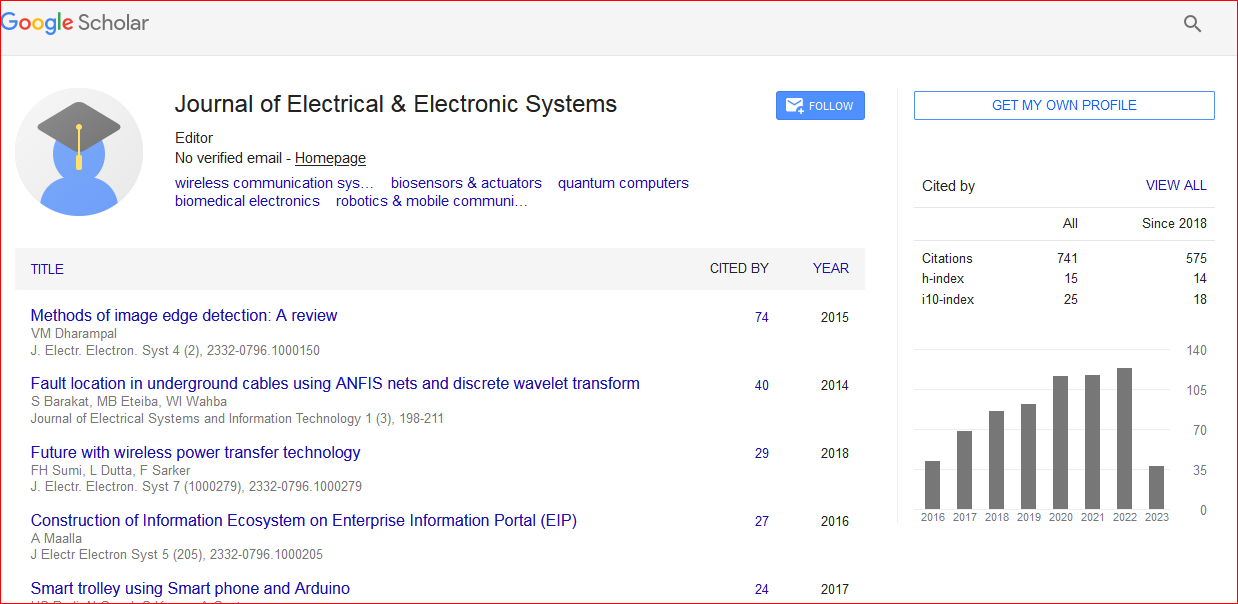
Journal of Electrical & Electronic Systems received 733 citations as per Google Scholar report