Research Article - (2026) Volume 12, Issue 3
Received: 26-May-2026, Manuscript No. jctt-26-189693;
Editor assigned: 28-May-2026, Pre QC No. P-189693;
Reviewed: 10-Jun-2026, QC No. Q-189693;
Revised: 16-Jun-2026, Manuscript No. R-189693;
Published:
26-Jun-2026
, DOI: 10.37421/2471-9323.2026.12.385
Citation: Muntha, Sedratul, Silma Subah, Nathasha Bogoda and Amanda Rao. “Effect of Ageratum Topical Hair Serum on Decreasing Grey Hair
in Adults: An open-label Clinical Trial.” J Cosmo Tricho 12 (2026): 385.
Copyright: © 2026 Rao A, et al. This is an open-access article distributed under the terms of the Creative Commons Attribution License, which permits
unrestricted use, distribution, and reproduction in any medium, provided the original author and source are credited.
Canities, more commonly known as greying hair, results from the progressive loss of melanin in the hair shaft due to dysfunction of follicular melanocytes. Oxidative stress has been identified as a major contributor to melanocyte damage and impaired pigmentation. Accordingly, antioxidant-containing formulations, such as Ageratum conyzoides, may help protect melanocytes from oxidative damage. This study aimed to evaluate the efficacy of a topical Ageratum conyzoides formulation on reducing grey hair in adults over a 12-week period. In this 12-week single arm clinical study, a topical hair serum containing 0.5% Ageratum conyzoides was applied to the scalp twice daily. The primary outcome was the change from baseline of grey hair density in a 1cm2 temporal scalp section measured by manual count from digital photographs. Secondary outcome measures included change from baseline of the percentage of grey hairs by scalp region, and results from a hair self-assessment questionnaire. The safety of the serum was also assessed. Daily topical application over 12 weeks resulted in a significant reduction in grey hair density (p<0.05). There was also a significant reduction in grey hair percentage in the temporal, frontal and vertex regions (p<0.05), as well as a significant decrease in the average across scalp regions (p<0.05). Self-assessment showed observations of improved hair thickness and health, darker hair appearance and reduction of grey hair. These results show that daily application of a topical Ageratum conyzoides formulation over 12 weeks improved the appearance of grey hair.
Canities • Greying hair • Ageratum conyzoides • Topical • Herbal • Oxidative stress
Canities or greying hair is a physiological phenomenon characterized by the progressive loss of hair shaft pigmentation or melanin that ultimately results in grey or white hair. Although canities is widely regarded as a natural hallmark of aging, its onset, progression, and severity vary considerably among individuals and populations due to factors like stress, ethnicity, and genetics [1-4]. It is estimated that between 6 to 23% of populations have 50% grey hair by 50 years old, with the average age of onset being 34 ± 9.6 years in Caucasians [5]. For those with canities, it can affect their confidence and socio-cultural adjustment but can also be an indicator of other conditions such as cardiovascular disease or osteopenia [6]. Therefore, in recent decades, increasing attention has been directed towards understanding the molecular mechanism of greying hair, especially in cases of premature canities [7].
Hair pigmentation is primarily determined by the synthesis and transfer of melanin from melanocytes located in the hair follicle bulb to keratinocytes of the growing hair shaft, and this is dependent on the functional integrity of follicular melanocytes and melanocyte stem cells, along with tightly regulated melanogenic pathways [8, 9]. Greying hair arises when melanin production is impaired due to the dysfunctions in the processes mentioned above. Aging-related changes, genetic predisposition, oxidative stress, nutritional deficiencies, autoimmune mechanisms, and environmental factors have all been implicated in the onset and progression of canities, with oxidative stress being the most prominent contributor [7, 10]. The accumulation of Reactive Oxygen Species (ROS) within hair follicles can overwhelm endogenous antioxidant defences, leading to damage to melanocytes and the surrounding microenvironment [11]. Therefore, strategies aimed at reducing oxidative stress and, consequently, preserving melanocyte viability have emerged as promising approaches for delaying or reversing greying hair [10].
While canities do not directly pose any direct threat to overall health, its impact on humans extends beyond biology. For example, canities is often perceived as a visible marker of aging, which can adversely affect self-esteem, body image, and psychological well-being, particularly in individuals experiencing premature canities [12]. To mask this issue, many individuals seek regular use of synthetic hair dyes. However, long term use of chemical dyes has raised concerns regarding allergic reactions, scalp irritation, and potential toxic effects, underscoring the need for safer, biologically active alternatives [13].
In this context, medicinal plants have gained increasing interest as potential natural interventions for hair disorders. Ageratum conyzoides (A.conyzoides), from the Ageratum genus, is a herb that grows in tropical and subtropical areas. It has traditionally been used for its medicinal benefits and pharmacological effects for a wide range of conditions that include headaches, infection, wound healing, and diarrhea [14]. A. conyzoides contains phytochemical substances such as sterols and lignan, and its essential oil constituents contain saponins, quercetin, and alkanes [15]. Evidence shows that phytochemicals, such as those found in A. conyzoides, can directly scavenge reactive oxygen species, control DNA repair, and modulate signalling pathways [16]. Therefore, there is a possibility that A. conyzoides may have a positive impact on those with canities.
There is no current research studying the effects of A. conyzoides on grey hair; however, there are studies that show its beneficial effects on hair growth. Two studies conducted by Clayton et al. found that both an oral and topical application of A. conyzoides significantly increased hair growth and density when compared with a placebo. It was shown that A. conyzoides could inhibit 5a-reductase and reduce prostaglandin PGD2, which are both linked to hair growth [17, 18]. Based on the limited research on the effects of A. conyzoides on hair growth and the lack of information in relation to grey hair, the current study aims to assess the effectiveness of an A. conyzoides topical hair serum on grey hair. It is hypothesised that those using the investigational product will show a decrease in the overall number of grey hairs.
The study was an open-label, single-arm clinical trial conducted over a 12-week period to evaluate the effect of Ageratum topical hair serum on grey hair in adults. Ethical approval was obtained prior to study initiation (Approval number 2024-03-287). Sixty-five adults from Brisbane, Queensland, who met the inclusion criteria were enrolled in the study. All participants had between 10-50% grey hair in the temporal scalp region as assessed by comparison to the Grey Hair Scale. Exclusion criteria included having over 50% grey hair in any scalp region; current use of topical hair/scalp medications (e.g., minoxidil); scalp conditions or genetic diseases contributing to baldness; use of hair dyes in the past 2 months; history of Cicatricial alopecia; serious illnesses (e.g., mood disorders, neurological disorders, kidney/liver/heart conditions); unstable illnesses (e.g., diabetes, thyroid dysfunction); current malignancy (excluding Basal Cell Carcinoma) or chemotherapy/radiotherapy within 2 years; use of anticoagulants (e.g., Warfarin, low-dose aspirin); active smoking, nicotine use, or drug abuse; chronic alcohol use (>14 drinks/week); pregnancy, up to 12 months postpartum, or lactation; allergic to product ingredients; participation in another trial within the past month; or any condition deemed unsuitable by the investigator. Concomitant medications (prescription, OTC, vitamins, minerals, herbals) were permitted except for topical hair/scalp treatments but had to be reported to the trial coordinator.
Participants were provided with Ageratum topical hair serum containing 0.5% A. conyzoides and were required to apply 2 teaspoons of gel onto the scalp twice a day (morning and evening) for the duration of the study. Participants were required to visit the study site at baseline (Week 0), Week 4, Week 8, and Week 12 for assessment of Grey Hair Density, Percentage of Grey Hair, Hair Self-Assessment Questionnaire and safety monitoring. Grey Hair Density was measured in a 1 cm² temporal scalp section. Hair was pulled back if needed and measured with a ruler placed lightly against the participant’s ear and positioned to outline a precise 1 cm² area beginning at the upper edge of the ear. A photograph of the section was captured, and the number of visible grey hairs within it was counted manually.
The Percentage of Grey Hair was assessed in the frontal, vertex, occipital, left temporal, and right temporal regions via standardized photography and compared to the Grey Hair Scale. Photography occurred in a controlled room with no natural light and consistent artificial lighting to avoid shadows or direct illumination on the target area. Participants were required to sit in a marked position, while an SLR camera on a tripod used fixed settings (non-auto) for consistency. Multiple photographs from at least two angles were taken to ensure accuracy. Total scalp grey hair percentage was calculated by the average of all 5 regions. Participants completed a Hair Self-Assessment Questionnaire at Weeks 4, 8, and 12. It is a short self-reported questionnaire containing four questions related to grey hair and overall hair health condition.
Adverse Events (AEs), vital signs (blood pressure, heart rate), medication use, and dosing compliance were monitored at all visits post-baseline. All grey hair assessments were blinded, photographs were uniquely identified with no participant or visit details stated and scored in random order by an investigator uninvolved in participant interactions. All statistical analyses were performed using GraphPad Prism (version 11; GraphPad Software, San Diego, CA, USA). The primary endpoint was the change from baseline to Week 12 in grey hair density, calculated for each participant as the reduction from baseline values. Changes from baseline were analysed using paired t-tests and presented as mean ± Standard Deviation (SD). Statistical significance was defined as a two-sided p-value < 0.05. All analyses were conducted on the per-protocol population, defined as participants who completed both baseline and Week 12 assessments.
Sixty-five (65) participants were enrolled, with 56 (31 females, 25 males) completing the study (Figure 1). One participant was withdrawn due to an adverse event, two were lost to follow up, two did not like using the product, and 4 withdrew for personal reasons. The demographic characteristics of the participants are presented in Table 1.
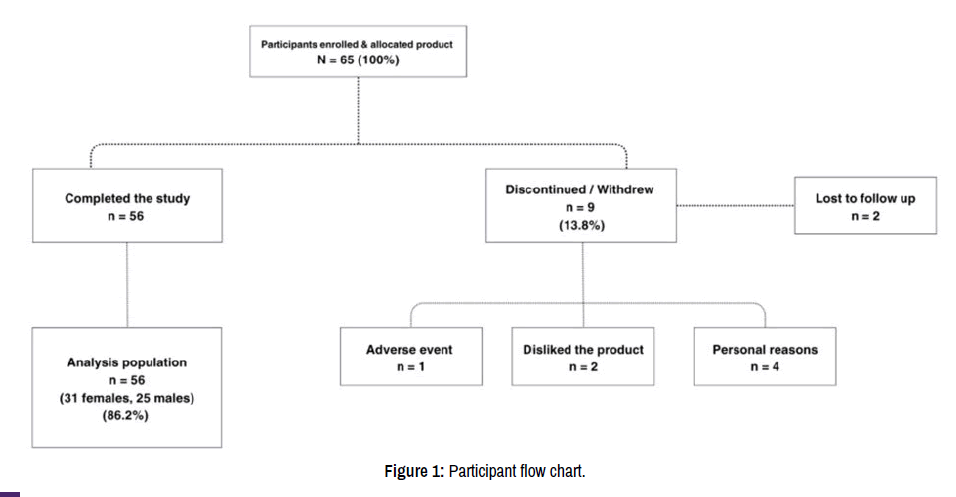
Figure 1. Participant flow chart.
| Characteristic | Overall (N = 56) | Female (n = 31) | Male (n = 25) |
|---|---|---|---|
| Gender, n (%) | |||
| Female | 31 (55.4%) | 31 (100%) | — |
| Male | 25 (44.6%) | — | 25 (100%) |
| Age (years) | |||
| Mean (SD) | 54.6 (11.0) | 56.5 (11.3) | 52.3 (10.6) |
| Median | 54.0 | 56.0 | 53.0 |
| Range (Min–Max) | 31–79 | 36–79 | 31–69 |
| Age group, n (%) | |||
| 18–39 | 6 (10.7%) | 4 (12.9%) | 2 (8.0%) |
| 40–49 | 13 (23.2%) | 4 (12.9%) | 9 (36.0%) |
| 50–59 | 17 (30.4%) | 11 (35.5%) | 6 (24.0%) |
| 60–69 | 16 (28.6%) | 8 (25.8%) | 8 (32.0%) |
| 70+ | 4 (7.1%) | 4 (12.9%) | 0 (0.0%) |
Table 1: Demographic Characteristics of Participants.
Primary outcome: Grey hair density
Grey hair density in the 1 cm² temporal scalp section decreased significantly in the whole group from baseline to Week 12 (p<0.05). The total reduction was 15.5%, with males showing a 17.4% reduction and females showing 12.8%. This variation between males and females is likely due to differences in their initial grey hair counts, with men showing a higher average count at baseline (Table 2).
| Measurement Average (SD) | Baseline | Week 12 (SD) | % Reduction | Paired T-test |
|---|---|---|---|---|
| Total | 95.5 (68.6) | 80.7 (67.0) * | -15.5% | p = 0.031 |
| Female | 71.2 (39.8) | 62.1 (34.0) * | -12.8% | p = 0.034 |
| Male | 123.5 (83.7) | 102.0 (87.5) | -17.4% | p = 0.205 |
Table 2: Grey Hair Count - Number of Hairs per 1 cm² of Temporal Scalp.
Secondary outcome: Grey hair percentage by scalp region
A significant reduction of grey hair percentage occurred in the temporal, frontal, and vertex regions (p<0.05), with minimal change in occipital. The overall average reduction was 8.9% (p<0.05), across all scalp regions indicating overall improvement in grey hair appearance (Table 3) (Figure 2 and Figure 3).
| Region | Baseline% | Week 12 % | Change | % Reduction | Paired T-Test |
|---|---|---|---|---|---|
| Temporal | 51.2 | 46.2* | -5.0 | -9.8% | p < 0.001 |
| Frontal | 41.8 | 36.8* | -5.0 | -12.0% | p = 0.001 |
| Vertex | 43.2 | 38.8* | -4.4 | -10.1% | p = 0.001 |
| Occipital | 28.9 | 28.6 | -0.3 | -1.2% | p = 0.781 |
| Average All Regions | 41.3 | 37.6* | -3.7 | -8.9% | p = 0.0003 |
Table 3: Grey Hair Percentage by Scalp Region.
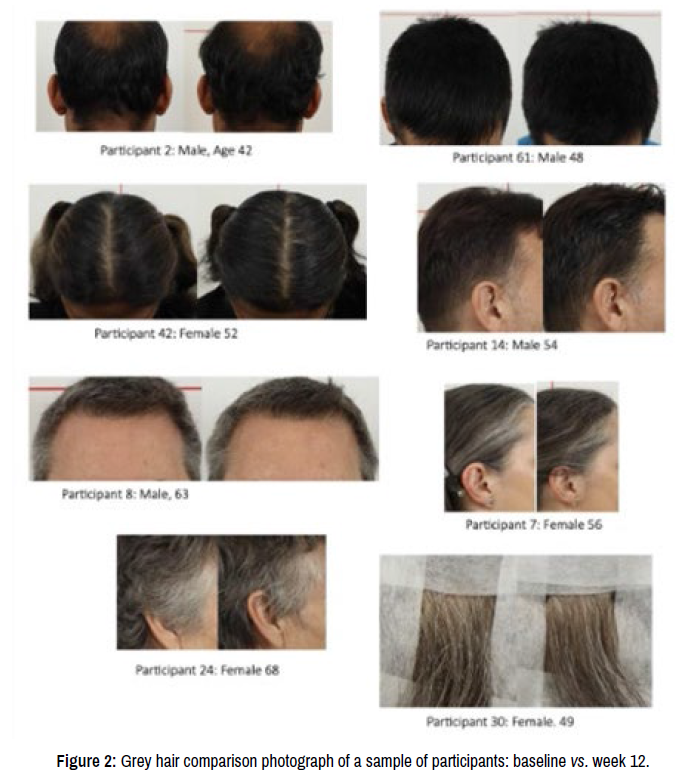
Figure 2. Grey hair comparison photograph of a sample of participants: baseline vs. week 12.
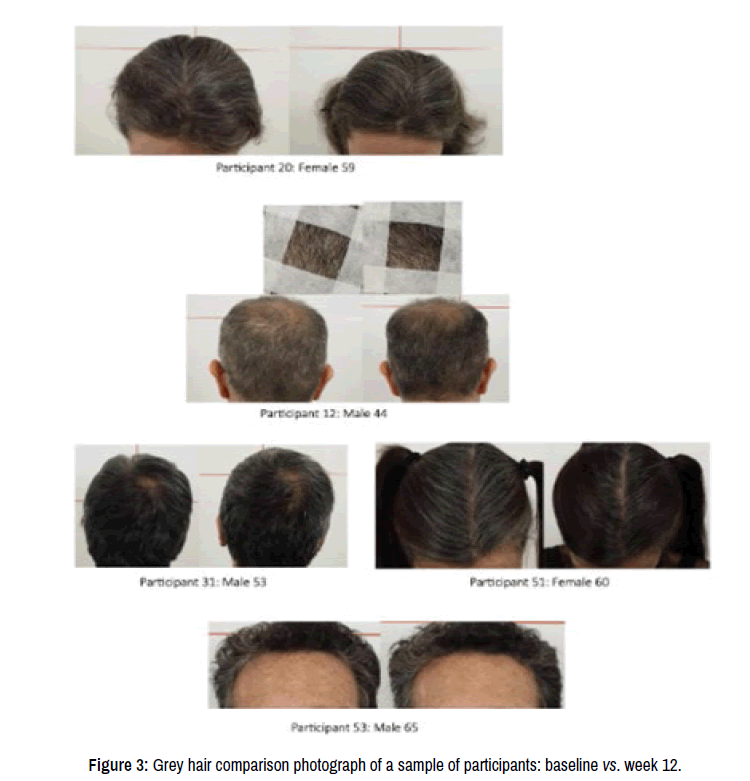
Figure 3. Grey hair comparison photograph of a sample of participants: baseline vs. week 12.
Secondary outcome: Hair self-assessment
At Week 12, 67.8% of participants reported improvement in hair thickness and health, 41.1% of them reported darker hair appearance, 35.7% of them perceived reduction in grey hair, and 30.4% noticed darker roots. Responses varied slightly by gender, with males reporting higher agreement on thickness/health (Table 4).
| Item | Agree % | Strongly Agree % | Unsure % | Disagree % | Strongly Disagree % |
|---|---|---|---|---|---|
| Less grey hair | 32.1 | 3.6 | 39.3 | 21.4 | 3.6 |
| Hair looks darker | 37.5 | 3.6 | 33.9 | 25.0 | 0.0 |
| Roots growing darker | 26.8 | 3.6 | 46.4 | 21.4 | 1.8 |
| Hair looks thicker and healthier | 46.4 | 21.4 | 23.2 | 8.9 | 0.0 |
Table 4:Hair Self-Assessment Questionnaire at Week 12 (All Participants, n=56).
Adverse events
Five adverse events were reported. One participant developed small pimple-like bumps on the forehead where excess product accumulated, and another experienced pimple-like growth with mild redness and dryness on the scalp. Both product-related events were mild in severity and were resolved completely, one after temporary discontinuation of the product as advised by the study doctor. The remaining three events include an arm infection treated with antibiotics, a shoulder injury from exercise, and a non-itchy lip swelling/lesion, were assessed as not related or unlikely related to the investigational product. No serious adverse events occurred, and there were no clinically significant changes in vital signs (blood pressure or heart rate). Overall, the Ageratum topical hair serum was well tolerated, with only one participant withdrawing due to a product-related adverse event.
This 12-week, single-arm clinical study evaluated the effects of a topical A. conyzoides formulation on grey hair density in adults with canities. Over the treatment period, there was a significant reduction in grey hair density, with an overall 15.5% reduction from baseline. This was observed alongside significant decreases in grey hair percentage in the temporal, frontal and vertex regions. The occipital region did not show a significant change. Nevertheless, the average decrease across regions also reached significance. In addition to objective measurements, participants reported perceived changes in hair quality in a Hair Self-Assessment Questionnaire at week 12. More than two-thirds noted enhanced hair thickness and health. However, only approximately a third reported reduced grey hair or darker appearing roots, and fewer than half reported darker hair appearance.
Across these categories, approximately a quarter of participants disagreed with improvements. It is important to note however, that a substantial proportion of participants were uncertain about improvements across the grey hair perception items, which could suggest an inability to perceive the objectively measured improvements. This may be due to a difficulty in self-assessing subtle changes in hair pigmentation. The strong perceived improvement in hair thickness and health indicates that participants noticed marked changes in overall hair quality. Given that cosmetic appearance is a key concern for individuals with greying hair, perceived improvements are an important outcome measure. As the present study showed that a notable proportion of participants reported being unsure of the improvements, future investigations would perhaps benefit from a longer duration to allow for a more noticeable differences to accumulate.
Earlier studies of A. conyzoides have demonstrated its efficacy in hair growth outcomes, suggested to be attributed to the reduction of 5a-reductase [17-19]. Lim et al also showed that A. Conyzoides Extract (ACE) enhanced antioxidant activity in human follicle dermal papilla cells by upregulating the expression of antioxidant enzymes, SOD1, SOD2 and GPx. Additionally, ACE treatment increased ALDH2 activity, a marker of cellular detoxification and stress response, in human oral mucosa-derived stem cells in a dose-dependent manner19. Despite these investigations on hair growth, the effects of A. conyzoides on hair pigmentation have not previously been evaluated in a clinical setting. The findings of the present study therefore introduce a potential novel application of this formulation in the management of canities. The clinical improvements observed in this study may reflect the antioxidant activity attributed to A. conyzoides. Given that oxidative stress has been implicated in melanocyte dysfunction, interventions that possess antioxidant properties may help mitigate oxidative damage and maintain melanocyte function [10]. Nevertheless, the present study did not directly assess melanocyte function or oxidative stress biomarkers. Future studies should therefore incorporate these measurements to better elucidate the underlying mechanisms of action.
Several limitations of this study should be noted when interpreting the findings. The single-arm design of the study meant that a placebo control was not included, therefore making it difficult to rule out natural hair cycle variations or expectation effects. The sample size, whilst sufficient to detect statistical significance overall, limits the power of subgroup analyses, for instance in the comparison between genders. As mentioned earlier, participants were unable to discern improvements in several categories of the Hair Self-Assessment Questionnaire, which could indicate a longer study duration is needed for changes in pigmentation to become noticeable to participants. Despite the limitations, this study provides preliminary evidence for the efficacy of A. conyzoides in reducing grey hair density in adults. Together with previous studies demonstrating the beneficial effects on hair density and hair loss [17, 18], these findings highlight the potential of A. conyzoides as a multifunctional ingredient for supporting overall hair health. Future placebo-controlled studies with mechanistic assessments are needed to confirm these findings and further define its mode of action. Additionally, assessing whether the formulation is efficacious between different hair types is also warranted.
This preliminary study provides clinical evidence for the efficacy of a topical formulation of A. conyzoides in reducing grey hair density in adults with canities, extending the known benefits of this ingredient beyond hair growth and loss.
The study was funded by Gencor Pacific, Hong Kong.
Informed consent was obtained from all subjects involved in the study.
Data is available from the authors on request.
N/A.
Author A.R. declares that the research was conducted in the absence of any commercial or financial relationships that could be construed as a potential conflict of interest. Authors S.M, S.S., and N.B. are employees of the study sponsor (Gencor Pacific), however, had no involvement in the study design, data collection, data analysis, or interpretation of results.
Google Scholar, Cross Ref, Indexed at
Google Scholar, Cross Ref, Indexed at
Google Scholar, Cross Ref, Indexed at
Google Scholar, Cross Ref, Indexed at
Google Scholar, Cross Ref, Indexed at
Google Scholar, Cross Ref, Indexed at
Google Scholar, Cross Ref, Indexed at
Google Scholar, Cross Ref, Indexed at
Google Scholar, Cross Ref, Indexed at
Google Scholar, Cross Ref, Indexed at
Google Scholar, Cross Ref, Indexed at
Google Scholar, Cross Ref, Indexed at
Google Scholar, Cross Ref, Indexed at
Google Scholar, Cross Ref, Indexed at
Google Scholar, Cross Ref, Indexed at
Journal of Cosmetology & Trichology received 180 citations as per Google Scholar report