Research Article - (2026) Volume 10, Issue 3
Received: 05-Sep-2024, Manuscript No. IJPHS-24-147427;
Editor assigned: 09-Sep-2024, Pre QC No. IJPHS-24-147427 (PQ);
Reviewed: 24-Sep-2024, QC No. IJPHS-24-147427;
Revised: 02-Feb-2026, Manuscript No. IJPHS-24-147427 (R);
Published:
09-Feb-2026
, DOI: 10.37421/2736-6189.2026.11.445
Citation: Wogayehu, Belachew Tekleyohannes, Tadesse Sisay, Asmamaw Malede, and Mesfin Gebrehiwot, et al. "Chronic Respiratory Symptoms, Pulmonary Function Parameters, and Associated Factors among Small-Scale Woodworkers in Debre Berhan City, Ethiopia: Cross-Sectional Study." Int J Pub Health Safe 10 (2025): 445.
Copyright: © 2025 Wogayehu BT, et al. This is an open-access article distributed under the terms of the creative commons attribution license which permits
unrestricted use, distribution and reproduction in any medium, provided the original author and source are credited.
Background: Inhalable wood dust is one of the most common causes of chronic respiratory disorders. Globally, more than 2.4 million workers die from work-related illnesses and accidents annually. Few studies on occupational health hazards have been conducted in Ethiopia. The purpose of this study is to determine the prevalence of chronic respiratory symptoms, pulmonary function parameters, and associated factors among workers in small wood manufacturing shops in Debre Berhan city in Ethiopia.
Methods: An institution-based cross-sectional study was conducted among 357 woodworkers in Debre Berhan city from June 20 to August 10, 2022. A simple random sampling technique was used to select woodworkers. A pre-tested, structured questionnaire adapted from the American Thoracic Society, an observational checklist, and a wet spirometer were used to collect data. Collected data were entered into Epi-Data version 4.6 and analyzed using STATA 14. A multivariable binary logistic regression model with 95% CI and p value<0.05 was employed to identify associated factors of chronic respiratory symptoms.
Results: The prevalence of chronic respiratory symptoms among woodworkers of Debre Berhan was 59% (95% CI: 54.3-64.5). Not utilizing respiratory protective equipment (AOR=4.29, 95% CI: 2.283-8.062), work experience between 5 and 9 years (AOR=4.77, 95% CI: 2.216-10.276), work experience equal to or greater than 10 years (AOR=9.51, 95% CI: 3.699-24.428), and not obtaining occupational health and safety training (AOR=2.98, 95% CI: 1.534-5.779) were significant factors of chronic respiratory symptoms. The mean ratio of forced expiratory volume in one second to forced vital capacity among woodworkers who developed chronic respiratory symptoms was 66.3 ± 1.93.
Conclusion: Prevalence of chronic respiratory symptoms among woodworkers was high. Not utilizing respiratory protective equipment, long work experience, and not taking occupational health and safety training were identified factors. In addition, air circulation was limited at work places of woodworkers who developed symptoms. Preventive programs need to emphasize the utilization of respiratory protective equipment and ventilation systems at work places.
Chronic respiratory symptoms • Wood dust • Wood workers
AOR: Adjusted Odds Ration; FEV1: Forced Expiratory Volume in One second; FVC: Forced Vital Capacity; MSME: Micro Small and Medium Enterprise; SE: Standard Error
One of the most prevalent occupational health problems among workers in the wood products manufacturing industry is the presence of chronic respiratory symptoms resulting from the inhalation of dust. Particularly, the production of furniture, doors, beds, tables, and windows has been associated with chronic cough, chronic phlegm, chronic wheezing, breathlessness, and chest pain [1]. Wood dust has been strongly linked to lung function impairment [2]. The accumulation of dust in the lungs causes occupational respiratory disorders. The small dust particles entering the lungs become deposited in the alveoli. The oxygen retaining capacity of the lungs may be reduced by the accumulation of dust in the lymph, causing damage to the alveoli [3]. Globally, chronic respiratory disorders such as Chronic Obstructive Pulmonary Disease (COPD) are the third most prominent cause of mortality, causing 3.2 million deaths a year, and in low and middle-income countries nearly 90% of COPD fatalities occur in people under the age of 70 [4]. According to the World Health Organization, occupational risks accounted for 2.1% of all deaths and 2.7% of all global disease burdens in 2015 [5]. In 2016 non-communicable diseases in Ethiopia accounted for 39% of all deaths and chronic respiratory diseases accounted for 2% [6].
A report by the International Agency for Research on Cancer showed that wood dust is carcinogenic and that at least 2 million people in the world are exposed to wood dust at their work places [7]. Disability and mortality rates from respiratory diseases are increasing world-wide [8].
Studies conducted in Malaysia [9], Iran [10], Myanmar [3], Nigeria [11], and Ethiopia [12] showed reductions in the pulmonary function parameters Forced Expiratory Volume in one second (FEV1), Forced Vial Capacity (FVC), and the ratio of Forced Expiratory Volume in one second to Forced Vital Capacity (FEV1/FVC) among industry workers. According to the Central Statistics Authority of Ethiopia, about 6.9% of the workforce in the country works in the industrialized sectors manufacturing wood, metal, and leather [13]. In Ethiopia, workers in small companies were found to be more susceptible to health related problems than those in medium-sized and large companies, resulting in their workers incurring large numbers of healthcare visits and high expenditures for diagnosis and treatment [14]. The number of small woodworking firms in the country is rapidly increasing. Studies conducted in Ethiopia have reported a high prevalence of chronic respiratory symptoms among woodworkers [1,15,16]. However, these studies did not investigate chronic respiratory symptoms, pulmonary function parameters, and associated factors among small-scale woodworkers. This study aims to assess chronic respiratory symptoms, pulmonary function parameters and its associated factors among woodworkers in Debre Berhan city in Ethiopia. With this study, three research questions were addressed.
• What is the prevalence of chronic respiratory symptoms among small-scale woodworkers in Debre Berhan city, Ethiopia?
• What are the pulmonary function parameters among small-scale woodworkers in Debre Berhan city, Ethiopia?
• What are the factors associated with at least one chronic respiratory symptom among small-scale woodworkers in Debre Berhan city, Ethiopia?
Study setting
Debre Berhan is a city in the central Ethiopian highlands at an altitude of 2,840 m in North Shewa Zone of Amhara Region, about 130 km Northeast of Addis Ababa. The city had a total population of 160,408 living in five sub-cities in 2020 G.C; 73,929 were males and 86,479 females. The average annual temperatures during the day and night are 20.7°C and 8.2°C. Average annual rainfall is 1219 mm and the mean relative humidity is 31% (Figure 1) [13].
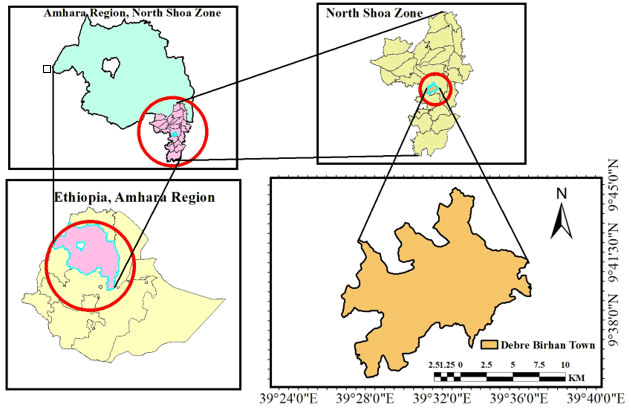
Figure 1. Map of the study area.
Study design and period
An institution-based cross-sectional study was conducted to assess prevalence of chronic respiratory symptoms, pulmonary function parameters, and associated factors among small-scale woodworkers of Debre Berhan city from June 20 to August 10, 2022.
Source population, inclusion and exclusion criteria
All woodworkers of small shops in Debre Berhan city constituted the source population and all woodworkers in each sub-city made up the study population. Woodworkers who had worked for at least one year were included in the study. Woodworkers who had acute illnesses; who had had chest/abdominal surgery; or who had confirmed chronic respiratory disease such as chronic bronchitis, asthma, chest illness, chest injury, or pneumonia before they worked in wood manufacturing; and workers with a previous history of dust exposure were excluded from the study.
Sample size determination and sampling procedure
The sample size for this study was computed by using a single population proportion formula with the following assumption: Prevalence of chronic respiratory symptoms (p=69.8%) was taken from a study conducted in Addis Ababa.
n=((Zα/2)2 × P(1-P))/d2
Where, n=is the required optimum sample size, P=the prevalence of chronic respiratory symptoms and d=5% margin of error.
After accounting for a 10% non-response rate, the final sample size was 357.
The total numbers of small woodworking shops and woodworkers in each sub-city was obtained from the administration offices of Micro, Small, and Medium Enterprises (MSMEs) in each sub-city. Proportional allocation was used to determine the number of woodworkers from each sub-city’s MSME office for selection of study subjects. Finally, using the lists of woodworkers from each sub-city as a sampling frame, the required number of woodworkers was selected by using simple random sampling.
Outcome and explanatory variables
Outcome variables were of two types:
• Chronic respiratory symptoms.
• Pulmonary function parameters.
Explanatory variables fell into four categories: Socio-demographic, behavioral, occupational, and housing.
Socio-demographic factors: Sex, age, marital status, religion, education status, household size, and wealth index.
Behavioral factors: Smoking, khat (Catha edulis) chewing, alcohol consumption, and utilization of respiratory protective equipment.
Occupational factors: Duration of employment, number of working hours, and Occupational Health and Safety (OHS) training.
Housing conditions: Type of floor material, type of building material, number of windows in each bedroom, presence/absence of a separate kitchen, type of energy used at home, and number of persons per sleeping room.
Operational definitions
Chronic respiratory symptoms: One or more of the symptoms of chronic cough, chronic phlegm, chronic wheezing, chronic breathlessness, and chronic chest pain lasting at least three months in one year.
Small woodworking shop: A facility that employs 6-30 workers, including the owner and other family members, and performs different activities using wood as a raw material to produce furniture and other household items, including doors, beds, tables, and windows [17,18].
Chronic cough: It is defined in epidemiology as coughing 4–6 times per day for four or more days of the week or coughing when rising in the morning or during the remainder of the day/night for at least three months in a year [19].
Chronic breathlessness: Being out of breath when hurrying or walking up a slight hill, walking more slowly than people of the same age, stopping for breath after walking a few minutes, and becoming breathless when leaving the house and during dressing or undressing for at least three months in a year.
Chronic chest tightness: Chest pain with mucus production that kept worker off work in the past one year [20].
Chronic wheezing: Experiencing whistling breathing for at least three months in a year.
Chronic phlegm: Sputum expectoration on four or more days of the week for at least three months in a year.
Current smokers: Workers who smoked at the time of the study or had stopped smoking less than one year before.
Ex-smokers: Workers who had quit at least 1 year before the study.
Never smokers: Workers who used no cigarette.
Current chewers: Workers who chew at the time of the study or had stopped chewing less than one year before the study time.
Ex-chewers: Workers who had quit at least 1 year before the study.
Never chewers: Workers who used no khat.
Risky alcohol drinking behavior: It is defined as the consumption of any alcoholic beverages almost every day in the last 12 months before the interview.
Non-risky drinking behavior: Defined as those who have never drunk before (“lifetime abstainers”), those who drunk at least once a week or less than once a week in the last 12 months, and those who have not drunk in the past 12 months.
FVC: The maximum volume of gas exhaled from the position of maximal inspiration by means of a rapid, maximally forced expiratory effort, expressed in liters.
FEV1: The volume of gas exhaled during the first second of the FVC maneuver, expressed in liters.
FEV1/FVC%: The observed FEV1 expressed as the percentage of observed FVC (FEV1/FVC × 100). FEV1/FVC ratio <70% was the cutoff point for the determination of presence or absence of air flow limitation.
Data collection tools and procedures
Data were collected with the use of a structured questionnaire adapted from the respiratory questionnaire developed by the American Thoracic Society and the National Heart and Lung Institute Division of Lung Disease, an observational checklist, and a wet spirometer. Data were collected in face-to-face interviews using the questionnaire, direct observations of work place/work area characteristics, and direct measurement of pulmonary function parameters of woodworkers. Before actual data collection, six data collectors (four BSc degree holders in occupational health and safety and two BSc nurses) were trained for two days on data collection methods and ethical issues. Data on anthropometric measurements and pulmonary function parameters were also collected. As recommended by the American Thoracic Society, a wet spirometer was used to measure the pulmonary function parameters (i.e., FVC, FEV1, and FEV1/FVC) of the woodworkers. Before the pulmonary function test, the weight (kg) and height (cm) of the woodworkers were measured using a standardized portable scale and a stadiometer with portable field survey scales, respectively. Evaluation of each parameter was performed early in the morning at the work place before the workers start work. Each of the required maneuvers/parameters was demonstrated to each participant before the actual pulmonary function test was applied and continuous supervision was conducted by senior anaesthetist until the test was completed. The participants were instructed to inhale deeply until their lungs were fully filled. During this time, the participants were instructed to avoid any leaks from their noses and mouths. Then they forcefully exhaled as much air as possible as quickly and completely as possible. For optimum result, the test was conducted in triplicate for each participant. Finally, the average value of the three tests was calculated and this figure used for analysis to minimize extremities and instrument bias. Because there was no prediction equation formula for Ethiopia, predicted values for each parameter were not computed and only the actual value for each lung function parameter was considered in this study.
Data quality management
To ensure data quality, a structured questionnaire adapted from ATS and national heart and lung institute-division of lung disease respiratory questionnaire was used. The questionnaire was translated from English to Amharic (the local language commonly spoken in the study area) and then back to English prior to data collection to ensure its consistency and validate the data collection tool. All data collectors and supervisors got two days of training by the principal investigator and performed practical exercises to be familiar with the data collection tool. Before the actual data collection, content validity was conducted by Environmental Health professional. A pre-test was conducted using a sample 10% of the total sample size in nearby Deneba town with randomly selected woodworkers. Two supervisors (an occupational health and safety worker and a nurse) monitored and gave feedback on the data collection process. The questionnaire was verified on a regular basis for completeness and consistency by each data collector. Incomplete data due to data collector’s problems was recollected again and incomplete data due to withdrawal of study participants from the interview, and unwillingness of study participants for the study was considered as non-response. The apparatus used for testing lung function parameters of study participants was calibrated on a regular basis as per the guide of the apparatus before starting the actual lung function parameter tests. Finally, all the collected data (both data from the interview and the test) was become cleaned and cross-checking was made before analysis.
Data analysis
Data obtained from the interview on chronic respiratory symptoms were entered into Epi-Data version 4.6 before being exported into STATA version 14 for data cleaning and descriptive and factor analysis. The data were checked for any missing values and basic quality assurance measures were performed using descriptive statistics results from cross-tabulations (contingency coefficient) and frequency distributions before the statistical analysis. Finally, descriptive statistics were calculated to summarize sociodemographic characteristics and anthropometric parameters of the study participants; these consisted of frequency distributions and measures of central tendency and dispersion using tables and figures showing median and interquartile range. The continuous and categorical independent variables were characterized and recharacterized. Principal component analysis was employed using STATA version 14 to estimate the wealth index of the woodworkers.
Analysis of data with respect to factors affecting chronic respiratory symptoms was conducted based on the nature of the variables. A bivariable binary logistic regression model was employed to determine crude odds ratios and 95% CI was used for the association between dependent and independent variables. The variables with P<0.25 in the bivariable binary logistic regression were selected as candidate variables and entered into multivariable binary logistic regression to adjust for the possible effect of confounders using a backward stepwise method; Adjusted Odds Ratio (AOR) was determined after adjusting for education status, wealth index, floor material, energy used at home, cigarette smoking, utilization of Respiratory Protective Equipment (RPE), work experience, and OHS training. Based on the AOR at 95% CI, variables having P<0.05 were considered statistically significant factors. To test multicollinearity of independent variables, Standard Error (SE) was utilized; all variables had SE values of -2<SE<2, which means there was no multicollinearity between independent variables. The Hosmer and Lemeshow test, used to check the model’s overall goodness of fit, had P value>0.05
Socio-demographic characteristics of respondents
Of 357 woodworkers selected for this study, 346 participated, for a response rate of 96.9%. The great majority of the participants (282, 81.5%) were males. The median age of the woodworkers was 28 years with interquartile range of 6, and the median household size of the woodworkers was 2. Nearly all (336, 97.1%) were Christians (Table 1).
| Variable | N | Percentage |
| Sex | ||
| Male | 282 | 81.5 |
| Female | 64 | 18.5 |
| Age (years) | ||
| ≤ 24 | 44 | 12.7 |
| 25-29 | 165 | 47.7 |
| 30-34 | 96 | 27.7 |
| ≥ 35 | 41 | 11.9 |
| Religion | ||
| Christian | 336 | 97.1 |
| Muslim | 10 | 2.9 |
| Marital status | ||
| Single | 183 | 52.8 |
| Married | 104 | 30.1 |
| Divorced | 47 | 13.6 |
| Widowed | 12 | 3.5 |
| Education status | ||
| Able to read and write | 67 | 19.4 |
| Primary education | 129 | 37.3 |
| Secondary education | 86 | 24.8 |
| Diploma and above | 64 | 18.5 |
| Household size | ||
| ≤ 2 | 223 | 64.4 |
| 3-4 | 83 | 24 |
| ≥ 5 | 40 | 11.6 |
| Wealth index | ||
| Poorest | 69 | 19.9 |
| Poorer | 69 | 19.9 |
| Middle | 76 | 22 |
| Richer | 63 | 18.3 |
| Richest | 69 | 19.9 |
Table 1. Socio-demographic characteristics of woodworkers of Debre Berhan city, June 20-August 10, 2022.
Anthropometric measurements of respondents
The anthropometric measurements of woodworkers were taken. The median height of woodworkers was 1.75 m and the median weight 62.0 kg (Table 2).
|
Variable |
Central tendency (Dispersion) |
Measured value |
|
Height (cm) |
Median (IQR) |
1.75 (0.09) |
|
Weight (kg) |
Median (IQR) |
62.00 (7.00) |
|
BMI (kg/m2) |
Median (IQR) |
20.48 (1.41) |
|
Note: IQR: Inter Quartile Range, BMI: Body Mass Index |
||
Table 2. Anthropometric measurements of woodworkers of Debre Berhan city, June 20-August 10, 2022.
Housing characteristics of respondents
Of the 346 woodworkers, 282 (81.5%) lived in houses with floors made of cement and 171 (49.4%) lived in houses built with wood and cement. More than two-thirds (239, 69.1%) lived in houses with a bedroom with a window. Moreover, the median number of persons per sleeping room was 1 (Table 3).
| Variable | n | Percentage |
| Floor material | ||
| Earth | 64 | 18.5 |
| Cement | 282 | 81.5 |
| Building material | ||
| Wood with mud | 153 | 44.2 |
| Wood with cement | 171 | 49.4 |
| Blocks (hollow masonry unit) | 22 | 6.4 |
| Bedroom window | ||
| No | 107 | 30.9 |
| Yes | 239 | 69.1 |
| Separate kitchen | ||
| No | 258 | 74.6 |
| Yes | 88 | 25.4 |
| Energy used at home | ||
| Solid fuel1 | 128 | 37 |
| Clean fuel2 | 218 | 63 |
| Persons per sleeping room | ||
| 1-2 | 314 | 90.8 |
| 3-4 | 32 | 9.2 |
| Note: 1Includes charcoal, wood/leaf, animal feces, 2Includes electricity, gas/kerosene | ||
Table 3. Housing characteristics of woodworkers of Debre Berhan city, June 20-August 10, 2022.
Behavioral characteristics of respondents
Of the 346 woodworkers, 71 (20.5%) were current smokers and 82 (23.7%) were current chewers of khat (Catha edulis). The majority (230, 66.5%) practiced non-risky alcohol consumption (Table 4).
| Variable | n | Percentage |
| Smoking | ||
| Current smoker | 71 | 20.5 |
| Ex-smoker | 37 | 10.7 |
| Never smoker | 238 | 68.8 |
| Khat (Catha edulis) chewing | ||
| Current chewer | 82 | 23.7 |
| Ex-chewer | 41 | 11.8 |
| Never chewed | 223 | 64.5 |
| Alcohol consumption | ||
| Risky alcohol consumption | 116 | 33.5 |
| Non-risky alcohol consumption | 230 | 66.5 |
Table 4. Behavioral characteristics of woodworkers of Debre Berhan city, June 20-August 10, 2022.
Utilization of respiratory protective equipment among respondents
Two-thirds of the woodworkers (227, 65.6%) did not utilize any respiratory protective equipment at work. Of those who utilized the equipment, 101 (79.5%) utilized respiratory masks (Table 5).
| Variable | n | Percentage |
| Utilization of respiratory protective devices | ||
| No | 227 | 65.6 |
| Yes | 119 | 34.4 |
| Type of respiratory protective equipment utilized (n=127) | ||
| Mask | 101 | 79.5 |
| Full face piece | 25 | 19.7 |
| Breathing apparatus | 1 | 0.8 |
Table 5. Respiratory protective equipment utilization among woodworkers of Debre Berhan city, June 20-August 10, 2022.
Regarding the reasons for not utilizing respiratory protective equipment, 191 (75.8%) of the woodworkers cited unavailability of the equipment (Figure 2).
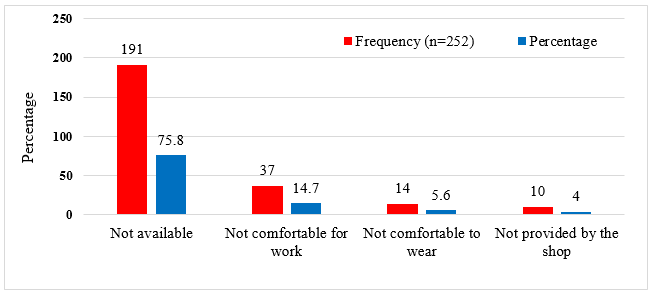
Figure 2. Reasons for not utilizing respiratory protective equipment given by woodworkers in Debre Berhan city, June 20-August 10, 2022.
Occupational characteristics of respondents
The median work experience of the woodworkers was 6 years with interquartile range of 3, and the median number of working hours per week was 48 with interquartile range of 13. Furthermore, 249 (72%) of the woodworkers had not obtained occupational health and safety training (Table 6).
| Variable | n | Percentage |
| Work experience (years) | ||
| ≤ 4 | 78 | 22.5 |
| 5-9 | 203 | 58.7 |
| ≥ 10 | 65 | 18.8 |
| Working hours per week | ||
| ≤ 48 | 300 | 86.7 |
| >48 | 46 | 13.3 |
| OHS training | ||
| No | 249 | 72 |
| Yes | 97 | 28 |
| Supervision at work place | ||
| No | 331 | 95.7 |
| Yes | 15 | 4.3 |
| Note: OHS: Occupational Health and Safety | ||
Table 6. Occupational characteristics of woodworkers of Debre Berhan city, June 20-August 10, 2022.
Prevalence of chronic respiratory symptoms among respondents
The prevalence of at least one chronic respiratory symptom per woodworker was 59% (95% CI: 54.3-64.5); 204 woodworkers had at least one chronic respiratory symptom. The prevalence of cough among woodworkers was 137 (39.6%; 95% CI: 34.7-44.5) and the prevalence of phlegm was 110 (31.8%; 95% CI: 27.2-37). The prevalence of wheezing, breathlessness, and chest colds and chest illnesses among the woodworkers was 103 (29.8%) with 95% CI (25.1-34.4), 121 (35%) with 95% CI (30.1-40.2%), and 96 (27.7%) with 95%CI (22.8-32.7), respectively (Figure 3).
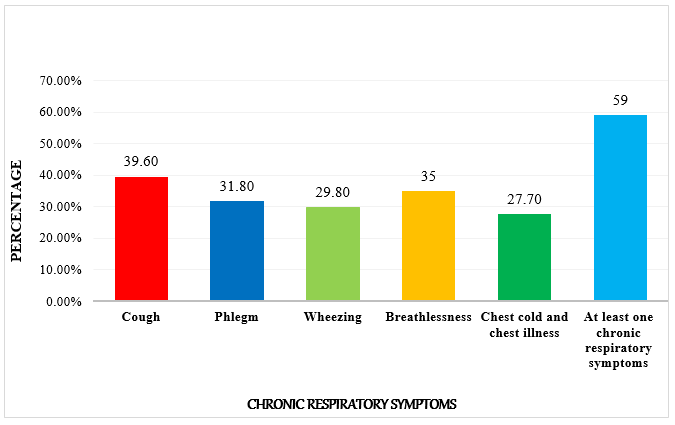
Figure 3. Prevalence of chronic respiratory symptoms among small-scale wood workers of Debre Berhan city, June 20-August 10, 2022.
Work place observation
An observational assessment revealed that of the 97 small woodworking shops in this study, 93 (96%) did not provide respiratory protective equipment. Written guidelines for choosing, utilizing, and maintaining respiratory protection equipment were absent in all shops. Moreover, high accumulations of dust were observed on the walls and floors of the shops. None of the shops had dust absorbers or exhaust ventilation systems. The floors of 75 (77.3%) shops were uncovered soil, impeding cleaning of the floors. Most shops (81, 83.5%) had one or more windows for ventilation, but the small size of the windows in 87 (89.7%) shops did not permit adequate air circulation.
Factors associated with chronic respiratory symptoms
The result of multivariable binary logistic regression revealed that not utilizing respiratory protective equipment, long work experience, and not taking occupational health and safety training were statistically significant predictors for the development of chronic respiratory symptoms among woodworkers (P<0.05) after adjustment for the effects of other variables. Woodworkers who did not utilize RPE were 4.29 (AOR=4.29, 95% CI; 2.283-8.062) times more likely to have at least one chronic respiratory symptom as compared to those woodworkers who utilized RPE, provided the effects of other variables were adjusted. Again, woodworkers who had work experience between 5-9 years were 4.77 times more likely to have at least one chronic respiratory symptom as compared to those woodworkers who had work experience ≤ 4 years (Table 7).
| Variable | At least one chronic respiratory symptom | AOR (95% CI) | P-value | |
| Yes | No | |||
| Education status | ||||
| Able to read and write | 45 | 22 | 0.56 (0.176-1.78) | 0.325 |
| Primary education | 83 | 46 | 0.50 (0.177-1.397) | 0.185 |
| Secondary education | 48 | 38 | 0.88 (0.307-2.491) | 0.802 |
| Diploma and above | 28 | 36 | 1 | - |
| Wealth index | ||||
| Poorest | 49 | 20 | 1.43 (0.497-4.124) | 0.507 |
| Poorer | 37 | 32 | 1.17 (0.456-2.981) | 0.748 |
| Middle | 48 | 28 | 2.27 (0.885-5.821) | 0.088 |
| Richer | 39 | 24 | 3.38 (1.076-10.633) | 0.073 |
| Richest | 31 | 38 | 1 | - |
| Floor material | ||||
| Earth | 42 | 22 | 0.78 (0.339-1.772) | 0.546 |
| Cement | 162 | 120 | 1 | - |
| Energy used at home | ||||
| Solid fuel | 90 | 38 | 1.57 (0.763-3.226) | 0.221 |
| Clean fuel | 114 | 104 | 1 | - |
| Cigarette smoking | ||||
| Current smoker | 50 | 21 | 1.14 (0.516-2.518 ) | 0.747 |
| Ex-smoker | 22 | 15 | 1.65 (0.540-5.038) | 0.379 |
| Never smoked | 132 | 106 | 1 | - |
| Utilization of RPE | ||||
| No | 166 | 61 | 4.29 (2.283-8.062) | 0.000* |
| Yes | 38 | 81 | 1 | - |
| Work experience (years) | ||||
| ≤ 4 | 14 | 64 | 1 | - |
| 5-9 | 143 | 60 | 4.77 (2.216-10.276) | 0.000* |
| ≥ 10 | 47 | 18 | 9.51 (3.699-24.428) | 0.000* |
| OHS training | ||||
| No | 177 | 72 | 2.98 (1.534-5.779) | 0.001* |
| Yes | 27 | 70 | 1 | - |
| Note: RPE: Respiratory Protective Equipment; OHS: Occupational Health and Safety training; *: Significant level at p<0.05, AOR: Adjusted Odds Ratio | ||||
Table 7. Multivariable binary logistic regression on factors associated with chronic respiratory symptoms among woodworkers of Debre Berhan city, June 20-August 10, 2022.
Pulmonary function parameters
Of the 346 woodworkers, 204 (59.0%) had reduced lung function parameters of FVC, FEV1, and FEV1/FVC × 100. The mean FVC and FEV1 of 204 woodworkers were 3.245 ± 0.49 and 2.15 ± 0.34, respectively.
The mean ratio of FEV1 to FVC (FEV1/FVC × 100) of 204 woodworkers was 66.3 ± 1.93. However, the mean FVC and FEV1 of the remaining 142 woodworkers were 3.64 ± 0.48 and 2.77 ± 0.35, respectively. The mean ratio of FEV1 to FVC (FEV1/FVC × 100) of 142 woodworkers was 76.34 ± 2.45 (Table 8).
| Pulmonary function parameters | Mean | Standard deviation | Pulmonary function parameters | Mean | Standard deviation |
| FVC (n=204) | 3.245 | 0.49 | FVC (n=142) | 3.64 | 0.48 |
| FEV1 (n=204) | 2.15 | 0.34 | FEV1 (n=142) | 2.77 | 0.35 |
| FEV1/FVC × 100 (n=204) | 66.3 | 1.93 | FEV1/FVC × 100 (n=142) | 76.34 | 2.45 |
| Note: FVC: Forced Vital Capacity; FEV1: Forced Expiratory Volume in one second | |||||
Table 8. Lung function parameters among woodworkers of Debre Berhan city, June 20-August 10, 2022.
It was found that, the overall prevalence of chronic respiratory symptoms among small-scale wood workers of Debre Birhan city was 59%. The finding of this study was in line with the study that had been done in Ethiopia in which prevalence of respiratory symptoms was 58.3%. Moreover, the present study was in line with the study conducted in Nigeria in which the prevalence of respiratory symptoms was 59%. However, the finding of the present study was relatively higher than study conducted in Thailand (29.94%), Macedonia (43.2%) and Myanmar (50.7%). The difference might be because of the disparity in study setting, sample size Macedonia (N=74) and Myanmar (N=207). The disparity might also be in the utilization of RPE in which only 36.7% of wood workers utilize RPE in the current study. But about 83.6% of workers utilize RPE always in Thailand. The difference might also be due to other behavioural characteristics such as smoking in which 20.5% and 10.7% of wood workers in this study were smokers and had history of cigarette smoking (ex-smokers) respectively. But only 8.4% of workers were smokers in Thailand. Furthermore, the observed variation might be due to khat chewing and risky alcohol consumption behaviour of wood workers in which 23.7% of wood workers were khat chewers and 11.8% had history of khat chewing and also 33.5% of wood workers had risky alcohol consumption behaviour. Moreover, the variation might also be due to disparity in supervision at work place in which 95.7% of wood working institutions was not supervised regarding occupational health and safety by responsible bodies.
The finding of this study was relatively lower than study conducted in Ethiopia (69.8%) and Nigeria (68%). The inconsistency might be due to the variation in occupational health and safety training in which only 5% of wood workers had occupational health and safety training in Ethiopia. But about 28% of wood workers had occupational health and safety training in the present study. Furthermore, the difference might be due to previous history of dust exposure in which 58.3% of workers who had history of previous dusty job develop respiratory symptoms in Nigeria. The present study also showed high prevalence of cough (39.6%) which is consistent with the study in Ethiopia (39%), Nigeria (41.2%) and Iran (40.2%). However, the finding of this study was comparatively higher than study conducted in India (28.8%) and Iran (28%). Besides, the finding was lower than study conducted in Ethiopia (54.6%) and India (72%). Phlegm (31.8%) was also another chronic respiratory symptom developed by wood workers in the present study. This finding was in line with the study conducted in Ethiopia (34.3%) and India (33.8%) and higher than study conducted in Iran (24%) and Malaysia (10.2%) but lower than another study conducted in Iran (40.6%).
The prevalence of wheezing (29.8%) in this study was similar to that in a study conducted in Iran (25.3%) and higher than in other studies carried out in Ethiopia (12.4%), Nigeria (5.3%), Thailand (5.09%), and Malaysia (5.1%) but lower than in another study in Ethiopia (45.0%). Woodworkers in the present study had a higher prevalence of breathlessness (35.0%) than those in other studies conducted in Ethiopia (24.0%), Nigeria (7.5%), Thailand (7.83%), and Malaysia (6.8%) but lower than in a study in India (59%). The current study also revealed a 27.7% prevalence of chest colds and other chest illnesses among woodworkers, a figure in line with studies conducted in India (30%) and Iran (27%); higher than in studies conducted in Nigeria (10.1%), India (3%), and Malaysia (13.6%); and lower than in other studies carried out in Ethiopia (42.9%) and Iran (38%). The reported differences in chronic respiratory symptoms between the present study and other studies may be due to variations in the utilization of RPE, study settings, occupational health and safety training, and duration of employment in woodworking shops.
Woodworkers who did not utilize RPE while at work were 4.29 times more likely to develop at least one chronic respiratory symptom than those who did utilize RPE. This finding is comparable to those of other studies in Ethiopia and Nigeria in which workers who did not utilize RPE were 2.29 and 4.0 times more likely, respectively, to develop at least one chronic respiratory symptom than those who did utilize RPE. These differences may be due to the differential unavailability of RPE and occupational health and safety training. Woodworkers’ work experience was another factor significantly associated with chronic respiratory symptoms. In this study, woodworkers who had work experience between 5 and 9 years and 10 and more years were 4.77 and 9.51 times more likely, respectively, to develop at least one chronic respiratory symptom than those who had work experience less than or equal to 4 years. The rate in our study was comparable to those in other studies in Ethiopia and studies in Ghana, Nigeria, Thailand, India, and Malaysia. Possible reasons for the variations may be the duration of working in woodworking shops, the amount of inhaled dust, the availability and proper use of RPE at the workplace, and misconceptions about the effectiveness of RPE and other preventive measures.
Occupational health and safety training was significantly associated with chronic respiratory symptoms among woodworkers. Woodworkers who had no OHS training were 2.98 times more likely to develop at least one chronic respiratory symptom. This result is similar to findings reported from other studies conducted in Ethiopia and Thailand in which workers who had no OHS training were 3.38 and 1.83 times more likely, respectively, to develop at least one chronic respiratory symptom. These patterns may be due to the effectiveness of OHS training, specifically the provision of pertinent information about the impacts of dust and the ability of RPE to prevent dust inhalation, on the behavior of workers. The current study also revealed that the mean FEV1/FVC ratio among woodworkers who developed chronic respiratory symptoms was 66.3%, similar to the ratio reported by a study in India (67.4%). These ratios are lower than the 70% ratio recommended by the Global Initiative for Diagnosis, Management, and Prevention of Chronic Obstructive Lung Disease (70%), indicating inadequate air circulation at these two study sites. Ethiopian respiratory disease prevention programs need to aim to increase air circulation in both wood shops and residential houses, both of which tend to have small windows and no air ventilation systems.
The prevalence of chronic respiratory symptoms among woodworkers of Debre Berhan city was high. Not utilizing proper respiratory protective equipment at work, long duration of working in wood shops, and low rates of occupational health and safety training were factors associated with chronic respiratory symptoms. The mean FEV1 to FVC ratio was lower among woodworkers who developed chronic respiratory symptoms, indicating inadequate air flow in the shops. These vulnerabilities, as well as the absence of dust absorbents and exhaust ventilation systems, indicate the need for health authorities to implement preventive measures.
The authors express their gratitude to the respondents of this study who gave valuable information for this study. We are also grateful to the data collectors, the supervisors, and the Debre Berhan City Department of Labor and Social Affairs and the offices of Micro, Small and Medium Enterprises (MSMEs) in each sub-city, who provided permission letters for the study.
This study was conducted in accordance with the Helsinki Declaration. Ethical approval was obtained from the Institutional Ethical Review Committee of the College of Medicine and Health Sciences of Wollo University (reference number CMHS_1426/2014). Permission letter was obtained from office of MSMEs requesting facilitation to conduct a research. Before data collection and any measurements, written consent was obtained from each study participants. The purpose of the study was explained to all participants and they were assured that their information would not be used for purposes other than scientific research. Participants were informed that participation would be voluntary and that they could withdraw at any time for whatever reason. Confidentiality was maintained by using identification numbers instead of the names of study members. During the study period, study participants who developed chronic respiratory health symptoms were advised and linked to a health facility
Not applicable
The datasets generated and/or analyzed during the current study is not publicly available due to study participant privacy consent agreements but are available from the corresponding author on reasonable request.
The authors declare that they have no competing interests.
The author(s) received no financial support for the research, authorship, and/or publication of this article.
BTW, TS, and AM contributed to the conception and design of the study. BTW conducted the investigation. BT, TS, AM, MG, GB, AK, NS, GMK, AKG, HK and MA performed data management and analysis. BTW and HK wrote and edited the manuscript. All authors contributed to the article and approved the submitted version.
[Crossref] [Google Scholar] [PubMed]
[Google Scholar] [PubMed]
[Crossref] [Google Scholar] [PubMed]
[Crossref] [Google Scholar] [PubMed]
[Crossref] [Google Scholar] [PubMed]
[Crossref] [Google Scholar] [PubMed]
[Crossref] [Google Scholar] [PubMed]
[Crossref] [Google Scholar] [PubMed]
[Crossref] [Google Scholar] [PubMed]
[Crossref] [Google Scholar] [PubMed]
[Crossref] [Google Scholar] [PubMed]
[Crossref] [Google Scholar] [PubMed]
[Crossref] [Google Scholar] [PubMed]
[Crossref] [Google Scholar] [PubMed]
[Crossref] [Google Scholar] [PubMed]
[Crossref] [Google Scholar] [PubMed]