Perspective - (2025) Volume 9, Issue 2
Received: 01-Apr-2025, Manuscript No. jid-26-186462;
Editor assigned: 03-Apr-2025, Pre QC No. P-186462;
Reviewed: 17-Apr-2025, QC No. Q-186462;
Revised: 22-Apr-2025, Manuscript No. R-186462;
Published:
29-Apr-2025
, DOI: 10.37421/2684-4559.2025.9.320
Citation: Kohler, Lara. "Biofilms: Key to Horizontal Gene Transfer And AMR." Clin Infect Dis 13 (2025):320.
Copyright: © 2025 Kohler L. This is an open-access article distributed under the terms of the Creative Commons Attribution License, which permits unrestricted use, distribution and reproduction in any medium, provided the original author and source are credited.
This article delves into the intricate dynamics of horizontal gene transfer (HGT) within multi-species biofilms found in hospital settings, highlighting its critical role in the rapid evolution and dissemination of antimicrobial resistance (AMR). It underscores how the complex, spatially structured environments of biofilms create ideal conditions for HGT, facilitating the exchange of resistance genes between diverse bacterial species, including both commensals and opportunistic pathogens. The research emphasizes the urgent need for novel therapeutic strategies that target HGT mechanisms to combat the escalating threat of multidrug-resistant infections in healthcare [1].
Focusing on the role of bacteriophages, one study investigates their contribution to promoting the horizontal gene transfer of antibiotic resistance genes (ARGs) within polymicrobial biofilms. It examines how phage-mediated transduction accelerates the spread of ARGs, particularly in environments characterized by high bacterial densities and genetic diversity, such as hospital biofilms. The findings suggest that phage activity can expedite bacterial adaptation to antibiotic stress by facilitating the acquisition of resistance determinants [2].
Further research examines the impact of sub-inhibitory concentrations of antibiotics on the frequency of horizontal gene transfer in Staphylococcus aureus biofilms. This investigation demonstrates that even at low levels, antibiotics can induce stress responses that enhance the uptake and transfer of plasmids carrying resistance genes. This highlights a concerning mechanism by which antibiotic usage can inadvertently promote resistance development within biofilms [3].
Another study investigates the role of the mobile genetic element Tn916 in mediating the transfer of tetracycline resistance genes within mixed-species biofilms formed by Enterococcus faecalis and other Gram-positive bacteria. The findings indicate that this conjugative transposon efficiently mobilizes resistance genes across species boundaries within the biofilm matrix, thereby contributing to the spread of tetracycline resistance in clinical isolates [4].
Exploring the influence of quorum sensing (QS) systems, one paper focuses on their regulation of horizontal gene transfer and antibiotic resistance in Pseudomonas aeruginosa biofilms. Specific QS-controlled genes that promote competence and conjugation have been identified, which consequently facilitate the exchange of resistance determinants. This suggests QS as a potential target for inhibiting resistance dissemination in biofilms [5].
Investigating the spatial distribution of antibiotic resistance genes and their mobile genetic elements within complex, multi-species biofilms, advanced imaging techniques reveal hotspots for HGT. This study identifies key microbial interactions that promote gene exchange, underscoring the importance of understanding biofilm architecture for effective resistance control [6].
A separate analysis scrutinizes the contribution of integrons to the acquisition and dissemination of multidrug resistance genes in clinical biofilm isolates. The research emphasizes how integrons serve as versatile platforms for accumulating resistance cassettes, which are then readily mobilized and transferred between bacteria within the biofilm environment [7].
Another investigation explores the role of extrachromosomal DNA, encompassing plasmids and bacteriophages, in driving antibiotic resistance evolution within multi-species biofilms. The study highlights the dynamic nature of these mobile genetic elements and their significant impact on the genetic makeup and resistance profiles of biofilm communities [8].
Focusing on the interspecies transfer of resistance genes mediated by conjugation, one study examines polymicrobial biofilms formed on medical devices. This research identifies specific gene transfer pathways and underscores the considerable challenges in preventing resistance spread within these complex microbial consortia [9].
Finally, an examination of biofilm matrix components, such as extracellular DNA (eDNA), reveals their role in facilitating horizontal gene transfer events. The research demonstrates that eDNA can function as a scaffold, bringing donor and recipient cells into close proximity and thereby enhancing the efficiency of conjugation and transformation of resistance genes within biofilms [10].
The intricate dynamics of horizontal gene transfer (HGT) within multi-species biofilms in hospital settings are extensively explored, emphasizing their critical role in the rapid evolution and dissemination of antimicrobial resistance (AMR) [1].
Biofilm environments, with their complex and spatially structured nature, create ideal conditions for HGT, enabling the exchange of resistance genes among diverse bacterial species, including both commensals and opportunistic pathogens. This underscores the urgent necessity for novel therapeutic strategies targeting HGT mechanisms to combat the escalating threat of multidrug-resistant infections in healthcare [1].
Bacteriophages play a significant role in promoting the horizontal gene transfer of antibiotic resistance genes (ARGs) within polymicrobial biofilms, as investigated in one study. The research highlights how phage-mediated transduction contributes to the spread of ARGs, especially in environments with high bacterial densities and genetic diversity, such as hospital biofilms. These findings suggest that phage activity can accelerate bacterial adaptation to antibiotic stress by facilitating the acquisition of resistance determinants [2].
Sub-inhibitory concentrations of antibiotics have been shown to significantly impact the frequency of horizontal gene transfer in Staphylococcus aureus biofilms. This study demonstrates that even at low levels, antibiotics can induce stress responses that enhance the uptake and transfer of plasmids carrying resistance genes, revealing a concerning mechanism by which antibiotic use can inadvertently promote resistance development within biofilms [3].
The mobile genetic element Tn916 is instrumental in mediating the transfer of tetracycline resistance genes within mixed-species biofilms composed of Enterococcus faecalis and other Gram-positive bacteria. This conjugative transposon efficiently mobilizes resistance genes across species boundaries within the biofilm matrix, contributing to the proliferation of tetracycline resistance in clinical isolates [4].
Quorum sensing (QS) systems exert a notable influence on the regulation of horizontal gene transfer and antibiotic resistance in Pseudomonas aeruginosa biofilms. The research identifies specific QS-controlled genes that foster competence and conjugation, thereby accelerating the exchange of resistance determinants, indicating QS as a potential target for inhibiting resistance dissemination in biofilms [5].
Advanced imaging techniques have been employed to investigate the spatial distribution of antibiotic resistance genes and their associated mobile genetic elements within complex, multi-species biofilms. This study has identified specific hotspots for HGT and elucidated key microbial interactions that facilitate gene exchange, emphasizing the critical importance of understanding biofilm architecture for controlling resistance spread [6].
Integrons contribute significantly to the acquisition and dissemination of multidrug resistance genes in clinical biofilm isolates. They function as versatile platforms for accumulating resistance cassettes, which are then readily mobilized and transferred between bacteria within the biofilm environment, facilitating the spread of resistance [7].
Extrachromosomal DNA, including plasmids and bacteriophages, plays a crucial role in driving antibiotic resistance evolution within multi-species biofilms. The research highlights the dynamic nature of these mobile genetic elements and their substantial impact on the genetic composition and resistance profiles of biofilm communities [8].
Conjugative transfer of resistance genes between bacterial species within polymicrobial biofilms on medical devices is a significant concern. This study identifies specific gene transfer pathways and underscores the considerable challenges associated with preventing the spread of resistance in these intricate microbial consortia [9].
Biofilm matrix components, particularly extracellular DNA (eDNA), play a facilitating role in horizontal gene transfer events. eDNA acts as a scaffold that brings donor and recipient cells into close proximity, thereby enhancing the efficiency of conjugation and transformation of resistance genes within biofilms [10].
This collection of research highlights the critical role of horizontal gene transfer (HGT) in the spread of antimicrobial resistance (AMR) within bacterial biofilms, particularly in clinical settings. Biofilms provide ideal conditions for HGT due to their complex structure and high bacterial density, facilitating the exchange of resistance genes through various mechanisms including bacteriophages, mobile genetic elements like Tn916, and integrons. Sub-inhibitory antibiotic concentrations and quorum sensing systems can further enhance HGT. The spatial organization within biofilms and the presence of extracellular DNA also contribute to efficient gene transfer. Understanding these processes is crucial for developing strategies to combat the growing threat of multidrug-resistant infections.
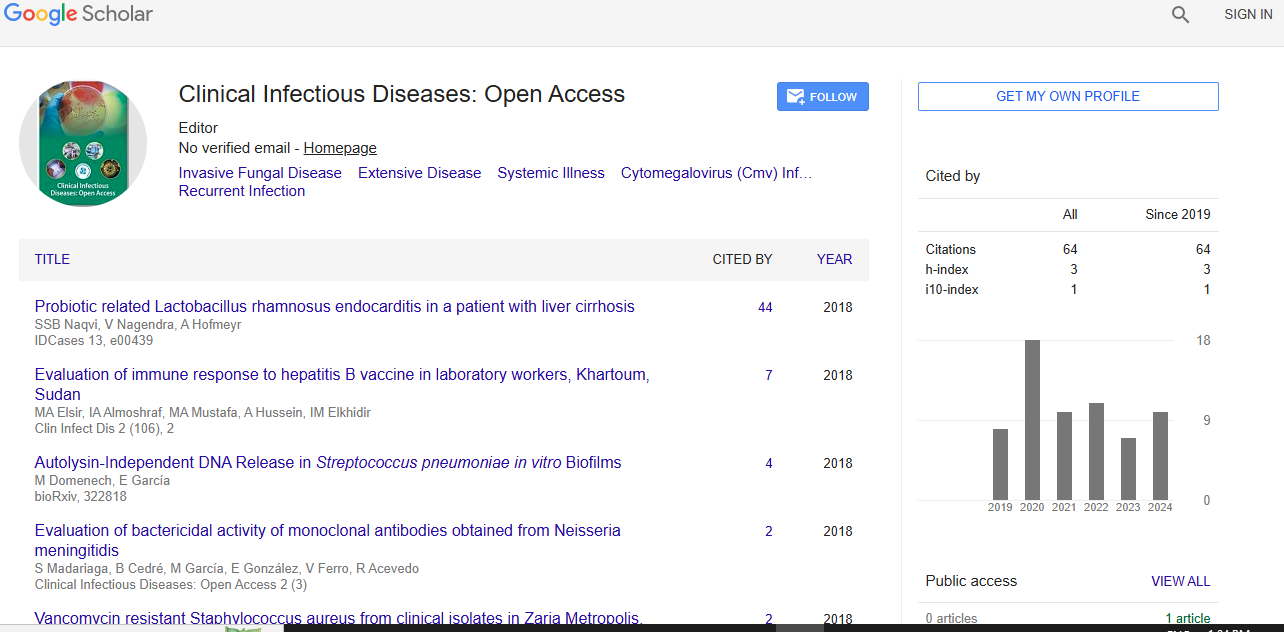
Clinical Infectious Diseases: Open Access received 1149 citations as per Google Scholar report