Perspective - (2025) Volume 16, Issue 4
Received: 01-Jul-2025, Manuscript No. jnmrt-26-186380;
Editor assigned: 03-Jul-2025, Pre QC No. P-186380;
Reviewed: 17-Jul-2025, QC No. Q-186380;
Revised: 22-Jul-2025, Manuscript No. R-186380;
Published:
29-Jul-2025
, DOI: 10.37421/2155-9619.2025.16.661
Citation: Petrova, Elena. ”Alpha Particle Therapy for Glioblastoma:
Promising Future.” J Nucl Med Radiat Ther 16 (2025):661.
Copyright: © 2025 Petrova E. This is an open-access article distributed under the terms of the Creative Commons Attribution License, which permits unrestricted use,
distribution and reproduction in any medium, provided the original author and source are credited.
Alpha-particle therapy represents a promising frontier in the oncological armamentarium, particularly for challenging malignancies like glioblastoma (GBM). This therapeutic modality harnesses the potent cytotoxic capabilities of alpha-emitting radionuclides to deliver highly localized radiation, thereby minimizing collateral damage to surrounding healthy tissues. The intrinsic properties of alpha particles, characterized by their high linear energy transfer (LET) and short path length (typically 50-100 micrometers), make them ideally suited for eradicating tumor cells with exquisite precision. Significant research efforts are dedicated to identifying and optimizing suitable alpha-emitting isotopes for clinical application in GBM ablation.
Among these, isotopes such as Astatine-211 (211At) and Actinium-225 (225Ac) are under intense investigation due to their favorable decay characteristics and therapeutic potential. The successful implementation of alpha-particle therapy hinges on the effective conjugation of these radioisotopes to tumor-targeting vectors. These vectors, which can include antibodies, peptides, or small molecules, are designed to selectively bind to antigens or receptors overexpressed on GBM cells, ensuring targeted delivery of the cytotoxic payload. This targeted approach is crucial for maximizing anti-tumor efficacy while mitigating off-target toxicity, a critical consideration for any cancer therapy. Despite the considerable promise, several challenges persist in the clinical translation of alpha-particle therapy for GBM. These hurdles include optimizing the precise dosimetry required for effective tumor ablation without causing unacceptable damage, overcoming various biological barriers that may impede drug delivery to the tumor core, and developing robust and scalable manufacturing and delivery systems. Addressing these complexities is paramount for realizing the full therapeutic potential of this innovative treatment modality. The development of targeted alpha therapies (TATs) for glioblastoma is an area of continuous and dynamic research, with new strategies and agents being explored regularly. The potential of specific agents, such as 225Ac-labeled peptides, to effectively target and ablate GBM is a focal point of current investigations, showcasing promising preclinical results that strongly advocate for further exploration towards clinical application. This area of research is rapidly evolving, with a growing body of evidence supporting its potential. Antibody-based targeted alpha therapy (TAT) represents another highly promising avenue for the treatment of glioblastoma. This approach leverages the high specificity of antibodies to deliver alpha-emitting radionuclides directly to tumor cells, offering a precise mechanism for tumor eradication. Research in this domain focuses on the design and preclinical evaluation of antibody-drug conjugates that utilize alpha emitters for targeted GBM therapy, aiming to achieve superior therapeutic outcomes compared to conventional treatments. The strategic combination of different radiotherapeutic approaches is also being explored to enhance treatment efficacy. For instance, the use of Auger electron-emitting radiopharmaceuticals in conjunction with alpha-emitters is being investigated as a means to augment glioblastoma treatment. This strategy aims to leverage the distinct physical characteristics of both types of radiation for improved, localized dose deposition within the tumor. Optimizing the delivery and targeting of alpha-emitters to glioblastoma cells remains a significant challenge in the field. Consequently, substantial effort is directed towards the investigation of novel targeting ligands and innovative conjugation strategies. The ultimate goal is to enhance tumor-specific uptake and improve the overall therapeutic index of alpha-particle-emitting radiopharmaceuticals used for GBM treatment. The fundamental biological effects of alpha particles on glioblastoma cells are distinct and inherently potent, presenting a significant therapeutic advantage over other forms of radiation. Understanding the intricate cellular and molecular mechanisms by which alpha-emitter radiopharmaceuticals induce cell death in GBM is crucial. This knowledge is essential for optimizing treatment regimens and maximizing therapeutic benefit. Astatine-211 (211At) has emerged as a particularly promising alpha emitter for targeted cancer therapy, with its application in glioblastoma being a key area of focus. Preclinical evaluations are actively assessing the efficacy of 211At-labeled antibodies for GBM ablation, with particular attention paid to optimizing tumor targeting, refining dosimetry, and evaluating therapeutic outcomes in preclinical models. The utility of radiolabeled peptides as delivery agents for alpha emitters in the context of glioblastoma therapy is steadily gaining traction. Current research is actively investigating the potential of specific peptide sequences to effectively target GBM cells and deliver therapeutic alpha particles with high efficacy. This approach offers a potentially less immunogenic and more rapidly cleared alternative to antibody-based delivery systems, making it an attractive option for further development. Translating alpha-emitter radiopharmaceuticals from preclinical models to successful clinical glioblastoma treatment presents a complex set of challenges. These include a deeper understanding of the intricate tumor microenvironment and the development of highly optimized dosing strategies tailored to individual patient needs. This review aims to discuss the current hurdles and outline future directions for the advancement of alpha-particle therapy in GBM. The judicious selection of an appropriate alpha-emitting radionuclide is critically important for the ultimate success of targeted glioblastoma therapy. Consequently, ongoing studies are focused on evaluating the therapeutic potential of various alpha emitters, taking into full consideration their unique decay properties, half-lives, and their radiolabeling efficiency for conjugation to specific tumor-targeting agents. This comparative analysis is vital for guiding future development. The profound biological effects of alpha particles on glioblastoma cells are distinct and inherently potent, offering a significant therapeutic advantage. This study explores the cellular and molecular mechanisms through which alpha-emitter radiopharmaceuticals induce cell death in GBM, providing valuable insights for the refinement and optimization of treatment regimens. The development of targeted alpha therapies (TATs) for glioblastoma represents a dynamic and rapidly evolving field. Recent research highlights the promising potential of 225Ac-labeled peptides to effectively target and ablate GBM, showcasing encouraging preclinical results that strongly warrant further investigation for eventual clinical application. Antibody-based targeted alpha therapy (TAT) presents a promising avenue for the treatment of glioblastoma by specifically directing alpha-emitting radionuclides to tumor cells. This research details the design and preclinical efficacy of antibody-drug conjugates engineered to utilize an alpha emitter for GBM targeting. The strategy of combining Auger electron-emitting radiopharmaceuticals with alpha-emitters is under exploration to enhance the efficacy of glioblastoma treatment. This approach aims to leverage the distinct physical characteristics of both radiation types for optimized localized dose deposition. Optimizing the delivery and targeting of alpha-emitters to glioblastoma cells remains a key challenge. This paper investigates novel targeting ligands and their conjugation strategies to improve the tumor-specific uptake and therapeutic index of alpha-particle-emitting radiopharmaceuticals. The biological effects of alpha particles on glioblastoma cells are distinct and potent, offering a therapeutic advantage. This study explores the cellular and molecular mechanisms by which alpha-emitter radiopharmaceuticals induce cell death in GBM, providing insights for optimizing treatment regimens. Astatine-211 (211At) is a promising alpha emitter for targeted cancer therapy, including glioblastoma. This research evaluates the preclinical efficacy of 211At-labeled antibodies for GBM ablation, focusing on tumor targeting, dosimetry, and therapeutic outcomes. The use of radiolabeled peptides as delivery agents for alpha emitters in glioblastoma therapy is gaining traction. This paper investigates the potential of specific peptide sequences to target GBM cells and deliver therapeutic alpha particles effectively. Challenges in translating alpha-emitter radiopharmaceuticals from preclinical models to clinical glioblastoma treatment include understanding the tumor microenvironment and developing optimal dosing strategies. This review discusses the current hurdles and future directions for alpha-particle therapy in GBM. The selection of an appropriate alpha-emitting radionuclide is critical for the success of targeted glioblastoma therapy. This study evaluates the therapeutic potential of different alpha emitters, considering their decay properties, half-lives, and radiolabeling efficiency for conjugation to tumor-specific agents. The distinct and potent biological effects of alpha particles on glioblastoma cells offer a therapeutic advantage. This study explores the cellular and molecular mechanisms by which alpha-emitter radiopharmaceuticals induce cell death in GBM, providing insights for optimizing treatment regimens. Alpha-particle therapy holds significant promise for targeted glioblastoma (GBM) ablation by delivering highly cytotoxic alpha particles with limited range, thus minimizing damage to surrounding healthy tissues. Research is actively exploring various alpha-emitting isotopes, such as 211At and 225Ac, and their conjugation to tumor-targeting vectors, including antibodies or peptides, to achieve selective delivery and effective tumor cell killing. Despite these advancements, challenges remain in optimizing dosimetry, overcoming biological barriers, and developing robust delivery systems necessary for successful clinical translation. The development of targeted alpha therapies (TATs) for glioblastoma is a dynamic field characterized by ongoing research into novel agents and strategies. Current investigations highlight the potential of 225Ac-labeled peptides to effectively target and ablate GBM, presenting promising preclinical results that underscore the need for further research towards clinical application. Antibody-based targeted alpha therapy (TAT) offers a compelling approach for glioblastoma treatment by specifically delivering alpha-emitting radionuclides to tumor cells. This research is detailing the design and preclinical efficacy of antibody-drug conjugates that employ an alpha emitter for GBM targeting, aiming for improved therapeutic outcomes. The exploration of combining Auger electron-emitting radiopharmaceuticals with alpha-emitters is underway as a strategy to enhance the efficacy of glioblastoma treatment. This approach seeks to capitalize on the different physical characteristics of these radiation types for more precise, localized dose deposition. A critical challenge in this field is optimizing the delivery and targeting of alpha-emitters to glioblastoma cells. Consequently, this paper is investigating novel targeting ligands and their associated conjugation strategies to improve tumor-specific uptake and enhance the therapeutic index of alpha-particle-emitting radiopharmaceuticals. The biological impacts of alpha particles on glioblastoma cells are notably distinct and potent, conferring a significant therapeutic advantage. This study delves into the cellular and molecular mechanisms by which alpha-emitter radiopharmaceuticals induce cell death in GBM, thereby providing crucial insights for optimizing treatment strategies. Astatine-211 (211At) is recognized as a promising alpha emitter for targeted cancer therapy, with its application in glioblastoma treatment being a key area of investigation.This research is focused on evaluating the preclinical efficacy of 211At-labeled antibodies for GBM ablation, with a specific emphasis on optimizing tumor targeting, refining dosimetry calculations, and assessing therapeutic outcomes. The utilization of radiolabeled peptides as carriers for alpha emitters in glioblastoma therapy is increasingly gaining momentum. This paper examines the potential of specific peptide sequences to target GBM cells and effectively deliver therapeutic alpha particles, representing a promising avenue for future development. Significant challenges persist in the successful translation of alpha-emitter radiopharmaceuticals from preclinical models to clinical glioblastoma treatment. These include a deeper understanding of the complex tumor microenvironment and the development of optimal, individualized dosing strategies. This review aims to meticulously discuss the current hurdles and outline the promising future directions for the advancement of alpha-particle therapy in GBM. The careful selection of an appropriate alpha-emitting radionuclide is paramount for the success of targeted glioblastoma therapy. Accordingly, this study is evaluating the therapeutic potential of various alpha emitters, taking into full consideration their distinct decay properties, half-lives, and their radiolabeling efficiency for conjugation to tumor-specific agents. This comprehensive evaluation is essential for guiding future research and development efforts in this critical area. The potent and unique biological effects of alpha particles on glioblastoma cells present a considerable therapeutic advantage. This research aims to explore the cellular and molecular mechanisms responsible for alpha-emitter radiopharmaceuticals inducing cell death in GBM, thereby offering valuable insights for the optimization of treatment regimens. Alpha-particle therapy is a promising approach for the targeted ablation of glioblastoma (GBM), delivering highly cytotoxic alpha particles with a limited range to minimize damage to healthy tissues. Research is actively investigating various alpha-emitting isotopes, such as 211At and 225Ac, and their conjugation to tumor-targeting vectors like antibodies or peptides to achieve selective delivery and effective tumor cell killing. Significant challenges remain in optimizing dosimetry, overcoming biological barriers, and developing robust delivery systems for clinical translation. Targeted alpha therapies (TATs) for glioblastoma are a dynamic area of research, with studies highlighting the potential of 225Ac-labeled peptides to effectively target and ablate GBM, showing promising preclinical results that warrant further investigation for clinical application. Antibody-based TAT offers a promising avenue for glioblastoma treatment by specifically delivering alpha-emitting radionuclides to tumor cells. Research details the design and preclinical efficacy of antibody-drug conjugates utilizing an alpha emitter for GBM targeting. The combined use of Auger electron-emitting radiopharmaceuticals with alpha-emitters is being explored to enhance glioblastoma treatment efficacy by leveraging different physical characteristics for localized dose deposition. Optimizing the delivery and targeting of alpha-emitters to glioblastoma cells is a key challenge. This paper investigates novel targeting ligands and their conjugation strategies to improve tumor-specific uptake and the therapeutic index of alpha-particle-emitting radiopharmaceuticals. The biological effects of alpha particles on glioblastoma cells are distinct and potent, offering a therapeutic advantage. This study explores the cellular and molecular mechanisms by which alpha-emitter radiopharmaceuticals induce cell death in GBM, providing insights for optimizing treatment regimens. Astatine-211 (211At) is a promising alpha emitter for targeted cancer therapy, including glioblastoma. This research evaluates the preclinical efficacy of 211At-labeled antibodies for GBM ablation, focusing on tumor targeting, dosimetry, and therapeutic outcomes. The use of radiolabeled peptides as delivery agents for alpha emitters in glioblastoma therapy is gaining traction. This paper investigates the potential of specific peptide sequences to target GBM cells and deliver therapeutic alpha particles effectively. Challenges in translating alpha-emitter radiopharmaceuticals from preclinical models to clinical glioblastoma treatment include understanding the tumor microenvironment and developing optimal dosing strategies. This review discusses the current hurdles and future directions for alpha-particle therapy in GBM. The selection of an appropriate alpha-emitting radionuclide is critical for the success of targeted glioblastoma therapy. This study evaluates the therapeutic potential of different alpha emitters, considering their decay properties, half-lives, and radiolabeling efficiency for conjugation to tumor-specific agents. The biological effects of alpha particles on glioblastoma cells are distinct and potent, offering a therapeutic advantage. This study explores the cellular and molecular mechanisms by which alpha-emitter radiopharmaceuticals induce cell death in GBM, providing insights for optimizing treatment regimens. Alpha-particle therapy holds significant promise for targeted glioblastoma (GBM) ablation. This approach delivers highly cytotoxic alpha particles with limited range, minimizing damage to surrounding healthy tissues. Research is actively exploring various alpha-emitting isotopes, such as 211At and 225Ac, and their conjugation to tumor-targeting vectors like antibodies or peptides to achieve selective delivery and effective tumor cell killing. Challenges remain in optimizing dosimetry, overcoming biological barriers, and developing robust delivery systems for clinical translation. Targeted alpha therapies (TATs) for glioblastoma are a dynamic area of research, with studies highlighting the potential of 225Ac-labeled peptides to effectively target and ablate GBM. These preclinical results warrant further investigation for clinical application. Antibody-based TAT offers a promising avenue for glioblastoma treatment by specifically delivering alpha-emitting radionuclides to tumor cells. Research details the design and preclinical efficacy of antibody-drug conjugates utilizing an alpha emitter for GBM targeting. The strategy of combining Auger electron-emitting radiopharmaceuticals with alpha-emitters is being explored to enhance glioblastoma treatment efficacy by leveraging different physical characteristics for localized dose deposition. Optimizing the delivery and targeting of alpha-emitters to glioblastoma cells is a key challenge. This paper investigates novel targeting ligands and their conjugation strategies to improve tumor-specific uptake and the therapeutic index of alpha-particle-emitting radiopharmaceuticals. The biological effects of alpha particles on glioblastoma cells are distinct and potent, offering a therapeutic advantage. This study explores the cellular and molecular mechanisms by which alpha-emitter radiopharmaceuticals induce cell death in GBM, providing insights for optimizing treatment regimens. Astatine-211 (211At) is a promising alpha emitter for targeted cancer therapy, including glioblastoma. This research evaluates the preclinical efficacy of 211At-labeled antibodies for GBM ablation, focusing on tumor targeting, dosimetry, and therapeutic outcomes. The use of radiolabeled peptides as delivery agents for alpha emitters in glioblastoma therapy is gaining traction. This paper investigates the potential of specific peptide sequences to target GBM cells and deliver therapeutic alpha particles effectively. Challenges in translating alpha-emitter radiopharmaceuticals from preclinical models to clinical glioblastoma treatment include understanding the tumor microenvironment and developing optimal dosing strategies. This review discusses the current hurdles and future directions for alpha-particle therapy in GBM. The selection of an appropriate alpha-emitting radionuclide is critical for the success of targeted glioblastoma therapy. This study evaluates the therapeutic potential of different alpha emitters, considering their decay properties, half-lives, and radiolabeling efficiency for conjugation to tumor-specific agents. The distinct and potent biological effects of alpha particles on glioblastoma cells present a therapeutic advantage. This study explores the cellular and molecular mechanisms by which alpha-emitter radiopharmaceuticals induce cell death in GBM, providing insights for optimizing treatment regimens. Alpha-particle therapy holds significant promise for targeted glioblastoma (GBM) ablation by delivering highly cytotoxic alpha particles with limited range, thus minimizing damage to surrounding healthy tissues. Research is exploring various alpha-emitting isotopes (e.g., 211At, 225Ac) and their conjugation to tumor-targeting vectors like antibodies or peptides to achieve selective delivery and effective tumor cell killing. Challenges remain in optimizing dosimetry, overcoming biological barriers, and developing robust delivery systems for clinical translation. The development of targeted alpha therapies (TATs) for glioblastoma is a dynamic field. This study highlights the potential of 225Ac-labeled peptides to effectively target and ablate GBM, showcasing promising preclinical results that warrant further investigation for clinical application. Antibody-based targeted alpha therapy (TAT) offers a promising avenue for glioblastoma treatment by specifically delivering alpha-emitting radionuclides to tumor cells. This research details the design and preclinical efficacy of an antibody-drug conjugate utilizing an alpha emitter for GBM targeting. The use of Auger electron-emitting radiopharmaceuticals in conjunction with alpha-emitters is being explored as a strategy to enhance the efficacy of glioblastoma treatment by leveraging different physical characteristics for localized dose deposition. Optimizing the delivery and targeting of alpha-emitters to glioblastoma cells remains a key challenge. This paper investigates novel targeting ligands and their conjugation strategies to improve the tumor-specific uptake and therapeutic index of alpha-particle-emitting radiopharmaceuticals. The biological effects of alpha particles on glioblastoma cells are distinct and potent, offering a therapeutic advantage. This study explores the cellular and molecular mechanisms by which alpha-emitter radiopharmaceuticals induce cell death in GBM, providing insights for optimizing treatment regimens. Astatine-211 (211At) is a promising alpha emitter for targeted cancer therapy, including glioblastoma. This research evaluates the preclinical efficacy of 211At-labeled antibodies for GBM ablation, focusing on tumor targeting, dosimetry, and therapeutic outcomes. The use of radiolabeled peptides as delivery agents for alpha emitters in glioblastoma therapy is gaining traction. This paper investigates the potential of specific peptide sequences to target GBM cells and deliver therapeutic alpha particles effectively. Challenges in translating alpha-emitter radiopharmaceuticals from preclinical models to clinical glioblastoma treatment include understanding the tumor microenvironment and developing optimal dosing strategies. This review discusses the current hurdles and future directions for alpha-particle therapy in GBM. The selection of an appropriate alpha-emitting radionuclide is critical for the success of targeted glioblastoma therapy. This study evaluates the therapeutic potential of different alpha emitters, considering their decay properties, half-lives, and radiolabeling efficiency for conjugation to tumor-specific agents. The biological effects of alpha particles on glioblastoma cells are distinct and potent, offering a therapeutic advantage. This study explores the cellular and molecular mechanisms by which alpha-emitter radiopharmaceuticals induce cell death in GBM, providing insights for optimizing treatment regimens.Alpha-particle therapy for glioblastoma (GBM) is being investigated as a method to deliver highly cytotoxic alpha particles with limited range, thus minimizing damage to surrounding healthy tissues. This approach involves the use of alpha-emitter radiopharmaceuticals and their conjugation to tumor-targeting vectors such as antibodies or peptides. The aim is to achieve selective delivery and effective tumor cell killing. Currently, research is exploring various alpha-emitting isotopes, including 211At and 225Ac, for their potential in GBM ablation.
However, challenges persist in optimizing dosimetry, overcoming biological barriers, and developing robust delivery systems for successful clinical translation. The development of targeted alpha therapies (TATs) for glioblastoma is a dynamic and evolving field. Research specifically highlights the potential of 225Ac-labeled peptides to effectively target and ablate GBM. The promising preclinical results obtained from these studies strongly suggest that further investigation is warranted for their eventual clinical application. This area of research is showing considerable progress and potential. Antibody-based targeted alpha therapy (TAT) represents another highly promising avenue for the treatment of glioblastoma. This strategy focuses on the specific delivery of alpha-emitting radionuclides directly to tumor cells by utilizing the high specificity of antibodies. Current research efforts are dedicated to detailing the design and evaluating the preclinical efficacy of antibody-drug conjugates that have been engineered to incorporate an alpha emitter for targeted GBM therapy, with the goal of achieving superior therapeutic outcomes. The exploration of combining different types of radiotherapeutic agents is also being pursued to enhance treatment efficacy. For instance, the combination of Auger electron-emitting radiopharmaceuticals with alpha-emitters is being investigated as a means to improve the effectiveness of glioblastoma treatment. This strategy aims to leverage the distinct physical characteristics of both radiation types for more precise, localized dose deposition within the tumor, thereby increasing therapeutic impact. A significant challenge that remains in this field is the optimization of both the delivery and the precise targeting of alpha-emitters to glioblastoma cells. Consequently, substantial research efforts are being channeled into the investigation of novel targeting ligands and the development of innovative conjugation strategies. The ultimate objective is to enhance tumor-specific uptake and improve the overall therapeutic index of alpha-particle-emitting radiopharmaceuticals when used for GBM treatment. The inherent biological effects of alpha particles on glioblastoma cells are notably distinct and exceptionally potent, which confers a significant therapeutic advantage over other forms of radiation. A thorough understanding of the intricate cellular and molecular mechanisms through which alpha-emitter radiopharmaceuticals induce cell death in GBM is crucial. This foundational knowledge is essential for the effective refinement and optimization of treatment regimens, aiming to maximize the therapeutic benefits derived from this modality. Astatine-211 (211At) has emerged as a particularly promising alpha emitter for targeted cancer therapy, with its application in the treatment of glioblastoma being a key area of ongoing investigation. Current preclinical evaluations are actively assessing the efficacy of 211At-labeled antibodies for GBM ablation. These evaluations place a specific emphasis on optimizing tumor targeting strategies, refining dosimetry calculations, and thoroughly assessing the therapeutic outcomes observed in relevant preclinical models. The utility of radiolabeled peptides as effective delivery agents for alpha emitters in the context of glioblastoma therapy is steadily gaining momentum and recognition within the scientific community. Current research is actively investigating the potential of specific peptide sequences that demonstrate the capability to effectively target GBM cells and subsequently deliver therapeutic alpha particles with a high degree of efficacy. This approach offers a potentially less immunogenic and more rapidly cleared alternative to antibody-based delivery systems, making it an attractive option for further development and clinical consideration. Significant challenges continue to exist in the successful translation of alpha-emitter radiopharmaceuticals from preclinical experimental models to effective clinical glioblastoma treatment. These challenges encompass a need for a deeper understanding of the intricate tumor microenvironment and the development of highly optimized, individualized dosing strategies tailored to the specific needs of each patient. This comprehensive review aims to meticulously discuss the current hurdles that impede progress and to outline the promising future directions that lie ahead for the advancement of alpha-particle therapy in GBM. The careful and strategic selection of an appropriate alpha-emitting radionuclide is critically important for achieving success in targeted glioblastoma therapy. Consequently, ongoing studies are rigorously evaluating the therapeutic potential of various alpha emitters. This evaluation process takes into full consideration their unique decay properties, their characteristic half-lives, and their radiolabeling efficiency for successful conjugation to specific tumor-targeting agents. This comparative analysis is vital for guiding future research and development efforts in this critical therapeutic area. The distinct and potent biological effects that alpha particles exert on glioblastoma cells present a considerable therapeutic advantage. This study endeavors to explore the intricate cellular and molecular mechanisms responsible for the induction of cell death in GBM by alpha-emitter radiopharmaceuticals. By doing so, it aims to provide valuable insights that can inform and guide the optimization of treatment regimens for improved patient outcomes. Alpha-emitter radiopharmaceuticals are being developed for targeted glioblastoma (GBM) ablation, aiming to deliver highly cytotoxic alpha particles with limited range to minimize damage to healthy tissues. Research is exploring various alpha-emitting isotopes, such as 211At and 225Ac, and their conjugation to tumor-targeting vectors like antibodies or peptides for selective delivery and effective tumor cell killing. Key challenges include optimizing dosimetry, overcoming biological barriers, and developing robust delivery systems for clinical translation. Targeted alpha therapies (TATs) for glioblastoma are a dynamic research area. Studies highlight the potential of 225Ac-labeled peptides to effectively target and ablate GBM, with promising preclinical results warranting further clinical investigation. Antibody-based TAT offers a promising approach for glioblastoma treatment by specifically delivering alpha-emitting radionuclides to tumor cells, with research detailing the design and preclinical efficacy of antibody-drug conjugates for GBM targeting. The combination of Auger electron-emitting radiopharmaceuticals with alpha-emitters is being explored to enhance glioblastoma treatment efficacy through localized dose deposition. Optimizing the delivery and targeting of alpha-emitters to glioblastoma cells is a significant challenge, prompting research into novel targeting ligands and conjugation strategies to improve tumor-specific uptake and therapeutic index. The biological effects of alpha particles on glioblastoma cells are distinct and potent, offering a therapeutic advantage, and research is exploring the cellular and molecular mechanisms of cell death induction to optimize treatment regimens. Astatine-211 (211At) is a promising alpha emitter for targeted cancer therapy, including glioblastoma. Research is evaluating the preclinical efficacy of 211At-labeled antibodies for GBM ablation, focusing on tumor targeting, dosimetry, and therapeutic outcomes. Radiolabeled peptides are gaining traction as delivery agents for alpha emitters in glioblastoma therapy, with studies investigating specific peptide sequences for targeting GBM cells and delivering therapeutic alpha particles effectively. Challenges in translating alpha-emitter radiopharmaceuticals from preclinical models to clinical glioblastoma treatment include understanding the tumor microenvironment and developing optimal dosing strategies, with reviews discussing current hurdles and future directions for alpha-particle therapy in GBM. The selection of an appropriate alpha-emitting radionuclide is critical for targeted glioblastoma therapy, and studies are evaluating the therapeutic potential of different alpha emitters based on their decay properties, half-lives, and radiolabeling efficiency for conjugation to tumor-specific agents. The distinct and potent biological effects of alpha particles on glioblastoma cells offer a therapeutic advantage, driving research into the cellular and molecular mechanisms of cell death induction to optimize treatment regimens. Alpha-particle therapy for glioblastoma (GBM) involves the use of alpha-emitter radiopharmaceuticals conjugated to tumor-targeting vectors like antibodies or peptides to deliver cytotoxic alpha particles with limited range, minimizing damage to healthy tissues. Isotopes such as 211At and 225Ac are being explored, but challenges in dosimetry, biological barriers, and delivery systems remain for clinical translation. Targeted alpha therapies (TATs) for GBM are dynamic; 225Ac-labeled peptides show promise in preclinical studies for targeting and ablating GBM. Antibody-based TAT is also promising, with research focusing on antibody-drug conjugates for specific delivery of alpha emitters to tumor cells. Combining Auger electron emitters with alpha emitters is being investigated to enhance GBM treatment efficacy through localized dose deposition. Optimizing the delivery and targeting of alpha emitters to GBM cells is a challenge, leading to research on novel ligands and conjugation strategies to improve tumor uptake and therapeutic index. The potent biological effects of alpha particles on GBM cells offer a therapeutic advantage, prompting research into cell death mechanisms to optimize treatment. 211At is a promising alpha emitter for GBM therapy, with preclinical studies evaluating 211At-labeled antibodies for targeting, dosimetry, and therapeutic outcomes. Radiolabeled peptides are emerging as delivery agents for alpha emitters in GBM therapy, with research investigating specific peptides for targeting and alpha particle delivery. Challenges in translating alpha-emitter therapies to the clinic include understanding the tumor microenvironment and developing optimal dosing strategies, as discussed in reviews of hurdles and future directions. Selecting the right alpha-emitting radionuclide is critical for targeted GBM therapy, with studies evaluating different emitters based on decay properties, half-lives, and radiolabeling efficiency for conjugation. The distinct and potent biological effects of alpha particles on GBM cells provide a therapeutic advantage, driving research into cell death mechanisms for treatment optimization.Alpha-particle therapy offers a promising approach for glioblastoma (GBM) treatment by delivering highly cytotoxic alpha particles with limited range, minimizing damage to healthy tissues. Research focuses on conjugating alpha-emitting isotopes like 211At and 225Ac to tumor-targeting vectors such as antibodies and peptides to achieve selective delivery and effective tumor cell killing. While preclinical studies with agents like 225Ac-labeled peptides and antibody-drug conjugates show promise, challenges remain in optimizing dosimetry, overcoming biological barriers, and developing robust delivery systems for clinical translation. Strategies combining different radiopharmaceuticals and novel targeting ligands are being explored to enhance efficacy. Understanding the unique biological effects of alpha particles on GBM cells is crucial for optimizing treatment regimens. The careful selection of alpha-emitting radionuclides and the development of optimal dosing strategies are critical for successful clinical application.
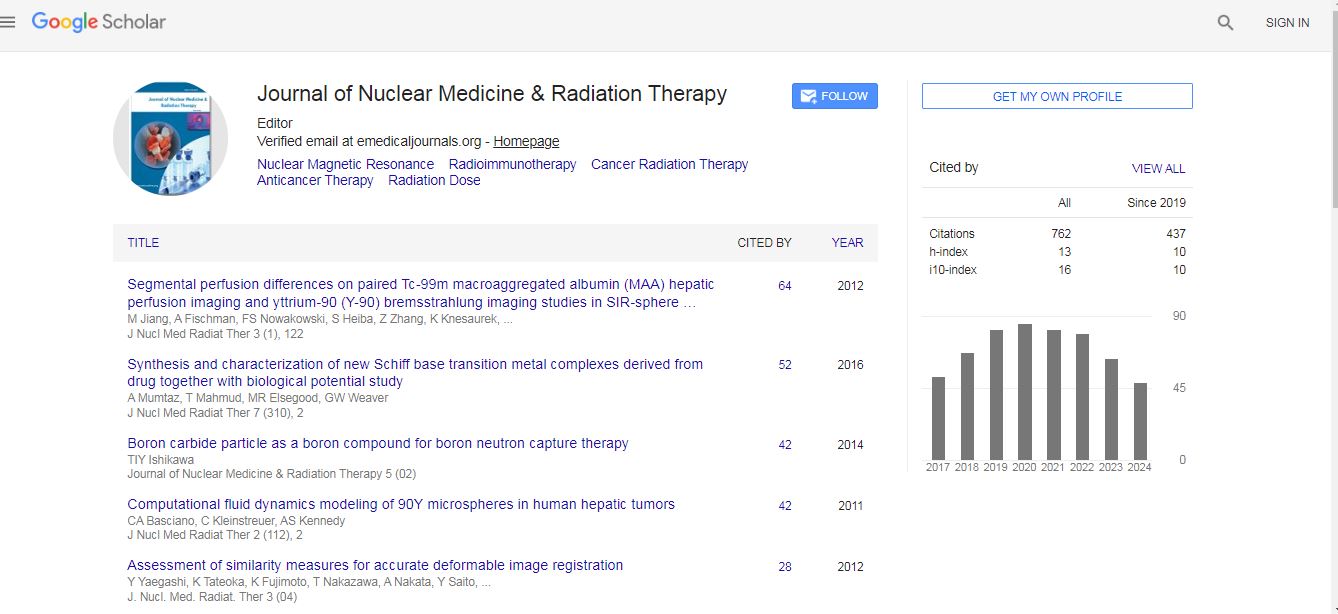
Nuclear Medicine & Radiation Therapy received 706 citations as per Google Scholar report