Commentary - (2025) Volume 16, Issue 5
Received: 01-Sep-2025, Manuscript No. jnmrt-26-186386;
Editor assigned: 03-Sep-2025, Pre QC No. P-186386;
Reviewed: 17-Sep-2025, QC No. Q-186386;
Revised: 22-Sep-2025, Manuscript No. R-186386;
Published:
29-Sep-2025
, DOI: 10.37421/2155-9619.2025.16.667
Citation: Alvarez, Sofia. ”Advancing Refractory Thyroid Cancer
Treatment: Dosimetry and Novel Therapies.” J Nucl Med Radiat Ther 16 (2025):667.
Copyright: © 2025 Alvarez S. This is an open-access article distributed under the terms of the Creative Commons Attribution License, which permits unrestricted use,
distribution and reproduction in any medium, provided the original author and source are credited.
The therapeutic landscape for differentiated thyroid cancer (DTC) that has become resistant to conventional treatments, particularly radioiodine, presents a significant clinical challenge. This review aims to consolidate current knowledge and explore future prospects in managing this refractory subset of patients. Specifically, it delves into the potential of escalating radiopharmaceutical doses, examining the delicate balance between therapeutic efficacy and the risk of toxicity for patients whose disease no longer responds to standard approaches. Findings suggest that with meticulous management and careful dose escalation, this strategy can offer a viable option for a subset of refractory patients, enhancing tumor control while mitigating radiation-induced side effects. This approach underscores the critical importance of personalized dosimetry and sophisticated treatment planning within nuclear medicine oncology [1].
The critical role of dosimetry in optimizing radiopharmaceutical therapy for refractory thyroid cancer cannot be overstated. This work explores how precise dose calculations, considering factors such as tumor volume, uptake kinetics, and normal organ constraints, directly impact treatment success. It provides insights into advanced imaging techniques and modeling for accurate dose estimation, aiming to maximize tumor kill while minimizing off-target radiation. The paper advocates for a tailored dosimetric approach in individualizing treatment regimens for refractory thyroid cancer patients [2].
This article investigates the safety and efficacy of escalating doses of Iodine-131 (¹³¹I) in patients with metastatic or radioiodine-refractory differentiated thyroid cancer (DTC). It analyzes treatment outcomes, including response rates and progression-free survival, in relation to the administered activity. The study also meticulously assesses the incidence and severity of acute and late toxicities. The findings support the judicious use of higher ¹³¹I doses as a salvage therapy for selected patients who have failed conventional treatments, underscoring the necessity of careful patient selection and monitoring [3].
Focusing on refractory thyroid cancer, this research explores the use of external beam radiotherapy (EBRT) in combination with or as an alternative to systemic therapies, including radiopharmaceuticals. It discusses the rationale for combining different treatment modalities to overcome resistance and improve local control. The review highlights the challenges in selecting appropriate patients and optimizing treatment planning for EBRT in this complex setting, considering the potential for additive toxicity when used alongside other treatments [4].
This review examines the evolving landscape of targeted radionuclide therapy for advanced thyroid cancer, with a specific emphasis on radioiodine-refractory disease. It discusses novel radiolabeled compounds beyond iodine, such as those targeting specific receptors overexpressed in certain thyroid cancer subtypes, offering potential for dose escalation and improved tumor targeting. The authors explore the mechanisms of resistance to conventional therapies and how new radiopharmaceuticals can circumvent these challenges [5].
This study provides a retrospective analysis of patients with advanced or metastatic thyroid cancer treated with high-dose ¹³¹I. It evaluates the outcomes in terms of tumor response, survival, and toxicity, focusing on patients who had previously undergone conventional ¹³¹I therapy or other treatments. The research aims to define the optimal dose range and patient selection criteria for this escalated approach, highlighting the need for meticulous management of potential side effects, particularly myelosuppression [6].
The article reviews the advancements in dosimetry and imaging for targeted radionuclide therapy in thyroid cancer. It discusses how improved imaging techniques, such as SPECT/CT and PET/CT, coupled with sophisticated pharmacokinetic and dosimetric modeling, allow for more precise dose delivery. This is particularly relevant for dose escalation strategies in refractory disease, enabling oncologists to better predict treatment response and toxicity based on individual patient characteristics [7].
This paper focuses on the management of radioiodine-refractory differentiated thyroid cancer (RAI-R DTC), discussing various therapeutic options including targeted therapies and dose-escalated radionuclide treatments. It highlights the role of molecular imaging in patient selection for targeted therapies and explores the potential of agents like Lutetium-177 (¹â·â·Lu)-based radiopharmaceuticals. The authors emphasize the need for personalized treatment strategies to improve outcomes in this challenging patient population [8].
This article explores the potential of lutetium-177 (¹â·â·Lu)-labeled somatostatin analogs for treating neuroendocrine tumors and discusses their potential applicability in other refractory cancers, including differentiated thyroid cancer. It delves into the dosimetry, efficacy, and safety profiles of ¹â·â·Lu-based therapies, suggesting that dose escalation might be feasible with careful monitoring. The review provides an overview of ongoing research and future directions for targeted radionuclide therapy [9].
This paper presents a comprehensive review of dosimetry in radionuclide therapy, with a particular focus on applications in thyroid cancer. It covers the principles of absorbed dose calculation, the use of imaging for patient-specific dosimetry, and the challenges associated with dose escalation. The authors discuss how understanding the radiation dose absorbed by both tumor and healthy tissues is crucial for optimizing treatment outcomes and minimizing toxicity in refractory thyroid cancer patients [10].
The therapeutic potential of escalating radiopharmaceutical doses for thyroid cancer patients with refractory disease is explored, focusing on dosimetric considerations and clinical outcomes. The study highlights the necessity of balancing therapeutic efficacy with toxicity, suggesting that carefully managed dose escalation can be a viable option for a subset of refractory patients, improving tumor control while managing side effects. This approach emphasizes the importance of personalized dosimetry and sophisticated treatment planning in nuclear medicine oncology [1].
Accurate dosimetry is presented as critical for optimizing radiopharmaceutical therapy in refractory thyroid cancer. The work details how precise dose calculations, incorporating tumor volume, uptake kinetics, and normal organ constraints, directly influence treatment success. It further offers insights into advanced imaging and modeling techniques for dose estimation, aiming to maximize tumor destruction while minimizing off-target radiation, advocating for tailored dosimetric approaches in personalized treatment [2].
This article meticulously investigates the safety and efficacy of escalating Iodine-131 (¹³¹I) doses in patients diagnosed with metastatic or radioiodine-refractory differentiated thyroid cancer (DTC). The research analyzes treatment outcomes, including response rates and progression-free survival, in correlation with administered activity. Furthermore, it thoroughly assesses the incidence and severity of both acute and late toxicities, supporting the judicious use of higher ¹³¹I doses as a salvage therapy for select patients who have not responded to conventional treatments, emphasizing careful patient selection and monitoring [3].
In the context of refractory thyroid cancer, this research examines the integration of external beam radiotherapy (EBRT) with or as an alternative to systemic therapies, including radiopharmaceuticals. It elucidates the rationale behind combining treatment modalities to overcome resistance and enhance local control. The review underscores the complexities in patient selection and treatment planning optimization for EBRT in this challenging scenario, considering the potential for cumulative toxicity [4].
This review synthesizes the advancements in targeted radionuclide therapy for advanced thyroid cancer, with a particular focus on radioiodine-refractory disease. It examines novel radiolabeled compounds that go beyond iodine, including those designed to target specific receptors overexpressed in certain thyroid cancer subtypes, thereby offering enhanced potential for dose escalation and improved tumor targeting. The authors also delve into the mechanisms underlying resistance to conventional therapies and how emerging radiopharmaceuticals can effectively bypass these resistance pathways [5].
A retrospective analysis of patients with advanced or metastatic thyroid cancer treated with high-dose ¹³¹I is presented. The study evaluates treatment outcomes concerning tumor response, survival, and toxicity, specifically in patients who have previously undergone conventional ¹³¹I therapy or other treatments. The research aims to establish optimal dose ranges and patient selection criteria for this escalated approach, highlighting the paramount importance of diligent management of potential side effects, especially myelosuppression [6].
The article comprehensively reviews the progress in dosimetry and imaging techniques applied to targeted radionuclide therapy in thyroid cancer. It elaborates on how enhanced imaging modalities, such as SPECT/CT and PET/CT, when combined with sophisticated pharmacokinetic and dosimetric modeling, enable more precise dose delivery. This advancement is particularly significant for dose escalation strategies in refractory disease, empowering oncologists to better predict treatment response and potential toxicity based on individual patient characteristics [7].
This paper concentrates on the management strategies for radioiodine-refractory differentiated thyroid cancer (RAI-R DTC), exploring diverse therapeutic options that encompass targeted therapies and dose-escalated radionuclide treatments. It underscores the utility of molecular imaging in the selection of patients for targeted therapies and investigates the therapeutic potential of agents such as Lutetium-177 (¹â·â·Lu)-based radiopharmaceuticals. The authors strongly emphasize the critical need for personalized treatment strategies to improve clinical outcomes in this challenging patient cohort [8].
The article investigates the therapeutic promise of lutetium-177 (¹â·â·Lu)-labeled somatostatin analogs, initially developed for neuroendocrine tumors, and discusses their potential application in other refractory cancers, including differentiated thyroid cancer. It provides a detailed examination of the dosimetry, efficacy, and safety profiles associated with ¹â·â·Lu-based therapies, suggesting that dose escalation could be feasible under careful patient monitoring. The review offers a broad overview of current research and prospective avenues for targeted radionuclide therapy [9].
A comprehensive review of dosimetry principles in radionuclide therapy is presented, with a specific emphasis on its applications in thyroid cancer management. The paper covers fundamental aspects of absorbed dose calculation, the utilization of imaging for patient-specific dosimetry, and the inherent challenges associated with dose escalation strategies. The authors articulate that a thorough understanding of radiation dose distribution in both tumor and healthy tissues is indispensable for optimizing treatment outcomes and minimizing toxicity in patients with refractory thyroid cancer [10].
This collection of research focuses on advanced treatment strategies for differentiated thyroid cancer that has become resistant to conventional therapies. A key theme is the exploration of dose escalation using radiopharmaceuticals, particularly Iodine-131, and the critical role of personalized dosimetry in optimizing treatment efficacy while minimizing toxicity. Novel targeted radionuclide therapies, including those using Lutetium-177, are also discussed as promising alternatives. The importance of advanced imaging techniques and sophisticated modeling for precise dose delivery and patient selection is emphasized across multiple studies. Overall, these works highlight the ongoing efforts to improve outcomes for patients with refractory thyroid cancer through tailored and advanced therapeutic approaches.
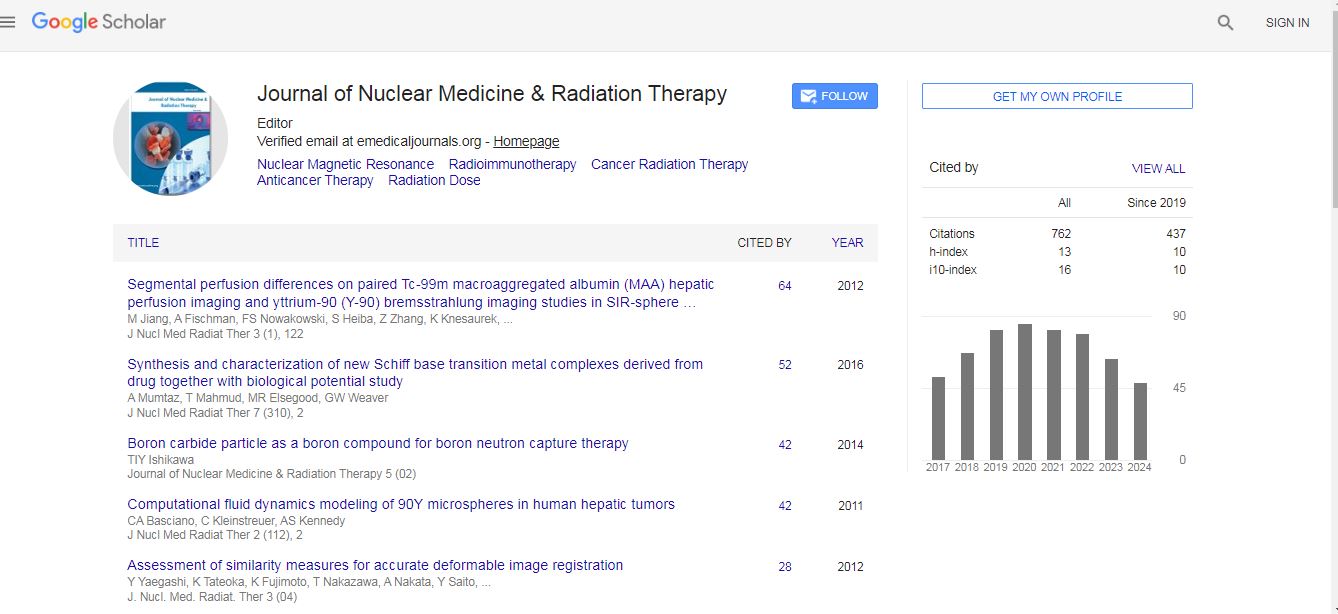
Nuclear Medicine & Radiation Therapy received 706 citations as per Google Scholar report