Dikhanbay Abduvaliyev
Uzbekistan
Scientific Tracks Abstracts: J Sports Med Dop Stud
The field of orthopedic medicine has witnessed groundbreaking innovations that have significantly improved patient care, surgical outcomes, and rehabilitation processes. Emerging technologies such as robotic-assisted surgery, 3D printing, biologics, and artificial intelligence (AI) have reshaped the diagnosis and treatment of musculoskeletal disorders, enhancing precision and reducing recovery times.Robotic-assisted surgery has revolutionized joint replacement and spinal procedures by providing greater accuracy, minimizing surgical trauma, and improving implant longevity. Concurrently, 3D printing technology has enabled the creation of custom implants and prosthetics tailored to individual patient anatomy, optimizing functionality and biocompatibility. Advances in biomaterials, such as bioresorbable implants and bioceramics, further enhance integration with native bone and reduce rejection risks.Regenerative medicine, including stem cell therapy, platelet-rich plasma (PRP), and tissue engineering, is reshaping the management of osteoarthritis, fractures, and tendon injuries by promoting natural tissue healing and reducing the need for invasive surgery. Gene therapy is also being explored to enhance cartilage regeneration and prevent degenerative joint diseases.Smart orthopedic implants with embedded sensors allow for real-time monitoring of load distribution, wear, and healing progress, providing clinicians with valuable data to personalize post- operative rehabilitation. AI-driven diagnostic tools, combined with wearable technology, assist in early detection of orthopedic conditions and enhance patientspecific rehabilitation strategies.Minimally invasive techniques, such as arthroscopy and percutaneous fixation, continue to reduce surgical morbidity, hospital stays, and post-operative complications. These advancements collectively contribute to improved patient outcomes, faster recovery, and reduced healthcare costs.As research continues, the future of orthopedic medicine is expected to focus on further personalization of treatments, enhanced implant longevity, and non-invasive regenerative solutions. Collaboration between biomedical engineers, orthopedic surgeons, and data scientists will be key in integrating these innovations into clinical practice and optimizing musculoskeletal healthcare.
Dikhanbay Abduvaliyev is a distinguished medical professional from Uzbekistan with a strong focus on orthopedic medicine and patient care. With extensive experience in diagnosing and treating musculoskeletal conditions, he has been actively involved in advancing innovative approaches in orthopedic practice. His work emphasizes the integration of modern techniques and technologies to improve patient outcomes, particularly in post-surgical rehabilitation and minimally invasive procedures. Dr. Abduvaliyev is committed to medical education and continues to contribute to the development of orthopedic standards in Uzbekistan and beyond.
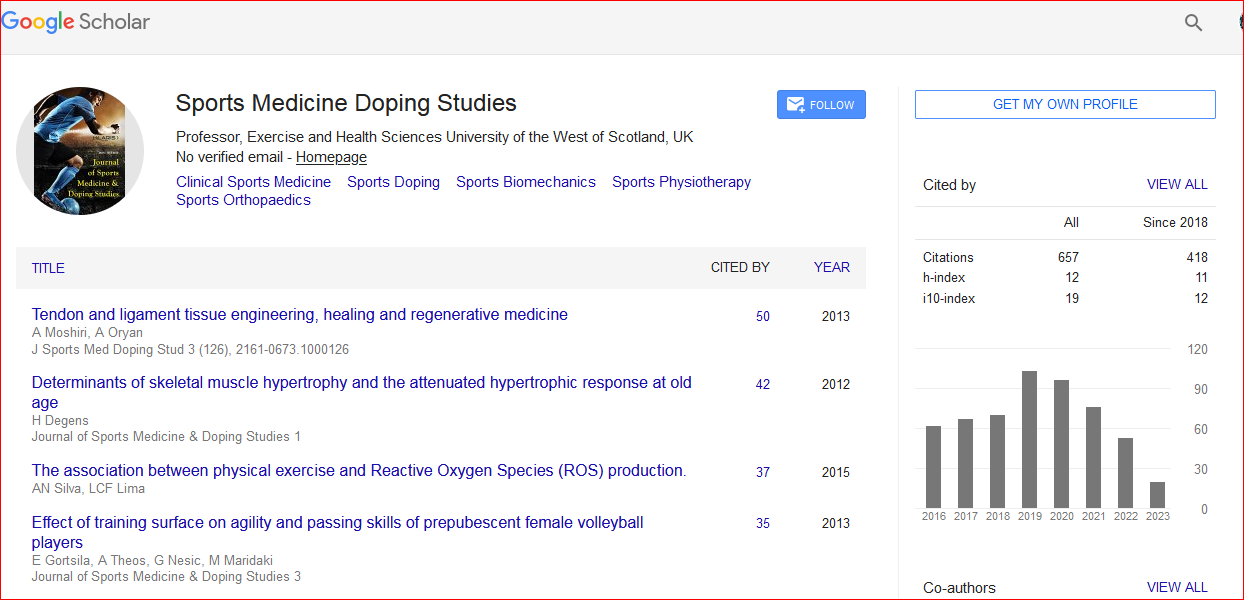
Journal of Sports Medicine & Doping Studies received 1022 citations as per Google Scholar report
 Spanish
  Chinese
  Russian
  German
  French
  Japanese
  Portuguese
  Hindi
Hindi 