Research Article - (2026) Volume 16, Issue 2
Received: 10-Mar-2025, Manuscript No. Jbpbt-26-186276;
Editor assigned: 12-Mar-2026, Pre QC No. P-186276;
Reviewed: 27-Mar-2026, QC No. Q-186276;
Revised: 07-Apr-2025, Manuscript No. R-186276;
Published:
14-Apr-2025
Citation: Prajapati, Gaurav, Meenakshi Pawar and Kinshuk Raj Srivastava. “Whole-Cell Biocatalysis for 4-Hydroxyisoleucine (4-HIL) Production in E. coli” J Bioprocess Biotech 16 (2026): 733.
Copyright: © 2026 Prajapati G, et al. This is an open-access article distributed under the terms of the Creative Commons Attribution License, which permits unrestricted use, distribution, and reproduction in any medium, provided the original author and source are credited.
4-HydroxyIsoLeucine (4-HIL) is a valuable non-proteinogenic amino acid with potent insulinotropic properties, offering significant therapeutic potential for the treatment of type 2 diabetes and metabolic disorders. Currently, the industrial availability of 4-HIL is limited by the low yields obtained from Trigonella foenum-graecum (fenugreek) seeds and the environmental burden associated with chemical synthesis. To address these limitations, this study establishes a sustainable whole-cell biocatalytic platform for the production of 4-HIL using recombinant Escherichia coli containing L-isoleucine dioxygenase (IDOI162T/T182N). Thus, a whole-cell biotransformation system was subsequently developed, wherein the engineered cells catalysed the regio- and stereoselective hydroxylation of exogenously supplied L-isoleucine in the presence of α-ketoglutarate, FeSO₄ and ascorbic acid. This work demonstrates a robust and scalable "green" synthetic route for 4-HIL production, offering a viable alternative to traditional plant extraction for pharmaceutical applications.
4-Hydroxyisoleucine • Biocatalytic platform • Whole-cell biotransformation • L-isoleucine dioxygenase • Escherichia coli
4-HydroxyIsoLeucine (4-HIL) is a non-proteogenic amino acid naturally found in fenugreek seeds (Trigonella foenum-graecum). 4HIL emerges as a potential therapeutic for metabolic disorder including type 2 diabetes mellitus and obesity [1-3], 4-HIL exerts its therapeutic effects mainly through a dual mechanism of action. First, it acts as a glucose-dependent insulin secretagogue, stimulating insulin release from the pancreatic β-cells only when blood glucose is elevated, thereby minimizing the risk of hypoglycaemia [4, 5]. In addition to stimulating insulin secretion, 4-HIL increases peripheral insulin sensitivity and glucose uptake by enhancing the expression of Glucose Transporter-4 (GLUT-4) and Insulin Receptor Substrate-1 (IRS-1) and suppressing proinflammatory mediators, including Tumor Necrosis Factor-α (TNF-α) [4]. Further studies have shown that 4-HIL prevents cardiovascular and hepatic injury via improvements in lipid profiles, including triglycerides and low-density lipoprotein cholesterol and increases in high-density lipoprotein cholesterol, as well as the inhibition of fat accumulation in adipose tissues, aiding in weight loss. Recent reports highlight 4HIL's role in enhancing hepatic glycogen synthesis and reducing chronic inflammation, thus extending its potential use as a therapeutic agent in metabolic syndrome management [5, 6].
Despite the therapeutic advantages, the large-scale production of 4HIL through traditional extraction methods from fenugreek seeds continues to be challenging. 4-HIL has been mainly derived from the seeds of Trigonella foenum-graecum (fenugreek), in which it is the main free amino acid, constituting 0.41-1.90% of the seed's dry weight, depending on genotype and growth conditions [7, 8]. This process yields about 150 mg of 4-HIL per kilogram of seed material [9]. In addition, abiotic factors such as temperature, solar irradiation and the availability of water influence the accumulation of 4-HIL in fenugreek, adding additional unpredictability to production systems using this plant [10]. This poor yield is further exacerbated by the complexity of the extraction medium, which requires extensive processing of the seeds to produce a multi-stage solvent extraction, often accompanied by the concurrent extraction of large amounts of saponins, fibers and lipids. As a result, the requirement for an additional downstream process to achieve high purity makes the conventional approach both technically and economically unviable. Therefore, there is an unmet need to develop more scalable processes and enzyme based or microbial production process appears to be a promising avenue.
The chemical synthesis to isolate pure (2S, 3R, 4S)-4-hydroxyisoleucine is challenging due to three consecutive chiral centres which can potentially results in eight potential stereoisomers. [11] To achieve the desired stereoselectivity complex multi-step synthesis and costly chiral auxiliaries or complex organocatalysts is required. Although, this process results in only low isolated yields of around 40%, [12] thus restricting the applicability of chemical synthesis to a large extent. The challenges along this direction further motivated researchers to explores other approaches and enzyme-based process is gaining considerable attention due to their high stereoselectivity and mild reaction conditions compared to conventional chemical synthesis routes [13-15]. Isoleucine Dioxygenases (IDOs) are Fe (II)/2-ketoglutarate-dependent dioxygenases is emerging as better option due to its ability to catalyse the regio- and stereoselective hydroxylation of L-isoleucine to produce (2S,3R,4S)-4-HIL. Discovery of IDO from Bacillus species was great step forward as this enabled direct and highly specific hydroxylation of L-isoleucine to the desired stereoisomer of 4-HIL [16]. Although, this presents advantage, poor stability and catalytic efficiency along with dependence on 2-ketoglutarate cofactors, limits its exploitation for large scale production. To overcome this problem, engineering of IDO through directed evolution approaches is being routinely explored for further improvement of catalytic efficiency of IDO for stereoselective synthesis of (2S, 3R, 4S)-4-HIL. Efforts to engineer IDO from Bacillus Thuringiensis have resulted in a 0.5-fold increase in efficiency, while the double mutant N126H/T130K of IDO from B. weihenstephanensis shows a 2.4-fold enhancement in catalytic efficiency [16-18]. Furthermore, the double mutant I162T/T182N IDO from Bacillus Subtilis has led to improved activity, expression levels and a yield of 80 g/L/d for (2S, 3R, 4S)-4-HIL synthesis using 50 g/L wet cell [19]. The process appears to be encouraging, but enzymatic efficiency improvements is still limited to meet the industrial scale production. Further efforts towards improving our understanding of IDO’s structure-activity relationship will guide engineering of IDOs for improved catalytic performance. In the meantime, more effective strategy will be to utilize the engineered variant reported till date and develop whole cell catalysts for production of 4-HIL. Recent studies have focused on developing Bacillus Thuringiensis IDO’s expressing in heterologous microbial host for conversion of L-isoleucine to 4-HIL in whole-cell biotransformation processes [14, 19] (Figure 1).
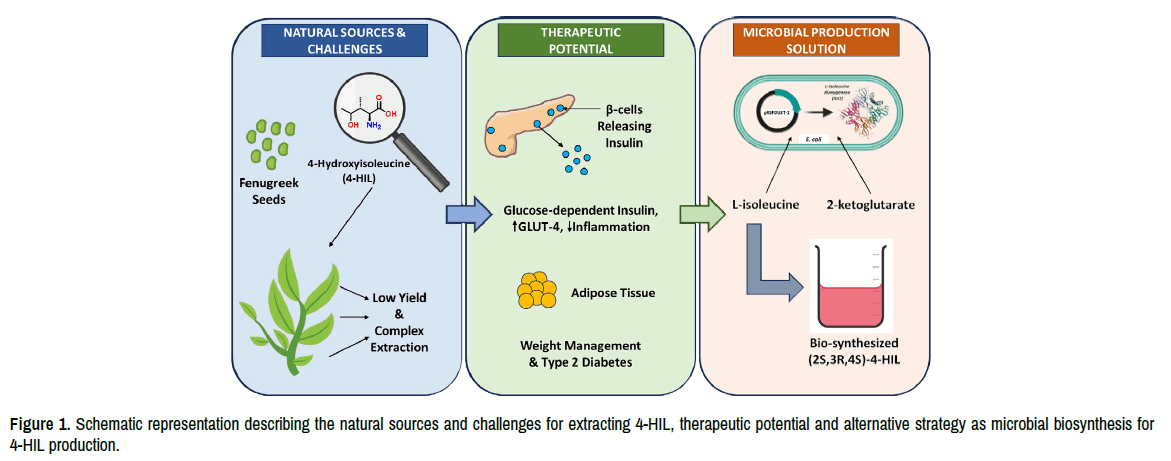
Figure 1. Schematic representation describing the natural sources and challenges for extracting 4-HIL, therapeutic potential and alternative strategy as microbial biosynthesis for 4-HIL production.
Chemicals: The media reagents and salts were purchased from HiMedia. The chemicals required were purchased Tokyo Chemical Industry (India).
Strains, plasmids and genes: The strains used in this study are E. coli BL21 (DE3) for expression and biocatalytic conversion while DH5α was used for routine molecular cloning purposes. pUC57 vector was used for gene cloning and pRSFDuet-1 was used as an expression vector. The gene L-Isoleucine dioxygenase (IDOI162T/T182N) for biocatalytic conversion was codon-optimised and synthesised from GenScript.
Molecular cloning: The gene L-Isoleucine Dioxygenase (IDOI162T/T182N) cloned into pUC57 was transformed into E. coli DH5α to increase the copy number. The transformed colonies were then mini-prep to isolate sufficient plasmid. The plasmid was then restriction digested with SacI and HindIII restriction enzyme site and cloned into an expression vector pRSFDuet-1. This cloned vector was then transformed into BL21 (DE3) for further expression and biocatalytic conversion (Figure 2A).
Protein expression: 100ml of the main culture after induction was isolated and centrifuged. The cell pellet was sonicated in 20mM Tris HCl and 150mM NaCl buffer with pulse 10s on and 5s off with amplitude 40% followed by centrifugation. For SDS-PAGE Gel, Resolving Gel and Stacking Gel was prepared by mixing acrylamide/bis-acrylamide solution, Tris-HCl buffer, SDS, APS and TEMED. For 10% Resolving gel, 4.1ml of water, 3.2 ml of acrylamide/bis-acrylamide solution, 2.5ml of Tris HCl (1.5M, pH-8.8), 0.1 ml of 10% SDS, 32µl of APS and 10µl of TEMED were mixed thoroughly. For 4% Stacking gel, 6.1ml of water, 1.3ml of acrylamide/bis-acrylamide solution, 2.5ml of Tris HCl (0.5M, pH-6.8), 0.1ml of 10% SDS, 100µl of APS and 10µl of TEMED were mixed thoroughly. After both the gel was prepared, resolving gel was poured into the gel casting tray and allow it to solidify. APS and TEMED were added just before pouring the gel into the caster. Then prepared stacking gel was poured onto the resolving gel after it gets solidified and allowed it to polymerize. Protein Samples were prepared by adding DTT and loading buffer and samples were incubated (usually at 95-100°C for 5 minutes) to denature the proteins (Figure 2B).
Whole-cell biotransformation: A single colony was inoculated in the 5ml of LB Media with 50 µg/mL of kanamycin antibiotic selection and incubated at 37°C for overnight in shaker incubator at 180rpm. 100 µl of seed culture was inoculated in the 100ml of LB Media with 50 µg/mL of kanamycin antibiotic selection and incubated at 37°C in shaker incubator at 180rpm. Induction with Isopropyl ß-D-1-ThioGalactopyranoside (IPTG) was given once the Optical Density (OD600) of the secondary culture reaches 0.45, which was measured by the spectrophotometer. After induction, the culture was incubated for 12 hrs in the shaker incubator at 30°C and 180rpm. After the incubation, the secondary culture was centrifuged at 4000rpm for 10 mins at room temperature. The supernatant was decanted and the cell pellet in the falcon was treated with liquid nitrogen and stored in the -80°C for 2-3 hrs and later resuspended and transferred into the Tris HCl Buffer Reaction Mixture (pH 7). The reaction buffer includes 10ml of Tris HCl (100mM, pH 7), 2.99gm of Isoleucine (160mM), 2.33gm of α-Ketoglutarate (160mM), 10ml of Ferrous Sulphate (10mM) and 10ml of Ascorbic acid (10mM). After the cell pellet was transferred into the Buffer Reaction Mixture, the culture was then incubated at 37°C for 48hrs at 180rpm (Figure 2C).
Metabolite extraction: The culture was centrifuged at 10000 rpm for 10mins at room temperature and the extraction of the culture was done with the two fractions of the culture- the supernatant (Media fraction) collected and the cells (pellet) obtained. After centrifugation the supernatant was treated with the solvent ethyl acetate (1:3) and separated using separating funnel which was then evaporated using Rotavapor instrument. The buffer media (water extract) was collected in the flask separately. After evaporation the dried product traces (ethyl acetate extract) were redissolved in the 1ml methanol and collected in the 1.5ml tubes. The cell pellet obtained was resuspended in 1ml methanol along with the glass beads, vortexed and centrifuged at 13000 rpm for 10 min before collecting it into the 1.5ml tubes (Methanol extract) (Figure 2D).
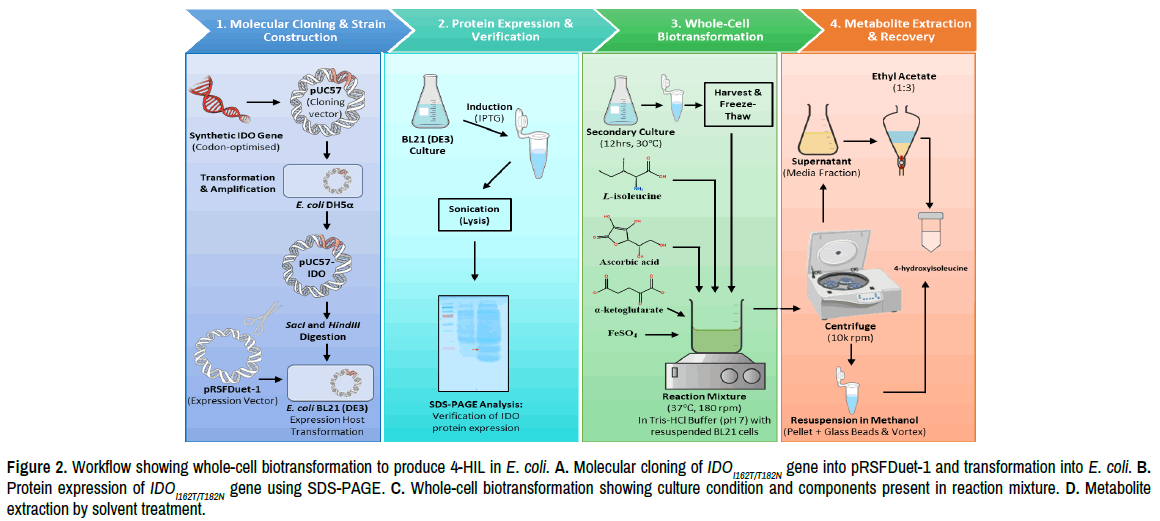
Figure 2. Workflow showing whole-cell biotransformation to produce 4-HIL in E. coli. A. Molecular cloning of IDOI162T/T182N gene into pRSFDuet-1 and transformation into E. coli. B. Protein expression of IDOI162T/T182N gene using SDS-PAGE. C. Whole-cell biotransformation showing culture condition and components present in reaction mixture. D. Metabolite extraction by solvent treatment.
For ESI-MS, ethyl acetate extract and water extract were submitted to Sophisticated Advance Instrument Facility (SAIF) present in CSIR-Central Drug Research Institute, Lucknow.
Literature survey
L-Isoleucine Dioxygenase (IDO), first identified in Bacillus Thuringiensis serovar israelensis ATCC 35646 lysate as the inaugural α-ketoglutarate-dependent dioxygenase acting on a free aliphatic amino acid (L-Ile), was characterized through N-terminal sequencing (KMSGFSIEEKVHEPESKGFLEI) matching 100% to the uncharacterized RBTH_06809 locus, which harbors the conserved 2-His-1-carboxylate facial triad and homology to L-proline hydroxylases. Exhibiting 1.28 U/mg activity exclusively in logarithmic growth phase lysates, mirroring patterns in related hydroxylases, IDO stereoselectively produces (2S,3R,4S)-4-HydroxyIsoLeucine (4-HIL), a bioactive antidiabetic compound, positioning it as a superior biocatalyst over low-yield plant extraction or wasteful chemical routes. Structural analyses revealed a dynamic β2–α3 loop for substrate gating, while mutagenesis at T244, Y143 and S153 expanded substrate scope to aliphatic/aromatic amino acids, enabling E. coli -based whole-cell platforms for scalable C–H hydroxylation and highlighting IDO's paradigm-shifting potential in biocatalytic amino acid derivatization [16].
Fe/2-oxoglutarate-dependent dioxygenases (Fe/2-KG DOs), including L-Isoleucine Dioxygenase (IDO), represent powerful biocatalysts for selective C–H hydroxylation of aliphatic amino acids such as L-Ile, L-Leu, L-Met, L-Nle and L-Nva, enabling synthesis of valuable hydroxylated derivatives. The apo crystal structure of IDO revealed a disordered β2–α3 loop adjacent to the active site, whose dynamic conformational changes, demonstrated by molecular dynamics simulations, facilitate substrate recruitment and active-site sealing upon binding, consistent with roles observed in related dioxygenases. Structure-guided saturation mutagenesis targeting Thr244 generated variants T244A, T244G and T244S exhibiting markedly improved regioselectivity, converting L-Nle predominantly to the 4-hydroxynorleucine (4-HNL) regioisomer by subtly expanding the binding pocket, constraining substrate conformations and increasing the Fe²⁺–C4/C5 distance differential from 0.12 to 0.81 Å to favor C4 hydroxylation. These molecular insights elucidate IDO's regioselectivity mechanism and provide a rational engineering framework for enhancing C–H functionalization precision across the Fe/2-KG DO family [15].
Cloning and expression of the IDO gene into pRSFDuet-1
The codon-optimized L-Isoleucine Dioxygenase (IDOI162T/T182N) gene was first synthesized in the pUC57 vector and transformed into Escherichia coli DH5α. Restriction digestion of the recombinant pUC57- IDOI162T/T182N plasmid with SacI and HindIII yielded a single DNA fragment of ~741 bp, consistent with the expected size of the IDOI162T/T182N insert.
The 741 bp IDOI162T/T182N fragment was subsequently ligated into the multiple cloning site of the pRSFDuet-1 vector and transformed into E. coli DH5α for plasmid amplification. Colony PCR screening of the transformants generated a specific amplification product of 741 bp, confirming successful insertion of the IDOI162T/T182N gene into pRSFDuet-1. Gel documentation of the restriction digestion and colony PCR products verified the integrity of the construct, which was then used for transformation into the expression host for subsequent protein production experiments (Figures 3a-d).
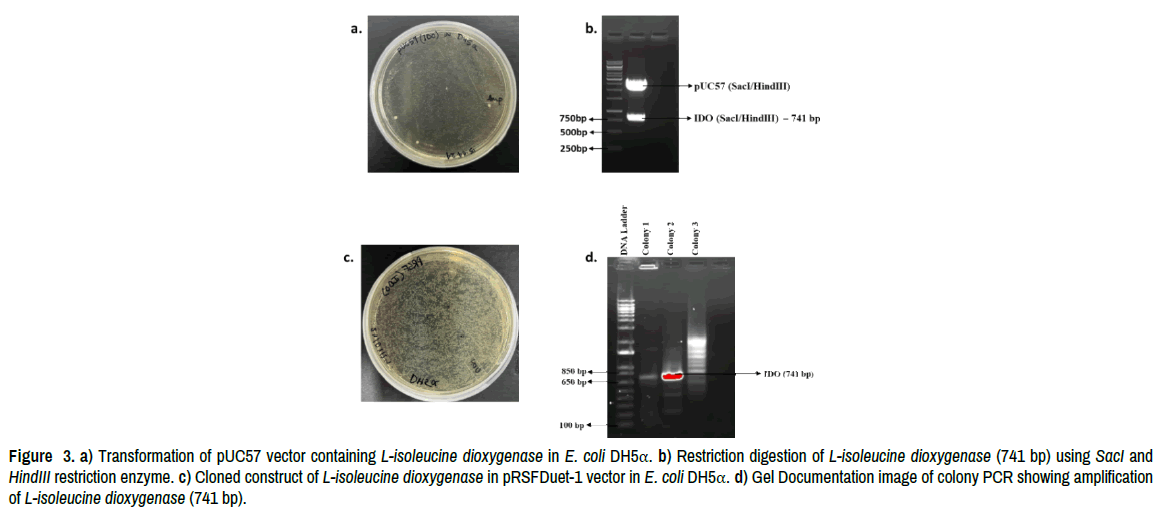
Figure 3. a) Transformation of pUC57 vector containing L-isoleucine dioxygenase in E. coli DH5α. b) Restriction digestion of L-isoleucine dioxygenase (741 bp) using SacI and HindIII restriction enzyme. c) Cloned construct of L-isoleucine dioxygenase in pRSFDuet-1 vector in E. coli DH5α. d) Gel Documentation image of colony PCR showing amplification of L-isoleucine dioxygenase (741 bp).
SDS–PAGE analysis confirmed the heterologous expression of L-Isoleucine Dioxygenase (IDOI162T/T182N) in the recombinant Escherichia coli strain. After induction with IPTG, a prominent protein band corresponding to the expected molecular weight of IDOI162T/T182N (28.1 kDa) was observed in the total cell lysate of induced cultures, whereas this band was absent or comparatively weaker in the non-induced control (Figure 4).
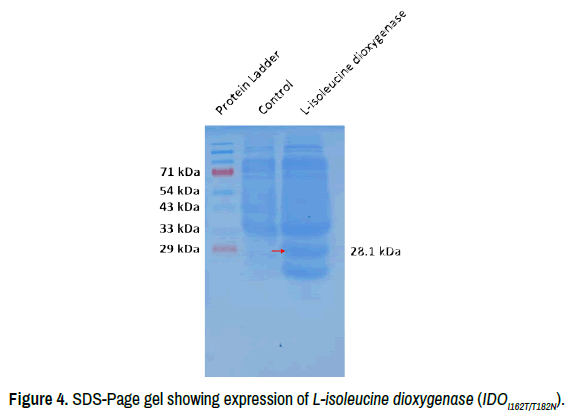
Figure 4. SDS-Page gel showing expression of L-isoleucine dioxygenase (IDOI162T/T182N).
4-hydroxyisoleucine culture
Whole-cell biotransformation experiments were performed using recombinant E.coli cultures expressing L-isoleucine dioxygenase to produce 4-hydroxyisoleucine (4-HIL). At the start of the reaction (0 h), seed culture was inoculated into the main reaction mixture and no visible biotransformation was apparent. After 48 h of incubation under shaking conditions, the culture showed clear progression of the biotransformation process, as evidenced by subsequent product extraction and analysis.
The whole-cell reaction mixture consisted of 10 ml Tris–HCl buffer (100 mM, pH 7), L-isoleucine (2.99 g; 160 mM), α-ketoglutarate (2.33 g; 160 mM), 10 ml FeSO₄ solution (10 mM) and 10 ml ascorbic acid solution (10 mM), which together provided the substrate and required cofactors for IDOI162T/T182N -catalyzed hydroxylation. The recombinant cells functioned as biocatalysts, converting L-isoleucine into 4-HIL over the 48 h reaction period.
Following biotransformation, 4-HIL and other metabolites were recovered from the culture broth by liquid–liquid extraction using ethyl acetate as the organic solvent (Figure 5a-d). The appearance of product-associated peaks/bands in the extracted phase, in contrast to the starting material profile, confirmed successful whole-cell conversion of L-isoleucine to 4-HIL under the described reaction conditions.
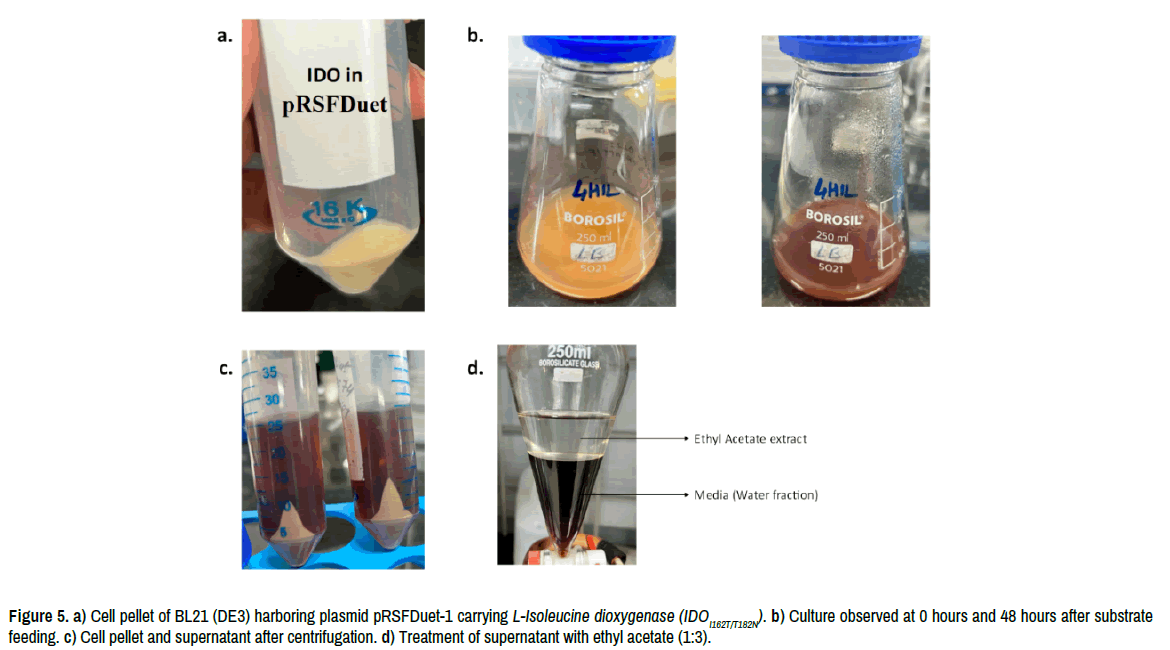
Figure 5. a) Cell pellet of BL21 (DE3) harboring plasmid pRSFDuet-1 carrying L-Isoleucine dioxygenase (IDOI162T/T182N). b) Culture observed at 0 hours and 48 hours after substrate feeding. c) Cell pellet and supernatant after centrifugation. d) Treatment of supernatant with ethyl acetate (1:3).
Synthesis of 4-hydroxyisoleucine.
L-isoleucine dioxygenase enzyme catalyzes hydroxylation of L-isoleucine to produce only one diastereomer, (2S,3R,4S)-4-HIL with remarkable regioselectivity and stereoselectivity. This hydroxylation process involves the oxidation of α-ketoglutarate to succinate [20]. The culture after extraction with ethyl acetate, dried under reduced pressure, collected and analysed by ESI-MS.
The peaks of Isoleucine and 4-hydroxyisoleucine which was observed at m/z = 149 in positive mode and m/z = 145 in negative mode. The molecular weight of Isoleucine is 131.095 and 4-Hydroxyisoleucine is 147.174 (Figures 6,7).
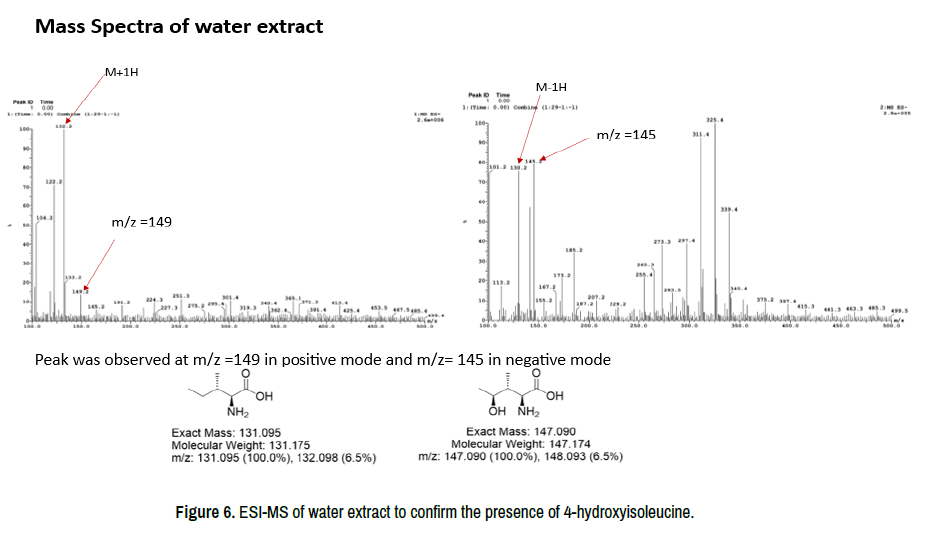
Figure 6. ESI-MS of water extract to confirm the presence of 4-hydroxyisoleucine.
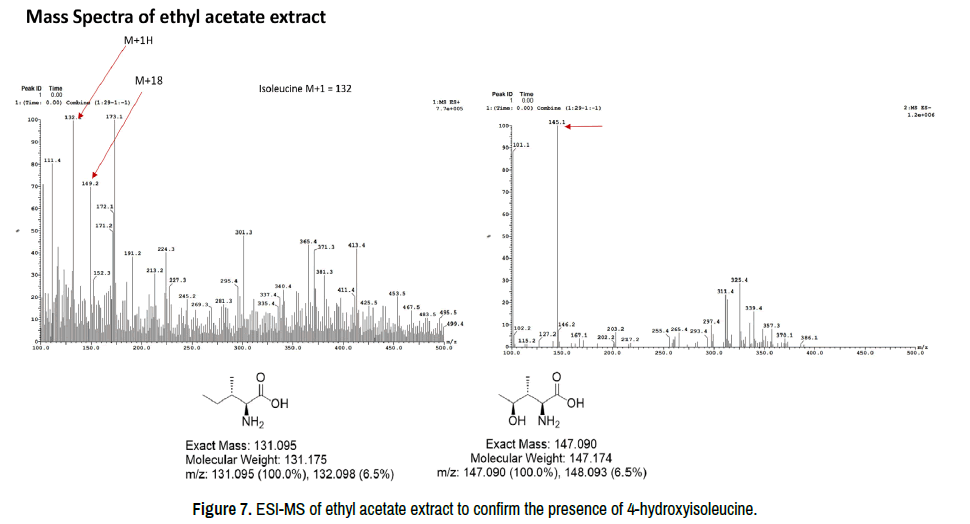
Figure 7. ESI-MS of ethyl acetate extract to confirm the presence of 4-hydroxyisoleucine.
In conclusion, this study successfully established a heterologous expression system for codon-optimized L-Isoleucine Dioxygenase (IDOI162T/T182N) in Escherichia coli BL21 (DE3). By cloning into the pRSFDuet-1 vector, we achieved efficient overexpression of the recombinant protein, as verified by SDS-PAGE analysis. The whole-cell biotransformation protocol along with α-ketoglutarate, FeSO₄ and ascorbic acid cofactors, proved effective for the conversion of L-isoleucine into 4-hydroxy-L-isoleucine. Furthermore, the extraction method allowed for the better recovery of metabolites from both the extracellular supernatant and the cellular biomass. The results indicate that this whole-cell biocatalytic system offers a viable and sustainable approach for the production of 4-hydroxy-L-isoleucine, with potential applications in pharmaceutics.
Google Scholar, Cross Ref, Indexed at
Google Scholar, Cross Ref, Indexed at
Google Scholar, Cross Ref, Indexed at
Google Scholar, Cross Ref, Indexed at
Google Scholar, Cross Ref, Indexed at
Google Scholar, Cross Ref, Indexed at
Google Scholar, Cross Ref, Indexed at
Google Scholar, Cross Ref, Indexed at
Google Scholar, Cross Ref, Indexed at
Google Scholar, Cross Ref, Indexed at
Google Scholar, Cross Ref, Indexed at
Google Scholar, Cross Ref, Indexed at
Google Scholar, Cross Ref, Indexed at
Google Scholar, Cross Ref, Indexed at
Google Scholar, Cross Ref, Indexed at
Google Scholar, Cross Ref, Indexed at
Google Scholar, Cross Ref, Indexed at
Journal of Bioprocessing & Biotechniques received 3351 citations as per Google Scholar report