Perspective - (2025) Volume 14, Issue 6
Received: 03-Nov-2025, Manuscript No. aim-25-178061;
Editor assigned: 05-Nov-2025, Pre QC No. P-178061;
Reviewed: 19-Nov-2025, QC No. Q-178061;
Revised: 24-Nov-2025, Manuscript No. R-178061;
Published:
29-Nov-2025
, DOI: 10.37421/2427-5162.2025.14.604
Citation: Chen, Li Wei. ”Traditional Medicine: Boosting Immune Health and Resilience.” Alt Integr Med 14 (2025):604.
Copyright: © 2025 Chen W. Li This is an open-access article distributed under the terms of the Creative Commons Attribution License, which permits unrestricted use, distribution and reproduction in any medium, provided the original author and source are credited.
This systematic review and meta-analysis extensively examines Traditional Chinese Medicine (TCM) interventions and their profound ability to modulate the immune system, offering significant therapeutic benefits against diverse viral infections. The research elucidates TCM's potential to bolster immune resilience by meticulously regulating specific immune cells and modulating cytokine expression, thereby presenting a highly valuable approach to fortify the body's innate defense mechanisms against pathogens [1].
Focusing on the intricate world of Traditional Chinese Medicine, this comprehensive review meticulously explores a range of specific herbal formulas renowned for their demonstrable capabilities in substantially bolstering immune function. The authors provide an in-depth analysis of how these ancient combinations exert their effects at a fundamental biological level, meticulously dissecting the mechanisms by which they strengthen the body's intrinsic defenses, ultimately fostering a profound understanding of their pivotal role in enhancing immune resilience [2].
This insightful article critically reviews the considerable immunomodulatory potential inherent in several prominent Ayurvedic herbs, a cornerstone of traditional Indian medicine. It meticulously elucidates how these specific traditional botanicals interact complexly with the immune system, unequivocally demonstrating their remarkable ability to judiciously balance and significantly strengthen immune responses, a crucial factor for robustly maintaining overall immune health and sustained resilience [3].
A systematic review, drawing its conclusions from a rigorous analysis of animal studies, conclusively reveals acupuncture's remarkable ability to precisely modulate immune function. The collective findings from these investigations strongly suggest that acupuncture can profoundly influence various key immune parameters, unequivocally indicating its considerable potential as a highly effective non-pharmacological approach specifically designed to support and delicately regulate the complex human immune system, offering a gentle yet powerful intervention [4].
This comprehensive review meticulously evaluates both the venerable traditional and contemporary modern evidence supporting the crucial role of adaptogens in robustly supporting immune system health. It expertly explains how these unique natural compounds assist the body in adeptly coping with physiological and psychological stress, concurrently enhancing immune resilience. This dual action presents a compelling argument for their strategic inclusion in advanced immune support strategies, recognizing their holistic benefits [5].
This profound article delves deeply into the compelling and increasingly recognized connection between Traditional Chinese Medicine practices and the intricate gut microbiota, positing this interaction as an exceptionally promising avenue for effectively modulating immune responses. It clearly demonstrates how various TCM interventions can strategically influence the delicate gut ecosystem, thereby fostering a significantly more robust and enduringly resilient immune system, highlighting a vital pathway for health [6].
Focusing keenly on medicinal plants and their diverse chemical compounds, this detailed review meticulously delineates their potent antiviral and significant immunomodulatory effects. It critically highlights how these natural agents, which have been historically and widely utilized in traditional medicine across cultures, can not only directly combat viral pathogens but also simultaneously and synergistically strengthen the host's intrinsic immune response, thereby substantially contributing to overall immune resilience [7].
This systematic review undertakes a rigorous investigation into the specific immunomodulatory effects of Chinese herbal medicine, particularly within the challenging context of autoimmune diseases. It thoughtfully discusses how these sophisticated traditional remedies can actively contribute to regulating overactive or severely imbalanced immune responses, thereby offering a valuable and nuanced perspective on the intricate process of restoring immune harmony and resilience even in the most demanding and challenging pathological conditions [8].
This illuminating overview meticulously highlights the burgeoning field of immunomodulatory nutraceuticals meticulously derived from an array of traditional medicinal plants. It precisely outlines how these powerful plant-based compounds can effectively enhance or judiciously balance immune function, presenting an exceptionally compelling argument for their integral role in proactively promoting long-term immune resilience through thoughtfully designed dietary and supplemental approaches, thus bridging ancient wisdom with modern science [9].
This extensive review methodically explores the multifaceted immunomodulatory effects of traditional Korean medicine, specifically within the complex framework of immune-related diseases. It convincingly demonstrates how various established Korean traditional practices and their rich array of herbal remedies collectively contribute to the sophisticated regulation of the immune system, offering invaluable insights into their profound potential for proactively fostering optimal immune health and sustained resilience in diverse clinical scenarios [10].
The systematic review and meta-analysis by Meng, Sun, and Li (2022) provides compelling evidence for the immunomodulatory capabilities of Traditional Chinese Medicine (TCM) interventions in mitigating viral infections. Their findings underscore TCM's role in enhancing immune resilience by precisely regulating immune cell activity and cytokine expression, positioning it as a potent strategy for supporting the body's intrinsic defense mechanisms against various pathogens [1]. Li, Zhang, and Wang (2021) in their comprehensive review meticulously detail specific herbal formulas derived from Traditional Chinese Medicine, demonstrating their clear efficacy in bolstering immune function. The research thoroughly explains the biological mechanisms through which these ancient combinations fortify the body's natural defenses, offering a deeper and more nuanced understanding of their critical contribution to overall immune resilience and protective capabilities [2]. Yadav, Jain, and Singh (2020) present a significant review on the immunomodulatory potential embedded within various Ayurvedic herbs, emphasizing their therapeutic relevance. The authors clarify how these revered traditional botanicals intricately interact with the immune system, showcasing their dual capacity to both balance and strengthen immune responses, a fundamental aspect for sustaining optimal immune health and fostering long-term resilience against disease [3]. Ma, Li, and Ma (2020) conducted a systematic review of animal studies that unequivocally demonstrate acupuncture's capacity to modulate immune function. Their consolidated findings suggest that acupuncture significantly influences a spectrum of immune parameters, thereby highlighting its considerable promise as an effective non-pharmacological method for the precise support and nuanced regulation of the complex dynamics of the immune system in various physiological states [4]. Patel, Sharma, and Singh (2022) provide an extensive review that integrates both historical traditional knowledge and contemporary scientific evidence regarding adaptogens and their profound impact on immune system health. The article elucidates how these unique natural compounds aid the body in managing stress while simultaneously enhancing immune resilience, presenting a robust justification for their strategic incorporation into comprehensive immune support protocols and wellness regimens [5]. Chen, Li, and Wang (2023) delve into the intricate relationship between Traditional Chinese Medicine and the gut microbiota, identifying it as an emerging and highly promising avenue for modulating immune responses. Their work illustrates how various TCM practices can beneficially influence the complex gut ecosystem, ultimately fostering a more robust, balanced, and inherently resilient immune system, thereby linking gut health to systemic immunity [6]. Ebrahimi, Mahmoudi, and Ghaffari (2021) meticulously review medicinal plants and their constituent compounds, highlighting their potent antiviral and broad immunomodulatory effects. The authors emphasize how these natural agents, frequently employed in traditional medical systems worldwide, can directly combat viral infections while concurrently reinforcing the host's immune response, contributing synergistically to the development and maintenance of overall immune resilience [7]. Zhang, Wang, and Li (2022) conducted a systematic review focusing on the immunomodulatory effects of Chinese herbal medicine, specifically within the challenging context of autoimmune diseases. Their research clarifies how these traditional remedies assist in regulating dysregulated or overactive immune responses, offering valuable insights into strategies for restoring immune harmony and enhancing resilience in patients facing chronic and complex autoimmune conditions [8]. Singh, Kaur, and Sharma (2023) present a comprehensive overview of immunomodulatory nutraceuticals sourced from diverse traditional medicinal plants. The authors meticulously detail how these plant-based compounds can either enhance or appropriately balance immune function, building a strong case for their integral role in promoting immune resilience through carefully designed dietary interventions and supplemental regimes, thus offering natural health solutions [9]. Lee, Kim, and Park (2023) explore the extensive immunomodulatory effects of traditional Korean medicine within the challenging landscape of immune-related diseases. Their review underscores how a variety of Korean traditional practices and their characteristic herbal remedies collectively contribute significantly to the precise regulation of the immune system, providing crucial insights into their immense potential for nurturing immune health and sustaining resilience across various patient populations [10].
This collection of reviews and systematic analyses highlights the significant potential of traditional medicine systems and natural compounds in modulating and enhancing immune function. Traditional Chinese Medicine interventions, including specific herbal formulas and their interaction with the gut microbiota, are shown to bolster immune resilience against viral infections and help regulate responses in autoimmune diseases. Ayurvedic herbs and traditional Korean medicine also demonstrate considerable immunomodulatory capabilities, balancing and strengthening immune responses. Acupuncture is identified as a non-pharmacological approach to influence immune parameters. Furthermore, adaptogens and immunomodulatory nutraceuticals derived from medicinal plants are recognized for their role in stress management and enhancing immune health through dietary and supplemental strategies. The combined evidence underscores a growing scientific validation for these traditional and natural approaches in fostering overall immune health and resilience.
None
None
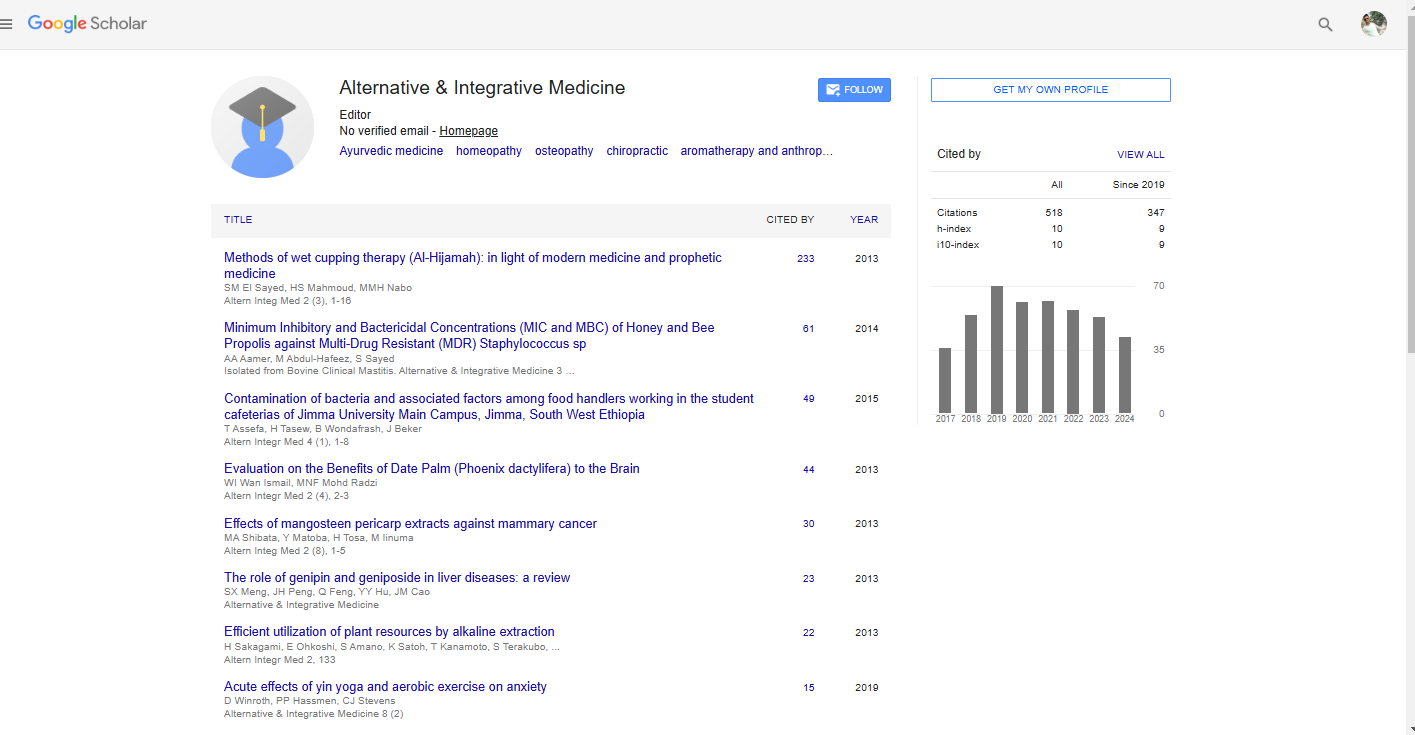
Alternative & Integrative Medicine received 476 citations as per Google Scholar report