Perspective - (2025) Volume 15, Issue 4
Received: 01-Jul-2025, Manuscript No. jnt-26-178950;
Editor assigned: 03-Jul-2025, Pre QC No. P-178950;
Reviewed: 17-Jul-2025, QC No. Q-178950;
Revised: 22-Jul-2025, Manuscript No. R-178950;
Published:
29-Jul-2025
, DOI: 10.37421/2161-0959.2025.15.576
Citation: Zielinski, Tomasz. ”Targeting Oxidative Stress for Kidney Disease Protection.” J Nephrol Ther 15 (2025):576.
Copyright: © 2025 Zielinski T. This is an open-access article distributed under the terms of the Creative Commons Attribution License, which permits unrestricted use, distribution and reproduction in any medium, provided the original author and source are credited.
Oxidative stress is a critical contributor to the development and progression of numerous renal disorders, underscoring its significance in nephrology research and clinical practice. Chronic kidney disease (CKD), diabetic nephropathy, and hypertensive nephropathy are all profoundly influenced by the imbalance between reactive oxygen species (ROS) production and the body's antioxidant defenses [1].
Mitochondrial dysfunction has emerged as a central player in the pathogenesis of renal fibrosis, a process characterized by the excessive accumulation of extracellular matrix in the kidney. This dysfunction directly fuels oxidative stress, making strategies that enhance mitochondrial health a promising avenue for renoprotection [2].
Diabetic nephropathy, a major complication of diabetes mellitus, exhibits a strong correlation with elevated levels of oxidative stress. The persistent hyperglycemia characteristic of diabetes triggers various pathways that generate ROS, leading to significant renal damage and dysfunction [3].
Hypertensive nephropathy, resulting from sustained high blood pressure, involves complex redox imbalances that contribute to endothelial dysfunction and injury to the glomeruli. Targeting these redox pathways, often in conjunction with interventions on the renin-angiotensin-aldosterone system, holds potential for renoprotection [4].
Nuclear factor erythroid 2-related factor 2 (Nrf2) is recognized as a master regulator of the cellular antioxidant response. Its activation can significantly bolster the kidney's defense against oxidative damage by upregulating endogenous antioxidant enzymes [5].
There is a pronounced interplay between inflammation and oxidative stress in the context of chronic kidney disease. Targeting inflammatory pathways, such as those mediated by NF-κB, can indirectly mitigate oxidative stress and offer synergistic renoprotective benefits when combined with antioxidant strategies [6].
Different species of reactive oxygen species (ROS), including superoxide and hydrogen peroxide, possess distinct roles in renal pathophysiology. A nuanced understanding of these specific roles is essential for developing highly targeted therapeutic interventions that address the precise mechanisms of renal damage [7].
Oxidative stress is a significant factor in the injury and subsequent dysfunction of podocytes, specialized cells crucial for glomerular filtration. Protecting podocytes from oxidative damage through targeted antioxidant therapies is vital for preserving kidney function in glomerular diseases [8].
Endogenous antioxidant enzymes, such as superoxide dismutase (SOD), catalase (CAT), and glutathione peroxidase (GPx), are the body's primary defense against ROS. Impairment in the function or expression of these vital enzymes is frequently observed in various renal pathologies [9].
The composition and function of the gut microbiome have been shown to influence systemic oxidative stress levels, with dysbiosis being associated with the progression of kidney disease. Modulating the gut microbiota presents a novel strategy for managing oxidative stress and inflammation in renal disorders [10].
The significant role of oxidative stress in the pathogenesis of various renal disorders, including chronic kidney disease (CKD), diabetic nephropathy, and hypertensive nephropathy, highlights the need for effective therapeutic strategies [1].
Targeting oxidative stress pathways with antioxidants or modulators of redox balance shows considerable promise for renoprotection, involving interventions to reduce reactive oxygen species (ROS) production, enhance endogenous antioxidant defenses, and mitigate oxidative damage to renal cells and tissues [1].
Mitochondrial dysfunction is a key driver of oxidative stress, particularly in the context of renal fibrosis. Strategies aimed at improving mitochondrial function, such as supplementation with coenzyme Q10 or the use of mitochondrial-targeted antioxidants, have demonstrated efficacy in attenuating fibrosis progression in preclinical models of kidney disease, emphasizing the importance of mitochondrial health for renoprotective therapies [2].
Diabetic nephropathy is intrinsically linked to increased oxidative stress, with hyperglycemia triggering pathways that generate excess ROS. Therapies focused on reducing advanced glycation end products (AGEs) or inhibiting NADPH oxidase (NOX) enzymes have shown potential in mitigating renal damage in diabetic patients, underscoring the necessity of understanding hyperglycemia-induced pathways for effective treatment development [3].
Hypertensive nephropathy is characterized by redox imbalances that lead to endothelial dysfunction and glomerular injury. Antioxidant interventions, especially when combined with agents that modulate the renin-angiotensin-aldosterone system (RAAS), may offer synergistic renoprotective effects. Research into novel agents that modulate redox signaling within the vasculature is an active and critical area of investigation [4].
Nrf2, a pivotal regulator of cellular antioxidant defense mechanisms, is a crucial therapeutic target for managing renal oxidative stress. Activating Nrf2 pathways through either phytochemicals or pharmacological agents can upregulate the expression of endogenous antioxidant enzymes, thereby providing substantial protection against kidney damage and holding significant promise for the prevention and treatment of renal disorders [5].
The intricate relationship between inflammation and oxidative stress is a hallmark of chronic kidney disease (CKD) progression. Targeting inflammatory pathways, such as those involving NF-κB, can indirectly reduce oxidative stress and contribute to renoprotective benefits. Consequently, combined anti-inflammatory and antioxidant strategies are being explored as potentially more effective than single-target approaches [6].
Understanding the specific roles of different reactive oxygen species (ROS) species, such as superoxide and hydrogen peroxide, in renal pathophysiology allows for the development of more precise and targeted therapeutic interventions. For example, targeting NADPH oxidase isoforms that predominantly produce superoxide may prove beneficial in specific renal conditions, leading to improved patient outcomes [7].
Oxidative stress plays a critical role in podocyte injury and subsequent dysfunction, which are key events in the development of glomerular diseases like focal segmental glomerulosclerosis (FSGS). Antioxidant therapies, particularly those that can be effectively delivered to the glomerulus, have the potential to protect podocytes from oxidative damage and preserve overall kidney function. Ongoing research is focused on developing novel delivery systems for these antioxidants [8].
Endogenous antioxidant enzymes, including superoxide dismutase (SOD), catalase (CAT), and glutathione peroxidase (GPx), are vital for detoxifying reactive oxygen species (ROS) and protecting renal cells. Impairment in the activity or expression of these enzymes is implicated in a wide array of renal pathologies, making strategies to enhance their function or expression attractive therapeutic avenues [9].
The gut microbiome's influence on systemic oxidative stress and its association with kidney disease progression are increasingly recognized. Modulating the gut microbiota through interventions like probiotics or prebiotics may offer a novel and effective strategy to reduce oxidative stress and inflammation in renal disorders, highlighting the therapeutic potential of the 'gut-kidney axis' [10].
Oxidative stress is a significant factor in the development and progression of various kidney diseases, including CKD, diabetic nephropathy, and hypertensive nephropathy. Strategies to target oxidative stress pathways, enhance mitochondrial function, and modulate the Nrf2 pathway show promise for renoprotection. Specific ROS species and their roles are crucial for targeted therapies. Inflammation and oxidative stress are intertwined in CKD, suggesting combined treatment approaches. Podocyte protection from oxidative damage is key in glomerular diseases. Endogenous antioxidant enzymes are vital, and their impairment contributes to renal pathologies. The gut microbiome's role in oxidative stress and kidney disease is an emerging therapeutic area.
None
None
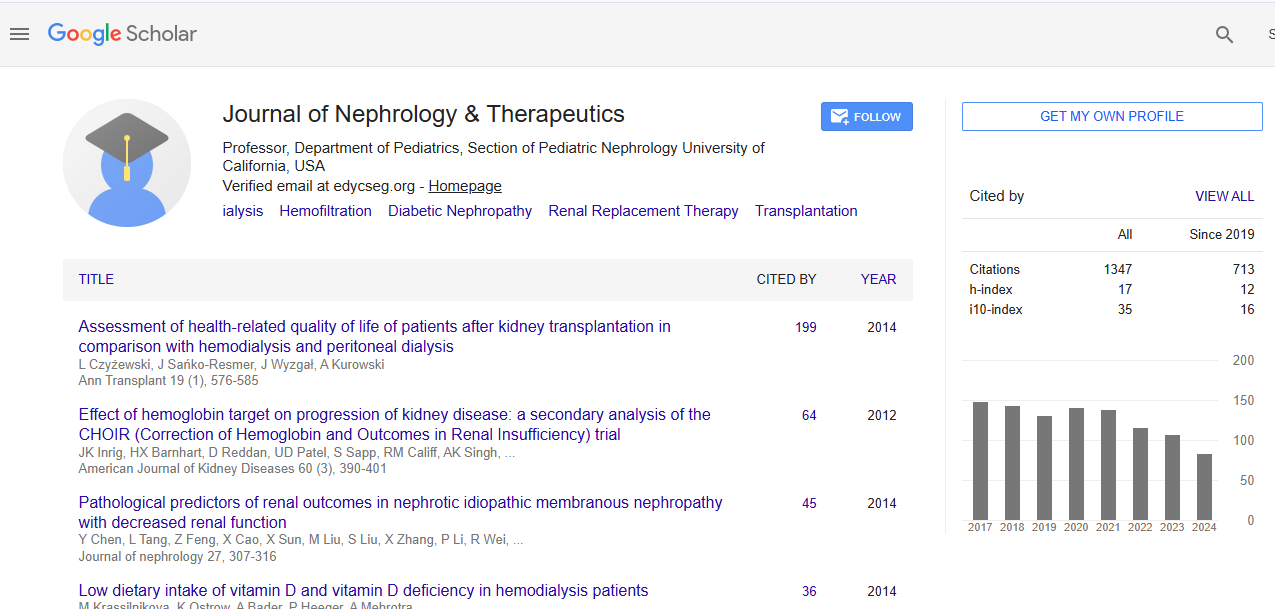
Journal of Nephrology & Therapeutics received 784 citations as per Google Scholar report