Opinion - (2025) Volume 15, Issue 2
Received: 01-Mar-2025, Manuscript No. jsmds-25-174163;
Editor assigned: 03-Mar-2025, Pre QC No. P-174163;
Reviewed: 17-Mar-2025, QC No. Q-174163;
Revised: 22-Mar-2025, Manuscript No. R-174163;
Published:
29-Mar-2025
, DOI: 10.37421/2161-0673.2025.15.419
Citation: Morel, Thiago. ”Supplements, Doping, and Athlete Education for Clean Sport.” J Sports Med Doping Stud 15 (2025):419
Copyright: © 2025 Morel T. This is an open-access article distributed under the terms of the Creative Commons Attribution License, which permits unrestricted use, distribution
and reproduction in any medium, provided the original author and source are credited.
The complex relationship between dietary supplements and anti-doping regulations is a pressing concern in modern sport. This area presents significant challenges for athletes, their support personnel, and anti-doping organizations alike. One major aspect involves how dietary supplements can inadvertently lead athletes into doping, primarily due to widespread contamination issues and insufficient industry regulation. A clear and urgent need exists for comprehensive anti-doping education, offering practical steps for athletes and their teams to make informed decisions and steer clear of doping risks associated with supplement use [1].
Further underscoring this challenge, studies reveal significant gaps in what elite athletes truly know and do regarding doping and dietary supplements. Even with generally positive views on anti-doping principles, many athletes lack a deep understanding of prohibited substances and the inherent dangers linked to supplement consumption. What this really means is that a critical demand exists for more targeted, sport-specific educational programs. These programs should equip athletes with solid, actionable advice on supplement safety and the intricacies of anti-doping rules, moving beyond general awareness to practical application [2].
Here's the thing: registered dietitians are pivotal in the global effort to prevent doping in sport. These professionals are uniquely positioned to guide athletes with evidence-based nutrition strategies and smart supplement choices, helping them achieve performance goals ethically and safely. The emphasis here is that professional dietary advice, coupled with specialized education on supplement contamination risks, forms a key defense against accidental doping incidents. Their expertise acts as a crucial barrier, protecting athletes from potential pitfalls in the supplement landscape [3].
The connection between dietary supplements and anti-doping rules is indeed a tricky and complex interplay. There's a constant struggle to guarantee supplement safety, often hampered by problems like incorrect labeling, undisclosed ingredients, and outright contamination, all of which heighten doping risks. The authors advocate for enhanced teamwork among regulators, supplement manufacturers, and anti-doping groups. This collaborative approach, combined with clearer, more effective athlete education, is essential to better manage sports nutrition practices and prevent doping across all levels of competition [4].
While anti-doping education plays a vital role, research has shown its impact on athletes' knowledge and attitudes about dietary supplements isn't always complete. Although education certainly raises awareness, specific gaps in understanding supplement safety and anti-doping regulations often persist. What this really means is that ongoing, customized education programs are crucial. They must continually adapt to new supplement trends and evolving anti-doping challenges, empowering athletes to make safer and more informed nutritional choices throughout their careers [5].
Nutritionists and dietitians are essential in preventing doping through athlete education. These professionals are well-equipped to provide athletes with reliable, evidence-based information on safe nutritional plans. They can also diligently check for potential supplement dangers and offer tailored advice, thereby helping athletes avoid inadvertent doping. The paper stresses the importance of integrated educational approaches, ensuring anti-doping messages are consistently delivered by trusted nutrition experts. This builds a strong foundation for clean sport, rooted in credible scientific guidance [6].
Let's break it down: anti-doping faces current struggles, particularly regarding how nutritional strategies and athlete education fit into the broader picture. The rapidly changing supplement market and athletes' intense drive for performance enhancement are identified as key areas of vulnerability. The authors strongly advocate for more dynamic and individualized anti-doping education. This education must integrate comprehensive nutritional guidance, focusing on robust risk assessment and the promotion of ethical choices, ultimately working towards creating and sustaining a truly clean sports environment [7].
For athletes and their support teams, navigating the complicated world of dietary supplements while staying anti-doping compliant requires clear, actionable instructions. This involves understanding how to effectively spot risky supplements, interpret complex product labels, and leverage reliable sources for information. Such diligence helps significantly reduce the chances of accidental doping. What this really means is that preventing doping is a shared responsibility, and continuous, informed education is absolutely essential for upholding clean sport through intelligent and safe nutrition practices [8].
Beyond elite athletes, young athletes represent a particularly vulnerable group. Studies have explored what these young individuals know, think, and feel about doping and dietary supplements. Findings often indicate that despite some general awareness, their grasp of specific risks and prohibited substances is frequently limited. This points to a clear, undeniable need for early, age-appropriate anti-doping education. Such programs must include practical advice on making safe nutritional choices and a thorough understanding of supplement safety to protect these developing athletes from potential harm [9].
Finally, incorporating smart nutrition strategies is key to stopping doping, offering athletes safe and effective ways to boost performance. This involves current best practices in sports nutrition education and counseling, emphasizing the vital role of registered dietitians in steering athletes away from risky supplements. The article also maps out future directions for anti-doping efforts, highlighting how nutritional science and ethical considerations must merge to foster a sustainable culture of clean sport [10].
The landscape of dietary supplements in sports presents a multifaceted challenge for athletes and anti-doping efforts. A significant concern revolves around the inadvertent exposure of athletes to prohibited substances through contaminated supplements. This is not merely an isolated issue; it highlights widespread contamination problems and a distinct lack of comprehensive industry regulation. Addressing this demands a robust, integrated approach to anti-doping education, providing athletes and their support teams with the knowledge and tools to make informed decisions and mitigate doping risks associated with supplement use [1]. The prevalence of this issue underscores the critical need for a proactive educational framework that empowers individuals rather than just imposing rules.
Research consistently indicates that even among elite athletes, substantial gaps exist in their understanding of doping and dietary supplements. While general attitudes towards anti-doping may be positive, specific knowledge about prohibited substances and the inherent dangers of supplement usage remains insufficient [2]. This knowledge deficit is not unique to elite athletes; young athletes also show limited comprehension of specific risks and prohibited substances despite some general awareness [9]. What this really means is that a blanket approach to anti-doping education is often inadequate. There's a clear imperative for highly targeted, sport-specific educational programs. These programs must move beyond theoretical concepts, providing concrete, actionable advice on supplement safety and detailed explanations of anti-doping regulations to bridge these critical knowledge gaps [2]. This ensures that education is not just received, but truly understood and applied in real-world scenarios, particularly for impressionable young athletes.
Here's the thing: registered dietitians and nutritionists play a central, indispensable role in preventing doping in sport. They are uniquely qualified to offer evidence-based nutrition guidance and advise on smart, safe supplement choices, thereby helping athletes pursue performance goals ethically [3, 6, 10]. Their professional advice and education on supplement contamination are key defenses against accidental doping, acting as trusted filters in a often-murky market [3]. These experts provide reliable information on safe nutritional plans, actively check for potential supplement dangers, and offer tailored guidance to help athletes avoid inadvertent doping [6]. The strategic integration of anti-doping messages delivered by these credible nutrition experts builds a vital foundation for clean sport, ensuring that athletes receive consistent and trustworthy information from a professional source [6]. This integrated approach also extends to mapping out future paths for anti-doping, emphasizing the crucial merger of nutritional science with ethical considerations to cultivate a deeply ingrained culture of clean sport [10].
The complex interplay between dietary supplements and anti-doping rules underscores a continuous struggle to ensure supplement safety. Issues like incorrect labeling, the presence of undeclared ingredients, and contamination are persistent problems that significantly elevate doping risks [4]. This necessitates enhanced collaboration among regulators, manufacturers, and anti-doping organizations to establish and enforce stricter controls over supplement production and marketing. Furthermore, clearer and more accessible athlete education is essential to manage sports nutrition effectively and prevent doping incidents [4]. This collaborative effort is not just about compliance, but about fundamentally improving the safety and transparency of the supplement market for all athletes.
While anti-doping education is crucial, its impact is not always uniform or entirely comprehensive. Studies show that while awareness can be raised, specific gaps in understanding supplement safety and evolving anti-doping rules often persist [5]. This highlights the need for dynamic, ongoing, and customized education programs that can keep pace with new supplement trends and the ever-present challenges of anti-doping [5]. Let's break it down: athletes and their support teams need clear, practical instructions for navigating the intricate supplement landscape. This includes identifying risky products, understanding complex labels, and knowing where to find reliable information to minimize accidental doping [8]. What this really means is that preventing doping is a shared responsibility, requiring continuous education and vigilance from everyone involved to uphold clean sport through informed nutritional choices and ethical decision-making [8]. The commitment to clean sport, therefore, is an evolving journey that requires constant learning and adaptation.
The provided research highlights the critical nexus between dietary supplements and doping in sport, emphasizing challenges and solutions for maintaining clean competition. A major theme is the risk of inadvertent doping due to widespread supplement contamination and inadequate industry regulation, underscoring the urgent need for comprehensive anti-doping education for athletes and their support teams [1, 4]. Studies reveal significant knowledge gaps among elite and young athletes regarding prohibited substances and supplement dangers, even with general positive attitudes towards anti-doping. This calls for targeted, sport-specific educational programs providing actionable advice on supplement safety and rules [2, 9]. Registered dietitians and nutritionists emerge as central figures in prevention, guiding athletes with evidence-based nutrition and smart supplement choices to ethically achieve performance goals [3, 6, 10]. Their expertise is crucial for educating on contamination risks, checking for dangers, and offering reliable information [3, 6]. The complex interplay between supplements and anti-doping rules necessitates better collaboration among regulators, manufacturers, and anti-doping bodies to ensure supplement safety and clearer athlete education [4]. Despite existing anti-doping education, persistent gaps in understanding supplement safety and rules highlight the need for ongoing, customized programs that adapt to new trends and challenges [5, 7]. Practical guidance for athletes on identifying risky supplements, interpreting labels, and using reliable sources is vital, reinforcing that doping prevention is a shared responsibility requiring continuous education for clean sport through smart nutrition [8]. Smart nutritional strategies, integrated with ethical considerations, are key to preventing doping and fostering a clean sport culture [10].
None
None
Indexed at, Google Scholar, Crossref
Indexed at, Google Scholar, Crossref
Indexed at, Google Scholar, Crossref
Indexed at, Google Scholar, Crossref
Indexed at, Google Scholar, Crossref
Indexed at, Google Scholar, Crossref
Indexed at, Google Scholar, Crossref
Indexed at, Google Scholar, Crossref
Indexed at, Google Scholar, Crossref
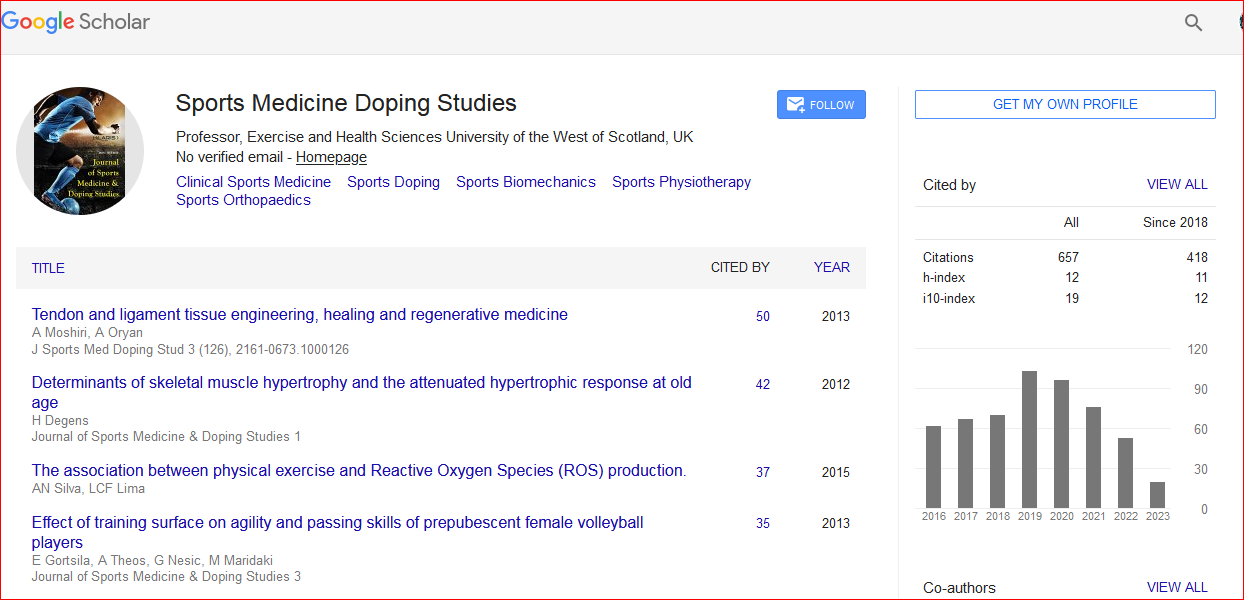
Journal of Sports Medicine & Doping Studies received 1022 citations as per Google Scholar report