Research Article - (2025) Volume 11, Issue 6
Received: 01-Dec-2025, Manuscript No. aso-25-177376;
Editor assigned: 03-Dec-2025, Pre QC No. P-177376;
Reviewed: 18-Dec-2025, QC No. Q-177376;
Revised: 25-Dec-2025, Manuscript No. R-177376;
Published:
31-Dec-2025
, DOI: 10.5281/zenodo.18502293
Citation: Gnangnon, Freddy Houehanou Rodrigue, Dansou Gaspard Gbessi, Yacoubou Imorou Souaibou, and Marthe Alice Agossou, et al. "Role of Surgery in the Management of Female Breast Cancer in Two Referral Hospitals in Southern Benin." Arch Surg Oncol 11 (2025): 216.
Copyright: © 2025 Gnangnon FHR, et al. This is an open-access article distributed under the terms of the Creative Commons Attribution License, which permits unrestricted use, distribution and reproduction in any medium, provided the original author and source are credited.
Introduction: Breast cancer is a major public health problem. Its management is particularly difficult in countries with limited resources. Surgery is sometimes the only therapeutic option available. Our objective was to study the place of surgery in this management in the Republic of Benin. Methods: This was a descriptive and analytical multicenter study that included medical records of patients undergoing surgery for breast cancer over the period from January 2013 to October 2019 in two university hospitals in Cotonou, southern Republic of Benin. Results: The 141 included patients had an average age of 47.2 years. Surgery was of curative intent in 84.4% of cases. Mastectomy was the most common treatment (92.9%). The Patey technique modified by Madden (81.56%) was the most used technique. The overall morbidity was 8.5% dominated by postoperative hematoma. The other therapeutic methods used were chemotherapy (95.7%) and radiotherapy (37.8%). Conclusion: Breast cancer surgery is dominated in our context by mastectomy. The development of conservative surgery and oncoplasty, associated with a policy of organized screening program and better access to radiotherapy, will improve the supply of care.
Republic of Benin • Breast cancer • Mastectomy • Conservative surgery • Prognosis
Breast cancer is a major public health issue worldwide [1]. In Africa, it accounts for 8.1% of new cancer cases and 11.8% of cancer-related mortality [1]. In Benin, it is the most common cancer among women [1, 2]. Its management is multidisciplinary and relies on several modalities, including surgery, radiotherapy, hormone therapy, chemotherapy and targeted therapies. Overall, in sub-Saharan Africa, surgery has long been and still remains the most accessible treatment option [3]. ]. Globally, the surgical management of breast cancer has increasingly shifted toward conservative approaches, driven by early detection, effective systemic therapies, and routine access to adjuvant radiotherapy. In high-income settings, breast-conserving surgery has become the standard for many patients. In contrast, in sub-Saharan Africa, late-stage presentation and limited access to radiotherapy and multidisciplinary care mean that mastectomy remains the predominant surgical option. At a time when surgical de-escalation in breast cancer management is being promoted by some teams in developed countries [4], our aim was to assess the role of surgery in the treatment of breast cancer in our setting.
This multicenter study was conducted in two level-III university hospitals located in the city of Cotonou, which serve as national referral centers for breast cancer management in Benin: the National University Hospital Center Hubert Koutoukou Maga (CNHU-HKM) and the Mother and Child University Hospital Center (CHU-MEL).
This was a descriptive and analytical cross-sectional study covering the period from January 2013 to October 2019. Included were female patients who underwent surgery for histologically confirmed breast cancer. The Kaplan–Meier method was used to assess survival. Statistical analysis was performed using STATA version 13. The significance level was set at 5%.
Among the 214 patients managed in the two hospitals for histologically confirmed breast cancer, 141 (65.8%) underwent surgery and met our inclusion criteria. The study flow diagram is presented in Figure 1.
The mean age of the patients was 47.2 ± 10.6 years. Their sociodemographic characteristics are summarized in Table 1.
| Number (n=141) | % | ||
|---|---|---|---|
| Age groups (years) | = 30 | 3 | 2.1 |
| [30-40] | 47 | 33.3 | |
| [40-50] | 42 | 29.8 | |
| [50-60] | 35 | 24.8 | |
| Educational level | No schooling | 35 | 24. |
| Primary level | 40 | 28.4 | |
| Secondary level | 38 | 26.9 | |
| Higher education | 24 | 17.0 | |
| Not specified | 4 | 2.8 | |
| Occupation | Housewife | 45 | 31.9 |
| Trader/vendor | 27 | 19.1 | |
| Salaried worker | 38 | 27.0 | |
| Craftsman | 22 | 15.6 | |
| Manual worker | 6 | 4.3 | |
| Not precised | 3 | 2.1 |
Table 1. Sociodemographic characteristics of patients operated on for breast cancer.
The disease was metastatic in 14.2% of cases (n=19). Clinical characteristics are summarized in Table 2.
| Number (n=141) | % | ||
|---|---|---|---|
| cTNM Classification | |||
| Taille (T) | T1 | 5 | 3.5 |
| T2 | 31 | 22.0 | |
| T3 | 31 | 22.0 | |
| T4 | 65 | 46.1 | |
| Tx | 9 | 6.4 | |
| Lymph node involvement (N) | N0 | 41 | 29.1 |
| N1 | 42 | 29.8 | |
| N2 | 45 | 31.9 | |
| N3 | 3 | 2.1 | |
| Nx | 10 | 7.1 | |
| Metastases (M) | M0 | 112 | 79.4 |
| M1 | 19 | 14.2 | |
| Mx | 9 | 6.4 | |
Table 2. Clinical characteristics of breast cancers.
Operability of breast cancers
Among the 214 breast cancer cases recorded during the study period, surgery was indicated in 174 patients, corresponding to an operability rate of 81.3%. The number of patients initially operable was 53 (30.5%). Of the 174 operable patients, 141 were ultimately operated, representing an accessibility rate of 81% (Figure 1).
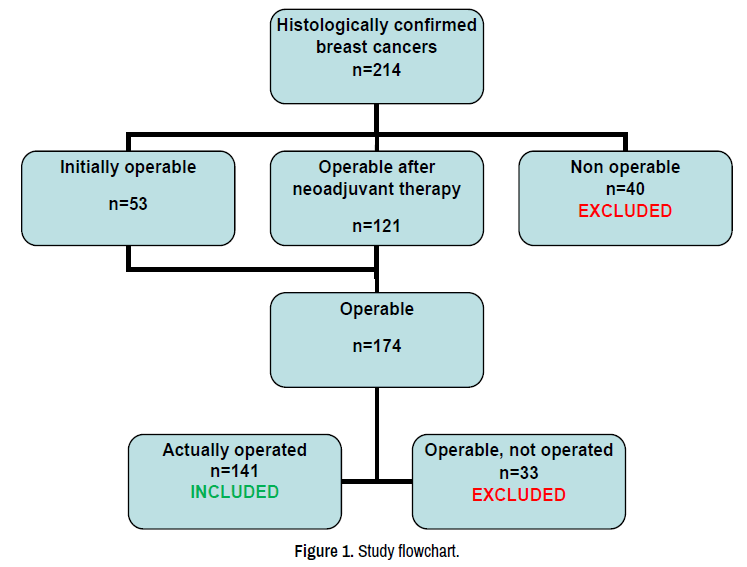
Figure 1. Sociodemographic characteristics of patients operated on for breast cancer.
Surgical treatment modalities
Surgical treatment was performed with curative intent in 84.4% of cases. In 15.6% of cases, surgery was performed for sanitation purposes (“clean-up surgery”) (Table 3).
| Number (n=141) | % | ||
|---|---|---|---|
| Breast surgery | |||
| Surgical intent | Curative | 119 | 84.4 |
| Sanitation (“clean-up”) | 22 | 15.6 | |
| Surgical methods | Radical | 131 | 92.9 |
| Conservative | 10 | 7.1 | |
| Axillary surgery | Axillary lymph node dissection | 124 | 87.9 |
| Sentinel lymph node biopsy | 0 | 0.0 | |
| Breast reconstruction | 3 | 2.1 | |
Table 3. Distribution of patients according to the type and method of surgery.
Specimen obtained from a mastectomy associated with ipsilateral en bloc axillary lymph node dissection and resection of a segment of the pectoralis major muscle.
A mastectomy (Figures 2 and 3) was performed in 92.9% of cases. Overall, 87.9% of patients underwent axillary lymph node dissection. Three cases of breast reconstruction after mastectomy were recorded (2.1%).
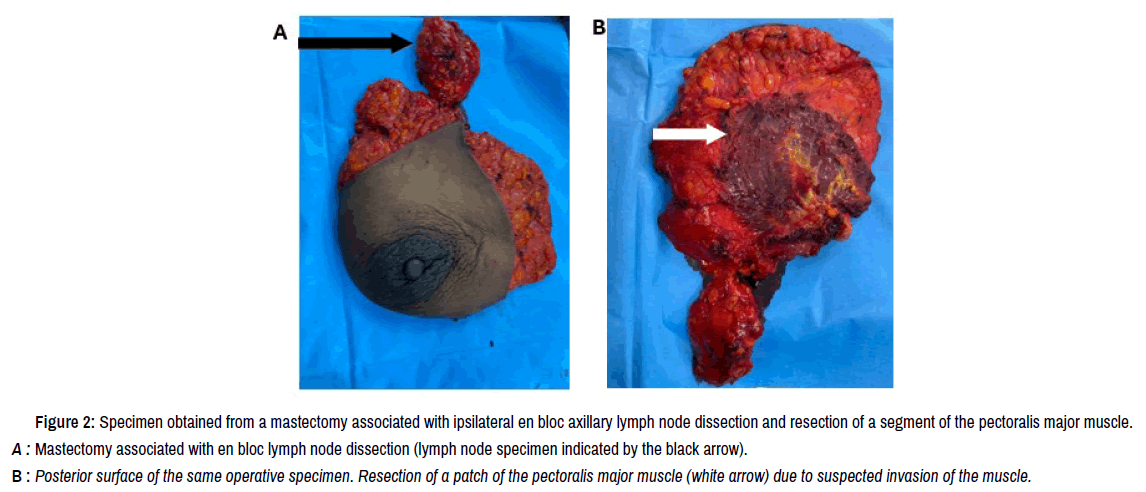
Figure 2. Specimen obtained from a mastectomy associated with ipsilateral en bloc axillary lymph node dissection and resection of a segment of the pectoralis major muscle.
A : Mastectomy associated with en bloc lymph node dissection (lymph node specimen indicated by the black arrow).
B : Posterior surface of the same operative specimen. Resection of a patch of the pectoralis major muscle (white arrow) due to suspected invasion of the muscle.
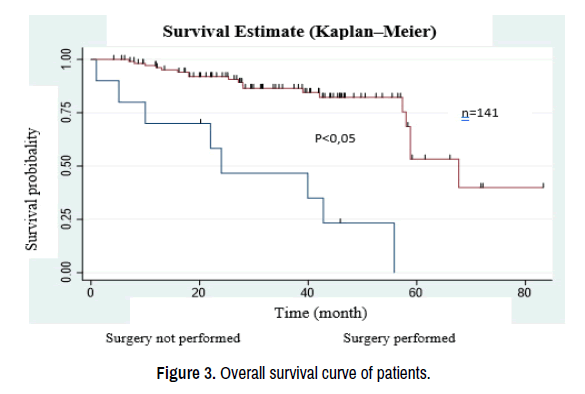
Figure 3. Overall survival curve of patients.
The most commonly used surgical technique was the Patey procedure modified by Madden (81.6%). Table 4 shows the distribution of patients according to the surgical technique.
| Effectif (n) | % | |
|---|---|---|
| Modified Patey/Madden | 115 | 81.6 |
| Halsted | 6 | 4.2 |
| Mastectomy without axillary dissection | 10 | 7.1 |
| Quadrantectomy without axillary dissection | 7 | 5.0 |
| Quadrantectomy with axillary dissection | 3 | 2.1 |
| Total | 141 | 100.0 |
Table 4. Distribution of patients according to the surgical technique used.
Postoperative outcomes were uncomplicated in 129 cases (91.5%). The main complications observed in 12 patients were postoperative hematoma (7 cases), lymphedema (4 cases), limited mobility of the ipsilateral limb (2 cases) and lymphocele (2 cases). Length of hospital stay was documented in 61 cases. The average hospital stay was 6.5 ± 2.4 days (range: 2–18 days). Forty-seven patients (77%) were discharged within the first postoperative week. No postoperative deaths were recorded.
Adjuvant therapies
Chemotherapy was administered to 135 patients. It was neoadjuvant in 61% of cases and adjuvant in 70%. Radiotherapy was given in 37.8% of cases. Hormone therapy and targeted therapy were administered in 73.0% and 35.5% of cases, respectively.
Regarding hormone therapy, tamoxifen was the most commonly used agent (52 cases). Targeted therapy was indicated in 31 cases and effectively administered to 11 patients (35.5%). The most commonly used drug was trastuzumab and pertuzumab was given to only one patient.
Follow-up
Sixteen patients were lost to follow-up. Twenty-seven patients experienced disease progression during the study period. These included 5 local recurrences, 2 regional (lymph node) recurrences and 20 distant metastases.
For patients who experienced progression or recurrence, the median time to progression after surgery was 12 months, with an interquartile range of 8–24 months.
Patients who underwent surgery had a median overall survival of 67.7 months (Figure 3).
Operability rate and access to surgery
The operability rate of breast cancers in this study was 81.3%. A difference exists between operability rates in developing vs. developed countries, with generally lower rates in low-resource settings. In our study, fewer than one in three patients (30.5%) were operable at presentation compared with 42% in a 2016 study from Burkina Faso [3].
In sub-Saharan Africa, late diagnosis, limited access to care, absence of health insurance and socioeconomic, organizational and sociocultural factors explain the low resectability rate at diagnosis. These factors should be analyzed to reduce the associated loss of opportunity while respecting the inalienable rights of patients [5-7].
A 2013 study conducted in Benin on therapeutic pathways showed that 54% of patients initially sought traditional medicine due to strong sociocultural influences affecting acceptance of biomedical care [6].
Therapeutic aspects
Surgery: In our study, radical surgery was the most commonly performed procedure (92.9%), explained by the advanced stage of tumors at diagnosis, limiting treatment options. Furthermore, conservative breast surgery for invasive cancer requires adjuvant radiotherapy yet radiotherapy is not available in Benin, as in many sub-Saharan countries.
In France, the rate of mastectomy ranges from 27% to 30% [8–11]. Breast-conserving surgery is generally increasing in developed countries and can reach 80% depending on the setting.
Due to the very advanced stage of some tumors, palliative or “sanitation” mastectomy was performed in 15.6% of our patients. Beyond its “cosmetic” nature, recent studies suggest that surgical removal of the primary tumor may improve survival in metastatic patients, especially when negative margins are obtained [12].
Axillary lymph node dissection was performed in 87.9% of cases. No sentinel lymph node biopsy was reported. Yet this technique, widely adopted in specialized centers between 2005 and 2012 in France and many other countries, reduces the need for full axillary dissection and its associated morbidity [4,12].
Only a few patients could undergo breast reconstruction after mastectomy (2.12%). This procedure is not yet commonly practiced in Benin. Lembrouck C, et al. [13] reported high reconstruction rates (47.6%) in Réunion Island in 2016. Breast reconstruction is an underdeveloped aspect of oncologic surgery in our setting but represents an important advancement in breast cancer care, helping reduce the aesthetic impact of surgery [14–16].
Breast cancer surgery carries a non-negligible morbidity rate. Immediate complications of mastectomy in our study were mainly hematoma (4.5%) and lymphocele (1.4%). Axillary surgery complications typically include lymphocele, abscesses and pain. Techniques such as quilting sutures have been proposed to reduce these complications [17]. The incidence of lymphocele varies widely from 4% to 90% [18].
The mean hospital stay was 6.55 ± 2.37 days. In Western countries, many breast cancer surgeries are shifting toward outpatient procedures. Such an approach would be beneficial in Cotonou as it would reduce hospitalization costs.
Although surgery remains a key component of breast cancer management in our context, many authors advocate for surgical de-escalation [4] due to the effectiveness of available therapies, including radiotherapy, chemotherapy, hormone therapy, targeted therapy and more recently, immunotherapy [4].
Adjuvant therapies
Chemotherapy was administered in 95.7% of cases, neoadjuvant in 60.74%. The high rate of neoadjuvant therapy reflects the advanced stage at diagnosis, often precluding immediate surgery. Challenges in administering chemotherapy and targeted therapy are related to high costs and limited drug availability.
Radiotherapy was indicated for 111 patients (78.72%) but was actually performed in only 37.83% of cases, likely contributing to some of the local recurrences observed. The absence of radiotherapy services in Benin forces patients to seek treatment abroad and financial constraints explain the low accessibility. Developing a radiotherapy center in Benin would greatly improve access and reduce the need for medical evacuation [19].
Surgery remains the most accessible treatment modality for breast cancer in our context. The development of breast-conserving surgery and oncoplastic techniques, alongside a systematic screening policy for breast cancer, could significantly improve patient management in our setting.
GNANGNON FH R: study concept, development of objectives, supervision of data collection, analysis plan, manuscript drafting, submission
IMOROU SOUAIBOU Y, ABOUBAKAR M : literature review, drafting assistance, preparation of curves
AGOSSOU MA : data collection support
DANGBEMEY P : data collection support
GBESSI DG: formatting and revision
TONATO-BAGNAN JA, DOSSOU FM: supervision of data collection, revision
DENAKPO JL: study supervision, final revision
We thank the members of LEMACEN (Dr. ROBIN SACCA Hélène, Mr. TOTAH Terrence, Prof. HOUINATO Dismand).
The authors received no funding for this study.
Ethical considerations and data confidentiality were respected. Permissions from relevant hospital authorities were obtained beforehand.
Data are available in the hospital’s data collection system and medical records and can be accessed in compliance with ethical and confidentiality requirements.
The authors declare no conflicts of interest related to this study.
Google Scholar, Cross Ref, Indexed at
Google Scholar, Cross Ref, Indexed at
Google Scholar, Cross Ref, Indexed at
Google Scholar, Cross Ref, Indexed at
Google Scholar, Cross Ref, Indexed at
Google Scholar, Cross Ref, Indexed at
Google Scholar, Cross Ref, Indexed at
Google Scholar, Cross Ref, Indexed at
Google Scholar, Cross Ref, Indexed at
Google Scholar, Cross Ref, Indexed at
Google Scholar, Cross Ref, Indexed at
Google Scholar, Cross Ref, Indexed at
Google Scholar, Cross Ref, Indexed at
Google Scholar, Cross Ref, Indexed at
Google Scholar, Cross Ref, Indexed at
Archives of Surgical Oncology received 37 citations as per Google Scholar report