Commentary - (2025) Volume 9, Issue 3
Received: 02-Jun-2025, Manuscript No. jid-26-186952;
Editor assigned: 04-Jun-2025, Pre QC No. P-186952;
Reviewed: 18-Jun-2025, QC No. Q-186952;
Revised: 23-Jun-2025, Manuscript No. R-186952;
Published:
30-Jun-2025
, DOI: 10.37421/2684-4559.2025.9.326
Citation: Benali, Fatima. "Predicting CRGNB Infections: Improving ICU Patient Outcomes." Clin Infect Dis 13 (2025):326.
Copyright: © 2025 Benali F. This is an open-access article distributed under the terms of the Creative Commons Attribution License, which permits unrestricted use, distribution and reproduction in any medium, provided the original author and source are credited.
Predictive risk models are becoming increasingly vital for identifying intensive care unit (ICU) patients who are at a heightened risk of developing carbapenem-resistant Gram-negative bacterial (CRGNB) infections. This early identification is crucial for the timely implementation of targeted infection control strategies and effective antimicrobial stewardship, which can significantly improve patient outcomes and mitigate the spread of these challenging pathogens. These models typically integrate various factors, including patient demographics, existing comorbidities, previous exposure to antibiotics, and clinical severity scores, to accurately stratify patient risk [1].
The development and rigorous validation of predictive models for CRGNB infections necessitate the use of robust datasets derived from diverse ICU populations. Key factors frequently incorporated into these models include a history of prior carbapenem or other broad-spectrum antibiotic use, the duration of a patient's hospital stay, the presence of invasive devices, and established severity of illness scores such as the Sequential Organ Failure Assessment (SOFA) score. Furthermore, the application of machine learning techniques is actively being explored to enhance the predictive accuracy and overall generalizability of these models [2].
The value of predictive models extends beyond simply identifying high-risk individuals; they play a significant role in informing resource allocation and guiding the strategic deployment of infection prevention interventions. By accurately pinpointing patients most susceptible to CRGNB infections, healthcare facilities can optimize the utilization of diagnostic testing, proactively implement contact precautions, and tailor antibiotic regimens, thereby contributing to a more efficient and effective infection control program [3].
However, challenges persist in the development of highly accurate predictive models. These include the inherent heterogeneity in CRGNB resistance mechanisms, the dynamic nature of evolving epidemiological patterns, and the variations in clinical practices observed across different healthcare settings. Moreover, the availability and quality of patient data can substantially influence model performance, underscoring the importance of careful consideration of data sources and preprocessing steps during the development and validation phases [4].
Prospective validation of these predictive models in real-world ICU environments is a critical step to confirm their generalizability and assess their clinical utility. Continuous monitoring and periodic re-evaluation of model performance are also essential to adapt to changes in resistance patterns and evolving treatment strategies. This iterative process ensures that predictive models remain relevant and effective tools in the ongoing fight against CRGNB infections [5].
The integration of predictive risk scores into electronic health record (EHR) systems offers a powerful mechanism for facilitating real-time risk assessment and enabling prompt clinical decision-making. This seamless integration empowers healthcare providers to swiftly identify at-risk patients and initiate appropriate interventions, ultimately optimizing patient care and reducing the overall burden of CRGNB infections in ICUs [6].
Epidemiological surveillance data serves as a fundamental component for both the initial development and the continuous refinement of predictive models. A thorough understanding of local and regional trends in CRGNB epidemiology, including the prevalent species and common resistance mechanisms, is paramount for tailoring models to specific healthcare environments and ensuring their sustained predictive accuracy [7].
The ultimate objective of developing predictive risk models for CRGNB infections is to translate the resulting risk stratification into tangible improvements in patient outcomes. This includes a reduction in mortality rates, shorter hospital stays, and a decrease in associated healthcare costs. Achieving this goal effectively requires a collaborative, multidisciplinary approach involving clinicians, microbiologists, infection prevention specialists, and data scientists [8].
Antibiotic stewardship programs can significantly benefit from the application of predictive models to optimize empiric therapy for patients identified as being at high risk for CRGNB infections. This personalized approach ensures that critically ill patients receive appropriate antimicrobial coverage without unnecessary exposure to broad-spectrum agents, thereby preserving their effectiveness for future use [9].
The successful clinical implementation of predictive risk models for CRGNB infections necessitates the establishment of clear guidelines and comprehensive training for all healthcare personnel. Effective communication of risk assessments and subsequent recommendations is vital to ensure that these predictive tools translate into actionable interventions that safeguard patients and effectively prevent the further spread of antimicrobial resistance [10].
Predictive risk models are indispensable tools for identifying intensive care unit (ICU) patients at elevated risk of carbapenem-resistant Gram-negative bacterial (CRGNB) infections. Early identification allows for the prompt implementation of targeted infection control measures and antimicrobial stewardship, potentially leading to improved patient outcomes and a reduction in the transmission of these difficult-to-treat pathogens. These models typically incorporate patient demographics, existing comorbidities, prior antibiotic exposure, and clinical severity scores to achieve effective risk stratification [1].
Developing and validating predictive models for CRGNB infections requires access to robust data obtained from diverse ICU populations. Crucial factors frequently included in these models are prior use of carbapenems or other broad-spectrum antibiotics, the duration of hospitalization, the presence of invasive devices, and illness severity scores like the Sequential Organ Failure Assessment (SOFA). Machine learning approaches are increasingly being investigated to improve the accuracy and generalizability of these models [2].
The utility of predictive models extends beyond identifying high-risk individuals; they are instrumental in informing resource allocation and guiding the strategic deployment of infection prevention interventions. By accurately identifying patients most likely to develop CRGNB infections, healthcare facilities can optimize the use of diagnostic tests, implement contact precautions proactively, and tailor antibiotic regimens, thereby enhancing the efficiency and effectiveness of infection control programs [3].
Challenges in developing precise predictive models include the inherent heterogeneity of CRGNB resistance mechanisms, the dynamic nature of evolving epidemiological patterns, and variations in clinical practice across different healthcare settings. Furthermore, the availability and quality of patient data can significantly impact model performance, emphasizing the need for careful consideration of data sources and preprocessing steps during model development and validation [4].
Prospective validation of these models in real-world ICU settings is essential to confirm their generalizability and clinical utility. Ongoing monitoring and re-evaluation of model performance are also important to account for changes in resistance patterns and treatment strategies. This iterative process ensures that predictive models remain relevant and effective tools in the fight against CRGNB infections [5].
The integration of predictive risk scores into electronic health record (EHR) systems can significantly facilitate real-time risk assessment and prompt clinical decision-making. This seamless integration enables healthcare providers to quickly identify at-risk patients and initiate appropriate interventions, thereby optimizing patient care and reducing the burden of CRGNB infections in ICUs [6].
Epidemiological surveillance data is fundamental for the development and ongoing refinement of predictive models. Understanding local and regional trends in CRGNB epidemiology, including the dominant species and resistance mechanisms, is crucial for tailoring models to specific healthcare environments and ensuring their predictive accuracy [7].
The ultimate goal of predictive risk models for CRGNB infections is to translate risk stratification into tangible improvements in patient outcomes, such as reduced mortality, shorter hospital stays, and decreased healthcare costs. Effective implementation requires a multidisciplinary approach involving clinicians, microbiologists, infection preventionists, and data scientists [8].
Antibiotic stewardship programs can leverage predictive models to optimize empiric therapy for patients identified as high risk for CRGNB infections. This personalized approach ensures that critically ill patients receive appropriate antimicrobial coverage without unnecessary exposure to broad-spectrum agents, thus conserving their effectiveness [9].
The clinical implementation of predictive risk models for CRGNB infections necessitates clear guidelines and training for healthcare personnel. Effective communication of risk assessments and recommendations is vital to ensure that predictive tools translate into actionable interventions that protect patients and prevent the spread of antimicrobial resistance [10].
Predictive risk models are essential for identifying intensive care unit (ICU) patients at high risk for carbapenem-resistant Gram-negative bacterial (CRGNB) infections. These models, which incorporate patient demographics, comorbidities, antibiotic history, and severity scores, enable timely interventions like targeted infection control and antimicrobial stewardship. Machine learning is being explored to enhance model accuracy. Challenges include data quality, resistance mechanism heterogeneity, and evolving epidemiology. Prospective validation and integration into electronic health records are crucial for effective implementation. Epidemiological surveillance data informs model refinement. The ultimate aim is to improve patient outcomes, reduce mortality, and lower healthcare costs through a multidisciplinary approach. These models also support antibiotic stewardship by optimizing empiric therapy. Clear guidelines and training are necessary for successful clinical adoption.
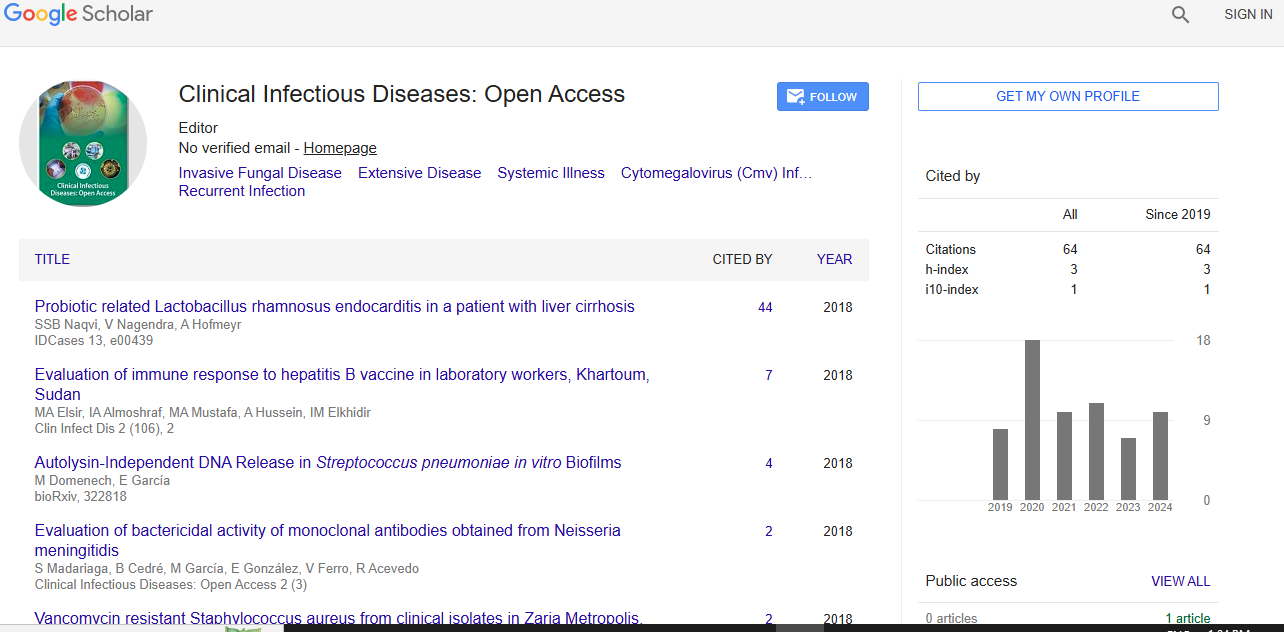
Clinical Infectious Diseases: Open Access received 1149 citations as per Google Scholar report