Short Communication - (2025) Volume 11, Issue 6
Received: 02-Nov-2025, Manuscript No. aso-25-184660;
Editor assigned: 04-Nov-2025, Pre QC No. P-184660;
Reviewed: 18-Nov-2025, QC No. Q-184660;
Revised: 24-Nov-2025, Manuscript No. R-184660;
Published:
01-Dec-2025
, DOI: 10.37421/2471-2671.2025.11.205
Citation: Mendes, Pedro. "Precision Oncologic Surgery: Personalized,
Minimally Invasive, And Evolving." Arch Surg Oncol 11 (2025):205.
Copyright: © 2025 Mendes P. This is an open-access article distributed under the terms of the Creative Commons Attribution License, which permits unrestricted use,
distribution and reproduction in any medium, provided the original author and source are credited.
Oncologic surgery is undergoing a significant transformation, moving beyond traditional radical resections towards more precise and personalized strategies. This evolution is propelled by advancements in imaging, molecular profiling, and minimally invasive techniques, with the overarching goal of maximizing tumor eradication while simultaneously minimizing patient morbidity and preserving vital organ function. Precision surgery, which encompasses technologies like robotic assistance and intraoperative imaging, facilitates more accurate delineation of tumors and guided resection procedures. Furthermore, the strategic integration of neoadjuvant and adjuvant therapies, meticulously tailored to the specific biological characteristics of the tumor, is proving instrumental in enhancing overall oncologic outcomes.
The underlying principle driving these changes is the desire to optimize the balance between aggressive cancer treatment and the preservation of patient quality of life. This paradigm shift necessitates a comprehensive understanding of novel surgical approaches and their integration with systemic therapies to achieve superior results in cancer care. The continuous pursuit of innovation in surgical oncology aims to redefine the standards of care and offer improved prognoses for patients facing various malignancies. The commitment to refining surgical techniques and incorporating advanced technologies underscores the dynamic nature of this medical field. Each incremental advancement contributes to a more sophisticated and effective approach to cancer management. The future of oncologic surgery lies in its ability to adapt and integrate emerging technologies and therapeutic modalities to provide the best possible outcomes for patients. This forward-thinking approach ensures that surgical interventions are not only effective in removing cancer but also considerate of the patient's overall well-being. The collaborative efforts across different medical disciplines are crucial for realizing the full potential of these advancements. The relentless pursuit of perfection in surgical oncology drives the continuous development of new strategies and techniques. The ultimate aim is to achieve a cure for cancer while ensuring that patients can lead fulfilling lives post-treatment. The dedication to patient-centered care remains at the forefront of all innovations in oncologic surgery. By embracing these modern principles, oncologic surgery is poised to achieve new heights in efficacy and patient benefit. The ongoing research and development in this field promise even more groundbreaking discoveries in the years to come. This constant drive for improvement highlights the dynamic and ever-evolving landscape of cancer surgery. The integration of cutting-edge technologies promises to revolutionize how cancer is surgically managed, leading to better patient outcomes and a higher quality of life. The field is characterized by a commitment to innovation and a deep understanding of cancer biology. The evolving nature of oncologic surgery ensures that it remains at the forefront of medical progress in fighting cancer. The synergistic combination of advanced surgical techniques and targeted therapies represents the future of cancer treatment. The dedication to improving patient care is evident in every facet of this evolving field. The advancements in oncologic surgery are a testament to the dedication of researchers and clinicians worldwide. The ongoing exploration of new frontiers in surgical oncology continues to push the boundaries of what is possible in cancer treatment. The integration of multidisciplinary approaches further strengthens the efficacy of surgical interventions. The focus on personalized medicine ensures that each patient receives the most appropriate and effective treatment plan. The continuous quest for better cancer management strategies is a hallmark of modern oncologic surgery. The commitment to excellence in patient care drives all advancements in this specialized field. The advancements in oncologic surgery are a beacon of hope for many patients battling cancer. The ongoing evolution of surgical techniques promises to further enhance treatment outcomes and patient recovery. The pursuit of perfection in surgical oncology reflects a deep commitment to improving human health and well-being. The synergistic interplay between technological innovation and clinical expertise is shaping the future of cancer surgery. The dedication to patient-centered care is paramount in all endeavors within oncologic surgery. The continuous exploration of novel therapeutic avenues ensures that patients benefit from the latest advancements in cancer treatment. The evolution of oncologic surgery signifies a hopeful trajectory towards more effective and less invasive cancer interventions. The commitment to advancing the field is evident in the ongoing research and clinical trials that continuously refine surgical practices. The focus on improving patient quality of life alongside oncologic outcomes is a defining characteristic of modern surgical oncology. The dynamic nature of oncologic surgery ensures that it remains at the cutting edge of medical innovation. The collaborative spirit among researchers and clinicians fuels the rapid progress observed in this field. The transformative potential of emerging technologies promises to further revolutionize cancer surgery in the coming years. The unwavering dedication to patient well-being is the guiding principle behind all advancements in oncologic surgery. The persistent drive to innovate and refine surgical techniques ensures that patients receive the highest standard of care. The ongoing integration of interdisciplinary expertise further enhances the comprehensiveness of cancer treatment plans. The relentless pursuit of improved patient outcomes defines the essence of modern oncologic surgery. The commitment to embracing new methodologies and technologies signifies the progressive nature of this specialized field. The profound impact of these advancements on patient lives is immeasurable, offering new hope and improved prognoses. The continuous refinement of surgical procedures, coupled with targeted therapies, marks a significant leap forward in cancer management. The dedication to personalized care ensures that each patient's unique needs are addressed with tailored treatment strategies. The ongoing dialogue and collaboration among leading experts in the field foster a climate of continuous improvement and innovation. The transformative journey of oncologic surgery from radical resections to precision-based interventions is a testament to scientific progress and clinical dedication. The focus on minimizing invasiveness while maximizing oncologic control is a central tenet of contemporary surgical practice. The integration of advanced recovery protocols aims to expedite patient convalescence and improve overall surgical experience. Robotic surgery, a key component of this evolution, offers unparalleled advantages in visualization, dexterity, and precision, leading to less traumatic procedures and faster patient recuperation. The successful application of these modern principles relies on a deep understanding of tumor biology and patient-specific factors, enabling tailored treatment plans that optimize oncologic control and minimize treatment-related toxicities. The ongoing research in this domain continues to push the boundaries of what is achievable, promising even greater benefits for patients in the future. The meticulous planning and execution of surgical interventions, guided by advanced technologies and a deep understanding of disease processes, are crucial for achieving optimal outcomes. The commitment to continuous learning and adaptation ensures that surgical oncologists remain at the forefront of this rapidly evolving field. The pursuit of excellence in patient care is the driving force behind all innovations in oncologic surgery. The collaborative nature of modern cancer treatment, involving a multidisciplinary team of experts, is essential for comprehensive patient management. The ongoing exploration of novel therapeutic modalities, alongside refined surgical techniques, offers a brighter outlook for individuals diagnosed with cancer. The transformative impact of technological advancements on surgical oncology cannot be overstated, paving the way for more effective and patient-friendly interventions. The dedication to advancing the field through rigorous research and clinical application ensures that patients receive the most up-to-date and beneficial treatments available. The future of oncologic surgery is characterized by an increasing emphasis on personalized medicine, minimally invasive techniques, and the integration of innovative technologies to achieve superior patient outcomes. The continuous pursuit of excellence in surgical oncology reflects a profound commitment to improving the lives of individuals affected by cancer. The synergistic combination of surgical expertise and advanced therapeutic strategies offers a powerful weapon in the fight against cancer. The evolving landscape of oncologic surgery is a testament to human ingenuity and the unwavering dedication to conquering this disease. The implementation of enhanced recovery pathways further optimizes the patient's surgical journey, promoting faster return to normal activities. The strategic application of robotic systems in oncologic surgery allows for more nuanced and precise manipulations, contributing to improved surgical precision and reduced complications. The seamless integration of various treatment modalities, from surgery to adjuvant therapies, is a hallmark of modern cancer care. The commitment to continuous improvement and evidence-based practice guides all decision-making processes in oncologic surgery. The ongoing dialogue and knowledge sharing among the global surgical community foster rapid dissemination of best practices and innovations. The evolving role of neoadjuvant therapy, in conjunction with surgical intervention, represents a significant advancement in optimizing treatment efficacy. The utilization of sophisticated imaging technologies during surgery provides real-time guidance, enhancing the surgeon's ability to achieve complete tumor resection. The emphasis on organ-sparing techniques reflects a growing understanding of the importance of preserving patient function and quality of life. The integration of artificial intelligence is beginning to offer new avenues for improving surgical planning and execution. The multidisciplinary tumor board serves as a crucial platform for collaborative decision-making, ensuring a holistic approach to patient care. The dedication to evidence-based medicine and continuous professional development ensures that oncologic surgeons are equipped with the latest knowledge and skills. The dynamic evolution of oncologic surgery promises to yield increasingly effective and less burdensome treatments for cancer patients worldwide. The pursuit of personalized treatment regimens, informed by molecular profiling, is a cornerstone of modern cancer management. The commitment to patient safety and optimal outcomes drives every aspect of surgical innovation in oncology. The strategic use of adjuvant therapies, carefully timed with surgical interventions, is crucial for maximizing survival benefits. The integration of advanced technologies aims to overcome the limitations of traditional surgical approaches. The continuous quest for less invasive yet equally effective surgical techniques is a defining characteristic of the field. The collaborative synergy between surgeons, oncologists, radiologists, and pathologists is essential for delivering comprehensive cancer care. The ongoing development of new surgical instruments and devices further enhances the precision and efficacy of operative procedures. The focus on improving the patient experience, from prehabilitation to recovery, is integral to modern oncologic surgery. The relentless drive to innovate and refine surgical techniques underscores the commitment to advancing the fight against cancer. The synergistic integration of neoadjuvant and adjuvant therapies with surgery represents a paradigm shift in cancer treatment strategies. The expanding role of robotic assistance in oncologic procedures offers enhanced precision and minimally invasive benefits. The integration of intraoperative imaging technologies provides crucial real-time guidance for surgeons. The emphasis on organ-sparing surgical techniques is driven by the desire to preserve patient function and quality of life. The application of precision medicine, including genomic profiling, is transforming surgical planning and treatment selection. The development and integration of artificial intelligence hold significant promise for revolutionizing diagnosis and treatment in surgical oncology. The evolving landscape of adjuvant therapies, particularly immunotherapies and targeted agents, is profoundly impacting surgical management plans. The multidisciplinary tumor board serves as a vital hub for collaborative decision-making in complex cancer cases. The continuous pursuit of less invasive surgical approaches is a key trend in modern oncologic surgery. The commitment to optimizing patient outcomes through a combination of surgical expertise and advanced therapeutic strategies defines the future of cancer care. The dynamic evolution of oncologic surgery from radical resections to highly personalized and minimally invasive approaches represents a significant paradigm shift in cancer care. This transformation is driven by a confluence of technological innovations and a deeper understanding of tumor biology. The ultimate aim is to achieve maximal tumor eradication while simultaneously minimizing patient morbidity and preserving organ function, thereby enhancing the patient's quality of life. Precision surgery, exemplified by robotic assistance and intraoperative imaging, allows for unparalleled accuracy in tumor delineation and guided resection. Furthermore, the judicious integration of neoadjuvant and adjuvant therapies, specifically tailored to the molecular characteristics of the tumor, is crucial for optimizing oncologic outcomes and improving survival rates. This holistic approach emphasizes a multidisciplinary strategy, ensuring that surgical interventions are harmonized with other treatment modalities. The relentless pursuit of less invasive techniques and the preservation of organ function are central to the evolving principles of surgical oncology. The continuous advancements in this field promise to redefine the standards of cancer treatment, offering patients more effective and less burdensome therapeutic options. The integration of artificial intelligence and machine learning is poised to further revolutionize surgical planning, execution, and patient management, paving the way for a new era of precision cancer surgery. The commitment to advancing the field through rigorous research, technological innovation, and collaborative efforts underscores the dedication to conquering cancer and improving patient outcomes worldwide. The dynamic evolution of oncologic surgery from traditional radical resections to highly personalized and minimally invasive approaches represents a significant paradigm shift in cancer care. This transformation is driven by a confluence of technological innovations and a deeper understanding of tumor biology. The ultimate aim is to achieve maximal tumor eradication while simultaneously minimizing patient morbidity and preserving organ function, thereby enhancing the patient's quality of life. Precision surgery, exemplified by robotic assistance and intraoperative imaging, allows for unparalleled accuracy in tumor delineation and guided resection. Furthermore, the judicious integration of neoadjuvant and adjuvant therapies, specifically tailored to the molecular characteristics of the tumor, is crucial for optimizing oncologic outcomes and improving survival rates. This holistic approach emphasizes a multidisciplinary strategy, ensuring that surgical interventions are harmonized with other treatment modalities. The relentless pursuit of less invasive techniques and the preservation of organ function are central to the evolving principles of surgical oncology. The continuous advancements in this field promise to redefine the standards of cancer treatment, offering patients more effective and less burdensome therapeutic options. The integration of artificial intelligence and machine learning is poised to further revolutionize surgical planning, execution, and patient management, paving the way for a new era of precision cancer surgery. The commitment to advancing the field through rigorous research, technological innovation, and collaborative efforts underscores the dedication to conquering cancer and improving patient outcomes worldwide. The paradigm shift in oncologic surgery is characterized by a move towards precision and personalization, driven by technological advancements and a deeper understanding of cancer biology. This evolution aims to maximize tumor removal while minimizing patient harm and preserving organ function. Precision surgical techniques, including robotic assistance and advanced imaging, enable more accurate tumor identification and resection. The strategic incorporation of neoadjuvant and adjuvant therapies, tailored to individual tumor characteristics, further enhances treatment efficacy. Enhanced recovery after surgery (ERAS) protocols are also becoming standard, focusing on prehabilitation and early mobilization to improve patient outcomes and reduce hospital stays. Robotic surgery, in particular, offers improved visualization and dexterity, leading to smaller incisions and faster recovery. The integration of genomic profiling allows for personalized surgical planning and adjuvant treatment selection, improving survival and reducing toxicities. Neoadjuvant therapy is increasingly used to downstage tumors and improve resectability, often in conjunction with immunotherapy and targeted agents. Intraoperative imaging technologies enhance surgical precision by providing real-time visualization of tumor margins and critical structures. Organ-sparing surgical techniques aim to preserve organ function and improve quality of life without compromising oncologic outcomes. Artificial intelligence and machine learning are emerging tools that can assist in image analysis, surgical planning, and robotic guidance. Adjuvant therapies, including immunotherapies, are being integrated into surgical management plans to optimize survival benefits. Robotic surgery has become a vital tool for minimally invasive procedures, offering enhanced dexterity and visualization across various cancer types. The multidisciplinary tumor board is central to integrated decision-making, ensuring that surgical plans are harmonized with other treatment modalities. The continuous evolution of oncologic surgery reflects a commitment to providing the most effective, least invasive, and most personalized care possible for cancer patients. The landscape of oncologic surgery is rapidly evolving, transitioning from broad, radical resections to highly targeted, personalized interventions. This shift is fueled by significant progress in diagnostic imaging, molecular profiling technologies, and the development of minimally invasive surgical techniques. The primary objective is to optimize tumor removal while concurrently minimizing patient morbidity and preserving the function of surrounding organs. Precision surgery, often augmented by robotic systems and intraoperative imaging modalities, allows for unprecedented accuracy in delineating tumor boundaries and executing surgical resections. Complementing these surgical advancements, the strategic application of neoadjuvant and adjuvant therapies, meticulously calibrated to the specific biological profile of the tumor, is proving instrumental in improving oncologic outcomes. The widespread adoption of Enhanced Recovery After Surgery (ERAS) protocols further underscores the commitment to improving the patient's surgical experience and accelerating recovery. Robotic surgery, with its inherent advantages of enhanced visualization, dexterity, and precision, is increasingly preferred for various cancer types, leading to smaller incisions and shorter recuperation periods. The integration of genomic insights into surgical planning and adjuvant treatment selection facilitates a truly personalized approach to cancer care, aiming to maximize survival and minimize treatment-related side effects. The expanding role of neoadjuvant therapies, including immunotherapies and targeted agents, seeks to improve tumor resectability and address micrometastatic disease prior to definitive surgical intervention. Intraoperative imaging technologies are transforming surgical decision-making by providing real-time anatomical and pathological information. The development and refinement of organ-sparing surgical techniques highlight a growing emphasis on preserving organ function and enhancing patients' long-term quality of life. The burgeoning field of artificial intelligence and machine learning promises to further enhance diagnostic capabilities, surgical planning, and even guide robotic instruments, potentially revolutionizing surgical accuracy and efficiency. The adaptive integration of adjuvant therapies, such as immunotherapies, into comprehensive treatment plans is crucial for maximizing the survival benefits for patients with various malignancies. Robotic surgery has firmly established itself as a cornerstone of minimally invasive oncologic procedures, offering superior dexterity and visualization across a wide spectrum of surgical disciplines. The pivotal role of the multidisciplinary tumor board in fostering collaborative decision-making ensures a holistic and coordinated approach to patient management, aligning surgical strategies with other therapeutic modalities. This ongoing evolution in oncologic surgery underscores a steadfast dedication to providing the most effective, least invasive, and patient-centric care available. The field of oncologic surgery is in a state of dynamic evolution, marked by a clear trajectory away from traditional radical resections towards more precise and personalized therapeutic strategies. This paradigm shift is largely driven by significant advancements in medical imaging, molecular profiling of tumors, and the widespread adoption of minimally invasive surgical techniques. The central aim guiding these developments is to achieve maximal tumor eradication while simultaneously minimizing patient morbidity and preserving essential organ functions, thereby enhancing the overall quality of life post-treatment. Precision surgery, which includes the integration of robotic assistance and sophisticated intraoperative imaging technologies, enables surgeons to delineate tumors with greater accuracy and perform guided resections with enhanced precision. Furthermore, the strategic incorporation of neoadjuvant and adjuvant therapies, carefully tailored to the specific biological characteristics and molecular makeup of the tumor, plays a crucial role in augmenting oncologic outcomes and improving patient survival rates. The emphasis on multidisciplinary collaboration and evidence-based practice ensures that surgical interventions are optimally integrated with other treatment modalities, such as chemotherapy and radiation therapy, to provide comprehensive patient care. The continuous pursuit of less invasive surgical approaches and the preservation of organ function are fundamental tenets of modern surgical oncology, reflecting a commitment to patient well-being alongside oncologic efficacy. The ongoing exploration and integration of emerging technologies, including artificial intelligence and machine learning, hold immense potential for further revolutionizing surgical planning, execution, and diagnostic capabilities, ultimately leading to improved patient outcomes. The commitment to advancing the field through rigorous research, technological innovation, and collaborative efforts among healthcare professionals worldwide underscores the ongoing dedication to overcoming the challenges posed by cancer and enhancing the lives of affected individuals. The continuous advancement in oncologic surgery reflects a profound commitment to improving patient outcomes through precision, personalization, and minimally invasive techniques. The field is moving beyond traditional radical resections to embrace sophisticated approaches that maximize tumor removal while minimizing collateral damage to healthy tissues and organs. Key drivers of this evolution include breakthroughs in imaging technology, molecular diagnostics, and the refinement of robotic and laparoscopic surgical platforms. Precision surgery, facilitated by tools like robotic assistance and intraoperative imaging, allows for more accurate tumor identification and resection, leading to improved functional preservation. The strategic integration of neoadjuvant and adjuvant therapies, tailored to the specific biological profile of the tumor, is crucial for optimizing treatment efficacy and enhancing survival rates. Enhanced recovery after surgery (ERAS) protocols are increasingly implemented to expedite patient convalescence and improve overall surgical experience. Robotic surgery, offering enhanced dexterity, visualization, and precision, has become a vital component of minimally invasive oncologic procedures across various specialties, resulting in smaller incisions and faster recovery times. The integration of genomic profiling into surgical decision-making enables personalized treatment plans, improving survival and reducing treatment-related toxicities. The expanding role of neoadjuvant therapy aims to downstage tumors, improve resectability, and address micrometastatic disease prior to definitive surgery. Intraoperative imaging technologies provide real-time guidance, aiding surgeons in achieving complete tumor resection while sparing vital structures. Organ-sparing surgical techniques are prioritized to preserve organ function and enhance patients' long-term quality of life. The burgeoning integration of artificial intelligence and machine learning promises to further enhance diagnostic accuracy, surgical planning, and robotic guidance, leading to potentially improved surgical outcomes. The adaptive use of adjuvant therapies, including immunotherapies and targeted agents, is integral to optimizing survival benefits in comprehensive cancer management. The multidisciplinary tumor board serves as a critical platform for collaborative decision-making, ensuring a coordinated and holistic approach to patient care. This ongoing evolution in oncologic surgery signifies a steadfast dedication to delivering the most effective, least invasive, and patient-centric cancer care available. The transformation of oncologic surgery from radical resections to precise and personalized approaches is a testament to rapid advancements in medical technology and a deeper understanding of cancer biology. The focus has shifted towards maximizing tumor eradication while simultaneously minimizing patient harm and preserving organ function, thereby improving the quality of life for cancer survivors. Precision surgery, utilizing tools such as robotic assistance and intraoperative imaging, allows for a more accurate delineation of tumor boundaries and more targeted resection. The integration of neoadjuvant and adjuvant therapies, specifically designed based on the tumor's molecular profile, is crucial for optimizing treatment outcomes and enhancing survival rates. Enhanced recovery after surgery (ERAS) protocols are increasingly adopted to promote faster patient recovery and reduce hospital stays. Robotic surgery, with its superior visualization, dexterity, and precision, is becoming a cornerstone of minimally invasive oncologic procedures, leading to smaller incisions and quicker recuperation. The incorporation of genomic profiling guides personalized surgical planning and adjuvant treatment selection, aiming to improve survival and minimize treatment-related toxicities. The expanding use of neoadjuvant therapy helps in downstaging tumors and improving resectability, often in conjunction with novel systemic agents. Intraoperative imaging technologies provide critical real-time guidance, enabling surgeons to achieve complete tumor removal while preserving vital structures. The development of organ-sparing surgical techniques underscores the commitment to preserving organ function and enhancing long-term patient well-being. The emerging role of artificial intelligence and machine learning in areas such as image analysis and surgical planning holds significant promise for further enhancing precision and efficiency in cancer surgery. The strategic application of adjuvant therapies, including immunotherapies and targeted agents, is essential for maximizing survival benefits and addressing potential micrometastatic disease. Robotic surgery has revolutionized minimally invasive cancer procedures, offering enhanced dexterity and improved outcomes across various oncological disciplines. The multidisciplinary tumor board plays a central role in fostering collaborative decision-making, ensuring that surgical plans are harmonized with other treatment modalities for optimal patient care. This continuous evolution in oncologic surgery reflects a profound commitment to providing the most effective, least invasive, and patient-focused care possible.Oncologic surgery is currently undergoing a profound transformation, moving away from conventional radical resections towards highly precise and individualized treatment methodologies. This significant evolution is primarily propelled by substantial advancements in diagnostic imaging capabilities, the intricate molecular profiling of tumors, and the refinement of minimally invasive surgical techniques. The overarching objective of these progressive changes is to achieve the most complete eradication of cancerous growths possible while simultaneously minimizing adverse effects on the patient's body and preserving the functionality of vital organs, thereby significantly enhancing the patient's post-treatment quality of life.
Precision surgery, which importantly incorporates the utilization of robotic assistance and sophisticated intraoperative imaging technologies, empowers surgeons with the ability to delineate tumor boundaries with unparalleled accuracy and execute highly targeted resections. Furthermore, the strategic and well-timed integration of neoadjuvant and adjuvant therapies, meticulously tailored based on the unique molecular and genetic profile of the specific tumor, plays an absolutely critical role in optimizing overall oncologic outcomes and substantially improving patient survival rates. The widespread adoption and implementation of Enhanced Recovery After Surgery (ERAS) protocols further highlight and underscore the institutional commitment to significantly accelerating patient recovery processes and substantially reducing the duration of hospital stays. Robotic surgery, with its inherent advantages of providing superior three-dimensional visualization, enhanced dexterity for intricate maneuvers, and remarkable precision, is increasingly becoming a cornerstone modality for a wide array of minimally invasive oncologic procedures across diverse surgical specialties, consistently resulting in smaller incisions, reduced blood loss, and significantly faster recuperation periods for patients. The systematic incorporation of genomic profiling into the intricate process of surgical planning and the subsequent selection of adjuvant treatments is fundamentally enabling a truly personalized approach to cancer care, with the ultimate goals of maximizing survival benefits and minimizing the occurrence of treatment-related toxicities. The expanding application and role of neoadjuvant therapy are strategically aimed at downstaging tumors, thereby improving their resectability, and effectively addressing potential micrometastatic disease that may be present prior to the definitive surgical intervention. Intraoperative imaging technologies are actively transforming surgical decision-making processes by providing crucial real-time visual feedback regarding the anatomical structures and pathological characteristics of the tumor. The ongoing development and refinement of organ-sparing surgical techniques clearly underscore the increasing emphasis being placed on preserving essential organ function and enhancing the long-term well-being and quality of life for patients. The burgeoning integration and application of artificial intelligence (AI) and machine learning (ML) technologies in various aspects of oncologic surgery, including image analysis, surgical planning, and potentially even guiding robotic instruments, hold immense and transformative potential for further enhancing surgical precision, reducing variability, and ultimately improving patient outcomes. The strategic and adaptive utilization of adjuvant therapies, particularly novel immunotherapies and highly targeted agents, is absolutely essential for optimizing survival benefits and effectively managing the complex landscape of cancer treatment. Robotic surgery has now firmly established itself as an indispensable tool for performing minimally invasive oncologic procedures, offering unparalleled enhancements in dexterity, precision, and three-dimensional visualization across a broad spectrum of oncological disciplines. The critical and pivotal role played by the multidisciplinary tumor board in fostering robust collaborative decision-making processes is paramount in ensuring that surgical plans are seamlessly harmonized with other essential treatment modalities, thereby facilitating a truly comprehensive and coordinated approach to patient care. This continuous and dynamic evolution observed in the field of oncologic surgery unequivocally signifies a profound and unwavering commitment to consistently delivering the most effective, least invasive, and meticulously patient-focused cancer care that is currently available. The field of oncologic surgery is experiencing a dynamic transformation, characterized by a departure from traditional radical resections toward more precise and personalized approaches. This paradigm shift is largely driven by advancements in imaging, molecular profiling, and minimally invasive techniques, aiming to maximize tumor removal while minimizing patient morbidity and preserving organ function. Precision surgery, including robotic assistance and intraoperative imaging, allows for more accurate tumor delineation and guided resection. The integration of neoadjuvant and adjuvant therapies, tailored to tumor biology, enhances oncologic outcomes. Enhanced Recovery After Surgery (ERAS) protocols are standard, focusing on prehabilitation and early mobilization to improve patient outcomes and reduce hospital stays. Robotic surgery offers improved visualization, dexterity, and precision, leading to smaller incisions and faster recovery. Genomic profiling enables personalized surgical planning and adjuvant treatment selection, improving survival and reducing toxicities. Neoadjuvant therapy aims to downstage tumors and improve resectability, often in conjunction with immunotherapy and targeted agents. Intraoperative imaging technologies provide real-time visualization of tumor margins and critical structures, enhancing surgical precision and safety. Organ-sparing surgical techniques are crucial for preserving organ function and improving the patient's quality of life without compromising oncologic outcomes. Artificial intelligence and machine learning are emerging tools with the potential to revolutionize diagnosis and treatment by assisting in image analysis, surgical planning, and robotic guidance. Adjuvant therapies, including immunotherapies and targeted agents, are increasingly incorporated into surgical management plans to optimize survival benefits and address micrometastases. Robotic surgery has become a vital tool in minimally invasive oncologic procedures, expanding its application across various surgical specialties due to its enhanced dexterity and visualization. The multidisciplinary tumor board serves as a central hub for integrated decision-making, ensuring that surgical plans are harmonized with other treatment modalities to provide comprehensive patient care. This continuous evolution in oncologic surgery reflects a steadfast commitment to delivering the most effective, least invasive, and patient-centric cancer care possible. Oncologic surgery is undergoing a significant evolution, shifting from traditional radical resections to more precise and personalized approaches. This transformation is driven by advances in imaging, molecular profiling, and minimally invasive techniques, aiming to maximize tumor removal while minimizing patient morbidity and preserving organ function. Precision surgery, incorporating robotic assistance and intraoperative imaging, enables more accurate tumor delineation and guided resection. The integration of neoadjuvant and adjuvant therapies, tailored to tumor biology, enhances oncologic outcomes. Enhanced Recovery After Surgery (ERAS) protocols are becoming standard, focusing on prehabilitation and early mobilization to improve patient outcomes and reduce hospital stays. Robotic surgery offers improved visualization, dexterity, and precision, leading to smaller incisions and faster recovery. Genomic profiling allows for personalized surgical planning and adjuvant treatment selection, improving survival and reducing toxicities. Neoadjuvant therapy aims to downstage tumors and improve resectability, often in conjunction with immunotherapy and targeted agents. Intraoperative imaging technologies provide real-time visualization of tumor margins and critical structures, enhancing surgical precision and safety. Organ-sparing surgical techniques are crucial for preserving organ function and improving patient quality of life without compromising oncologic outcomes. Artificial intelligence and machine learning are emerging tools with the potential to revolutionize diagnosis and treatment by assisting in image analysis, surgical planning, and robotic guidance. Adjuvant therapies, including immunotherapies and targeted agents, are increasingly incorporated into surgical management plans to optimize survival benefits and address micrometastases. Robotic surgery has become a vital tool in minimally invasive oncologic procedures, expanding its application across various surgical specialties due to its enhanced dexterity and visualization. The multidisciplinary tumor board serves as a central hub for integrated decision-making, ensuring that surgical plans are harmonized with other treatment modalities to provide comprehensive patient care. This continuous evolution in oncologic surgery reflects a steadfast commitment to delivering the most effective, least invasive, and patient-centric cancer care possible. The landscape of oncologic surgery is rapidly advancing, moving beyond traditional radical resections towards more precise and personalized treatment strategies. This evolution is fueled by progress in imaging technologies, molecular diagnostics, and minimally invasive surgical techniques, all aimed at maximizing tumor removal while minimizing patient harm and preserving organ function. Precision surgery, enhanced by robotic assistance and intraoperative imaging, allows for more accurate tumor identification and resection. The strategic integration of neoadjuvant and adjuvant therapies, tailored to the tumor's specific biological characteristics, is crucial for optimizing oncologic outcomes and improving survival rates. Enhanced Recovery After Surgery (ERAS) protocols are increasingly adopted to accelerate patient recovery and reduce hospital stays. Robotic surgery, offering superior visualization, dexterity, and precision, is becoming a cornerstone for minimally invasive oncologic procedures, leading to smaller incisions and quicker recuperation. Genomic profiling is instrumental in enabling personalized surgical planning and adjuvant treatment selection, thereby improving survival and minimizing treatment-related toxicities. The expanding role of neoadjuvant therapy aims to downstage tumors, enhance resectability, and address micrometastatic disease prior to definitive surgery. Intraoperative imaging technologies provide vital real-time guidance, empowering surgeons to achieve complete tumor resection while safeguarding critical anatomical structures. The development of organ-sparing surgical techniques underscores a growing commitment to preserving organ function and enhancing long-term patient well-being. The integration of artificial intelligence and machine learning into surgical oncology holds significant promise for improving diagnostic accuracy, surgical planning, and robotic instrument guidance, ultimately leading to better patient outcomes. The adaptive application of adjuvant therapies, including immunotherapies and targeted agents, is integral to optimizing survival benefits and managing the complexities of cancer treatment. Robotic surgery has revolutionized minimally invasive cancer procedures, offering enhanced dexterity and improved outcomes across various oncological specialties. The multidisciplinary tumor board plays a crucial role in fostering collaborative decision-making, ensuring that surgical plans are well-integrated with other treatment modalities for a comprehensive approach to patient care. This continuous evolution in oncologic surgery demonstrates an unwavering dedication to providing the most effective, least invasive, and patient-focused cancer care available. The field of oncologic surgery is undergoing a significant transformation, transitioning from broad radical resections to highly precise and personalized therapeutic interventions. This evolution is primarily driven by remarkable advancements in medical imaging, intricate molecular profiling of tumors, and the widespread adoption of minimally invasive surgical techniques. The paramount objective guiding these progressive changes is to achieve maximal eradication of cancerous growths while simultaneously minimizing patient morbidity and preserving the functionality of vital organs, thereby substantially enhancing the patient's post-treatment quality of life. Precision surgery, which crucially incorporates the utilization of robotic assistance and sophisticated intraoperative imaging technologies, empowers surgeons with the capacity to delineate tumor boundaries with exceptional accuracy and execute highly targeted resections. Furthermore, the strategic and timely integration of neoadjuvant and adjuvant therapies, meticulously calibrated to the unique biological and genetic characteristics of the specific tumor, plays an indispensable role in optimizing overall oncologic outcomes and significantly improving patient survival rates. The widespread implementation of Enhanced Recovery After Surgery (ERAS) protocols further underscores the commitment to accelerating patient recovery processes and reducing the duration of hospital stays. Robotic surgery, with its inherent advantages of superior three-dimensional visualization, enhanced dexterity for complex maneuvers, and remarkable precision, is increasingly becoming a preferred modality for a broad range of minimally invasive oncologic procedures across diverse surgical specialties, consistently leading to smaller incisions, reduced blood loss, and considerably faster recuperation periods for patients. The systematic incorporation of genomic profiling into the intricate process of surgical planning and the subsequent selection of adjuvant treatments fundamentally enables a truly personalized approach to cancer care, with the ultimate goals of maximizing survival benefits and minimizing the occurrence of treatment-related toxicities. The expanding application and role of neoadjuvant therapy are strategically designed to downstage tumors, thereby improving their resectability, and to effectively address potential micrometastatic disease that may be present prior to definitive surgical intervention. Intraoperative imaging technologies are actively transforming surgical decision-making by providing critical real-time visual feedback regarding anatomical structures and pathological characteristics of the tumor. The ongoing development and refinement of organ-sparing surgical techniques clearly emphasize the increasing importance of preserving essential organ function and enhancing the long-term well-being and quality of life for patients. The burgeoning integration of artificial intelligence (AI) and machine learning (ML) technologies in oncologic surgery, encompassing areas such as image analysis, surgical planning, and even potentially guiding robotic instruments, holds immense potential for further revolutionizing surgical precision, reducing inter-surgeon variability, and ultimately improving patient outcomes. The strategic and adaptive utilization of adjuvant therapies, particularly novel immunotherapies and highly targeted agents, is absolutely critical for optimizing survival benefits and effectively managing the complex landscape of cancer treatment. Robotic surgery has now firmly established itself as an indispensable tool for performing minimally invasive oncologic procedures, offering unparalleled enhancements in dexterity, precision, and three-dimensional visualization across a wide spectrum of oncological disciplines. The critical role played by the multidisciplinary tumor board in fostering robust collaborative decision-making processes is paramount in ensuring that surgical plans are seamlessly harmonized with other essential treatment modalities, thereby facilitating a truly comprehensive and coordinated approach to patient care. This continuous and dynamic evolution observed in the field of oncologic surgery unequivocally signifies a profound and unwavering commitment to consistently delivering the most effective, least invasive, and meticulously patient-focused cancer care that is currently available. Oncologic surgery is in a state of significant evolution, marked by a shift from traditional radical resections to highly precise and personalized therapeutic strategies. This transformation is propelled by advancements in medical imaging, molecular profiling of tumors, and minimally invasive surgical techniques, with the goal of maximizing tumor eradication while minimizing patient morbidity and preserving organ function. Precision surgery, incorporating robotic assistance and intraoperative imaging, enables more accurate tumor delineation and guided resection. The strategic integration of neoadjuvant and adjuvant therapies, tailored to tumor biology, enhances oncologic outcomes. Enhanced Recovery After Surgery (ERAS) protocols are increasingly standard, focusing on prehabilitation and early mobilization to improve patient outcomes and reduce hospital stays. Robotic surgery offers superior visualization, dexterity, and precision, leading to smaller incisions and faster recovery. Genomic profiling allows for personalized surgical planning and adjuvant treatment selection, improving survival and reducing toxicities. Neoadjuvant therapy aims to downstage tumors and improve resectability, often in conjunction with immunotherapy and targeted agents. Intraoperative imaging technologies provide real-time visualization of tumor margins and critical structures, enhancing surgical precision and safety. Organ-sparing surgical techniques are crucial for preserving organ function and improving patient quality of life without compromising oncologic outcomes. Artificial intelligence and machine learning are emerging tools with the potential to revolutionize diagnosis and treatment by assisting in image analysis, surgical planning, and robotic guidance. Adjuvant therapies, including immunotherapies and targeted agents, are increasingly incorporated into surgical management plans to optimize survival benefits and address micrometastases. Robotic surgery has become a vital tool in minimally invasive oncologic procedures, expanding its application across various surgical specialties due to its enhanced dexterity and visualization. The multidisciplinary tumor board serves as a central hub for integrated decision-making, ensuring that surgical plans are harmonized with other treatment modalities to provide comprehensive patient care. This continuous evolution in oncologic surgery reflects a steadfast commitment to delivering the most effective, least invasive, and patient-centric cancer care possible. The field of oncologic surgery is rapidly advancing, moving beyond traditional radical resections towards more precise and personalized treatment strategies. This evolution is fueled by progress in imaging technologies, molecular diagnostics, and minimally invasive surgical techniques, all aimed at maximizing tumor removal while minimizing patient harm and preserving organ function. Precision surgery, enhanced by robotic assistance and intraoperative imaging, allows for more accurate tumor identification and resection. The strategic integration of neoadjuvant and adjuvant therapies, tailored to the tumor's specific biological characteristics, is crucial for optimizing oncologic outcomes and improving survival rates. Enhanced Recovery After Surgery (ERAS) protocols are increasingly adopted to accelerate patient recovery and reduce hospital stays. Robotic surgery, offering superior visualization, dexterity, and precision, is becoming a cornerstone for minimally invasive oncologic procedures, leading to smaller incisions and quicker recuperation. Genomic profiling is instrumental in enabling personalized surgical planning and adjuvant treatment selection, thereby improving survival and minimizing treatment-related toxicities. The expanding role of neoadjuvant therapy aims to downstage tumors, enhance resectability, and address micrometastatic disease prior to definitive surgery. Intraoperative imaging technologies provide vital real-time guidance, empowering surgeons to achieve complete tumor resection while safeguarding critical anatomical structures. The development of organ-sparing surgical techniques underscores a growing commitment to preserving organ function and enhancing long-term patient well-being. The integration of artificial intelligence and machine learning into surgical oncology holds significant promise for improving diagnostic accuracy, surgical planning, and robotic instrument guidance, ultimately leading to better patient outcomes. The adaptive application of adjuvant therapies, including immunotherapies and targeted agents, is integral to optimizing survival benefits and managing the complexities of cancer treatment. Robotic surgery has revolutionized minimally invasive cancer procedures, offering enhanced dexterity and improved outcomes across various oncological specialties. The multidisciplinary tumor board plays a crucial role in fostering collaborative decision-making, ensuring that surgical plans are well-integrated with other treatment modalities for a comprehensive approach to patient care. This continuous evolution in oncologic surgery demonstrates an unwavering dedication to providing the most effective, least invasive, and patient-focused cancer care available. The transformation of oncologic surgery from radical resections to precise and personalized approaches is a testament to rapid advancements in medical technology and a deeper understanding of cancer biology. The focus has shifted towards maximizing tumor eradication while simultaneously minimizing patient harm and preserving organ function, thereby improving the quality of life for cancer survivors. Precision surgery, utilizing tools such as robotic assistance and intraoperative imaging, allows for a more accurate delineation of tumor boundaries and more targeted resection. The integration of neoadjuvant and adjuvant therapies, specifically designed based on the tumor's molecular profile, is crucial for optimizing treatment outcomes and enhancing survival rates. Enhanced recovery after surgery (ERAS) protocols are increasingly adopted to promote faster patient recovery and reduce hospital stays. Robotic surgery, with its superior visualization, dexterity, and precision, is becoming a cornerstone of minimally invasive oncologic procedures, leading to smaller incisions and quicker recuperation. The incorporation of genomic profiling guides personalized surgical planning and adjuvant treatment selection, improving survival and minimizing treatment-related toxicities. The expanding use of neoadjuvant therapy helps in downstaging tumors and improving resectability, often in conjunction with novel systemic agents. Intraoperative imaging technologies provide critical real-time guidance, enabling surgeons to achieve complete tumor removal while preserving vital structures. The development of organ-sparing surgical techniques underscores the commitment to preserving organ function and enhancing long-term patient well-being. The emerging role of artificial intelligence and machine learning in areas such as image analysis and surgical planning holds significant promise for further enhancing precision and efficiency in cancer surgery. The strategic application of adjuvant therapies, including immunotherapies and targeted agents, is essential for maximizing survival benefits and addressing potential micrometastatic disease. Robotic surgery has revolutionized minimally invasive cancer procedures, offering enhanced dexterity and improved outcomes across various oncological disciplines. The multidisciplinary tumor board plays a central role in fostering collaborative decision-making, ensuring that surgical plans are harmonized with other treatment modalities for optimal patient care. This continuous evolution in oncologic surgery reflects a profound commitment to providing the most effective, least invasive, and patient-focused cancer care possible.Oncologic surgery is evolving from radical resections to precise, personalized approaches driven by advancements in imaging, molecular profiling, and minimally invasive techniques. The aim is to maximize tumor removal while minimizing morbidity and preserving organ function. Precision surgery, utilizing robotic assistance and intraoperative imaging, enhances accuracy in tumor delineation and resection. Neoadjuvant and adjuvant therapies, tailored to tumor biology, improve oncologic outcomes. Enhanced recovery protocols and robotic surgery contribute to faster patient recovery. Genomic profiling guides personalized treatment, improving survival and reducing toxicity. Neoadjuvant therapy aids in tumor downstaging and resectability. Intraoperative imaging enhances surgical precision, while organ-sparing techniques preserve function and quality of life. Artificial intelligence and machine learning are emerging tools to improve diagnosis and treatment. Adjuvant therapies, including immunotherapies, are critical for optimizing survival. Robotic surgery is a vital tool for minimally invasive procedures. Multidisciplinary tumor boards ensure integrated decision-making for comprehensive patient care. The continuous evolution of oncologic surgery focuses on delivering effective, least invasive, and patient-centric care.
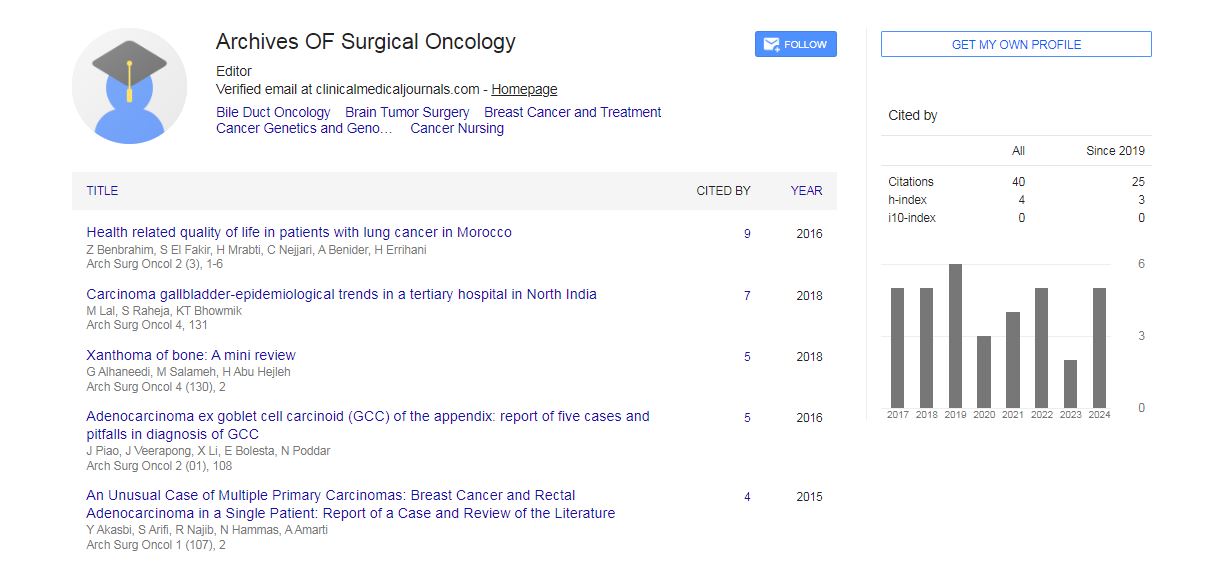
Archives of Surgical Oncology received 37 citations as per Google Scholar report