Short Communication - (2025) Volume 11, Issue 4
Received: 01-Jul-2025, Manuscript No. aso-26-184637;
Editor assigned: 03-Jul-2025, Pre QC No. P-184637;
Reviewed: 17-Jul-2025, QC No. Q-184637;
Revised: 22-Jul-2025, Manuscript No. R-184637;
Published:
29-Jul-2025
, DOI: 10.37421/2471-2671.2025.11.184
Citation: Evans, Laura. "Postoperative Complications Impact
Long-Term Oncologic Survival." Arch Surg Oncol 11 (2025):184.
Copyright: © 2025 Evans L. This is an open-access article distributed under the terms of the Creative Commons Attribution License, which permits unrestricted use, distribution
and reproduction in any medium, provided the original author and source are credited.
The intricate relationship between postoperative complications and long-term oncologic outcomes is a subject of paramount importance in contemporary surgical oncology. Immediate postoperative morbidity, arising from various surgical and patient-related factors, can significantly derail a patient's recovery trajectory and, more critically, influence distant oncologic outcomes. This critical link necessitates a deep understanding of the factors contributing to these early complications. Identifying these drivers, such as the chosen surgical approach, the presence of comorbidities, and the adherence to established perioperative care protocols, is the first step toward mitigating their impact on survival rates [1].
Surgical site infections (SSIs) represent a significant category of postoperative morbidity that extends its influence beyond the acute postoperative period. Emerging evidence suggests that SSIs following oncologic resections are not merely short-term inconveniences but can actively contribute to long-term adverse oncologic events. The inflammatory response and prolonged healing processes associated with SSIs can create a microenvironment that may inadvertently foster tumor recurrence, thereby compromising overall survival [2].
Frailty, a prevalent condition among older surgical patients, has been identified as a robust predictor of both short-term postoperative morbidity and long-term survival in the context of oncologic surgery. Frail individuals are predisposed to experiencing a higher incidence of complications, prolonged hospitalizations, and ultimately, poorer survival rates. This underscores the critical need for comprehensive pre-operative frailty assessments and the implementation of tailored perioperative interventions to effectively mitigate these elevated risks and optimize patient outcomes [3].
Severe postoperative complications, particularly organ-space surgical site infections, exert a discernible influence on the long-term oncologic trajectory of patients undergoing cancer surgery. Studies focusing on colorectal cancer resections, for instance, demonstrate a clear association between these profound complications and significantly diminished disease-free and overall survival, hinting at a complex interplay between surgical stress, immune dysregulation, and tumor progression [4].
The duration of an operative procedure is another crucial factor that can impact postoperative outcomes. Research has shown that prolonged operative times in procedures like radical prostatectomy are associated with an increased risk of complications. These complications, including the need for blood transfusions and the development of surgical site infections, can then exhibit a trend toward negatively affecting disease-specific survival, thereby highlighting the importance of surgical efficiency in achieving optimal oncologic results [5].
Anastomotic leak, a particularly challenging postoperative morbidity following esophageal cancer surgery, has been shown to have a profound effect on long-term survival. These leaks are not only a significant source of immediate patient distress and prolonged hospital stays but are also independently linked to poorer survival outcomes. This emphasizes the indispensable role of meticulous surgical technique and vigilant postoperative monitoring in the prevention of such critical complications [6].
Postoperative pulmonary complications, such as pneumonia and prolonged air leaks, are recognized as significant contributors to morbidity after lung cancer surgery. Beyond their immediate impact on recovery, these complications have been shown to negatively affect long-term oncologic outcomes and survival. Consequently, proactive management strategies aimed at optimizing pulmonary function and ensuring early identification of these complications are vital for improving patient prognosis [7].
Venous thromboembolism (VTE) represents a serious postoperative complication that carries significant implications for long-term survival in patients undergoing major oncologic surgery. Despite being a postoperative event, VTE is strongly associated with increased mortality and can indirectly impact oncologic outcomes by compromising a patient's recovery and their ability to tolerate subsequent cancer treatments. This highlights the critical importance of robust VTE prophylaxis protocols [8].
Postoperative delirium, particularly in elderly patients undergoing oncologic surgery, is increasingly recognized not as a transient episode but as a significant factor associated with adverse long-term outcomes. Delirium is linked to increased morbidity, extended hospital stays, and a notable reduction in overall survival, emphasizing the need for targeted interventions for its prevention and management in this vulnerable patient cohort [9].
Operative blood loss during major oncologic resections is a tangible factor that correlates with postoperative morbidity and long-term survival. Higher intraoperative blood loss is associated with an increased incidence of complications, including prolonged intensive care unit stays and elevated infection rates. These complications, in turn, can negatively impact oncologic outcomes and reduce survival, underscoring the necessity of meticulous surgical technique to minimize bleeding [10].
The critical link between immediate postoperative morbidity and long-term oncologic survival is a complex interplay of various factors that must be thoroughly understood and managed. Immediate complications following oncologic surgery can profoundly influence a patient's recovery and, more importantly, their ultimate survival rates. Identifying the key contributors to this morbidity, including the specific surgical approach, the presence of pre-existing patient comorbidities, and the diligent adherence to perioperative care protocols, is essential for optimizing patient outcomes and improving long-term survival [1].
Surgical site infections (SSIs) are a significant source of postoperative morbidity and have been demonstrated to have a detrimental impact on long-term oncologic outcomes. Studies indicate that SSIs following oncologic resections are not merely transient complications but can create an environment that promotes tumor recurrence. The inflammatory cascade and prolonged healing associated with SSIs can foster a pro-tumorigenic milieu, thereby diminishing survival prospects. Consequently, robust infection prevention strategies are paramount for both patient safety and enhanced oncologic results [2].
Frailty is a critical consideration in older adults undergoing oncologic surgery, serving as a potent predictor of both short-term postoperative complications and long-term survival. Patients exhibiting higher levels of frailty are at an increased risk for a cascade of adverse events, including more frequent complications, extended hospital stays, and diminished survival rates. This highlights the imperative for pre-operative frailty assessments and the development of individualized perioperative management plans to mitigate these risks and improve patient prognoses [3].
Major postoperative complications, such as organ-space surgical site infections, have been found to significantly affect the long-term oncologic trajectory of patients, particularly those undergoing surgery for conditions like colorectal cancer. These severe complications are directly associated with a substantial reduction in both disease-free and overall survival, suggesting a complex bidirectional relationship between surgical stress, the host's immune response, and the progression of the malignancy [4].
The duration of operative procedures can also play a role in postoperative morbidity and subsequent oncologic outcomes. For instance, in the context of radical prostatectomy, longer operative times have been linked to an increased incidence of complications, such as the need for blood transfusions and the development of surgical site infections. These complications, in turn, can negatively impact disease-specific survival, emphasizing the value of surgical efficiency and judicious operative planning in optimizing oncologic results [5].
Anastomotic leaks represent a significant source of postoperative morbidity in patients undergoing esophageal cancer surgery, with a direct and adverse impact on long-term survival. Beyond increasing immediate complications and prolonging hospital stays, these leaks are independently associated with poorer survival outcomes. This finding underscores the absolute necessity of meticulous surgical technique, careful intraoperative assessment, and vigilant postoperative monitoring to prevent their occurrence [6].
Postoperative pulmonary complications, including pneumonia and prolonged air leaks, are recognized as having a detrimental effect on the long-term oncologic outcomes of patients undergoing lung cancer surgery. These complications not only increase immediate morbidity but can also negatively impact survival rates. Therefore, implementing strategies for proactive management of pulmonary function and early detection of these complications is crucial for improving patient prognosis [7].
Venous thromboembolism (VTE) is a significant postoperative complication that has been shown to be associated with increased mortality and can impact long-term survival in patients undergoing major oncologic surgery. While primarily a thrombotic event, VTE can indirectly affect oncologic outcomes by prolonging recovery and potentially compromising a patient's ability to tolerate further cancer treatments. This reinforces the importance of comprehensive VTE prophylaxis protocols [8].
Postoperative delirium, particularly in elderly patients undergoing oncologic surgery, is increasingly understood to have lasting consequences beyond the acute hospital stay. This condition is associated with increased morbidity, prolonged hospitalization, and a significant reduction in overall survival. These findings necessitate a focused approach to prevent and manage delirium in this vulnerable patient population to improve long-term outcomes [9].
Intraoperative blood loss during major oncologic resections is an important factor that correlates with postoperative morbidity and subsequent long-term survival. Higher levels of blood loss during surgery are associated with an increased incidence of complications, such as extended stays in the intensive care unit and higher rates of infection. These complications, in turn, can adversely affect oncologic outcomes and reduce survival, underscoring the importance of meticulous surgical technique to minimize bleeding [10].
Postoperative complications in oncologic surgery significantly impact long-term survival. Factors such as surgical site infections, frailty, organ-space infections, operative duration, anastomotic leaks, pulmonary complications, venous thromboembolism, and delirium are all linked to increased morbidity and reduced survival rates. Meticulous surgical technique, vigilant monitoring, and tailored perioperative interventions are crucial for mitigating these risks and improving patient outcomes and long-term cancer control.
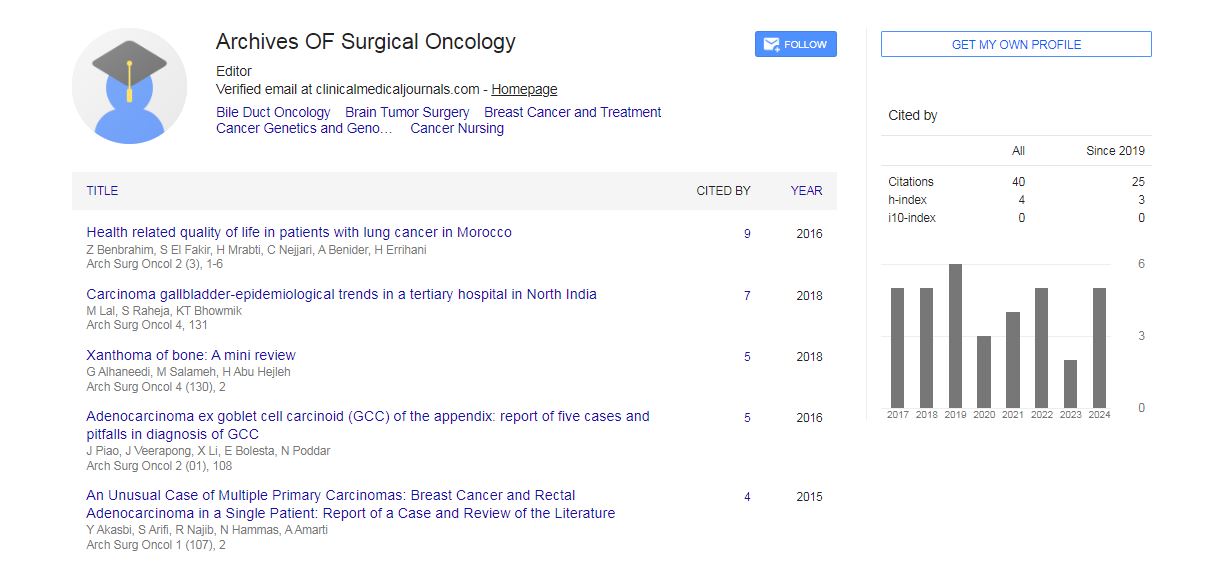
Archives of Surgical Oncology received 37 citations as per Google Scholar report