Perspective - (2025) Volume 16, Issue 5
Received: 01-Sep-2025, Manuscript No. jnmrt-26-186390;
Editor assigned: 03-Sep-2025, Pre QC No. P-186390;
Reviewed: 17-Sep-2025, QC No. Q-186390;
Revised: 22-Sep-2025, Manuscript No. R-186390;
Published:
29-Sep-2025
, DOI: 10.37421/2155-9619.2025.16.671
Citation: Sorensen, Anne. ”Personalized Radionuclide Therapy
for Hepatocellular Carcinoma.” J Nucl Med Radiat Ther 16 (2025):671.
Copyright: © 2025 Sorensen A. This is an open-access article distributed under the terms of the Creative Commons Attribution License, which permits unrestricted use,
distribution and reproduction in any medium, provided the original author and source are credited.
Personalized radionuclide therapy for hepatocellular carcinoma (HCC) represents a paradigm shift in cancer treatment, moving away from one-size-fits-all approaches towards highly individualized therapeutic strategies. This evolution is driven by the need to optimize treatment efficacy while simultaneously minimizing toxicity to surrounding healthy tissues. The core of this personalized approach lies in precise dosimetry, which utilizes patient-specific uptake data of radiopharmaceuticals to tailor radiation doses, a significant advancement over traditional fixed-activity regimens. The integration of advanced imaging techniques and sophisticated dose calculation algorithms is therefore crucial for achieving this level of personalization, aiming to deliver a therapeutic radiation burden directly to tumor cells and spare healthy liver tissue [1].
Accurate internal dosimetry stands as a paramount requirement for the effective implementation of personalized radionuclide therapy in HCC. This involves the meticulous quantification of radiopharmaceutical uptake using advanced imaging modalities such as single-photon emission computed tomography (SPECT) and positron emission tomography (PET). The primary challenge lies in translating these valuable imaging data into reliable absorbed dose calculations. This necessitates the development and application of robust pharmacokinetic modeling, coupled with a thorough consideration of both intra- and inter-patient variability in radiopharmaceutical biodistribution, which can significantly influence treatment outcomes [2].
A critical area of ongoing research and development in HCC treatment focuses on the creation of novel radiopharmaceuticals that exhibit improved tumor targeting capabilities and enhanced dosimetry characteristics. Compounds demonstrating a high tumor-to-background ratio and predictable biodistribution are considered essential for the success of personalized therapy. This endeavor requires a multidisciplinary collaboration involving experts in radiochemistry, molecular biology, and nuclear medicine to engineer agents capable of delivering a potent cytotoxic radiation dose specifically to malignant cells within the liver [3].
The practical implementation of dosimetry-guided radionuclide therapy for HCC is heavily reliant on sophisticated software and computational tools. These systems are indispensable for processing complex imaging data, performing accurate dose calculations, and predicting potential treatment outcomes. The development of user-friendly interfaces for clinicians, alongside rigorous validation of these computational tools for both accuracy and reliability, is paramount for their widespread adoption. The continuous evolution of these computational tools aims to further refine treatment planning and enable even more precise delivery of radiation to target lesions [4].
Patient selection emerges as a critical determinant of success in personalized radionuclide therapy for HCC. Identifying individuals who are most likely to derive significant benefit from this treatment modality, based on a comprehensive assessment of their tumor characteristics, overall liver function, and potential for experiencing treatment-related toxicities, is essential for achieving optimal outcomes. This rigorous selection process typically involves thorough patient evaluation and extensive multidisciplinary team discussions to ensure that the proposed therapy is both appropriate and precisely tailored to each individual's unique medical needs [5].
The radiation dose delivered to the liver is recognized as the primary factor influencing the incidence and severity of toxicity associated with radionuclide therapy for HCC. Dosimetry-guided approaches offer a means to meticulously optimize this delivered dose. The objective is to maintain the dose within the established tolerance limits of the healthy liver parenchyma while simultaneously maximizing the radiation dose to the tumor itself. Striking this delicate balance is key to preventing or significantly minimizing treatment-related complications, such as radiation-induced liver disease (RILD) [6].
Radioembolization, a widely employed form of internal radiation therapy for HCC, can substantially benefit from dosimetry-guided planning. By conducting a thorough assessment of the patient's hepatic vascular anatomy and the anticipated distribution of the radiopharmaceutical, clinicians can strategically optimize the delivery of radioactive microspheres to the tumorous lesions. This optimization process serves to enhance overall treatment effectiveness and concurrently reduce the potential for off-target radiation exposure to healthy organs [7].
Robust quality assurance (QA) procedures are indispensable for ensuring the accuracy and reliability of dosimetry in personalized radionuclide therapy. This comprehensive QA program encompasses the validation of imaging protocols used for data acquisition, ensuring the accurate quantification of radioactivity within the target and surrounding tissues, and rigorously verifying the performance of the dose calculation software employed. A well-established and consistently applied QA program fundamentally underpins the overall safety and trustworthiness of this personalized treatment strategy [8].
The successful integration of dosimetry into routine clinical practice for HCC radionuclide therapy mandates the establishment of clear, evidence-based guidelines and standardized protocols. Implementing these standards is vital for ensuring consistency in treatment delivery across different healthcare settings and for facilitating meaningful comparisons of outcomes among diverse patient populations. Such standardization is crucial for the continued advancement of the field and for realizing the full therapeutic potential of personalized radiation oncology [9].
Future advancements in dosimetry-guided personalized radionuclide therapy for HCC are anticipated to involve the increasing incorporation of artificial intelligence (AI) and machine learning (ML) technologies. These powerful computational tools have the potential to significantly enhance the accuracy of dose prediction models, optimize complex treatment planning processes, and potentially identify novel biomarkers that predict treatment response. The synergistic integration of sophisticated dosimetry techniques with cutting-edge AI holds considerable promise for further refining personalized oncological treatments and improving patient outcomes [10].
Personalized radionuclide therapy for hepatocellular carcinoma (HCC) is fundamentally dependent on precise dosimetry to maximize therapeutic benefit while minimizing collateral damage to healthy tissues. This patient-specific approach leverages the unique uptake patterns of radiopharmaceuticals within an individual to tailor radiation doses, representing a significant departure from less adaptable standard regimens. The successful execution of this personalized strategy necessitates the seamless integration of advanced imaging technologies and sophisticated dose calculation algorithms. The ultimate goal is to deliver a precisely targeted therapeutic radiation burden directly to tumor cells, thereby preserving the integrity of the surrounding healthy liver parenchyma [1].
Accurate internal dosimetry is an indispensable prerequisite for the effective application of personalized radionuclide therapy in the context of HCC. This process involves the meticulous quantification of radiopharmaceutical uptake, typically achieved through advanced imaging modalities such as single-photon emission computed tomography (SPECT) and positron emission tomography (PET). A key challenge within this domain is the accurate translation of the quantitative imaging data into reliable estimations of absorbed dose. This critical step requires the development and application of robust pharmacokinetic models, alongside careful consideration of the inherent variability in radiopharmaceutical biodistribution observed both within individual patients over time and between different patients [2].
A vital area of ongoing research and development in the field of HCC treatment is the creation of novel radiopharmaceuticals designed for improved tumor targeting and enhanced dosimetry characteristics. Ideal agents for personalized therapy are those that exhibit a high tumor-to-background ratio and predictable biodistribution patterns. Achieving these desirable properties requires a concerted, multidisciplinary effort involving experts in radiochemistry, molecular biology, and nuclear medicine to engineer therapeutic agents capable of delivering a potent cytotoxic radiation dose specifically to malignant cells within the liver [3].
The clinical implementation of dosimetry-guided radionuclide therapy for HCC is critically dependent on the availability and utilization of sophisticated software and computational tools. These systems are essential for processing complex imaging datasets, performing accurate dose calculations, and predicting the likely treatment outcomes for individual patients. The development of user-friendly interfaces for clinicians, coupled with rigorous validation processes to ensure the accuracy and reliability of these computational tools, is paramount for their successful adoption in clinical practice. Continuous refinement of these tools aims to further optimize treatment planning and enable increasingly precise radiation delivery [4].
Effective patient selection is a cornerstone of successful personalized radionuclide therapy for HCC. The process of identifying patients who are most likely to benefit from this advanced treatment modality is based on a thorough evaluation of their tumor characteristics, overall liver function, and potential risk factors for treatment-related toxicities. This meticulous selection process is essential for achieving optimal therapeutic outcomes and typically involves comprehensive patient assessment and extensive multidisciplinary team discussions to ensure the therapy is both appropriate and tailored to the individual's specific needs [5].
The radiation dose delivered to the liver represents the primary determinant of toxicity associated with radionuclide therapy for HCC. Dosimetry-guided approaches are specifically designed to optimize this delivered dose, aiming to remain within the tolerance limits of the healthy liver parenchyma while simultaneously maximizing the dose to the tumor. Maintaining this crucial balance is paramount for preventing or significantly reducing the incidence of treatment-related complications, such as radiation-induced liver disease (RILD) [6].
Radioembolization, a significant modality within the spectrum of internal radiation therapy for HCC, can achieve enhanced efficacy through dosimetry-guided planning. This approach involves a detailed assessment of the patient's hepatic vascular anatomy and the anticipated distribution of the radiopharmaceutical. Such assessments enable clinicians to strategically optimize the delivery of radioactive microspheres directly to the tumor, thereby improving treatment effectiveness and minimizing the potential for unintended radiation exposure to non-target tissues [7].
Rigorous quality assurance (QA) is an essential component of dosimetry for personalized radionuclide therapy. This encompasses the validation of imaging protocols used for data acquisition, ensuring the accurate quantification of radioactivity within the relevant tissues, and verifying the performance of the dose calculation software. A robust QA program is fundamental to establishing the reliability and safety of this personalized treatment strategy, ensuring that clinicians can confidently rely on the dosimetry data for treatment planning [8].
The successful integration of dosimetry into the daily clinical workflow for HCC radionuclide therapy necessitates the development and adherence to clear, evidence-based guidelines and standardized protocols. The implementation of such standards is vital for ensuring consistency in treatment delivery across different institutions and for facilitating meaningful comparisons of clinical outcomes among diverse patient populations. Standardization is a key enabler for the continued advancement of the field and for realizing the full therapeutic potential of personalized radiation oncology [9].
Future advancements in dosimetry-guided personalized radionuclide therapy for HCC are expected to be significantly influenced by the integration of artificial intelligence (AI) and machine learning (ML). These advanced computational technologies hold the promise of enhancing the accuracy of dose prediction models, optimizing complex treatment planning strategies, and potentially identifying novel biomarkers predictive of treatment response. The synergistic combination of sophisticated dosimetry techniques with state-of-the-art AI offers a powerful pathway for further refining personalized oncological treatments and improving patient outcomes [10].
Personalized radionuclide therapy for hepatocellular carcinoma (HCC) relies on precise dosimetry to optimize treatment and minimize toxicity. This approach uses patient-specific radiopharmaceutical uptake data to tailor radiation doses, a significant improvement over fixed regimens. Advanced imaging and dose calculation algorithms are crucial for this personalization, aiming to target tumor cells while sparing healthy liver tissue. Accurate internal dosimetry, using SPECT and PET, quantifies uptake, but translating this to absorbed doses requires robust pharmacokinetic modeling and consideration of patient variability. Research focuses on novel radiopharmaceuticals with better tumor targeting and dosimetry characteristics. Implementing this therapy demands sophisticated software for data processing and dose calculation, emphasizing user-friendliness and validation. Patient selection based on tumor characteristics and liver function is critical for successful outcomes. Liver dose is a primary toxicity determinant, and dosimetry helps optimize it to balance tumor treatment and organ preservation. Radioembolization can benefit from dosimetry-guided planning to enhance efficacy and reduce off-target exposure. Quality assurance in imaging protocols, radioactivity quantification, and software performance is essential for reliability and safety. Standardized guidelines and protocols are vital for consistent treatment delivery and advancing the field. Future directions include integrating AI and machine learning to improve dose prediction, treatment planning, and identify biomarkers for treatment response.
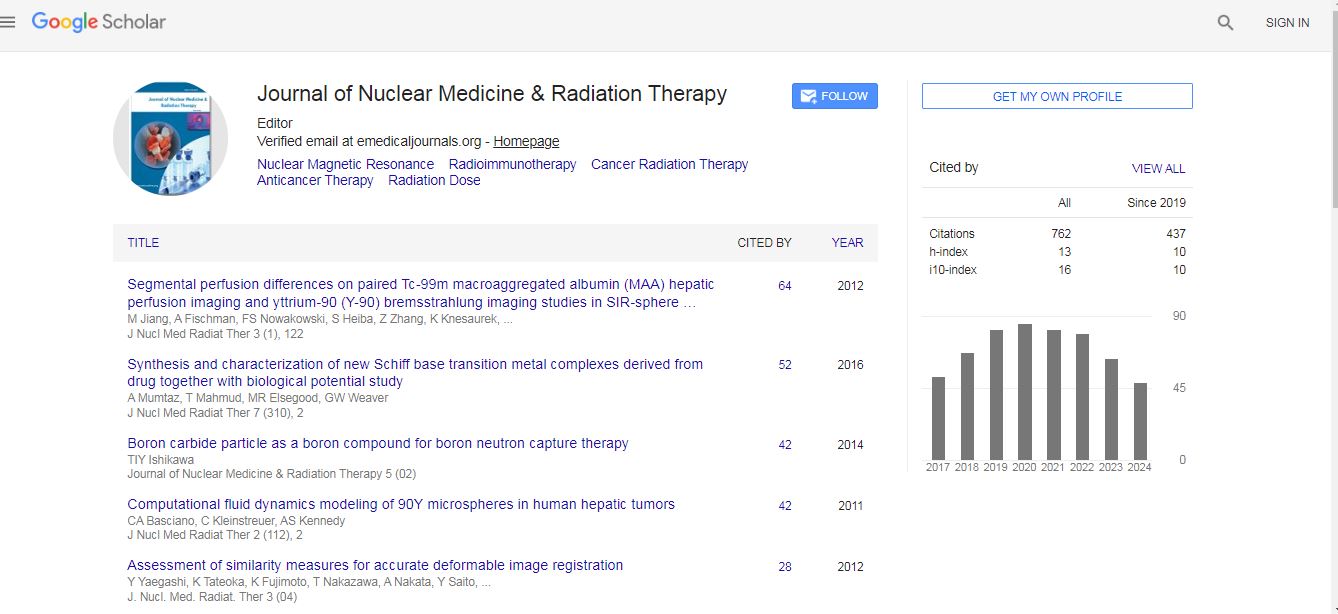
Nuclear Medicine & Radiation Therapy received 706 citations as per Google Scholar report