Brief Report - (2025) Volume 16, Issue 3
Received: 02-Jun-2025, Manuscript No. jar-25-176614;
Editor assigned: 04-Jun-2025, Pre QC No. P-176614;
Reviewed: 18-Jun-2025, QC No. Q-176614;
Revised: 23-Jun-2025, Manuscript No. R-176614;
Published:
30-Jun-2025
, DOI: 10.37421/2155-6113.2025.16.1062
Citation: Li, Tao. ”PEP: Vital Strategy for Diverse Disease Control.”
J AIDS Clin Res 16 (2025):1062.
Copyright: © 2025 Li T. This is an open-access article distributed under the terms of the Creative Commons Attribution License, which permits unrestricted use, distribution
and reproduction in any medium, provided the original author and source are credited.
Post-exposure prophylaxis (PEP) for HIV is a critical strategy to prevent infection after potential exposure. This review offers an updated look at available antiretroviral regimens, focusing on their effectiveness, tolerability, and adherence challenges. It highlights how quickly starting treatment and sticking to the full course are vital for success. The field continues to evolve with new drugs and better understanding of optimal use, which is great for public health efforts [1].
Managing potential rabies exposure requires quick action. This article outlines a practical, evidence-based approach to rabies PEP, emphasizing immediate wound care, judicious use of rabies immunoglobulin, and timely vaccination. What this really means is tailoring treatment to the type of exposure and the individual's vaccination history, which helps streamline patient management and improve outcomes, especially in regions where rabies is endemic [2].
Preventing hepatitis B virus (HBV) infection after exposure is a crucial public health goal. This overview breaks down the current strategies for HBV post-exposure prophylaxis, detailing who should receive it, when, and with what. It covers the combined use of hepatitis B immune globulin (HBIG) and hepatitis B vaccine, explaining how these interventions significantly reduce the risk of transmission, particularly in vulnerable populations [3].
When it comes to Mpox, understanding the current approaches to post-exposure prophylaxis is key. This article maps out the landscape of Mpox PEP, highlighting the role of vaccines like JYNNEOS in preventing severe disease after exposure. It also touches on monitoring exposed individuals and the considerations for targeted vaccination campaigns during outbreaks. Essentially, it clarifies the best practices for minimizing disease spread [4].
For healthcare workers, knowing how to manage potential HIV exposure in the workplace is vital. This systematic review and meta-analysis on occupational HIV PEP consolidates the evidence on its effectiveness. The big takeaway is that immediate and appropriate post-exposure prophylaxis significantly reduces the risk of HIV transmission in occupational settings, underscoring the importance of clear protocols and accessibility to treatment for frontline staff [5].
Tetanus, while rare, is serious, making proper post-exposure prophylaxis essential. This article outlines an evidence-based approach to tetanus PEP. It stresses the importance of assessing wound type and the patient's immunization status to determine whether tetanus toxoid vaccine, tetanus immune globulin, or both are needed. This careful evaluation ensures timely and effective protection against a potentially deadly infection [6].
For individuals exposed to the varicella-zoster virus (VZV), or chickenpox, timely intervention can prevent illness or reduce its severity. This review summarizes the current recommendations for VZV post-exposure prophylaxis, particularly for immunocompromised individuals, pregnant women, and neonates. The main point is that appropriate use of varicella-zoster immune globulin (VZIG) or antiviral medications can be crucial in preventing serious complications [7].
When facing influenza exposure, especially in high-risk groups, antiviral PEP can be an important tool. This update on antiviral drugs for influenza, focusing on post-exposure prophylaxis, details the current options and their efficacy. It emphasizes how rapidly initiating antivirals after exposure can mitigate illness or prevent infection altogether, providing another layer of defense beyond vaccination during flu seasons or outbreaks [8].
For COVID-19, particularly in specific scenarios, monoclonal antibodies have been explored for post-exposure prophylaxis. This systematic review and meta-analysis examines their effectiveness in preventing COVID-19 after exposure. What this study points out is the potential benefit of these targeted therapies in reducing infection risk, particularly for those who may not mount a strong immune response to vaccination or are otherwise vulnerable [9].
Effective management of sexually transmitted infections (STIs) in people living with HIV often includes considering post-exposure prophylaxis for various pathogens. This article, part of an updated guideline, provides insights into comprehensive STI management in this population. It underscores how critical it is to offer counseling, testing, and appropriate PEP strategies to prevent further transmission and protect health, reflecting current best practices in sexual health [10].
Post-exposure prophylaxis (PEP) for HIV is a vital strategy for preventing infection after potential exposure. Recent reviews update available antiretroviral regimens, focusing on their effectiveness, tolerability, and the challenges of adherence. Starting treatment quickly and completing the full course are crucial for success, with the field continuously evolving with new drugs and better understanding of optimal use, which greatly benefits public health [1]. In a related context, managing potential HIV exposure in the workplace is essential for healthcare workers. A systematic review and meta-analysis on occupational HIV PEP confirms its effectiveness, showing that immediate and appropriate prophylaxis significantly reduces the risk of transmission in occupational settings. This highlights the importance of clear protocols and accessible treatment for frontline staff [5].
Beyond HIV, various other viral infections also necessitate prompt PEP. For rabies, managing potential exposure demands quick action. A practical, evidence-based approach involves immediate wound care, judicious use of rabies immunoglobulin, and timely vaccination. What this means is tailoring treatment to the type of exposure and an individualâ??s vaccination history, streamlining patient management and improving outcomes, especially in endemic regions [2]. Preventing hepatitis B virus (HBV) infection post-exposure is another critical public health goal. Current strategies for HBV PEP include detailing who should receive it, when, and with what, often combining hepatitis B immune globulin (HBIG) and the hepatitis B vaccine. These interventions significantly reduce transmission risk, particularly for vulnerable groups [3]. Similarly, understanding current approaches to Mpox PEP is key. This involves vaccines like JYNNEOS to prevent severe disease after exposure, alongside monitoring exposed individuals and considering targeted vaccination campaigns during outbreaks. This clarifies best practices for minimizing disease spread [4]. For individuals exposed to the varicella-zoster virus (VZV), or chickenpox, timely intervention can prevent illness or reduce severity. Recommendations for VZV PEP, especially for immunocompromised individuals, pregnant women, and neonates, emphasize the appropriate use of varicella-zoster immune globulin (VZIG) or antiviral medications to prevent serious complications [7].
Tetanus, though rare, is a serious condition, making proper post-exposure prophylaxis crucial. An evidence-based approach to tetanus PEP stresses evaluating the wound type and the patient's immunization status. This determines whether a tetanus toxoid vaccine, tetanus immune globulin, or both are needed, ensuring timely and effective protection against this potentially deadly infection [6].
In the realm of respiratory and emerging viral threats, PEP also plays a role. When facing influenza exposure, especially in high-risk groups, antiviral PEP is an important tool. Updates on antiviral drugs for influenza, focusing on post-exposure prophylaxis, detail current options and their efficacy. Rapidly initiating antivirals after exposure can mitigate illness or prevent infection altogether, adding a layer of defense beyond vaccination during flu seasons or outbreaks [8]. For COVID-19, particularly in specific scenarios, monoclonal antibodies have been explored for post-exposure prophylaxis. A systematic review and meta-analysis highlights the potential benefit of these targeted therapies in reducing infection risk, especially for those who may not mount a strong immune response to vaccination or are otherwise vulnerable [9].
Finally, effective management of sexually transmitted infections (STIs) in people living with HIV often involves considering post-exposure prophylaxis for various pathogens. Updated guidelines provide insights into comprehensive STI management in this population, underscoring the critical need to offer counseling, testing, and appropriate PEP strategies to prevent further transmission and protect health, reflecting current best practices in sexual health [10].
Post-exposure prophylaxis (PEP) is a vital public health strategy across a spectrum of infectious diseases. For HIV, comprehensive reviews highlight the importance of timely initiation and adherence to antiretroviral regimens, emphasizing continuous evolution in drug availability and optimal use [1, 5]. Similarly, managing rabies exposure requires immediate wound care, judicious use of immunoglobulin, and vaccination, with treatment tailored to exposure type and individual history [2]. Preventing hepatitis B virus (HBV) transmission post-exposure is achieved through combined use of immune globulin and vaccine, crucial for reducing risk in vulnerable populations [3]. The landscape of PEP extends to emerging threats like Mpox, where vaccines such as JYNNEOS play a key role in preventing severe disease and guiding targeted vaccination efforts during outbreaks [4]. Even long-standing concerns like tetanus necessitate an evidence-based approach, assessing wound type and immunization status to determine appropriate toxoid vaccine or immune globulin administration [6]. For varicella-zoster virus (VZV), or chickenpox, timely intervention with immune globulin or antivirals is critical, especially for high-risk groups like immunocompromised individuals, pregnant women, and neonates [7]. Influenza PEP utilizes antiviral drugs, particularly for high-risk groups, showing how rapid initiation after exposure can mitigate illness or prevent infection altogether [8]. For COVID-19, monoclonal antibodies have been explored, demonstrating potential benefits in reducing infection risk, particularly for vulnerable individuals or those with suboptimal vaccine response [9]. Additionally, in comprehensive STI management for people living with HIV, PEP strategies are integral, underscoring the need for counseling, testing, and appropriate interventions to prevent further transmission and protect health [10]. Overall, PEP represents a dynamic and essential component of infectious disease control, constantly adapting with new insights and therapies.
Indexed at, Google Scholar, Crossref
Indexed at, Google Scholar, Crossref
Indexed at, Google Scholar, Crossref
Indexed at, Google Scholar, Crossref
Indexed at, Google Scholar, Crossref
Indexed at, Google Scholar, Crossref
Indexed at, Google Scholar, Crossref
Indexed at, Google Scholar, Crossref
Indexed at, Google Scholar, Crossref
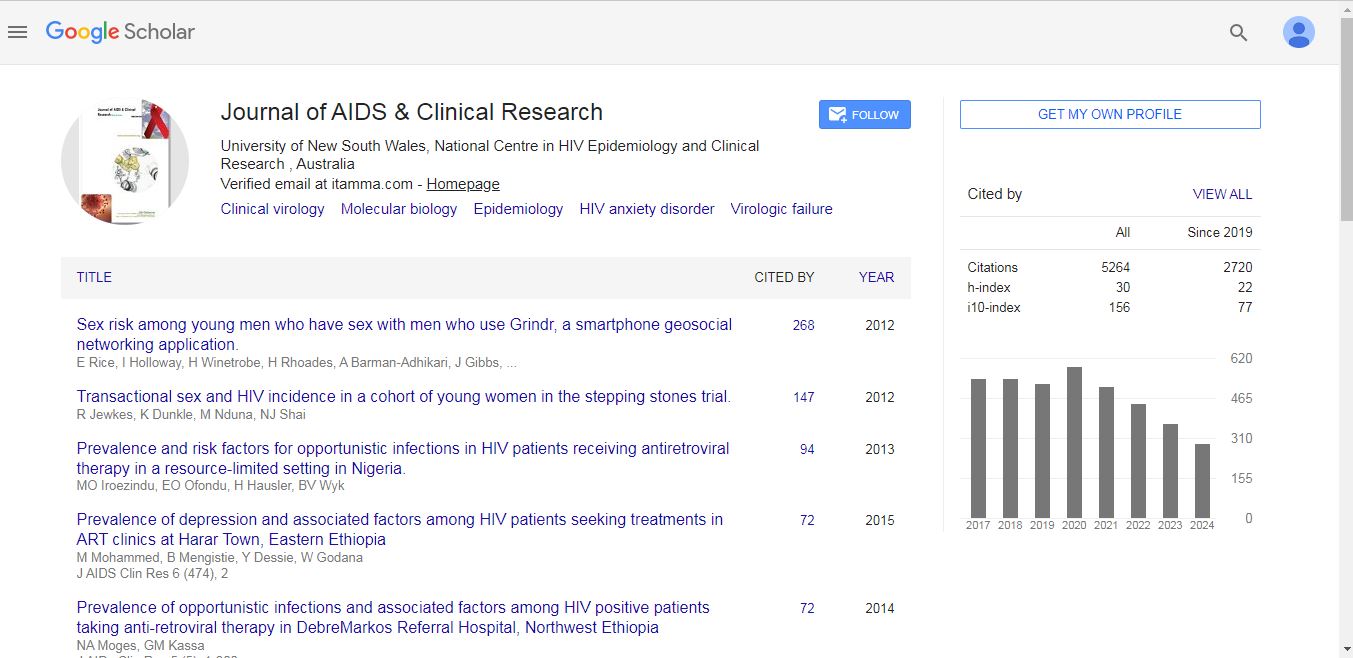
Journal of AIDS & Clinical Research received 5264 citations as per Google Scholar report