Short Communication - (2025) Volume 15, Issue 6
Received: 01-Nov-2025, Manuscript No. Jsmds-25-175860;
Editor assigned: 03-Nov-2025, Pre QC No. P-175860;
Reviewed: 17-Nov-2025, QC No. Q-175860;
Revised: 24-Nov-2025, Manuscript No. R-175860;
Published:
01-Dec-2025
, DOI: 10.37421/2161-0673.2025.15.464
Citation: Smith, Liam. ”Optimizing Athletic Recovery: A Holistic Approach.” J Sports Med Doping Stud 15 (2025):464.
Copyright: © 2025 Smith L. This is an open-access article distributed under the terms of the Creative Commons Attribution License, which permits unrestricted use, distribution
and reproduction in any medium, provided the original author and source are credited.
Optimizing athletic performance and facilitating effective recovery are paramount concerns for athletes, coaches, and sports scientists alike. The strategies employed to accelerate recovery are diverse, spanning physical modalities, nutritional interventions, psychological support, and structured rehabilitation. Understanding the efficacy of these various approaches is crucial for developing comprehensive and personalized recovery protocols that sustain high-level training and competition while mitigating injury and overtraining risks. This body of research provides a holistic perspective on current best practices and insights for future investigation into athletic recovery. One significant area of focus is the combination of different recovery strategies. Evidence indicates that integrating multiple recovery modalities, such as combining cold water immersion with active recovery, yields superior results compared to single techniques for restoring athletic power and aerobic performance [1].
This multi-modal approach offers valuable insights for refining recovery protocols. Alongside physical methods, specific nutritional strategies play a critical role in optimizing athlete recovery and enhancing training adaptations. Tailored macronutrient and micronutrient intake, precisely timed, can accelerate muscle repair, facilitate glycogen replenishment, and effectively reduce exercise-induced fatigue, supporting athletes in maintaining rigorous training schedules [2].
Such dietary considerations are fundamental to an athlete's sustained well-being and competitive edge. Furthermore, the importance of sleep in athletic recovery cannot be overstated. Interventions focused on enhancing sleep for elite athletes, including improved sleep hygiene, strategic napping, and light therapy, significantly boost both physical and cognitive function while simultaneously lowering injury risk [3].
These targeted sleep protocols are integral components of a robust recovery regimen. Psychological factors also profoundly impact recovery and performance. A systematic review underscores the complex relationship between stress, recovery, and athletic output, emphasizing that effective stress management, adequate rest, and mental relaxation are essential in preventing overtraining syndrome and burnout [4].
Integrating psychological support into personalized recovery plans can substantially enhance athlete well-being and facilitate sustained high performance. Physical therapies like massage also contribute significantly. Research confirms that massage therapy is an effective recovery strategy, notably reducing delayed onset muscle soreness (DOMS) and perceived fatigue, alongside potentially improving muscle function [5].
This makes massage a valuable complementary method for enhancing post-exercise comfort and physiological restoration. Another common physical recovery method involves water immersion techniques. Specifically, cold water immersion (CWI) is frequently employed for its benefits in reducing muscle soreness and inflammation, and its positive impact on subsequent performance. However, further research is needed to determine optimal protocols and individual responses to maximize benefits without impeding long-term training adaptations [6].
Similarly, compression garments have been evaluated for their role in mitigating exercise-induced muscle damage and accelerating recovery. Findings suggest these garments can modestly decrease muscle soreness and perceived fatigue, and potentially aid in the recovery of muscle function. While not a standalone solution, they represent a beneficial adjunctive recovery strategy, particularly in sports characterized by a high potential for muscle damage [7].
Beyond general recovery, specific nutritional timing around exercise, particularly the combined ingestion of carbohydrates and protein post-endurance exercise, has proven highly effective. This approach accelerates glycogen resynthesis and reduces markers of muscle damage, consequently improving subsequent performance. The emphasis here is on the critical importance of nutrient timing and optimal ratios for maximizing physiological recovery and adaptation in endurance athletes [8].
Moreover, injury prevention forms a crucial part of a comprehensive recovery and performance strategy. Rehabilitation strategies specifically aimed at preventing recurrent hamstring strain injuries, prevalent in many sports, highlight the effectiveness of exercise programs focusing on eccentric strength and neuromuscular control. These structured, progressive rehabilitation programs are vital for a safe return to sport and for significantly lowering the risk of re-injury [9].
Finally, the broader context of training load management and recovery strategies is addressed in official guidelines, such as the International Olympic Committee consensus statement. This statement provides guidance on monitoring training load, understanding individual athlete responses, and implementing effective recovery interventions. It stresses that optimal recovery is not merely a post-activity intervention but an integral component of periodization, essential for preventing overtraining and ensuring athlete health and sustainable performance across competitive seasons [10].
These studies collectively illustrate the multifaceted nature of athletic recovery, pointing towards the need for integrated, evidence-based approaches that address physiological, nutritional, psychological, and preventive aspects to optimize athlete well-being and performance.
The current body of literature extensively investigates various modalities and strategies aimed at optimizing recovery for athletes, thereby enhancing performance and mitigating injury risk. A significant theme emerging from this research is the superior efficacy of multi-modal recovery approaches. For instance, combining different strategies like cold water immersion and active recovery proves more effective than single modalities in restoring athletic power and aerobic performance [1]. This suggests that a comprehensive, integrated approach to recovery often yields better outcomes across various aspects of physical function, providing valuable insights for both athletes and coaches.
Nutritional science provides crucial insights into accelerating physiological recovery. Tailored dietary strategies, focusing on the timing and type of macronutrient and micronutrient intake, are critical for athletes. These approaches accelerate muscle repair, ensure adequate glycogen replenishment, and mitigate exercise-induced fatigue, allowing athletes to sustain high-intensity training and adapt more effectively [2]. In endurance sports, specifically, the co-ingestion of carbohydrates and protein post-exercise is confirmed to effectively accelerate glycogen resynthesis and reduce markers of muscle damage, directly enhancing subsequent performance and adaptation [8]. This underscores the precise and context-specific role of nutrition in different athletic endeavors.
Beyond physical and nutritional interventions, psychological and physiological factors like sleep and stress management are equally vital for athlete well-being and performance. Optimized sleep hygiene, strategic napping, and even light therapy are highlighted as critical components of an athlete's recovery regimen, significantly improving physical and cognitive function while concurrently reducing injury risk [3]. Furthermore, the intricate relationship between stress, recovery, and athletic performance demands attention to psychological recovery strategies. Effective stress management techniques, sufficient rest, and mental relaxation are crucial for preventing overtraining syndrome and burnout, ultimately supporting sustained high performance and overall well-being in elite athletes [4].
Several physical recovery techniques have been systematically evaluated for their benefits. Massage therapy, for instance, is shown to significantly reduce delayed onset muscle soreness (DOMS) and perceived fatigue, and potentially improve muscle function, making it a valuable adjunct to other recovery methods for enhancing comfort and physiological restoration post-exercise [5]. Water immersion techniques, particularly cold water immersion (CWI), are effective in reducing muscle soreness and inflammation and can positively impact subsequent performance. However, research suggests that optimal protocols and individual responses still warrant further investigation to maximize benefits without potentially hindering long-term training adaptations [6]. Compression garments also offer a beneficial adjunctive strategy, modestly reducing muscle soreness and perceived fatigue, and enhancing muscle function recovery, especially in sports prone to high muscle damage potential [7].
Finally, long-term athletic health and performance hinge on effective injury prevention and intelligent load management. Rehabilitation strategies, specifically those designed to prevent recurrent hamstring strain injuries, emphasize eccentric strength and neuromuscular control exercises. These structured, progressive programs are essential for a safe return to sport and for significantly lowering the risk of re-injury [9]. The broader context of training load is addressed by consensus statements, such as the International Olympic Committee's guidelines on load management and recovery. This highlights that monitoring training load, understanding individual athlete responses, and implementing effective recovery interventions are integral to periodization, ensuring athlete health and sustainable performance across competitive seasons, thereby preventing overtraining and burnout [10]. These diverse studies collectively emphasize a comprehensive and individualized approach to athletic recovery, integrating various scientific disciplines to support optimal athlete well-being and peak performance in sport.
Athletic recovery is a complex process requiring diverse strategies to optimize performance and prevent injury. Studies show that combining different recovery methods, like cold water immersion and active recovery, often outperforms single modalities in restoring power and aerobic performance. Nutrition plays a critical role, with precise timing and types of macronutrients and micronutrients speeding up muscle repair and replenishing glycogen, thereby reducing exercise-induced fatigue. Adequate sleep, including proper hygiene and napping, is essential for improving physical and cognitive function and lowering injury risks for elite athletes. Psychological recovery, which involves stress management and mental relaxation, is equally important to avoid overtraining and burnout, contributing to overall well-being and consistent high performance. Physical interventions also prove beneficial. Massage therapy is effective in reducing delayed onset muscle soreness and subjective fatigue, acting as a valuable complement to other recovery techniques. Water immersion, particularly cold water immersion, helps alleviate muscle soreness and inflammation, though specific protocols still need more investigation. Compression garments offer a moderate reduction in muscle soreness and fatigue, and can aid in muscle function recovery, especially in activities prone to muscle damage. For endurance sports, consuming carbohydrates and protein together after exercise significantly boosts glycogen replenishment and lessens muscle damage, leading to better subsequent performance. Furthermore, long-term injury prevention relies on structured rehabilitation programs, crucial for safely returning to sport and reducing the likelihood of re-injury. The International Olympic Committee emphasizes that intelligent load management and timely recovery interventions are fundamental to preventing overtraining, maintaining athlete health, and sustaining performance throughout competitive seasons. These findings collectively advocate for a holistic recovery approach, integrating physical, nutritional, psychological, and rehabilitative elements for peak athletic achievement.
None
None
Indexed at, Google Scholar, Crossref
Indexed at, Google Scholar, Crossref
Indexed at, Google Scholar, Crossref
Indexed at, Google Scholar, Crossref
Indexed at, Google Scholar, Crossref
Indexed at, Google Scholar, Crossref
Indexed at, Google Scholar, Crossref
Indexed at, Google Scholar, Crossref
Indexed at, Google Scholar, Crossref
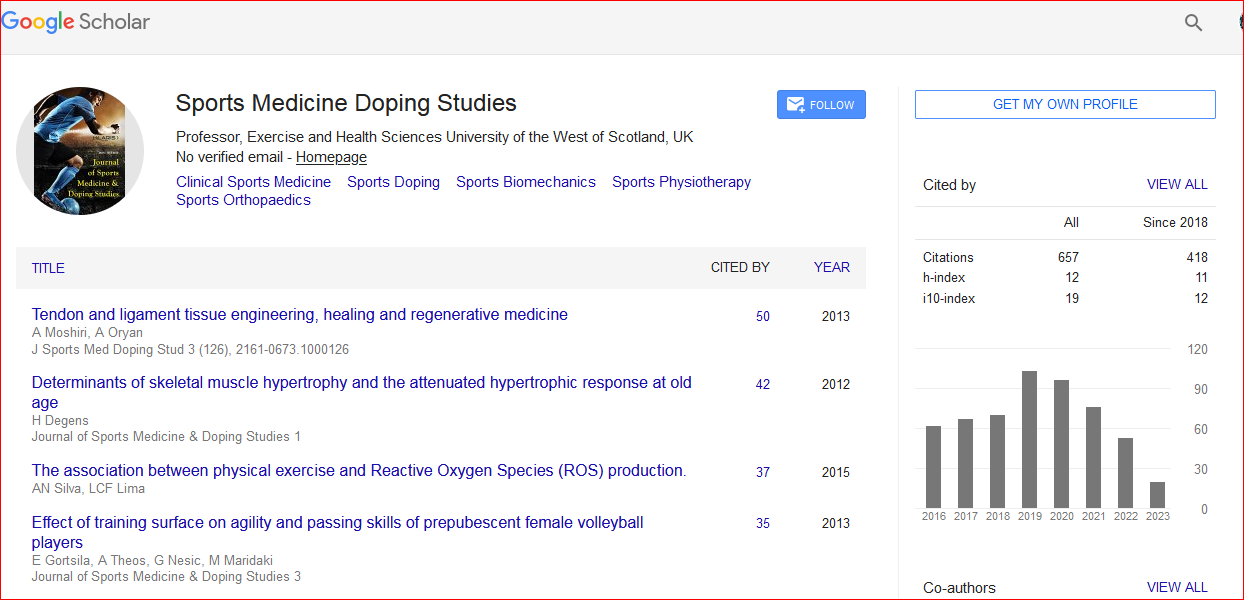
Journal of Sports Medicine & Doping Studies received 1022 citations as per Google Scholar report