Commentary - (2025) Volume 15, Issue 4
Received: 01-Jul-2025, Manuscript No. jsmds-25-174511;
Editor assigned: 03-Jul-2025, Pre QC No. P-174511;
Reviewed: 17-Jul-2025, QC No. Q-174511;
Revised: 22-Jul-2025, Manuscript No. R-174511;
Published:
29-Jul-2025
, DOI: 10.37421/2161-0673.2025.15.439
Citation: Rossi, Isabella. ”Optimizing Athlete Performance, Injury Prevention, and Well-being.” J Sports Med Doping Stud 15 (2025):439.
Copyright: © 2025 Rossi I. This is an open-access article distributed under the terms of the Creative Commons Attribution License, which permits unrestricted use, distribution
and reproduction in any medium, provided the original author and source are credited.
The field of sports science continually evolves, seeking to optimize athletic performance, mitigate injury risks, and support the holistic well-being of athletes. A central theme in this pursuit involves the meticulous monitoring of training load, a practice deemed critical for enhancing athletic performance and substantially reducing the likelihood of injuries. This approach underscores the necessity for highly individualized strategies combined with sophisticated data analytics to guide training decisions effectively [1].
Further discussions on load management within sport consolidate existing evidence, providing practical recommendations for coaches and practitioners. These insights highlight the delicate balance required between training exposure and recovery to maximize performance gains while simultaneously minimizing the risks of both injury and overtraining [6].
Despite progress in understanding and implementing injury prevention strategies in elite sports, complete injury elimination remains an elusive goal. This situation advocates for more integrated, data-driven methods that account for the intricate interplay among training load, recovery processes, and unique individual athlete characteristics [4].
Moreover, a systematic review on concussion in sport offers crucial insights into the epidemiology of mild traumatic brain injury among athletes. It emphasizes the varied risks across different sports and the continuous importance of ongoing efforts in both prevention and effective management strategies [9].
Beyond the physical demands, the psychological landscape of athletes also merits significant attention, especially in the context of global stressors. For example, the COVID-19 pandemic exerted a profound psychological impact on athletes, leading to elevated rates of anxiety, depression, and stress. This underscores a critical need for robust mental health support systems and adaptable coping strategies tailored for athletic populations during periods of widespread crisis [3].
Nutritional science forms another cornerstone of athletic success, particularly for team sports athletes. Current strategies emphasize the paramount importance of tailored macronutrient intake, meticulous hydration protocols, and judicious strategic supplementation. These elements collectively contribute to enhancing performance, accelerating recovery timelines, and sustaining overall athlete health [2].
Complementing nutrition, a comprehensive overview of post-exercise recovery strategies for athletes delves into the physiological rationale and practical application of diverse methods. These include nutritional interventions, adequate sleep, hydrotherapy techniques, and active recovery, all aimed at optimizing physiological adaptation and subsequent performance [10].
The relationship between exercise and immune function also receives updated review. It clarifies that moderate, consistent physical activity generally bolsters immune surveillance, yet excessive or prolonged strenuous exercise can temporarily suppress immunity, making athletes more susceptible to illness [5].
Intriguingly, genetic factors significantly influence exercise performance. Research summarizes current evidence, discussing how genetic predispositions impact various facets of athletic ability, from endurance capabilities to explosive power. This area holds potential for developing truly personalized training approaches founded on individual genetic profiles [8].
Stepping back, the broader public health implications of physical activity are also explored, specifically concerning children and adolescents. An overview synthesizing systematic reviews highlights the extensive health benefits associated with active lifestyles while simultaneously pointing out the risks linked to excessive sedentary time. This body of work strongly advocates for targeted interventions to promote healthier habits from a young age [7].
These multifaceted areas of research collectively contribute to a comprehensive understanding of athlete development, health, and performance across various contexts.
The scientific understanding of athletic performance heavily relies on the precise management of training load, which is essential for maximizing an athlete's potential and significantly reducing the risk of injury [1]. This involves employing individualized approaches and sophisticated data analytics to guide training decisions, ensuring that each athlete's unique physiological responses are considered. Effective load management in sport balances the intensity and volume of training exposure with adequate recovery periods. This careful equilibrium is vital for performance gains and minimizing instances of overtraining and injury [6]. Despite advancements, the complete elimination of injuries in elite sports remains a persistent challenge. This reality calls for a move towards more integrated, data-driven strategies that recognize the complex interplay between training demands, recovery status, and individual athlete vulnerabilities [4]. A critical area within injury concerns is concussion, where systematic reviews provide crucial insights into its incidence and risk factors among athletes. These studies highlight the varying degrees of risk across different sports and underscore the continuous need for robust prevention and management protocols [9].
Athlete well-being extends beyond physical readiness to encompass mental and physiological health. The psychological toll of external events, such as the COVID-19 pandemic, has been particularly significant, leading to increased anxiety, depression, and stress among athletes. This situation emphasizes the urgent need for dedicated mental health support and the development of resilient coping strategies tailored for athletic populations facing global crises [3]. From a physiological perspective, the immune system's response to exercise is also a key consideration. Moderate and regular physical activity generally strengthens immune surveillance, contributing to overall health. However, intense or prolonged strenuous exercise can temporarily suppress immune function, increasing an athlete's susceptibility to illness and potentially impacting training consistency [5]. Understanding this balance is vital for maintaining athlete health and performance.
Optimizing performance and accelerating recovery are primary goals in sports, with nutrition and post-exercise strategies playing pivotal roles. Current nutritional guidelines for team sports athletes stress the importance of carefully tailored macronutrient intake, ensuring proper hydration, and strategically utilizing supplementation. These elements are not only crucial for enhancing on-field performance but also for expediting recovery processes and supporting the athlete's long-term health [2]. Complementing nutritional efforts, a comprehensive array of post-exercise recovery strategies exists. These methods, which include specific nutritional timing, ensuring adequate sleep, employing hydrotherapy, and engaging in active recovery, are supported by physiological rationales. Their practical application is designed to optimize physiological adaptation to training stimuli and subsequent athletic performance [10].
Delving deeper into individual differences, genetic factors significantly influence an athlete's performance capabilities. Research summarizes current evidence, demonstrating how genetic predispositions can affect diverse aspects of athletic ability, from endurance capacity to power output. This understanding opens avenues for more personalized training approaches, potentially tailored to an athlete's unique genetic profile [8].
Beyond elite sport, the broader impact of physical activity and sedentary behavior on public health, particularly in children and adolescents, is well-documented. Systematic reviews synthesize extensive evidence, underscoring the broad health benefits derived from active lifestyles and cautioning against the risks associated with excessive sedentary time. This body of work advocates strongly for targeted interventions to promote physical activity and reduce sedentary habits in younger populations, laying the groundwork for healthier future generations [7]. These comprehensive areas of inquiry collectively paint a picture of the multifaceted considerations crucial for advancing sports science and public health.
This collection of research outlines critical aspects of athletic performance, injury prevention, and overall well-being in sports. It emphasizes the importance of meticulously monitoring training load to optimize performance and reduce injury risks, advocating for individualized approaches and advanced data analytics [1]. This ties into broader discussions on load management, balancing training exposure and recovery to prevent overtraining [6]. Effective injury prevention strategies are crucial in elite sports, though complete elimination remains a challenge, necessitating integrated, data-driven methods that consider complex interactions among load, recovery, and individual athlete factors [4]. Concussion incidence and risk factors are specifically examined, highlighting varying risks across sports and the ongoing need for prevention and management efforts [9]. Beyond physical demands, the psychological impact on athletes, particularly during crises like the COVID-19 pandemic, is significant, with increased rates of anxiety, depression, and stress underscoring the need for mental health support [3]. Nutritional strategies are vital for team sport athletes, focusing on tailored macronutrient intake, proper hydration, and strategic supplementation for enhanced performance, accelerated recovery, and overall health [2]. Post-exercise recovery strategies, encompassing nutrition, sleep, hydrotherapy, and active recovery, are also key to optimizing adaptation and performance [10]. Exercise's role in immune function is dual; moderate activity boosts immunity, while strenuous exertion can temporarily suppress it [5]. Furthermore, genetic factors influence exercise performance, suggesting potential for personalized training based on genetic profiles [8]. Lastly, the broader health benefits of physical activity and risks of sedentary behavior in children and adolescents are highlighted, urging targeted interventions [7].
None
None
Indexed at, Google Scholar, Crossref
Indexed at, Google Scholar, Crossref
Indexed at, Google Scholar, Crossref
Indexed at, Google Scholar, Crossref
Indexed at, Google Scholar, Crossref
Indexed at, Google Scholar, Crossref
Indexed at, Google Scholar, Crossref
Indexed at, Google Scholar, Crossref
Indexed at, Google Scholar, Crossref
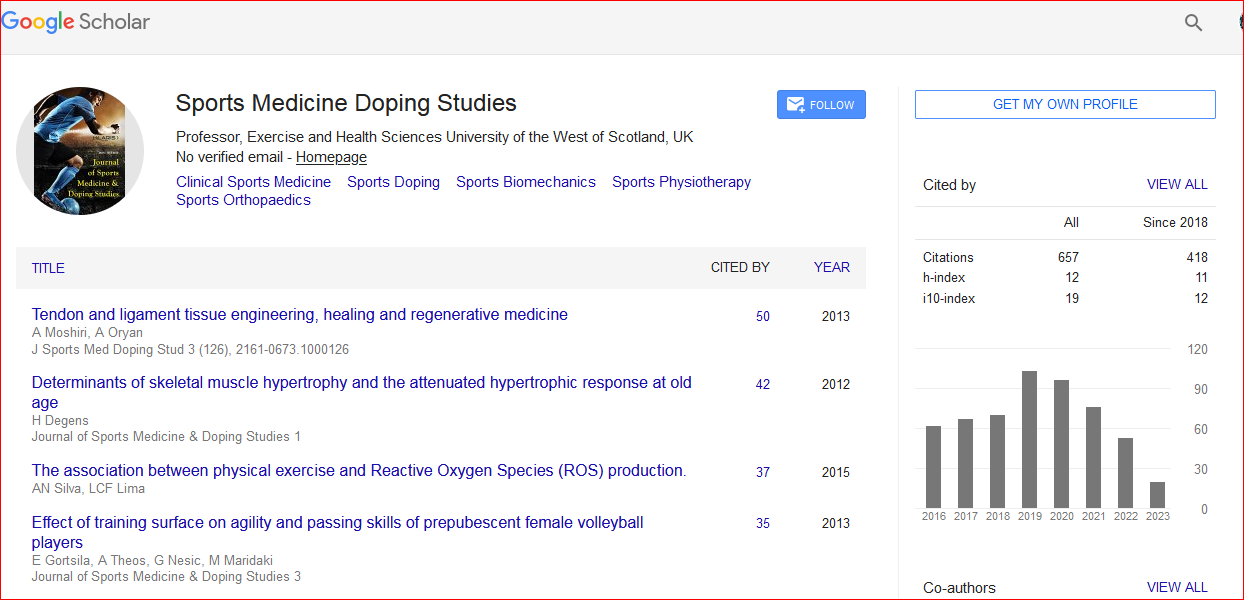
Journal of Sports Medicine & Doping Studies received 1022 citations as per Google Scholar report