Short Communication - (2025) Volume 11, Issue 5
Received: 01-Sep-2025, Manuscript No. aso-25-184652;
Editor assigned: 03-Sep-2025, Pre QC No. P-184652;
Reviewed: 17-Sep-2025, QC No. Q-184652;
Revised: 22-Sep-2025, Manuscript No. R-184652;
Published:
29-Sep-2025
, DOI: 10.37421/2471-2671.2025.11.193
Citation: Hassan, Ahmed. ”Oncoplastic Surgery: Restoring Form,
Function, and Well-being.” Arch Surg Oncol 11 (2025):193.
Copyright: © 2025 Hassan A. This is an open-access article distributed under the terms of the Creative Commons Attribution License, which permits unrestricted use,
distribution and reproduction in any medium, provided the original author and source are credited.
Oncoplastic surgery represents a significant advancement in cancer treatment, harmoniously merging the principles of oncology with the reconstructive capabilities of plastic surgery. Its primary objective is to achieve complete tumor eradication while simultaneously ensuring optimal aesthetic and functional outcomes for the patient. This integrated approach is particularly beneficial in situations where preserving organs is a priority, thereby enhancing the patient's quality of life and minimizing the need for more extensive surgical interventions. The successful implementation of oncoplastic surgery relies heavily on a multidisciplinary team, advanced imaging technologies for precise preoperative planning, and a deep understanding of both oncologic control and reconstructive techniques. This holistic strategy aims to provide comprehensive care that addresses both the disease and its impact on the patient's well-being, moving beyond solely curative intentions to embrace restorative aspects of care. The evolution of these techniques has paved the way for improved patient satisfaction and reduced long-term morbidity associated with cancer treatment.
This collaborative effort ensures that each patient receives tailored treatment plans that consider individual needs and anatomical complexities, fostering a patient-centered approach to complex surgical challenges. Ultimately, oncoplastic surgery redefines the landscape of cancer care by prioritizing a balanced approach to disease management and patient recovery. It offers a paradigm shift in how we conceptualize surgical success, moving towards a definition that encompasses both oncologic clearance and functional and aesthetic restoration. The continuous development of innovative surgical methods and reconstructive options further solidifies its position as a critical component in modern cancer therapy. This patient-centric philosophy ensures that the physical and emotional well-being of the patient is at the forefront of all treatment decisions, leading to more positive and enduring outcomes in the long term. The meticulous planning and execution involved in these procedures underscore the sophisticated nature of contemporary surgical practice, where precision and artistry converge to achieve the best possible results for individuals facing cancer. The dedication to preserving native tissues and functions whenever feasible is a hallmark of this approach, reflecting a profound respect for the patient's overall health and personal well-being throughout their treatment journey and beyond. The synergy between oncologic resection and plastic surgery reconstruction allows for a more comprehensive and less debilitating treatment experience. By addressing both the removal of cancerous tissue and the subsequent reconstruction in a unified manner, oncoplastic surgery minimizes the physical and psychological toll on patients, leading to improved recovery and long-term satisfaction. This integrated approach is crucial for maintaining a high quality of life after cancer treatment, ensuring that patients can return to their daily activities with confidence and improved self-esteem. The development and refinement of oncoplastic surgical techniques have been driven by a commitment to improving patient outcomes and minimizing the disfigurement and functional deficits often associated with cancer surgery. This has led to innovative approaches that balance the need for aggressive tumor removal with the desire to preserve the patient's appearance and bodily functions. The effectiveness of oncoplastic surgery is further enhanced by the integration of advanced imaging and planning tools. These technologies enable surgeons to meticulously map out tumor margins and plan reconstructive procedures with exceptional accuracy, minimizing the risk of incomplete resection and optimizing the aesthetic results. The collaborative nature of oncoplastic surgery, involving a multidisciplinary team of oncologists, surgeons, radiologists, and pathologists, is fundamental to its success. This teamwork ensures that all aspects of patient care are considered, from diagnosis and treatment planning to surgical intervention and postoperative recovery. The application of oncoplastic principles extends across various cancer types, demonstrating its versatility and broad applicability in modern surgical oncology. This adaptability allows for tailored treatment strategies that address the specific challenges posed by different cancers and anatomical locations. The emphasis on organ preservation within oncoplastic surgery is a key factor in improving patient quality of life. By minimizing the extent of tissue removal and maximizing reconstructive efforts, oncoplastic techniques help patients retain essential functions and avoid the debilitating consequences of extensive surgeries. The psychological benefits of oncoplastic surgery are profound, as it addresses not only the physical aspects of cancer treatment but also the emotional and aesthetic concerns of patients. This comprehensive approach contributes to improved body image and self-esteem, fostering a more positive outlook on recovery and life after cancer. The continuous innovation in surgical techniques and materials used in oncoplastic surgery further enhances its efficacy and expand its potential applications. This ongoing evolution ensures that patients have access to the most advanced and effective treatment options available. The ultimate goal of oncoplastic surgery is to achieve oncologic cure while restoring the patient's form and function, thereby improving their overall well-being and facilitating a return to normal life with minimal compromise. Oncoplastic surgery combines oncologic principles with plastic surgery techniques to achieve optimal tumor removal and aesthetic outcomes, preserving organs whenever possible. This approach is particularly relevant in breast cancer and head and neck cancers, offering patients better quality of life and reducing the need for more extensive resections. The integration of advanced imaging, preoperative planning, and multidisciplinary teams is crucial for success [1].Organ-preserving strategies in head and neck cancer surgery, such as transoral robotic surgery (TORS) and endoscopic approaches, are transforming patient care. These techniques aim to minimize functional deficits, including swallowing and speech impairments, by enabling precise tumor resection with wider margins and reduced morbidity compared to traditional open surgeries. Patient selection and meticulous surgical technique are key [2].
The role of oncoplastic techniques in skin cancer management, particularly for facial reconstruction, allows for the complete excision of tumors with immediate defect closure using flaps and grafts. This preserves cosmesis and function, especially in cosmetically sensitive areas. The understanding of oncologic margins remains paramount, with oncoplastic reconstruction enhancing the aesthetic outcome post-resection [3].
Minimally invasive oncologic surgery, including laparoscopic and robotic approaches, is increasingly adopted across various surgical specialties. These techniques offer reduced invasiveness, shorter hospital stays, and faster recovery. For oncologic outcomes, achieving adequate margins and lymph node dissection remains critical, and advancements continue to improve their feasibility and safety [4].
The principles of oncoplastic surgery are being extended to reconstructive procedures following oncologic resections in the extremities. This involves not only achieving clear margins but also restoring function and form, often using free flaps and complex tissue transfers. The goal is to improve patient mobility and quality of life after cancer treatment [5].
Breast-conserving surgery (BCS) has evolved with oncoplastic techniques to improve aesthetic results while maintaining oncologic safety. Techniques like volume replacement and defect reconstruction, often performed by a multidisciplinary team, are now standard of care for many breast cancer patients, leading to better patient satisfaction and psychosocial well-being [6].
Reconstruction of the mandible after cancer resection is a complex challenge that benefits from oncoplastic principles. Utilizing free flaps with osseous components allows for both functional and aesthetic restoration, aiming to improve speech, swallowing, and facial contour. Preoperative planning and multidisciplinary collaboration are key to successful outcomes [7].
The integration of neoadjuvant therapy with surgical oncology is a growing area, particularly in locally advanced cancers. Oncoplastic and organ-preserving techniques play a vital role in managing the post-treatment anatomy, allowing for potentially less morbid surgery after tumor shrinkage. This requires close coordination between medical oncologists, radiation oncologists, and surgeons [8].
Reconstruction of the breast following mastectomy is a cornerstone of oncoplastic surgery. Immediate breast reconstruction using autologous tissue or implants offers significant psychological benefits and improved body image for patients. The selection of the appropriate reconstruction method depends on patient factors, oncologic considerations, and surgeon expertise [9].
The application of robotic surgery in oncologic resections, particularly for gynecologic and urologic cancers, allows for enhanced visualization, dexterity, and precision. These organ-sparing approaches can lead to improved functional outcomes, such as quicker recovery of bladder and bowel function, and reduced blood loss, while maintaining oncologic control [10].
Oncoplastic surgery embodies a paradigm shift in cancer care, skillfully blending oncologic imperatives with sophisticated plastic surgery techniques to optimize tumor removal and aesthetic restoration. A paramount consideration is the preservation of organs whenever feasible, thereby significantly enhancing patient quality of life and mitigating the necessity for excessively invasive resections. This sophisticated approach is particularly impactful in the treatment of breast and head and neck cancers, where minimizing functional and cosmetic compromise is crucial for patient well-being.
The efficacy of oncoplastic surgery is deeply reliant on the synergistic collaboration of multidisciplinary teams, the utilization of advanced imaging for meticulous preoperative planning, and a thorough understanding of both oncologic principles and reconstructive artistry. The overarching goal is to provide a comprehensive care strategy that not only eradicates cancer but also actively promotes recovery and restoration, thereby redefining the patient experience beyond mere survival. The continuous refinement of these techniques has led to improved patient satisfaction and a reduction in the long-term physical and emotional burdens associated with cancer treatment, fostering a more holistic approach to patient recovery and overall well-being. The strategic integration of advanced imaging modalities and detailed preoperative planning is indispensable for the successful execution of oncoplastic procedures. These tools empower surgical teams to precisely delineate tumor margins and meticulously map out reconstructive strategies, thereby minimizing the risk of inadequate tumor clearance and maximizing the potential for superior aesthetic and functional results. The inherent collaborative nature of oncoplastic surgery, requiring the seamless interaction of a multidisciplinary team comprising oncologists, plastic surgeons, radiologists, pathologists, and other specialists, is fundamental to its success. This integrated approach ensures that every facet of patient care, from initial diagnosis through surgical intervention and postoperative rehabilitation, is thoroughly addressed and coordinated. The broad applicability of oncoplastic principles across a diverse spectrum of oncologic conditions highlights its versatility and growing importance in contemporary surgical oncology. This adaptability allows for the development of highly individualized treatment plans that effectively address the unique challenges presented by various cancer types and their specific anatomical locations. A central tenet of oncoplastic surgery is its strong emphasis on organ preservation, a critical factor in enhancing the overall quality of life for patients undergoing cancer treatment. By striving to minimize tissue excision and maximizing reconstructive efforts, oncoplastic techniques help patients retain vital bodily functions and avoid the profound functional deficits that can result from extensive surgical procedures. The significant psychological benefits derived from oncoplastic surgery cannot be overstated, as it directly addresses not only the physical manifestations of cancer and its treatment but also the deeply personal concerns regarding appearance and body image. This comprehensive approach plays a vital role in bolstering patients' self-esteem and fostering a more positive outlook during their recovery and beyond. The dynamic landscape of oncoplastic surgery is continually being shaped by ongoing innovation in surgical methodologies and the development of novel reconstructive materials and technologies. This relentless pursuit of advancement ensures that patients consistently have access to the most cutting-edge and effective treatment options available in the field. The ultimate aspiration of oncoplastic surgery is to achieve a definitive oncologic cure while simultaneously restoring the patient's natural form and function, thereby profoundly improving their overall well-being and facilitating a seamless return to their pre-cancer lifestyle with minimal lasting compromise. Oncoplastic surgery combines oncologic principles with plastic surgery techniques to achieve optimal tumor removal and aesthetic outcomes, preserving organs whenever possible. This approach is particularly relevant in breast cancer and head and neck cancers, offering patients better quality of life and reducing the need for more extensive resections. The integration of advanced imaging, preoperative planning, and multidisciplinary teams is crucial for success [1].Organ-preserving strategies in head and neck cancer surgery, such as transoral robotic surgery (TORS) and endoscopic approaches, are transforming patient care. These techniques aim to minimize functional deficits, including swallowing and speech impairments, by enabling precise tumor resection with wider margins and reduced morbidity compared to traditional open surgeries. Patient selection and meticulous surgical technique are key [2].
The role of oncoplastic techniques in skin cancer management, particularly for facial reconstruction, allows for the complete excision of tumors with immediate defect closure using flaps and grafts. This preserves cosmesis and function, especially in cosmetically sensitive areas. The understanding of oncologic margins remains paramount, with oncoplastic reconstruction enhancing the aesthetic outcome post-resection [3].
Minimally invasive oncologic surgery, including laparoscopic and robotic approaches, is increasingly adopted across various surgical specialties. These techniques offer reduced invasiveness, shorter hospital stays, and faster recovery. For oncologic outcomes, achieving adequate margins and lymph node dissection remains critical, and advancements continue to improve their feasibility and safety [4].
The principles of oncoplastic surgery are being extended to reconstructive procedures following oncologic resections in the extremities. This involves not only achieving clear margins but also restoring function and form, often using free flaps and complex tissue transfers. The goal is to improve patient mobility and quality of life after cancer treatment [5].
Breast-conserving surgery (BCS) has evolved with oncoplastic techniques to improve aesthetic results while maintaining oncologic safety. Techniques like volume replacement and defect reconstruction, often performed by a multidisciplinary team, are now standard of care for many breast cancer patients, leading to better patient satisfaction and psychosocial well-being [6].
Reconstruction of the mandible after cancer resection is a complex challenge that benefits from oncoplastic principles. Utilizing free flaps with osseous components allows for both functional and aesthetic restoration, aiming to improve speech, swallowing, and facial contour. Preoperative planning and multidisciplinary collaboration are key to successful outcomes [7].
The integration of neoadjuvant therapy with surgical oncology is a growing area, particularly in locally advanced cancers. Oncoplastic and organ-preserving techniques play a vital role in managing the post-treatment anatomy, allowing for potentially less morbid surgery after tumor shrinkage. This requires close coordination between medical oncologists, radiation oncologists, and surgeons [8].
Reconstruction of the breast following mastectomy is a cornerstone of oncoplastic surgery. Immediate breast reconstruction using autologous tissue or implants offers significant psychological benefits and improved body image for patients. The selection of the appropriate reconstruction method depends on patient factors, oncologic considerations, and surgeon expertise [9].
The application of robotic surgery in oncologic resections, particularly for gynecologic and urologic cancers, allows for enhanced visualization, dexterity, and precision. These organ-sparing approaches can lead to improved functional outcomes, such as quicker recovery of bladder and bowel function, and reduced blood loss, while maintaining oncologic control [10].
Oncoplastic surgery merges cancer removal with reconstructive plastic surgery to optimize tumor excision and aesthetic outcomes, prioritizing organ preservation for better quality of life. This multidisciplinary approach, crucial in breast and head and neck cancers, employs advanced imaging and planning for precise tumor removal and reconstruction. Techniques are expanding to skin cancer, extremities, and reconstructive procedures post-mastectomy, utilizing flaps and grafts for functional and cosmetic restoration. Minimally invasive and robotic surgeries are also incorporated, offering reduced invasiveness and faster recovery while maintaining oncologic control. Integration with neoadjuvant therapy and specialized reconstruction, like for the mandible, further enhances patient care. The focus remains on achieving oncologic cure while restoring form and function for improved patient well-being.
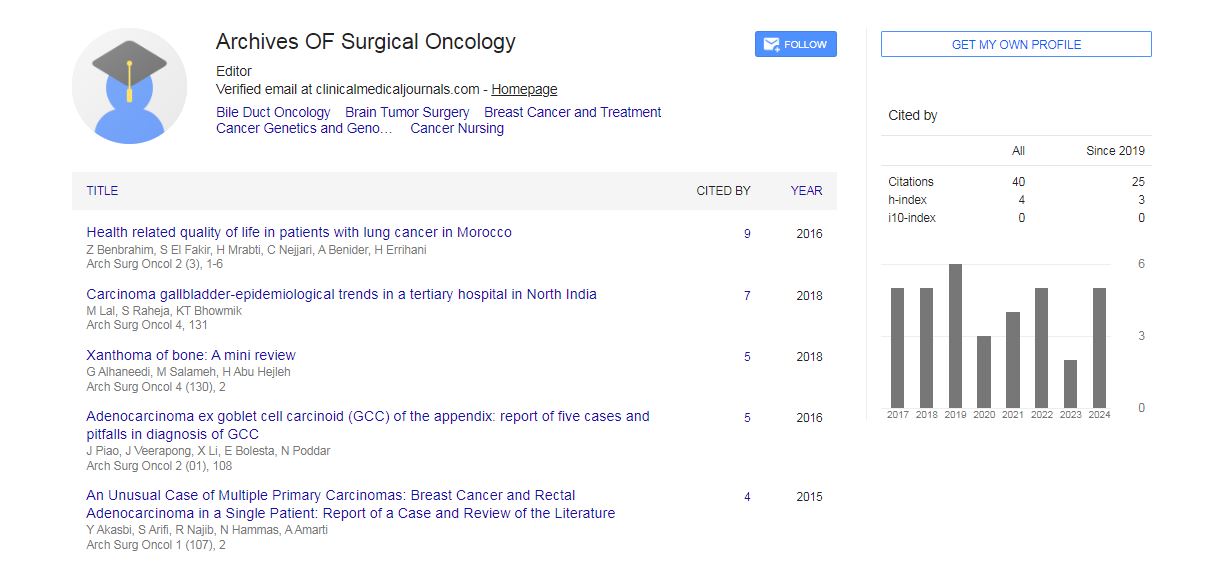
Archives of Surgical Oncology received 37 citations as per Google Scholar report