Brief Report - (2025) Volume 11, Issue 4
Received: 01-Jul-2025, Manuscript No. aso-26-184648;
Editor assigned: 03-Jul-2025, Pre QC No. P-184648;
Reviewed: 17-Jul-2025, QC No. Q-184648;
Revised: 22-Jul-2025, Manuscript No. R-184648;
Published:
29-Jul-2025
, DOI: 10.37421/2471-2671.2025.11.177
Citation: O Connor, Samuel. "Minimally Invasive Surgery For
Oncologic Care." Arch Surg Oncol 11 (2025):177.
Copyright: © 2025 O Connor S. This is an open-access article distributed under the terms of the Creative Commons Attribution License, which permits unrestricted use,
distribution and reproduction in any medium, provided the original author and source are credited.
Minimally invasive surgery (MIS) has revolutionized oncologic care, offering substantial advantages over traditional open procedures. These benefits encompass reduced blood loss, shorter hospital stays, and accelerated recovery times, making it a cornerstone in surgical oncology. The safety and feasibility of MIS have been demonstrated across a broad spectrum of oncologic resections, including complex cases within gastrointestinal, thoracic, and gynecologic oncology. Furthermore, oncologic control and survival rates achieved with MIS are increasingly recognized as equivalent or even superior to open surgery, contingent upon meticulous patient selection and surgeon expertise. Ongoing research is dedicated to refining existing MIS techniques, extending their application to more challenging surgical scenarios, and standardizing training protocols to ensure optimal patient outcomes and efficacy in oncologic resections[1].
In the realm of colorectal cancer surgery, laparoscopic and robotic approaches have become well-established, consistently demonstrating favorable short-term outcomes. Crucially, these minimally invasive techniques achieve oncologic results that are comparable to open colectomy, reassuring for cancer treatment. The feasibility of these methods extends to intricate procedures such as low anterior resections and abdominoperineal resections, offering less invasive alternatives for challenging anatomical sites. The safety profiles associated with laparoscopic and robotic colorectal surgery are generally excellent, with notable potential reductions in complications like wound infections and incisional hernias, contributing to improved patient recovery. Continued research is actively exploring the long-term oncologic benefits and the cost-effectiveness of these advanced MIS techniques in the management of colorectal malignancies[2].
Thoracic oncology has witnessed a significant transformation with the widespread adoption of MIS, notably video-assisted thoracoscopic surgery (VATS). VATS has emerged as the standard of care for numerous pulmonary resections, providing patients with reduced postoperative pain and improved pulmonary function. This minimally invasive approach also contributes to shorter hospitalizations while consistently achieving excellent oncologic outcomes, particularly for early-stage lung cancer. The safety and feasibility of VATS are well-documented, encompassing procedures like lobectomies, segmentectomies, and even complex operations such as pneumonectomy in carefully selected patients. Current investigations are focused on evaluating the role of VATS in managing advanced disease and its potential as a platform for delivering neoadjuvant therapy in lung cancer[3].
Within gynecologic oncology, MIS, predominantly employing laparoscopic and robotic techniques, has profoundly reshaped the treatment landscape for various malignancies, including ovarian, uterine, and cervical cancers. These advanced surgical methods facilitate accurate cancer staging, precise tumor resection, and comprehensive lymphadenectomy with significantly minimized morbidity. The feasibility of MIS in gynecologic oncology is high, applicable to both diagnostic procedures and definitive therapeutic interventions, with survival and recurrence rates aligning with those of open surgery. The enhanced visualization and superior dexterity offered by robotic systems prove particularly advantageous for complex dissections within the pelvic region, improving surgical precision[4].
The application of MIS is steadily expanding within head and neck oncology, with transoral robotic surgery (TORS) and endoscopic skull base surgery leading this evolution. TORS, in particular, has revolutionized the management of oropharyngeal cancers, enabling organ preservation and leading to improved functional outcomes with substantially reduced morbidity for patients. The safety and feasibility of these transoral approaches are well-established when appropriate patient and tumor selection criteria are met. Oncologic control achieved through TORS remains excellent, and patient-reported outcomes concerning swallowing and speech are frequently superior to those observed with traditional open surgical methods, enhancing quality of life post-treatment[5].
Minimally invasive techniques are increasingly being adopted for liver surgery, addressing both primary and metastatic hepatic tumors. Laparoscopic and robotic hepatectomy offer distinct advantages, including diminished blood loss, shorter hospital stays, and improved cosmetic results for patients. Although these approaches present significant technical challenges, they have demonstrated commendable safety and feasibility across a wide array of liver resections, including those considered complex. The oncologic outcomes derived from these minimally invasive liver surgeries appear comparable to open procedures, with ongoing research efforts concentrating on refining oncologic principles and establishing standardization for more advanced cases[6].
The role of MIS in pancreatic cancer surgery is undergoing continuous evolution, with laparoscopic and robotic techniques for pancreaticoduodenectomy and distal pancreatectomy gaining notable traction. These advanced surgical methods are designed to mitigate the substantial morbidity frequently associated with traditional open pancreatic procedures. While the feasibility and safety of these MIS approaches are steadily improving, they remain technically demanding surgeries. A critical focus of current research is on oncologic outcomes, with ongoing studies meticulously comparing long-term survival and recurrence rates against open surgery to better define their efficacy. Successful implementation hinges critically on careful patient selection and substantial surgeon experience[7].
Minimally invasive surgery has successfully extended its reach into reconstructive oncologic surgery, encompassing procedures like sentinel lymph node biopsy for breast and melanoma cancers, as well as minimally invasive radical prostatectomy. These techniques are specifically designed to minimize functional deficits and enhance cosmetic results while rigorously maintaining oncologic safety and efficacy. The feasibility and safety of these MIS approaches are now well-established, and patient outcomes, including improvements in quality of life and the speed of return to function, are frequently observed to be superior compared to traditional open surgical methods[8].
The implementation of robotics in urologic oncology, particularly for radical prostatectomy and nephrectomy, has yielded significant advantages for patient care. Robotic surgery provides surgeons with enhanced precision, superior visualization, and improved dexterity, directly translating into better operative outcomes such as reduced blood loss and notably shorter recovery periods. The safety and feasibility of these robotic procedures are well-established, and oncologic outcomes consistently demonstrate comparability to open surgical standards. Current research is actively exploring the expansion of robotic surgery into more complex and challenging urologic oncology cases, aiming to further broaden its therapeutic applications[9].
Minimally invasive surgical techniques are progressively being applied to the management of soft tissue sarcomas, presenting potential benefits related to improved cosmesis and reduced surgical morbidity. While the primary goal remains limb-sparing surgery, the fundamental oncologic principle of achieving clear surgical margins is always paramount. The feasibility and safety of MIS for sarcomas are currently being firmly established, bolstered by advancements in imaging technologies and surgical planning methodologies. Comparative studies examining oncologic outcomes and recurrence rates are ongoing to definitively ascertain the optimal role of MIS in the comprehensive treatment of soft tissue sarcomas[10].
Minimally invasive surgery (MIS) has emerged as a transformative force in oncologic practice, offering significant advantages over conventional open surgical approaches. The benefits of MIS include substantially reduced blood loss, shorter hospital stays, and expedited recovery times, establishing it as a critical component of modern surgical oncology. Evidence consistently supports the safety and feasibility of MIS across a wide array of oncologic resections, encompassing complex procedures in gastrointestinal, thoracic, and gynecologic cancers. Importantly, oncologic outcomes, including tumor control and patient survival rates, are increasingly found to be comparable or even superior to those achieved with open surgery, provided that patient selection and surgeon expertise are optimized. Current research endeavors are focused on refining these MIS techniques, broadening their applicability to more challenging surgical scenarios, and standardizing training to ensure the highest standards of patient safety and efficacy in oncologic surgery[1].
In the field of colorectal cancer surgery, both laparoscopic and robotic approaches have become standard procedures, demonstrating favorable short-term outcomes and oncologic results that are on par with open colectomy. These minimally invasive methods are feasible for complex operations such as low anterior resections and abdominoperineal resections. The safety profiles are generally excellent, with a noted potential for decreased complications like wound infections and incisional hernias. Ongoing research continues to investigate the long-term oncologic benefits and the economic viability of these MIS techniques in colorectal cancer management[2].
Thoracic oncology has experienced a significant paradigm shift due to the widespread adoption of MIS, primarily through video-assisted thoracoscopic surgery (VATS). VATS is now the preferred method for many pulmonary resections, leading to reduced postoperative pain, enhanced pulmonary function, and shorter hospital stays, all while achieving excellent oncologic outcomes for early-stage lung cancer. The safety and feasibility of VATS for procedures such as lobectomies, segmentectomies, and even complex pneumonectomies in select cases are well-documented. Ongoing studies are exploring its utility in advanced disease and as a means of delivering neoadjuvant therapy[3].
Within gynecologic oncology, MIS, predominantly through laparoscopic and robotic surgery, has revolutionized the treatment of various gynecologic malignancies, including ovarian, uterine, and cervical cancers. These techniques allow for precise staging, accurate tumor resection, and thorough lymphadenectomy with minimal patient morbidity. The feasibility of MIS for both diagnostic and definitive treatment in gynecologic oncology is high, and oncologic outcomes, including survival and recurrence rates, are comparable to open surgery. Robotic systems, with their enhanced visualization and dexterity, are particularly beneficial for complex pelvic dissections[4].
The application of MIS is progressively expanding in head and neck oncology, notably with transoral robotic surgery (TORS) and endoscopic skull base surgery. TORS has transformed the treatment of oropharyngeal cancers, enabling organ preservation and improving functional outcomes with reduced morbidity. The safety and feasibility of these approaches are well-established for appropriate patient and tumor selection. Oncologic control remains robust, and patient-reported outcomes related to swallowing and speech are often superior to open approaches, highlighting the functional benefits of MIS[5].
Minimally invasive techniques are increasingly being utilized in liver surgery for both primary and metastatic tumors. Laparoscopic and robotic hepatectomy offer advantages such as reduced blood loss, shorter hospital stays, and improved cosmesis. Despite being technically demanding, these approaches have demonstrated safety and feasibility for a range of liver resections, including complex procedures. Oncologic outcomes appear to be comparable to open surgery, with ongoing research focusing on oncologic principles and standardization for advanced cases[6].
The role of MIS in pancreatic cancer surgery is evolving, with laparoscopic and robotic pancreaticoduodenectomy and distal pancreatectomy gaining prominence. These techniques aim to decrease the significant morbidity associated with open procedures. While feasibility and safety are improving, these remain complex surgeries. Oncologic outcomes are a critical focus, with ongoing studies comparing long-term survival and recurrence rates to open surgery. Patient selection and surgeon experience are paramount for successful implementation[7].
Minimally invasive surgery has also found a significant role in reconstructive oncologic surgery, including sentinel lymph node biopsy for breast and melanoma cancers, and minimally invasive radical prostatectomy. These techniques are designed to minimize functional deficits and improve cosmetic outcomes while maintaining oncologic safety. The feasibility and safety of these approaches are well-established, and patient outcomes, including quality of life and return to function, are often enhanced compared to traditional open methods[8].
Robotics in urologic oncology, particularly for radical prostatectomy and nephrectomy, has demonstrated substantial advantages. Robotic surgery offers enhanced precision, visualization, and dexterity, leading to improved operative outcomes such as reduced blood loss and shorter recovery times. Safety and feasibility are well-established for these procedures, with oncologic outcomes comparable to open surgery. Ongoing research explores its application in more complex urologic oncology cases[9].
Minimally invasive surgical techniques are increasingly being applied to the management of soft tissue sarcomas, potentially offering benefits in cosmesis and reduced morbidity. While limb-sparing surgery is the goal, achieving clear margins remains paramount from an oncologic perspective. Feasibility and safety are being established, particularly with advancements in imaging and surgical planning. Comparative studies on oncologic outcomes and recurrence rates are ongoing to define the optimal role of MIS in sarcoma treatment[10].
Minimally invasive surgery (MIS) has become a standard in oncologic care, offering benefits like reduced blood loss, shorter hospital stays, and faster recovery compared to open surgery. It is safe and feasible for numerous cancer types, including gastrointestinal, thoracic, gynecologic, head and neck, liver, pancreatic, and urologic cancers, with oncologic outcomes often comparable or superior to open procedures. Techniques like VATS, laparoscopy, and robotic surgery enhance precision and minimize patient morbidity. Ongoing research focuses on refining these methods, expanding their applications, and standardizing training to ensure optimal patient safety and efficacy across a wide range of oncologic resections.
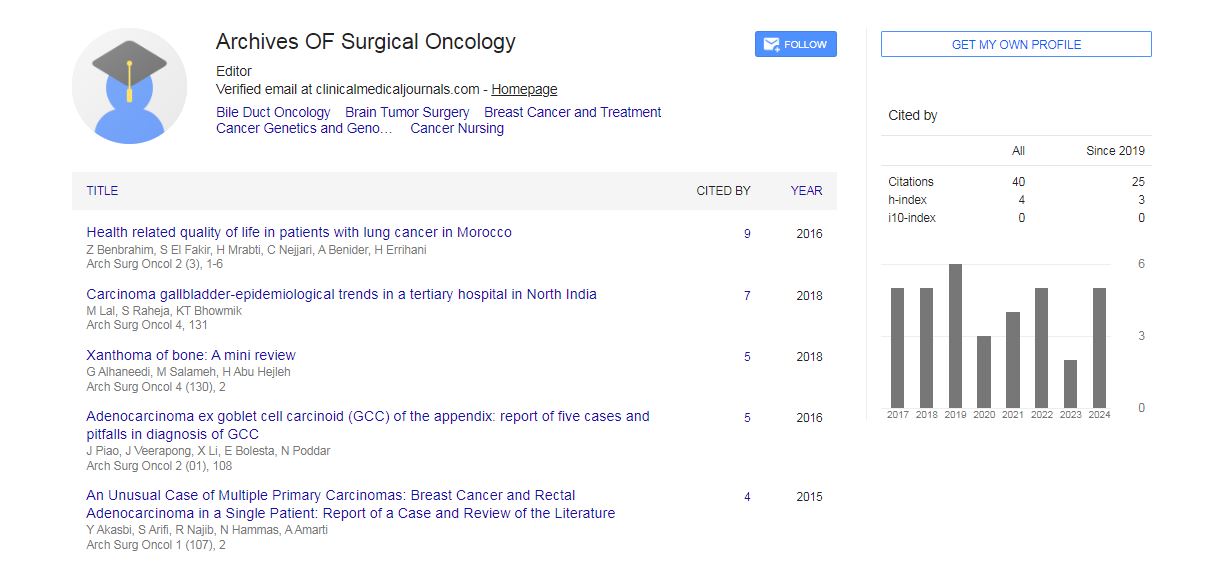
Archives of Surgical Oncology received 37 citations as per Google Scholar report