Short Communication - (2025) Volume 15, Issue 2
Received: 01-Apr-2025, Manuscript No. jeat-26-188600;
Editor assigned: 03-Apr-2025, Pre QC No. P-188600;
Reviewed: 17-Apr-2025, QC No. Q-188600;
Revised: 22-Apr-2025, Manuscript No. R-188600;
Published:
29-Apr-2025
, DOI: 10.37421/2161-0525.2025.15.841
Citation: Reddy, Priya. ”Microplastics: Threat to Marine Life And
Health.” J Environ Anal Toxicol 15 (2025):841.
Copyright: © 2025 Reddy P. This is an open-access article distributed under the terms of the Creative Commons Attribution License, which permits unrestricted use, distribution
and reproduction in any medium, provided the original author and source are credited.
Microplastics, increasingly recognized as pervasive environmental contaminants, present multifaceted threats to marine ecosystems. Their widespread presence in the marine environment necessitates a thorough understanding of their detrimental effects on aquatic life and overall ecosystem health. The toxicological impacts of microplastics are diverse, ranging from cellular damage to disruptions in fundamental biological processes. These contaminants can induce significant physiological stress in marine organisms, impacting their survival and reproductive capabilities. This review aims to synthesize current knowledge on the toxicological effects and environmental impacts of microplastic pollution in marine ecosystems, drawing upon recent research to elucidate the mechanisms of harm and the broader ecological consequences.
One significant pathway through which microplastics exert their negative influence is by inducing oxidative stress within marine organisms. This imbalance in cellular redox homeostasis can lead to damage to cellular components, including DNA, proteins, and lipids. Furthermore, microplastics have been shown to elicit inflammatory responses in various marine species, further compromising their health and resilience. The inflammatory cascade triggered by microplastic particles can result in tissue damage and functional impairments, particularly in sensitive organs like the digestive tract. The genotoxic potential of microplastics is another area of significant concern, as evidenced by studies demonstrating their ability to induce DNA damage. Such damage can manifest as mutations or chromosomal aberrations, with long-term implications for the genetic integrity of marine populations. The accumulation of microplastics within the digestive tracts of marine animals can lead to physical obstructions and abrasions, impairing nutrient absorption and overall feeding efficiency. This physical damage can have cascading effects on an organism's ability to grow and reproduce effectively. Across various trophic levels, from microscopic plankton to larger fish and marine mammals, the ingestion of microplastics poses a consistent threat. The widespread contamination means that organisms at all stages of the food web are susceptible to the adverse effects of microplastic exposure. The reduced feeding capacity observed in many species due to microplastic ingestion directly impacts their energy intake, leading to slower growth rates and diminished reproductive success. These consequences can have substantial implications for population dynamics and ecosystem stability. The long-term accumulation of microplastics within marine food webs is a critical concern for ecosystem health. As microplastics are transferred from lower to higher trophic levels, their concentration can increase, leading to amplified toxicological burdens on top predators. This bioaccumulation process not only affects individual organisms but also has the potential to destabilize entire food webs, impacting biodiversity and ecosystem function. The persistent nature of microplastics means that their presence and effects will continue to be a challenge for years to come. Beyond their direct physical and toxicological impacts, microplastics also serve as vectors for other harmful substances present in the marine environment. They can adsorb persistent organic pollutants (POPs) and other toxic chemicals from the surrounding water, concentrating these toxins and delivering them to marine organisms upon ingestion. This dual threat of microplastic presence and associated chemical contamination significantly amplifies the overall toxicological risk to marine life, creating a complex environmental challenge. The implications of microplastic pollution extend beyond the marine environment to potentially impact human health. Through the consumption of seafood, humans can be exposed to microplastics and the associated toxins that have accumulated in fish, shellfish, and other marine organisms. Understanding the pathways of microplastic transfer into the food chain is therefore crucial for assessing potential risks to human well-being and developing strategies for mitigation. The study of microplastic impacts on specific marine organisms provides valuable insights into the general mechanisms of harm. For instance, research on bivalves like mussels has revealed significant reductions in feeding and physiological stress biomarkers when exposed to microplastics. These organisms, often used as bioindicators, offer a direct window into the detrimental effects of microplastic pollution on commercially important species and ecosystem health. Similarly, investigations into the genotoxic potential of different types of microplastics, such as polystyrene in zebrafish larvae, highlight the capacity of these particles to induce cellular damage at the genetic level. The observed DNA damage and altered gene expression in response to microplastic exposure underscore the need for further research into the long-term genetic consequences for aquatic populations and the broader implications for evolutionary processes. Ultimately, the ubiquitous nature of microplastics and their diverse toxicological effects underscore the urgency of addressing this global environmental challenge. From cellular dysfunction to ecosystem-level disruptions and potential human health risks, the impacts are far-reaching and interconnected. Continued research and concerted global efforts are essential to mitigate microplastic pollution and protect the health of our oceans and ourselves.Microplastics are a ubiquitous environmental concern, posing substantial threats to marine life through various toxicological mechanisms. These contaminants can induce oxidative stress, leading to an imbalance in cellular redox states and subsequent damage to cellular components. Furthermore, inflammation is a common response observed in marine organisms exposed to microplastics, often manifesting as tissue damage, particularly within the digestive system. The genotoxic potential of microplastics is also a significant issue, with studies indicating their capacity to cause DNA damage, which can have long-term consequences for organismal health and population genetics [1].
The physical presence of microplastics within the digestive tracts of marine animals can lead to mechanical damage, such as abrasions and blockages, thereby impairing nutrient absorption and overall feeding efficiency. This reduced feeding capacity directly impacts an organism's energy intake, leading to slower growth rates and diminished reproductive success across a wide spectrum of marine species, from plankton to fish and marine mammals [1].
The widespread nature of microplastic contamination means that virtually all marine organisms are at risk of ingesting these particles, highlighting the pervasive nature of this environmental problem. A key study investigating the impact of polyethylene microplastics on the mussel, *Mytilus edulis*, revealed significant detriments to its physiological functions. Mussels exposed to these microplastics exhibited a marked reduction in their feeding rate and filtration activity, crucial processes for their survival and well-being. Moreover, the research identified elevated levels of biomarkers associated with oxidative stress, such as superoxide dismutase activity and malondialdehyde, indicating cellular damage within the exposed mussels. These findings emphasize the vulnerability of bivalves to microplastic ingestion and their utility as bioindicators of marine pollution [2].
The genotoxic effects of microplastics have been further elucidated through studies on zebrafish (*Danio rerio*) larvae exposed to polystyrene microplastics. This research demonstrated an increased frequency of DNA damage, as evidenced by higher rates of micronuclei formation and positive comet assay results. The study also noted altered expression of genes involved in DNA repair pathways, suggesting a cellular response aimed at counteracting the microplastic-induced damage. These findings underscore the capacity of microplastics to induce genetic mutations, presenting a tangible risk to the genetic integrity and viability of aquatic organism populations [3].
The phenomenon of trophic transfer plays a critical role in the dissemination of microplastics and their associated pollutants throughout marine food webs. A study modeling a simplified marine food web indicated that microplastics are readily ingested and accumulated by zooplankton, subsequently being transferred to higher trophic levels, including small fish and predatory seabirds. Crucially, microplastics act as vectors for persistent organic pollutants (POPs), effectively concentrating and delivering these toxic substances to organisms further up the food chain, thereby exacerbating the toxicological burden [4].
Inflammatory responses and tissue damage are significant consequences of microplastic exposure in marine invertebrates, as demonstrated in a study on sea urchins (*Paracentrotus lividus*). Histopathological analysis of sea urchins exposed to various types and concentrations of microplastics revealed inflammation and observable tissue damage within their digestive systems. Furthermore, elevated levels of pro-inflammatory cytokines were detected, indicating an active immune system response to the presence of foreign microplastic particles, highlighting a direct cellular and immunological impact [5].
Microplastic fibers, a common component of marine debris, have been shown to impair the reproductive success of marine copepods, a vital group of planktonic crustaceans. Research in this area found that exposure to microplastic fibers led to a reduction in both egg production and hatching rates. Additionally, altered swimming behavior was observed, which could compromise their ability to avoid predators and succeed in mating. These findings suggest that microplastic fibers can significantly impact the population dynamics of these crucial organisms [6].
Bioaccumulation and physiological disturbances have been observed in bivalves exposed to specific types of microplastics, such as polyethylene terephthalate (PET). In the Pacific oyster (*Crassostrea gigas*), PET microplastics were found to accumulate primarily in the digestive gland and gills. Biomarker analysis revealed increased oxidative stress and alterations in metabolic enzyme activities, indicating that microplastics can disrupt essential physiological functions in these important shellfish species [7].
The immune system of commercially important fish species can also be negatively affected by microplastic ingestion. A study on Atlantic cod (*Gadus morhua*) exposed to polypropylene microplastics indicated alterations in immune gene expression and an increase in circulating immune cells. These changes suggest that microplastic ingestion can compromise immune function in fish, potentially rendering them more susceptible to diseases and other environmental stressors, with implications for fisheries management [8].
Beyond direct physiological impacts, microplastics can also disrupt the gut microbiome of marine invertebrates, which is essential for their health and nutrient assimilation. Research on the marine polychaete, *Nereis diversicolor*, showed that exposure to microplastic particles led to significant alterations in the structure and diversity of their gut microbial communities. These changes were correlated with reduced growth rates and increased oxidative stress markers, underscoring the interconnectedness of microplastic exposure, gut health, and overall organismal well-being [9].
Nanoplastics, even smaller versions of microplastics, also pose significant toxicological risks. Studies on the sea star (*Asterias rubens*) exposed to polystyrene nanoplastics revealed increased production of reactive oxygen species, indicative of oxidative stress, and elevated levels of antioxidant enzymes. Behavioral assays further indicated impaired locomotion and feeding responses, suggesting that nanoplastics can induce neurotoxic effects and disrupt vital functions in marine invertebrates, highlighting the distinct impacts of different plastic particle sizes [10].
Microplastics are pervasive environmental contaminants causing significant harm to marine life. They induce oxidative stress, inflammation, and genotoxicity, leading to cellular damage and impaired physiological functions across various trophic levels. Ingestion of microplastics can result in physical damage to digestive tracts, reduced feeding capacity, and decreased growth and reproduction. Microplastics also act as vectors for pollutants, amplifying toxicological burdens. Their accumulation in marine food webs poses risks to ecosystem health and potentially human health through seafood consumption. Research has demonstrated these impacts in diverse species including mussels, zebrafish, sea urchins, copepods, oysters, Atlantic cod, and polychaetes, affecting their growth, reproduction, immune systems, and gut microbiomes. Nanoplastics also exhibit neurotoxic effects. Addressing microplastic pollution is crucial for marine ecosystem preservation and human well-being.
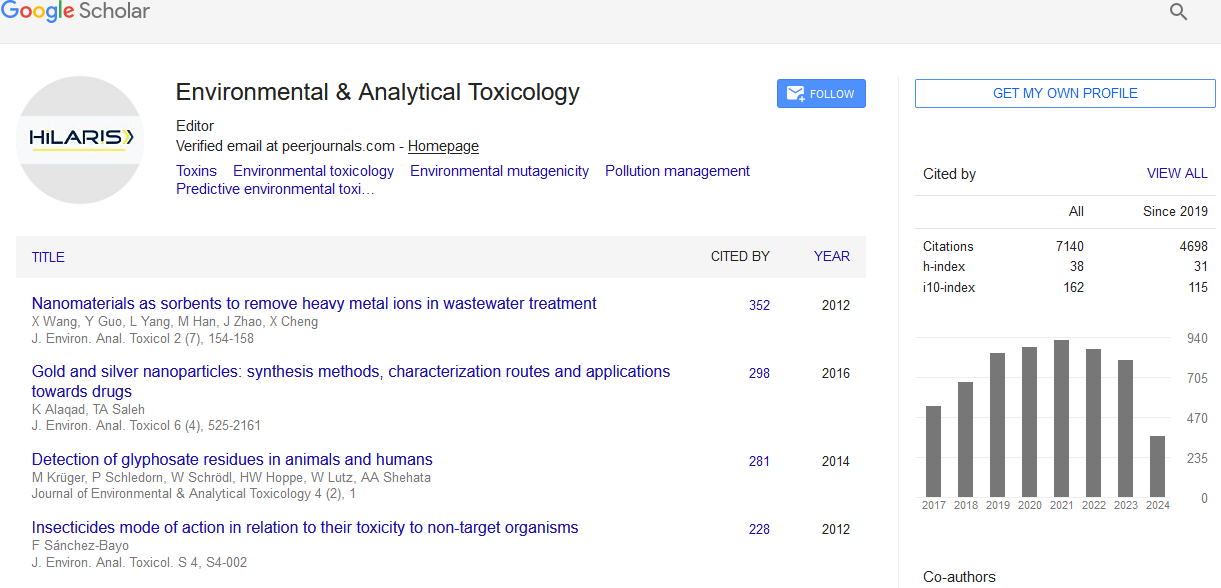
Environmental & Analytical Toxicology received 6818 citations as per Google Scholar report