Short Communication - (2025) Volume 14, Issue 3
Received: 01-May-2025, Manuscript No. VTE-26-180091;
Editor assigned: 05-May-2025, Pre QC No. P-180091;
Reviewed: 19-May-2025, QC No. Q-180091;
Revised: 22-May-2025, Manuscript No. R-180091;
Published:
29-May-2025
, DOI: 10.37421/2376-1318.2025.14.377
Citation: Bennett, Thomas. ”Micronutrients for Pregnancy, Lactation, and Fetal Health.” Vitam Miner 14 (2025):377.
Copyright: © 2025 Bennett T. This is an open-access article distributed under the terms of the Creative Commons Attribution License, which permits unrestricted use, distribution and reproduction in any medium, provided the original author and source are credited.
The critical role of adequate nutrient intake during pregnancy and lactation for both maternal health and optimal fetal development cannot be overstated. Essential micronutrients are indispensable for preventing birth defects, supporting rapid fetal growth, and facilitating nutrient transfer to the infant. The nutritional status prior to conception and the continuous quality of the maternal diet significantly influence pregnancy outcomes. Individualized supplementation strategies are essential, tailored to specific physiological requirements and potential deficiencies, informed by current scientific evidence and established clinical guidelines. Folic acid supplementation stands as a fundamental component of prenatal care, serving as a primary preventative measure against neural tube defects. While its importance is widely acknowledged, ongoing research continues to refine the optimal timing and dosage, often extending recommendations to the preconception period and the early stages of pregnancy. Furthermore, advancements in understanding genetic variations that impact folate metabolism are paving the way for more personalized prenatal nutrition approaches. Iron deficiency anemia represents a prevalent complication during pregnancy, mandating vigilant monitoring and, frequently, iron supplementation. The efficacy of iron absorption is intricately linked to dietary factors, making a thorough understanding of these interactions paramount for successful management. Emerging research is exploring various iron formulations to ascertain their comparative efficacy and tolerability in pregnant individuals. Calcium and vitamin D are indispensable for the robust skeletal development of the fetus and for preserving the maternal bone health throughout gestation and beyond. Ensuring adequate intake is crucial, especially as the demands for calcium by the developing fetus escalate. Current research efforts are focused on refining the recommendations for calcium and vitamin D supplementation, taking into account factors such as maternal age and baseline nutritional status. Omega-3 fatty acids, particularly docosahexaenoic acid (DHA), are fundamentally important for the proper development of the fetal brain and eyes. Maternal consumption of these essential fats, either through dietary sources or supplementation, can profoundly influence these developmental outcomes. The scientific community continues to deliberate on the most advantageous sources and optimal dosages, striving to balance the extensive benefits with any potential risks. The significance of iodine during pregnancy is profound, as it is a critical element for thyroid hormone synthesis, which is essential for normal fetal neurological development. Inadequate iodine intake can lead to lasting impairments in cognitive function in offspring. Current global health strategies emphasize universal salt iodization and diligent monitoring of iodine intake to mitigate these risks. Choline, though sometimes overlooked, is an essential nutrient vital for fetal brain development and the healthy functioning of the placenta. Its importance in ensuring positive pregnancy outcomes is increasingly recognized, with ongoing research aimed at establishing definitive intake recommendations for pregnant individuals. Vitamin A plays a crucial role in fetal growth and development; however, both insufficient intake and excessive consumption can pose risks. A nuanced understanding of the appropriate forms and dosages of vitamin A during pregnancy is essential to prevent potential teratogenic effects while ensuring adequate supply for the developing fetus. Zinc contributes to pregnancy health through its multifaceted roles, supporting immune function, DNA synthesis, and overall fetal growth. A deficiency in zinc can elevate the risk of adverse pregnancy outcomes, including preterm birth and intrauterine growth restriction. Strategic consideration of dietary sources and supplementation is therefore important. Lactation introduces heightened nutritional demands on the mother to sustain milk production and support infant growth. Specific micronutrients such as iron, calcium, iodine, and B vitamins are particularly crucial during this period. The mother's nutritional status directly impacts the nutrient profile of breast milk, underscoring the need for continued attention to diet and supplementation post-partum.
The cornerstone of a healthy pregnancy and successful lactation rests upon the adequate intake of essential vitamins and minerals. These micronutrients are instrumental in preventing congenital anomalies, fostering robust fetal growth, and ensuring the efficient transfer of nutrients to the neonate. The nutritional landscape prior to conception and the ongoing quality of dietary intake are significant determinants of pregnancy outcomes. Consequently, supplementation strategies must be personalized, addressing individual physiological needs and potential deficiencies, guided by the latest scientific research and established clinical recommendations. Folic acid supplementation is an indispensable element of prenatal care, primarily aimed at preventing neural tube defects. The precise timing and dosage of folic acid remain subjects of active scientific inquiry, with current guidelines often encompassing the preconception period and early pregnancy. Furthermore, the exploration of genetic variations affecting folate metabolism is contributing to the evolution of personalized prenatal nutrition plans. Iron deficiency anemia is a frequently encountered complication in pregnancy, necessitating rigorous monitoring and, in many cases, iron supplementation. The body's ability to absorb iron is significantly influenced by dietary components, and understanding these interactions is key to effective management. Ongoing research is investigating the efficacy and tolerability of various iron formulations for pregnant individuals. Calcium and vitamin D are critical for the proper skeletal development of the fetus and for maintaining the mother's bone health. Sufficient intake is paramount, particularly as fetal calcium requirements increase throughout gestation. Research continues to refine recommendations for calcium and vitamin D supplementation, considering factors such as maternal age and baseline nutrient status. Omega-3 fatty acids, especially DHA, are vital for the development of the fetal brain and visual system. Maternal intake, whether from diet or supplements, plays a significant role in these developmental outcomes. Discussions persist regarding the optimal sources and dosages, aiming to balance therapeutic benefits with potential risks. Iodine's role during pregnancy is exceptionally important, as it is essential for the production of thyroid hormones, which are critical for fetal neurological development. A lack of iodine can impair cognitive development in children. Current recommendations emphasize universal salt iodization and careful monitoring of iodine intake. Choline is recognized as an essential nutrient for fetal brain development and placental function. While historically less emphasized, ensuring adequate choline intake through diet or supplements is increasingly viewed as crucial for healthy pregnancy outcomes. Efforts are underway to establish definitive intake recommendations. Vitamin A is vital for fetal growth and development, but both deficiency and excess can be detrimental. It is imperative to understand the appropriate forms and dosages of vitamin A during pregnancy to avert teratogenic effects while ensuring sufficient supply for fetal needs. Zinc participates in numerous essential processes during pregnancy, including immune function, DNA synthesis, and fetal growth. Deficiency can increase the risk of adverse outcomes such as preterm birth and intrauterine growth restriction. Dietary sources and supplementation require careful consideration. Lactation places increased nutritional demands on the mother to support milk production and infant growth. Certain micronutrients, including iron, calcium, iodine, and B vitamins, are especially important. The mother's nutritional status directly influences the nutrient composition of breast milk, highlighting the need for continued dietary attention and supplementation post-partum.
Ensuring adequate intake of essential vitamins and minerals is vital for maternal well-being and fetal development during pregnancy and lactation. Key micronutrients like folate, iron, calcium, vitamin D, and omega-3 fatty acids are crucial for preventing birth defects, supporting growth, and nutrient transfer. Pre-conception nutrition and ongoing dietary quality significantly impact outcomes, necessitating individualized supplementation guided by research. Folic acid is essential for preventing neural tube defects, iron is critical for managing anemia, and calcium and vitamin D support skeletal development. Omega-3s, particularly DHA, aid fetal brain and eye development. Iodine is crucial for neurological development, while choline supports brain and placental function. Vitamin A is important for growth but requires careful dosage, and zinc supports immune function and growth. Lactation increases maternal nutritional demands, with continued importance of micronutrients to support milk production and infant growth. The mother's nutritional status directly affects breast milk composition.
None
None
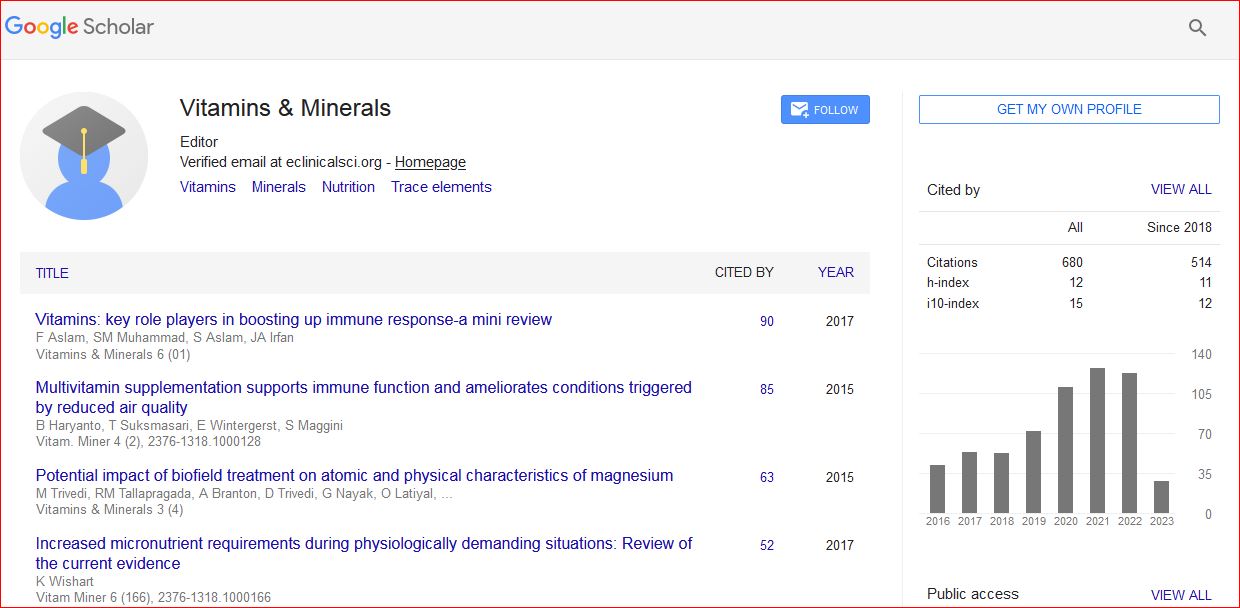
Vitamins & Minerals received 790 citations as per Google Scholar report