Opinion - (2025) Volume 14, Issue 5
Received: 01-Sep-2025, Manuscript No. VTE-26-180112;
Editor assigned: 03-Sep-2025, Pre QC No. P-180112;
Reviewed: 17-Sep-2025, QC No. Q-180112;
Revised: 22-Sep-2025, Manuscript No. R6-180112;
Published:
29-Sep-2025
, DOI: 10.37421/2376-1318.2025.14.391
Citation: Musa, Ibrahim. ”Micronutrient Deficiencies: Public Health Crisis In Developing Nations.” Vitam Miner 14 (2025):391.
Copyright: © 2025 Musa I. This is an open-access article distributed under the terms of the Creative Commons Attribution License, which permits unrestricted use, distribution and reproduction in any medium, provided the original author and source are credited.
Micronutrient deficiencies represent a pervasive and persistent public health crisis, particularly in developing nations, demanding urgent and multifaceted interventions [1].
These deficiencies, especially those involving iron, vitamin A, and zinc, disproportionately impact vulnerable populations, including women of reproductive age and young children, leading to a cascade of adverse health outcomes [1].
Impaired cognitive development, heightened susceptibility to infections, and elevated maternal and child mortality rates are among the severe consequences [1].
Addressing these deficiencies requires comprehensive strategies that encompass dietary diversification, food fortification, targeted supplementation programs, and the enhancement of access to essential healthcare and education [1].
A thorough understanding of local contexts and the specific drivers of deficiency is paramount for designing and implementing effective interventions [1].
Iron deficiency anemia (IDA) stands as the most prevalent micronutrient deficiency globally, exerting a substantial negative influence on cognitive function, physical performance, and immune response in children, particularly in developing regions [2].
Inadequate dietary intake, poor iron absorption, and increased iron losses are significant contributing factors to IDA, necessitating interventions such as iron supplementation, promotion of improved dietary iron sources, and effective malaria control measures [2].
Vitamin A deficiency (VAD) poses a grave threat to child survival and development in many low-income settings, impairing vision and leading to irreversible blindness, while also compromising immune function and increasing the risk of severe childhood infections [3].
Large-scale vitamin A supplementation programs, combined with dietary improvements and enhanced child feeding practices, have demonstrated considerable success in reducing VAD prevalence [3].
Zinc deficiency is a widespread issue in developing countries, contributing to stunting, compromised immune function, and increased mortality in young children, often exacerbated by low dietary zinc intake, phytic acid interference, and diarrheal diseases [4].
Therapeutic zinc supplementation is recognized as a key intervention for managing childhood diarrhea and promoting improved growth [4].
The interconnectedness of infectious diseases and micronutrient deficiencies creates a detrimental cycle, particularly in areas with high disease burdens [5].
Infections like malaria, parasitic infections, and HIV/AIDS can deplete essential micronutrient stores, while deficiencies weaken the immune system, rendering individuals more vulnerable to these infections [5].
Therefore, integrated approaches that simultaneously address malnutrition and infectious disease control are critically important [5].
Food fortification with essential micronutrients, including iron, vitamin A, iodine, and zinc, offers a cost-effective and sustainable strategy for improving nutritional status across populations [6].
Utilizing commonly consumed staple foods such as flour, oil, and salt as vehicles for fortification, coupled with robust regulatory frameworks, quality control, and stakeholder engagement, ensures successful implementation [6].
Dietary diversity is fundamental for achieving adequate micronutrient intake, yet many developing regions suffer from monotonous diets heavily reliant on staple crops [7].
Promoting the consumption of a broader range of fruits, vegetables, legumes, and animal-source foods is crucial for preventing and rectifying micronutrient deficiencies [7].
Maternal micronutrient status during pregnancy, including deficiencies in iron and folate, is directly linked to adverse birth outcomes such as preterm birth, low birth weight, and neural tube defects [8].
Prenatal supplementation and enhanced maternal nutrition are essential for disrupting the intergenerational transmission of malnutrition [8].
The ramifications of micronutrient deficiencies extend beyond immediate health concerns, significantly impacting economic productivity and societal development by hindering cognitive and physical development in children, leading to reduced educational attainment and lower earning potential in adulthood [9].
Consequently, investing in micronutrient interventions is an investment in human capital and long-term economic growth [9].
Effectively addressing micronutrient deficiencies in developing countries requires a multisectoral approach that harmonizes health, agriculture, education, and social protection systems [10].
Community-based interventions, thoughtfully tailored to local contexts and cultural practices, are frequently the most effective, empowering communities with nutritional knowledge and access to nutrient-rich foods as a sustainable path to improved micronutrient status [10].
Micronutrient deficiencies, particularly of iron, vitamin A, and zinc, continue to pose a significant public health challenge in developing countries, disproportionately affecting vulnerable groups such as women of reproductive age and young children [1].
These deficiencies can lead to a range of adverse health outcomes, including impaired cognitive development, increased susceptibility to infections, and higher maternal and child mortality rates [1].
To combat these issues, multifaceted strategies are necessary, encompassing dietary diversification, food fortification, supplementation programs, and improvements in healthcare and education access [1].
Understanding the specific local context and the underlying causes of deficiency is crucial for the successful implementation of interventions [1].
Iron deficiency anemia (IDA) is recognized as the most common micronutrient deficiency worldwide, with profound consequences for children's cognitive function, physical performance, and immune responses in developing regions [2].
Contributing factors include inadequate dietary iron intake, poor absorption, and increased iron loss, necessitating interventions like iron supplementation, dietary improvements, and malaria control [2].
Vitamin A deficiency (VAD) presents a serious threat to child survival and development in low-income countries, causing visual impairments like xerophthalmia and blindness, and compromising immune function, thereby increasing the risk of severe childhood infections [3].
Effective strategies for reducing VAD prevalence involve large-scale vitamin A supplementation programs, alongside dietary interventions and improved child feeding practices [3].
Zinc deficiency is a pervasive problem in developing nations, contributing to stunting, weakened immune systems, and increased mortality among young children, often exacerbated by low dietary zinc intake from plant-based diets, phytic acid, and diarrheal diseases [4].
Therapeutic zinc supplementation plays a vital role in managing childhood diarrhea and promoting growth [4].
A critical aspect of micronutrient health is the synergistic relationship between infectious diseases and deficiencies, creating a vicious cycle particularly in high-disease-burden areas [5].
Infections can deplete micronutrient stores, while deficiencies weaken the immune system, increasing susceptibility to further infections [5].
Integrated strategies that address both malnutrition and infectious disease control are therefore essential [5].
Food fortification with key micronutrients like iron, vitamin A, iodine, and zinc offers a cost-effective and sustainable method for enhancing population nutritional status [6].
The use of widely consumed staple foods as carriers for fortification, supported by strong regulatory frameworks and quality control, is a proven approach [6].
Dietary diversity is a cornerstone of adequate micronutrient intake, yet many populations in developing regions consume monotonous diets [7].
Encouraging the intake of a wider variety of fruits, vegetables, legumes, and animal-source foods is critical for preventing and addressing micronutrient deficiencies [7].
The nutritional status of mothers during pregnancy is directly linked to the health of their offspring, with deficiencies like iron and folate leading to adverse birth outcomes such as preterm birth, low birth weight, and neural tube defects [8].
Prenatal supplementation and improved maternal nutrition are crucial for breaking the cycle of malnutrition across generations [8].
The economic and societal impacts of micronutrient deficiencies are substantial, affecting productivity and development through impaired cognitive and physical development in children, which can lead to reduced educational and economic opportunities in adulthood [9].
Investing in micronutrient interventions is thus an investment in human capital and long-term economic growth [9].
Ultimately, addressing micronutrient deficiencies in developing countries necessitates a multisectoral strategy that integrates health, agriculture, education, and social protection [10].
Community-based interventions, adapted to local customs and contexts, are often highly effective, empowering communities with nutritional knowledge and access to diverse, nutrient-rich foods for sustainable health improvements [10].
Micronutrient deficiencies, particularly iron, vitamin A, and zinc, are a major public health issue in developing countries, affecting vulnerable populations and leading to severe health consequences. Addressing these requires diverse strategies including dietary improvements, food fortification, and supplementation. Iron deficiency anemia is the most prevalent, impacting child development. Vitamin A deficiency causes blindness and increases infection risk, while zinc deficiency contributes to stunting and mortality. Infections exacerbate deficiencies, creating a cycle that necessitates integrated control measures. Food fortification and promoting dietary diversity are key interventions. Maternal nutrition is critical for offspring health, and deficiencies have significant economic and societal repercussions. Multisectoral approaches and community-based programs are essential for sustainable solutions.
None
None
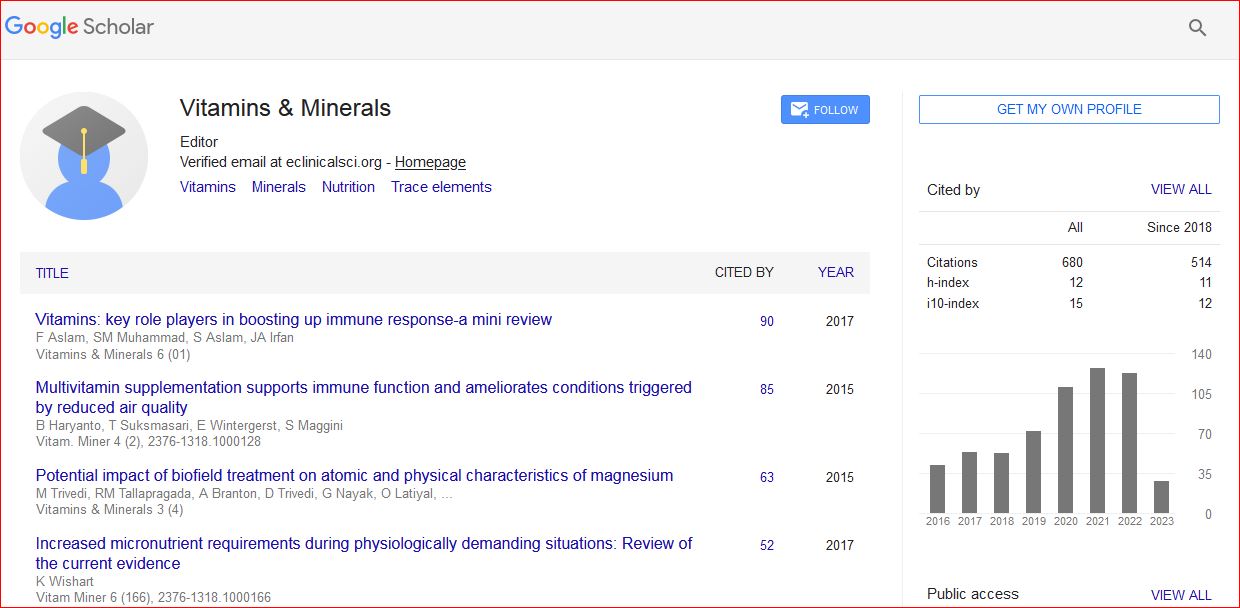
Vitamins & Minerals received 790 citations as per Google Scholar report