Opinion - (2025) Volume 14, Issue 2
Received: 01-Jun-2025, Manuscript No. jms-25-172632;
Editor assigned: 03-Jun-2025, Pre QC No. P-172632;
Reviewed: 17-Jun-2025, QC No. Q-172632;
Revised: 23-Jun-2025, Manuscript No. R-172632;
Published:
30-Jun-2025
, DOI: 10.37421/2167-0943.2024.13.405
Citation: Ashford, Rowan. ”Metabolism: Disease Mechanisms, Therapies, Industrial Applications.” J Metabolic Synd 14 (2025):405.
Copyright: © 2025 Ashford R. This is an open-access article distributed under the terms of the Creative Commons Attribution License, which permits unrestricted use,
distribution and reproduction in any medium, provided the original author and source are credited.
Research highlights an analog of fibroblast growth factor 21 (FGF21) as a remarkably promising therapeutic agent for metabolic dysfunction-associated steatotic liver disease (MASLD). It demonstrates substantial improvements in liver fat reduction, diminished inflammation, and a decrease in fibrosis, thereby opening up a crucial new treatment pathway for this widespread and challenging metabolic condition[1].
Here's the thing: mitochondrial dysfunction plays a critical role in cancer progression. This article delves into how this dysfunction actively reshapes the cell's metabolic pathways, steering them towards glycolysis, and simultaneously enables cancer cells to evade the immune system. This strongly suggests that a targeted approach focusing on mitochondrial metabolism could serve as a powerful dual strategy to combat cancer progression effectively[2].
What this really means is, the gut microbiota, through its diverse array of metabolites, profoundly influences the entire progression of metabolic syndrome. This work underscores the significant impact these microbial products have on vital host processes, including overall metabolism, inflammatory responses, and insulin sensitivity. Consequently, modulating the gut microbiome emerges as a truly compelling and innovative avenue for developing novel therapeutic interventions[3].
This review offers fresh, critical perspectives on lipid metabolism, particularly within the contexts of obesity and various related metabolic disorders. It meticulously examines the intricate underlying mechanisms, encompassing adipose tissue dysfunction, problematic ectopic lipid deposition, and pervasive systemic inflammation. This deep dive ultimately suggests innovative targets for therapeutic interventions that extend well beyond conventional weight management strategies[4].
The field of diabetes treatment is currently witnessing remarkable progress, specifically through strategies that meticulously target glucose metabolism. This comprehensive article surveys some of the most advanced pharmacological interventions available today. These include novel insulin sensitizers, highly effective GLP-1 receptor agonists, and SGLT2 inhibitors, collectively showcasing the current cutting-edge approaches to achieve superior glycemic control for patients[5].
This review brings to light the multifaceted and often overlooked roles of amino acid metabolism, extending significantly beyond their traditional function solely in protein synthesis. It thoroughly discusses their critical involvement in complex cellular signaling pathways, essential energy production, and their implications across various disease states, offering genuinely new perspectives for crafting potential therapeutic strategies[6].
This work clarifies the crucial and often underappreciated link between specific brain metabolic pathways and the onset and progression of neurodegenerative diseases. It strongly emphasizes how significant disruptions in glucose, lipid, and amino acid metabolism contribute substantially to debilitating conditions such as Alzheimer's and Parkinson's. This insight powerfully suggests that strategic metabolic modulation could represent a valuable and impactful therapeutic approach[7].
Let's break it down: exercise triggers significant and beneficial metabolic changes within skeletal muscle tissue. These profound adaptations lead directly to improved mitochondrial function, enhanced glucose uptake by cells, and more efficient fat oxidation. These collective changes not only bolster overall systemic metabolic health but also establish a powerful, natural defense mechanism against a wide range of metabolic diseases[8].
This review makes a clear and compelling case for the profound interconnectedness of our body's circadian rhythms and overall metabolic health. It starkly illustrates how disruptions to our internal biological clocks can directly contribute to the development of various metabolic disorders. Consequently, the article advocates strongly for a greater focus on chronotherapeutic strategies within clinical practice to effectively address these prevalent issues[9].
The article highlights significant and ongoing advances in the specialized field of metabolic engineering. Researchers are specifically fine-tuning microbial metabolic pathways with unprecedented precision. This deliberate modification aims to achieve the sustainable production of valuable chemicals, essential biofuels, and crucial pharmaceuticals, collectively representing a major and transformative leap forward in both industrial biotechnology and sustainable manufacturing practices[10].
Metabolic research yields critical insights into both health maintenance and disease progression. Novel therapeutic agents show promise for widespread metabolic conditions. For instance, an analog of fibroblast growth factor 21 (FGF21) is a significant therapeutic agent for metabolic dysfunction-associated steatotic liver disease (MASLD)[1]. It improves liver fat, inflammation, and fibrosis, paving a new strategic pathway for this pervasive condition. Understanding metabolic pathways is crucial for developing effective interventions.
Mitochondrial dysfunction drives cancer, reshaping metabolic pathways towards glycolysis and enabling immune evasion[2]. This points to targeting mitochondrial metabolism as a powerful dual strategy against cancer progression. Similarly, brain metabolic pathways are linked to neurodegenerative diseases; disruptions in glucose, lipid, and amino acid metabolism contribute to conditions like Alzheimer's and Parkinson's, suggesting metabolic modulation as a valuable therapeutic approach[7]. The field of diabetes treatment advances rapidly by targeting glucose metabolism with pharmacological strategies, including novel insulin sensitizers, GLP-1 receptor agonists, and SGLT2 inhibitors, showcasing the current cutting edge in glycemic control[5].
Fresh perspectives on lipid metabolism inform our understanding of obesity and related metabolic disorders. This research delves into adipose tissue dysfunction, ectopic lipid deposition, and systemic inflammation, proposing new targets beyond traditional weight management[4]. Here's the thing: the gut microbiota, through its diverse metabolites, profoundly influences the progression of metabolic syndrome[3]. These microbial products significantly impact host metabolism, inflammation, and insulin sensitivity, making gut microbiome modulation a compelling avenue for therapeutic development.
Concurrently, amino acid metabolism extends beyond protein synthesis. This review highlights its critical involvement in signaling pathways, energy production, and various disease states, providing new perspectives for potential therapeutic strategies[6]. These interconnected systems underscore the complexity and systemic nature of metabolic health.
Lifestyle factors, particularly exercise, play a profound role in metabolic health. Let's break it down: exercise induces significant metabolic changes in skeletal muscle, leading to improved mitochondrial function, glucose uptake, and fat oxidation[8]. These adaptations bolster systemic metabolic health and act as a powerful defense against various metabolic diseases. Furthermore, the interconnectedness of circadian rhythms and metabolic health is crucial. Disrupting our body's internal clocks contributes to metabolic disorders, advocating for a greater focus on chronotherapeutic strategies in clinical practice[9].
Finally, the innovative realm of metabolic engineering sees remarkable advances. Researchers are fine-tuning microbial metabolic pathways with precision to produce sustainable chemicals, biofuels, and pharmaceuticals[10]. This represents a major leap forward in industrial biotechnology and sustainable manufacturing practices, showcasing how fundamental understanding of metabolism can translate into significant real-world applications beyond direct human health, contributing to a more sustainable future.
This data collection offers a broad look at metabolism, spanning from disease mechanisms to therapeutic innovations and industrial applications. First, we see how an analog of fibroblast growth factor 21 (FGF21) holds promise for metabolic dysfunction-associated steatotic liver disease (MASLD), improving liver fat, inflammation, and fibrosis. There's also a clear picture of mitochondrial dysfunction in cancer, driving metabolic reprogramming and immune evasion, suggesting that targeting these pathways could be a dual strategy against tumor progression. Here's the thing: the gut microbiota, through its diverse metabolites, profoundly influences metabolic syndrome progression, affecting host metabolism, inflammation, and insulin sensitivity. Lipid metabolism is explored in obesity and related metabolic disorders, pinpointing adipose tissue dysfunction and systemic inflammation as key mechanisms and new therapeutic targets. What this really means is, the field of diabetes treatment is advancing rapidly by targeting glucose metabolism with novel insulin sensitizers, GLP-1 receptor agonists, and SGLT2 inhibitors. Amino acid metabolism, beyond protein synthesis, plays critical roles in signaling and energy, impacting various disease states. The crucial link between brain metabolic pathways and neurodegenerative diseases like Alzheimer's and Parkinson's is clarified, suggesting metabolic modulation as a therapeutic avenue. Let's break it down: exercise induces significant metabolic changes in skeletal muscle, enhancing mitochondrial function, glucose uptake, and fat oxidation, which bolsters systemic metabolic health. The interconnectedness of circadian rhythms and metabolic health is evident; disrupting internal clocks contributes to metabolic disorders, advocating for chronotherapeutic strategies. Finally, significant advances in metabolic engineering fine-tune microbial pathways for sustainable production of chemicals, biofuels, and pharmaceuticals, marking a major leap in industrial biotechnology.
None
None
Indexed at, Google Scholar, Crossref
Indexed at, Google Scholar, Crossref
Indexed at, Google Scholar, Crossref
Indexed at, Google Scholar, Crossref
Indexed at, Google Scholar, Crossref
Indexed at, Google Scholar, Crossref
Indexed at, Google Scholar, Crossref
Indexed at, Google Scholar, Crossref
Indexed at, Google Scholar, Crossref
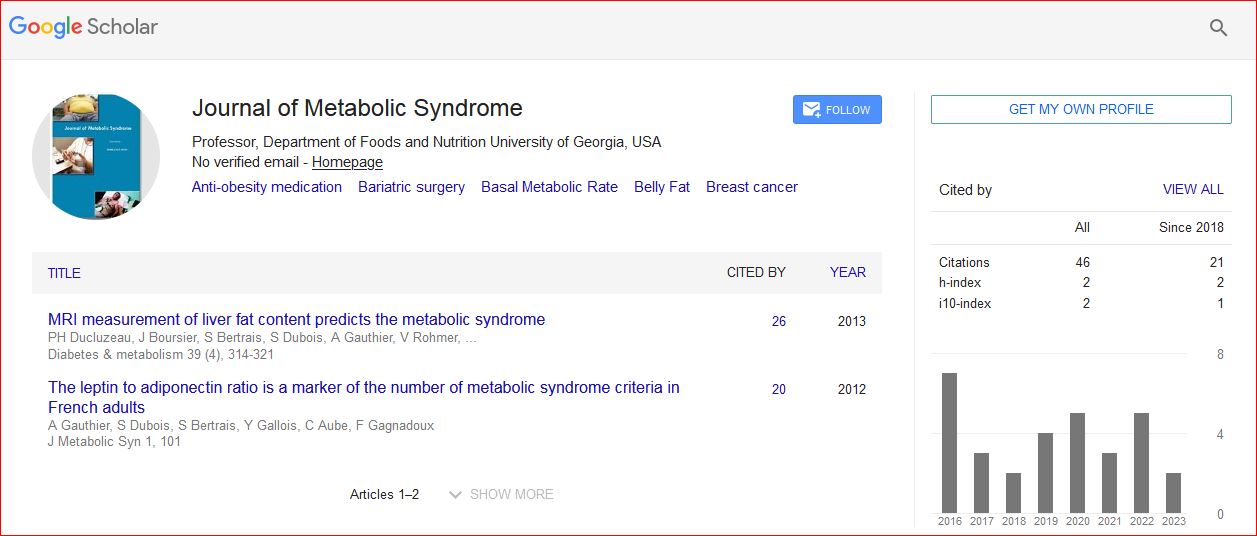
Journal of Metabolic Syndrome received 48 citations as per Google Scholar report