Research Article - (2025) Volume 10, Issue 3
Received: 01-Aug-2024, Manuscript No. IJPHS-24-144193;
Editor assigned: 05-Aug-2024, Pre QC No. IJPHS-24-144193 (PQ);
Reviewed: 19-Aug-2024, QC No. IJPHS-24-144193;
Revised: 10-Jun-2025, Manuscript No. IJPHS-24-144193 (R);
Published:
17-Jun-2025
, DOI: 10.37421/2736-6189.2025.10.444
Citation: Adane, Balew, Agernesh Ayele and Birhanu Sewunet. "Knowledge, Attitude, Practice and Associated Factors towards Water, Sanitation and Hygiene among Women in Northwestern Ethiopia, 2023." Int J Pub Health Safe 10 (2025): 444.
Copyright: © 2025 Adane B, et al. This is an open-access article distributed under the terms of the creative commons attribution license which permits unrestricted use, distribution and reproduction in any medium, provided the original author and source are credited.
Background: Research commonly demonstrates that human health and well-being rely on access to improved water, good sanitation and proper hygienic practices. The increased mortality rate from communicable diseases, particularly in developing countries, was mostly caused by these issues. Water, sanitation and hygiene-related home tasks are traditionally fall on women’s. Therefore, women's knowledge, attitudes, practices and associated factors among women’s must be studied.
Materials and methods: Between June 3, 2023 and August 9, 2023, a cross-sectional study was conducted. Data was collected from 389 households throughout all kebeles in the town of Finote Selam using a method of systematic sampling. Both a standardized questionnaire and an observation checklist were utilized. The analysis was conducted using STATA version 14 and included tables, a pi-chart and a model logistic regression. Finally, a p-value and 95% confidence interval were reported.
Result: Out of the 422 women who participated in the study, 389 (92.2%) gave a response. About 44.7% of the women had a neutral attitude, whereas 39.3% of the women had poor knowledge and 62.7% had bad practices towards water, sanitation and hygiene. Practices related to water, sanitation and hygiene have been strongly associated with wealth (AOR=3.8 (1.7-4.6), knowledge (AOR=4.3 (2.2-6.1) and improved water sources (AOR=0.5 (0.03-0.8).
Conclusion: We can conclude that most of the women had poor practices, a neutral attitude and moderate knowledge. To reduce the burden of communicable diseases, it is crucial to provide access to improved water and sanitation as well as promote knowledge, attitudes and livelihoods of the communities.
Water • Sanitation • Hygiene • Knowledge • Attitude • Practice • Factors
WASH: Water, Sanitation and Hygiene; KAP: Knowledge, Attitude and Practice; HH: Households; COD: Crude Odd Ratio; AOR: Adjusted Odd Ratio; CI: Confidence Interval; VIF: Variance Inflation Factor
WASH (clean water, sanitation and hygiene) is crucial for protecting human health and well-being. Safe WASH is important for livelihoods, school attendance and dignity, in addition to being a requirement for good health. It also helps build strong communities with wholesome surroundings. Excreta contaminate ground waters and surface waters used for drinking water, irrigation, bathing and household functions, which harms health through ailments like diarrhea. WASH is crucial to the delivery of medical care, lowering emergency-related health risks and planning for future readiness. WASH is critical in the prevention and management of NTDs scheduled for intensified control or elimination by 2030. WASH is a major priority for the global health agenda and sustainable development goals [1].
Globally, 2.3 billion people lack basic sanitation (892 million people practice open defecation), 844 million people lack basic drinking water and 2.5 million people lack improved sanitation. Cholera remains endemic in more than 47 countries, with an estimated 40-80 million people in Africa living in cholera hotspots and globally, an estimated 2.9 million cases every year and up to 95,000 deaths.
In developing countries, WASH is one of the most important felt needs in public health in the 21st century. However, about 842,000 people die as a result of inadequate WASH each year, representing 58% of the total diarrheal deaths [2].
In sub-Saharan Africa, WASH remains one of the major public health challenges with very low coverage. Nearly half of the population (319 million) does not use WASH facilities, 58% in subSaharan Africa lack basic drinking water and only 15% have hand washing facilities with soap and water.
Like many other sub-Saharan African nations, Ethiopia has inadequate access to water, sanitation and hygiene facilities and practices. Due to inadequate water, sanitation and hygiene, for example, trachoma is the third most frequent cause of vision impairment and the second most frequent cause of blindness.
WASH-related home tasks including fetching water, cooking, cleaning and child care traditionally fall on women and girls. Hence the Knowledge, Attitude and Practice (KAP) of women have to be increased to lessen the spread of infectious diseases. Therefore, first, it is crucial to assess KAP towards WASH and associated factors among women in Finote Selam Town, Northern West Ethiopia [3].
Study area descriptions
Finote Selam is a town and separate woreda in northwestern Ethiopia. Located in the West Gojjam Zone of the Amhara Region, it is 387 km from Addis Ababa and 176 km from Bahir Dar. The town is the capital city of West Gojjam Zone. This town has a longitude and latitude of 10°42′N, 37°16′E and an elevation of 1917 meters above sea level.
Based on the 2007 national census conducted by the Central Statistical Agency of Ethiopia (CSA), this town had a total population of 25,913, of whom 13,035 were male and 12,878 were female. Most (95.91%) of the inhabitants practice Ethiopian Orthodox Christianity and 3.34% are Muslim [4].
Study design and period
A community-based both descriptive and analytical study design was used. The study was conducted from June 3, 2023, to August 9, 2023.
Source and study populations
All the women found in Finote Selam town were the source population for the study. The study population was all women, systematically selected from the source population.
Eligibility criteria
Inclusion criteria: All women found in Finote Selam town were included in the study.
Exclusion criteria: Women who were not residents of the town (those without kebele identity cards) were excluded.
Sample size determination
The sample size was determined using a single population proportion formula with a 5% margin of error (d), a 95% CI (Z=1.96) and a p-value taken from KAP on WASH among HHS in the Tigray region. Z is the standardized normal distribution curve value for the 95% confidence interval (1.96).
P1=Level of knowledge towards WASH among households in Tigray (42.2%)
P2=Level of attitude towards WASH among households in Tigray (48.5%)
P3=Level practice towards WASH among households in Tigray (49.2%)
n=(Za/2)2 (P) (1-P)/d2
D=Margin of sampling error tolerated-5% (0.05)
α=Critical value at 95% confidence interval of certainty (1.96)
P=Population proportion
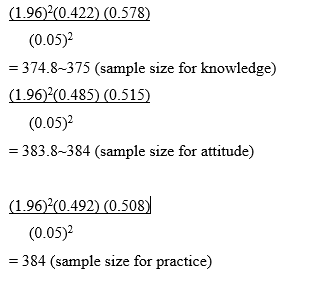
Thus, the sample size from the prevalence of practice was n=(Za/2)2 P (1-P)/d2=(1.96)2 0.492 (0.508)/0.0025=384 and adding 10% non-response rate was 384+10% of total sample size=422, therefore the final sample size becomes 422.
Sampling procedures
All kebeles (the smallest administrative unit in Ethiopia) of the town were included. Then determine the sampling interval (K) by dividing the number of units in the total household by the desired sample size. Total households 781/422=2, so K=2. The first sample household was selected by lottery method then the other was determined by adding k unit. When the selected households were closed during data collection, the next households were taken (Figure 1) [5].
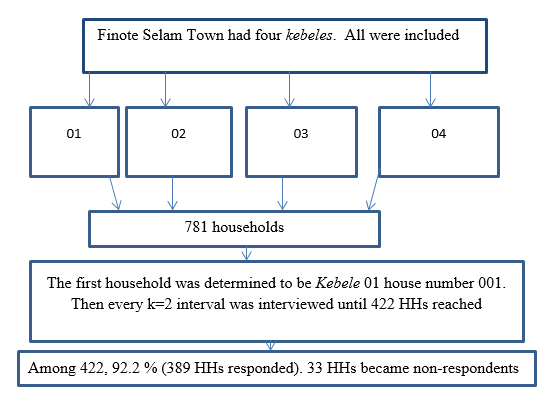
Figure 1. The schematic diagram of sampling procedures among women in Finote Selam town, Northwest Ethiopia, from 09 July to August 2023 (N=389).
Variable of the study
Dependent variables: Water, sanitation and hygiene practices.
Independent variables: Age, sex, marital status, occupational status, economic status, knowledge and attitude towards WASH, family size, access to improved water sources and sanitation facilities.
Operational definitions
Poor knowledge: A mean knowledge score of ≤ 0.50, ≤ 0.75 and ≥ 0.75 was considered poor, moderate and good knowledge, respectively [6].
Negative attitude: A mean attitude score of ≤ 0.60 was considered to have a negative attitude.
Bad practice: A mean practice score of ≤ 0.50 was considered va poor practice.
Improved water source: Include rainwater collection systems, protected dug wells, protected springs, boreholes, public standpipes and home connections. They are defined as those that are probably going to be protected from external pollutants, especially feces.
Improved sanitation: It is defined as those who keep human waste away from human contact in a hygienic manner. These consist of ventilated-improved pit latrines, septic tank pit latrines, flush or pourflush to piped sewer systems and pit latrines with slab or composting toilets.
Variable measurements
This study used twenty-five knowledge-related, fifteen attituderelated and twenty-five practice-related WASH questions to measure those characteristics. A right answer received a score of 1 for each question, whereas an incorrect response received a score of 0. After adding up the scores, the mean score was determined. Similar to this, a Likert scale of sorts 1-5 was used to measure attitude. Strongly agree, agree for positive attitude, neutral and disagree and strongly disagree for negative attitudes were used. Every right response received a score of 1 in the practice assessment, while every incorrect response received a score of 0.
The principal component analysis method was used to classify the wealth index into three categories: Poor, medium and reaches. The economic index was created using information about household assets, such as the possession of several consumer goods, such as a television, bicycle or automobile, as well as details about the features of the home, such as the type of flooring, the availability of clean water and sanitary facilities [7].
Data collection, quality assurance and analysis
The study variables include socio-demographic characteristics related to knowledge, attitude and practice toward water, sanitation and hygiene. The study used an interviewer-administered structured questionnaire to collect data from women. Observational checklists were used to capture and ensure the practices of household compound cleanliness and latrine utilization (observing fresh faces). The questionnaire was adapted from different pieces of literature, considering the local situation.
A pre-test including 5% of the sample size was carried out in a neighboring district to improve the questionnaire. Under the supervision of the principal investigators, six knowledgeable and experienced environmental health specialists gathered the data to ensure data quality. Furthermore, the Cronbach's alpha test was utilized to assess the questionnaires' consistency and stability. The tools were first created in English and then translated into Amharic, the original language [8].
The data was entered using Epi-data v.4.1 software, and the statistical analysis was performed using STATA V.14.1. For every riable, frequencies were run to check for outliers, inconsistencies and missing values. Using a Variance Inflation Factor (VIF), multicollinearity between independent variables was analyzed.
Pie charts and tables were used to perform descriptive statistics. With logistic regression, bivariate and multivariate analyses were also performed. We used the 95% Confidence Interval (CI) and Odds Ratio (OR) to assess the effect of possibly associated factors on WASH practices. Candidates for multivariable analysis were the bivariable analysis variables with p-values less than 0.25.
Socio-demographic and binary logistic regression results
Of the 422 households that were part of the study, 389 had a response rate of 92.2%, and 298 (73.6%) of those who responded were married. 166 (41.0%) respondents or nearly half of the respondents, had a family size of less than five (Table 1) [9].
| Variables | Level | Bad WASH practice | Good WASH practice | Total frequency (%) | COR | 95% CI | p-values |
| Age | 15-30 | 58 | 23 | 81 (20.8) | 2.6 | 0.95-3.2 | 0.08 |
| 31-45 | 102 | 103 | 210 (54.0) | 1 | 0.2-2.4 | 0.67 | |
| Above 45 | 48 | 50 | 98 (25.2) | Ref | - | ||
| Family size | ≤ 5 | 98 | 89 | 187 (48.1) | 1.1 | 0.8-1.7 | 0.61 |
| >5 | 100 | 102 | 202 (51.9) | Ref | - | - | |
| Marital status | Unmarried | 32 | 26 | 58 (14.9) | 1 | 0.3-4.0 | 0.76 |
| Divorced | 16 | 16 | 32 (8.2) | 1.3 | 0.8-4.8 | 0.82 | |
| Widowed | 5 | 3 | 8 (2.1) | 2.1. | 0.9-5.2 | 0.35 | |
| Married | 132 | 168 | 291 (74.8) | Ref | - | - | |
| Occupational status | Government | 48 | 70 | 118 (30.3) | 0.5 | 0.03-1.65 | 0.1 |
| Non-governmental | 150 | 117 | 271 (69.7) | Ref | - | - | |
| Wealth index | Poor | 89 | 27 | 116 (29.8) | 4.4 | 2.9-5.6 | <0.001 |
| Medium | 98 | 112 | 210 (54.0) | 1.2 | 0.7-3.1 | 0.2 | |
| Rich | 27 | 36 | 63 (16.2) | Ref | - | - | |
| Knowledge | Poor | 105 | 48 | 153 (39.3) | 3.8 | 1.9-5.5 | <0.001 |
| Moderate | 95 | 90 | 185 (47.6) | 1.8 | 0.6-3.4 | 0.3 | |
| Good | 18 | 33 | 51 (13.1) | Ref | - | - | |
| Attitude | Negative | 27 | 31 | 58 (14.9) | 1 | 0.4-1.9 | 0.93 |
| Neutral | 86 | 87 | 173 (44.5) | 1.1 | 0.3-2.2 | 0.97 | |
| Positive | 74 | 84 | 158 (40.6) | Ref | - | - | |
| Water source | Improved | 72 | 144 | 216 (55.5) | 0.4 | 0.05-09 | <0.001 |
| Unimproved | 100 | 73 | 173 (44.5) | Ref | - | - | |
| Sanitation facilities | Improved | 67 | 22 | 89 (22.9) | 1.4 | 0.8-2.2 | 0.6 |
| Unimproved | 203 | 97 | 300 (77.9) | Ref | - | - | |
| Note: Ref: Reference group; COR: Crude Odd Ratio; CI: Confidence Interval | |||||||
Table 1. Association between independent variables and water, sanitation and hygiene practice in bivariable analysis among women in Finote Selam Town, 2023 (N=389).
Women's knowledge of WASH
A total of twenty-five questions measuring knowledge of water, sanitation and hygiene were given to three hundred and ninety-nine women. 39.3% of the respondents were found to have good knowledge about WASH. The scores for moderate and poor knowledge were 47.6 and 13.1%, respectively (Figure 2) [10].
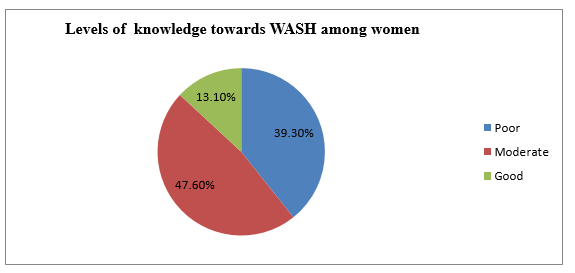
Figure 2. Levels of knowledge among women towards WASH in Finote Selam town from 9 July to August 2023, Northwestern Ethiopia (N=389).
Women's attitude towards WASH
One hundred and fifty-eight women (40.6%) felt a positive attitude about WASH. Only a small percentage of women 58 (14.9%) have a negative attitude about WASH, while the majority 173 (44.5%) have a neutral one (Figure 3).
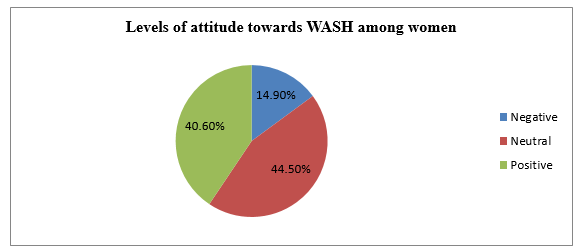
Figure 3. Attitude of women towards WASH in Finote Selam town from 9 July to August 2023, northwestern Ethiopia (N=389).
Women's practice towards WASH
Merely 37.3% of the participants reported engaging in good WASH practices, whereas the majority of women 62.7%exhibited poor practices (Figure 4).
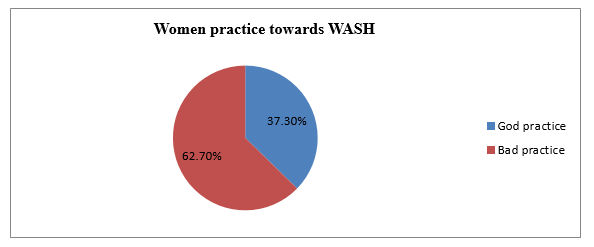
Figure 4. Practice of women towards WASH in Finote Selam town from 9 July to August 2023, northwestern Ethiopia (N=389).
Factors associated with WASH practice using a multivariable logistic regression model
According to the study's findings, there is a significant association of WASH practices and higher socio-economic status (p<0.01), improved water source availability (p<0.001), and WASH knowledge (p<0.001) (Table 2).
| Variables | Level | Bad WASH practice | Good WASH practice | Total frequency (%) | AOR | 95% CI | p-values |
| Wealth index | Poor | 89 | 27 | 116 (29.8) | 3.8 | 1.7-4.6 | 0.01 |
| Medium | 98 | 112 | 210 (54.0) | 1.6 | 0.3-2.2 | 0.2 | |
| Rich | 27 | 36 | 63 (16.2) | Ref | - | - | |
| Knowledge | Poor | 105 | 48 | 153 (39.3) | 4.3 | 2.2-6.1 | <0.001 |
| Moderate | 95 | 90 | 185 (47.6) | 2 | 0.8-3.9 | 0.3 | |
| Good | 18 | 33 | 51 (13.1) | Ref | - | - | |
| Water source | Improved | 72 | 144 | 216 (55.5) | 0.5 | 0.03-0.8 | <0.001 |
| Unimproved | 100 | 73 | 173 (44.5) | Ref | - | - | |
| Note: Ref: Reference group; AOR: Adjusted Odd Ratio; CI: Confidence Interval | |||||||
Table 2. Association between independent variables and water, sanitation and hygiene practice in multivariable logistic analysis among women in Finote Selam town, 2023 (N=389).
A cross-sectional study was carried out to assess women's Knowledge, Attitude and Practice (KAP) of WASH and the associated factors for the practice in Finote Selam Town.
In this study, knowledge is the most significant associated factor for WASH practice. Out of all (389) women, 39.3% or 153 of them had poor knowledge about WASH and 68.6% or 105 of them engaged in bad practices that are essential for preventing illness. According to a Malaysian survey, 40.0% of respondents had poor knowledge levels, which is almost the same. Another study in Tigray, Ethiopia also showed that 42.2% of the residents had good knowledge of WASH. However knowledge is not translated into practice and a major attitudinal change is essentially required, showing the need for behavior change communication using various media to increase their knowledge about water, sanitation and hygienic practices.
Even though only 84 (53.2%) of the women engage in good practices, 108 (40.6%) of the women have a positive attitude regarding WASH. In the other study, 48.5% of the people living in Tigray, northern Ethiopia and 73.3% of the respondents in Malaysia had a positive attitude toward WASH.
About 216 (55.5%) of the women had access to improved water sources and 144 (66.7%) of them followed good practices. Eightynine percent of the households in another KAP study were using improved sources of water for their consumption. Nevertheless, in 2015, 91% of people worldwide were using improved sources of drinking water.
The wealth status of the households was another significant factor; of them, 116 (or 29.8%) were classified as poor, which has an immediate impact on WASH practices. Bad practices are present in eighty-nine (76.7%) of the households. This investigation is well supported by a study conducted in Nepal. This is because the availability of soap in homes and laundry rooms is influenced by household income.
Poor knowledge, a neutral attitude and bad WASH practices were common among the women of Finote Selam Town in northern western Ethiopia. Wealth, improved water sources and knowledge are all associated factors with WASH practice.
We suggested reviving primary healthcare health extension initiatives, implementing an effective program for women's health education, boosting access to improved water and sanitation and improving community livelihoods overall.
This investigation is subject to many limitations. First off, the study's cross-sectional design makes it impossible to infer causation. Second, the results might have been impacted by well-known biases (including social desirability and memory recall biases) because the study relied on self-reported data.
The 1964 Helsinki Declaration, its updates, similar ethical standards and the national and institutional research committees' ethical guidelines were all strictly followed during this investigation. An official letter of support was provided by the Finote Selam Town Health Office and each kebele administration and ethical clearance and approval were granted by the Debre Markos University College of Medicine and Health Sciences ethical review committee by protocol no (4152/520). The women provided their informed, signed consent.
Not applicable.
The corresponding author can provide the datasets gathered and/ or examined during the current investigation upon justifiable request.
The authors declare that they have no competing interests.
There are no funding agencies for this study.
All authors contributed to the study conception and design, data collection and analysis. The manuscript was written by Balew Adane. All the authors read and approved the final manuscript.
We are appreciative that Debre Markos University allowed us to participate in this study. Additionally, we are deeply grateful to Kebeles and the Finote Selam Town Health Office for their help and important information during the data-gathering procedure. Lastly and perhaps most importantly, we would want to express our gratitude to the woman for their voluntary involvement in the study.
[Google Scholar] [CrossRef] [PubMed]