Research Article - (2026) Volume 17, Issue 1
Received: 15-Oct-2024, Manuscript No. JAR-24-150206;
Editor assigned: 18-Oct-2024, Pre QC No. JAR-24-150206 (PQ);
Reviewed: 04-Nov-2024, QC No. JAR-24-150206;
Revised: 12-Feb-2026, Manuscript No. JAR-24-150206 (R);
Published:
19-Feb-2026
, DOI: 10.37421/2155-6113.2025.17.973
Citation: Tegegne, Awoke Seyoum, Melaku Tadege, and Emebet Abich. "Knowledge and Practice on HIV/AIDS Prevention and Associated Factors among High and Preparatory School Students in Awi Zone, North-West Ethiopia." J AIDS Clin Res 17 (2026): 973.
Copyright: © 2025 Tegegne AS, et al. This is an open-access article distributed under the terms of the creative commons attribution license which permits unrestricted use, distribution and reproduction in any medium, provided the original author and source are credited.
Background: Human immune deficiency virus is a virus that causes acquired immunodeficiency syndrome by reducing a person’s ability to fight infection. In the whole world, approximately 37.6 million people were infected by the human immune deficiency virus. Therefore, the main objective of the current investigation was to assess knowledge/awareness and associated factors of HIV/AIDS among Awi zone high and preparatory school students.
Method: About 2049 respondents were considered as respondents/participants. In this investigation, a cross-sectional study design was conducted to assess the knowledge of students about the different ways of transmission of HIV/AIDS from HIV positive to negative people. Chisquare tests of association and binary logistic regression analysis were applied to test the association and to identify the factors related to the cause of having insufficient knowledge about HIV/AIDS. SPSS version 23 software was implemented.
Results: From all students, 78.9% of all had adequate knowledge. Among students who have ever sex, only 12.9% of students were used a condom whereas 87.1% of students were not used a condom during sexual intercourse. More surprisingly, only 14.7% of the entire students knew their HIV AIDS result.
Conclusion: The knowledge of students on ways of transmission of HIV/AIDS was good but the practice was poor. Advanced strategies to prevent HIV/AIDS are highly recommended. A health related education should be conducted to students on using the AIDS club; especially awareness should be created on use of condom during sexual intercourse.
HIV/AIDS • Binary logistic regression • HIV/AIDS knowledge • Awi zone
The worldwide figure stated that 37.6 million people have infected through human immune deficiency virus [1,2]. The African continent is highly affected region; with nearly 26 million people have been living with HIV/AIDS in 2017. HIV is that the most responsible causes of mortality worldwide and therefore the primary predictor of death in Sub-Saharan Africa region. The prevalence of new infections in the area accounted for 66.6% of the whole world. Above 68% of adults and 90%of youngsters infected with the disease were found during this area, and quite 76% of HIV/AIDS-related deaths were occurred in Africa [3,4].
Around two million people were died because of HIV/AIDSassociated causes worldwide, 70% occurred in sub-Saharan Africa [5,6] and 22.9 million people living with HIV/AIDS and 1.2 million deaths from HIV/AIDS among children in 2010 [7]. In developing countries, half of HIV infections happen in people younger than 25 years old; this implies that nearly 60% of all new HIV infections are among 15 to 24 years [8].
In Ethiopia, approximately one million people are living with HIV which has become the leading cause of mortality among 15-49 years of age [9-11]. Additionally, children with HIV/AIDS were 92,000 and AIDS deaths also 67,000 in 2007 [12]. The young adults were engaged in risky sexual practices that expose for acquiring sexually transmitted infections disease and most of the sexual practices during adolescence period are unsafe due to lack of awareness about sexual and reproductive health limited access to health services and susceptibility to sexual abuse [13].
Therefore, risks of sexually transmitted infections including HIV/ AIDS are at high prevalence among young people in the study area [14]. Ethiopian demographic and health survey in 2011 report showed that knowledge of AIDS is only 19% of women and 32% of men have knowledge of HIV/AIDS transmission and prevention methods [15]. This is a disaster for a country which aims to minimize the impact of HIV/AIDS. As a result, investigation on the knowledge of students about HIV/AIDS transmission and the way how they can prevent sexually transmitted disease should be the cross cutting issue.
The estimated 114,690 Ethiopians died of AIDS-related conditions and this increased the number of youngsters who have lost one or both parents to AIDS to over half 1,000,000. It will also still increase infant death rate and lower the population size and growth in Ethiopia. In addition to morbidity and mortality, the HIV/AIDS pandemic in Ethiopia has adversely impacted the country developmental growth. HIV/AIDS is affecting every sector [16]. The adult prevalence of HIV infection in Ethiopia was estimated to be 2.4% in which most of the burden occurring among younger age groups [9,15,17]. More than half of household survey respondents in Ethiopia said they would avoid buying vegetables from a vendor living with HIV. This discriminatory attitude was also expressed by 31% of people in Angola, 25% in Uganda, 21% in Mozambique, 18% in Zimbabwe, 15% in Malawi and 13% in Botswana. This clearly shows that many people still lack basic knowledge about HIV [18].
Awi zone public health emergency management department stated HIV/AIDS prevalence among students is high in Awi zone. As a result, an investigation on the knowledge and practice towards HIV/ AIDS is timely. The current situation calls for intervention to minimize the number of students who are at risk. To this effect, there is a need for identifying the major risk factors associated with the knowledge and practice on HIV prevention in the study area. Additionally, there is no research which was conducted on the knowledge and practice in the zone towards HIV/AIDS. Therefore, this research aimed to investigate to assess the knowledge and practice of High and preparatory students on HIV/AIDS prevention from one person to another.
Study area
The study was conducted in Awi zone, Amhara region, North-west Ethiopia. Awi zone, one among the eleven zones in Amhara national regional state, located 447 km far away from Addis Ababa at North West direction. Based on the 2007 census conducted by the Central Statistical Agency of Ethiopia (CSA), this zone features a total population of 982,942, a rise of 37.07% over the 1994 Ethiopian housing and people census. Of whom 491,077 were women and 491,865 were men. The Amharic language has been speaking as a first language by 53.38%, and 45.04% spoke Awngi; the other 1.58% has been speaking other languages. In the religious aspect, 94.4% of them were Ethiopian Orthodox Christian followers, and 4.5% of the population said they were Muslim [17]. Awi zone has a variety of tourist attractions including Zengena lake and a lot of waterfalls.
Variable in the study
Dependent variable: Students HIV/AIDS knowledge and practice status (good, poor knowledge). Students who scored above average questions considered as having “good knowledge” about the prevention and transmission measures, otherwise the subject stated as "lack of basic knowledge’’ about HIV/AIDS.
Independent variables: the predictor variables are gender (male, female), age, the residence classified as rural and urban, family marital status (living with partner, living without partners), grade level (9,10,11,12), training on the HIV/AIDS (yes, no), heard about HIV/ AIDS (yes, no) and students living with [19,20].
Study population
From all secondary and preparatory school students, some randomly selected schools were considered as the study population. From selected sample respondents, the student who was active at the time of the study was included in the study whereas unconsciously sick ones at the specified period were excluded. The target populations for this study were secondary and preparatory school students in Awi zone. Here each student has an identification number. The data were collected by trained health professionals. The data collectors were strictly followed by the researcher throughout the entire data collection. Data were analyzed by SPSS version 23.
Study design and period
A cross-sectional study design was conducted from January 2019 to June 2019.
Sampling techniques
Simple random sampling technique was used to select high schools and preparatory schools to be included in the study.
Sample size determination
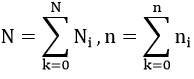
To have an optimum sample size, there are some issues/points one has to take into account. Some of the issues are objective of the research, design of the research, cost constraint, degree of precision required for generalization, etc. There are 38 high school and preparatory schools and there are 41,987 high school students as well as 17,287 preparatory school students in 2019 academic year in Awi zone. From the entire 38 high schools and preparatory school, four secondary schools were selected randomly. The randomly selected schools include were Tilili, Dangla, Chagini and Injibara. The sample size was determined using a single population formula n=Z2α/2 p (1-p)/d2 with 3% margin of error and p=50%. The total number of sample was 2049 students. The sample size was allocated based on proportionality which is computed as ni=(Ni × n)/N
Data collection and quality control
Data collection was supervised by the investigators. During the data collection process, the filled checklist was conducted for their completeness, consistency and accuracy by the investigators.
Data collection tool and procedure
Data were collected using a questionnaire. The tool was translated into Amharic and then translated back to English to check its consistency. The tool was validated through pretesting in one high school and one preparatory school other than the study area. 22 data collectors and 8 supervisors were participated in the data collection process.
Data processing and analysis techniques
After data collection completed, the data was entered into a computer using SPSS version 23 software. Descriptive statistics was done to describe the characteristics of the study population. Binary logistic regression analysis was conducted to discover the effect of each study variable on the outcome variable. Variables having a pvalue< 0.2 on the bivariate analysis was entered into a multivariable logistic regression analysis.
Descriptive statistics: In the descriptive part of the study without going further conclusion was expressed the result by using the measure of central tendency.
Inferential statistics: Inferential statistics were the procedures by which the study was reach conclusion about the population under the study depending upon the observed samples that have drawn from the population. Therefore, the study was used Chi-square test and binary logistic regression from inferential statistics.
Chi-square test of statistics: Chi-square test was used to analyze the association between categorical dependent and independent variables. Here Chi-square test used for the test of independence. There are two hypotheses null and alternative which are expressed as H0: There is no significant association between the dependent variable and independent variables and H1: There is a significant association between the dependent variable and independent variables. The test statistics can be calculated as

Where, Eij is expected frequency, and Oij is observed frequency
Logistic regression
In many regression applications, the response variable has only two outcomes: An event either did or did not occur. Such a variable is often referred to as a binary or binomial variable as its behaviour is related to the binomial distribution. A regression model with this type of response can be interpreted as a model that estimates the effect of the independent variable(s) on the probability of the event occurring. In this study, we used a binary logistic regression model which is one type of logistic regression. Binary logistic regression is most useful when you want to model the event probability for a categorical response variable with two outcomes (success, failure). The model stated as Yi=E(yi)+πi, where, Yi are independent Bernoulli random variables with E[yi]=πi=(exp(β0+β1Xi))/(1+exp(β0+β1Xi)), the parameters are interpreted in terms odds ratio.
From all students, the number of female students was 1082 (52.8%) and the number of males was 967 (47.2%). There were 1121 (54.7%) numbers of students from an urban area. The rest of the students come from a rural area (45.3%). Majority of students were taken a formal training about HIV AIDS 1178 (57.5) but there were 871 (42.5%) students who did not participate in a formal HIV AIDS training. Majority of students had above average scored about HIV AIDS knowledge 1616 (78.9%). The mean age of the participants was 18 years old (Table 1).
| Variable | Category | Frequency | Percent |
| Sex | Male | 967 | 47.2 |
| Female | 1082 | 52.8 | |
| Residence | Urban | 1121 | 54.7 |
| Rural | 928 | 45.3 | |
| Marital status | Married | 1386 | 67.6 |
| Separated | 212 | 10.3 | |
| Widowed | 324 | 15.8 | |
| Other | 127 | 6.2 | |
| Grade | 9 | 392 | 19.1 |
| 10 | 444 | 21.7 | |
| 11 | 691 | 33.7 | |
| 12 | 522 | 25.5 | |
| Living with | Mother only | 229 | 11.2 |
| Father only | 48 | 2.3 | |
| Both | 1586 | 77.4 | |
| Other | 186 | 9.1 | |
| Training about HIV | Yes | 1178 | 57.5 |
| No | 871 | 42.5 | |
| Heard about HIV | Yes | 2049 | 100 |
| No | 0 | 0 | |
| HIV knowledge | Above average | 1616 | 78.9 |
| Below average | 433 | 21.1 |
Table 1. Socio-demographic characteristics with respect to student’s HIV/AIDS knowledge in Awi zone, Northwest Ethiopia, 2019.
Among students who have sex only 12.9% of students have been using condom. 87.1% of students have not used any condom during sexual intercourse. Only 14.7% of the entire students knew their HIV AIDS result (Table 2).
| Variable | Category | Number | Percent |
| HIV testing | Yes | 301 | 14.7 |
| No | 1748 | 85.3 | |
| Condom utilization | Yes | 43 | 12.9 |
| No | 332 | 87.1 |
Table 2. The characteristics of students practice about HIV AIDS prevention in Awi zone, Northwest Ethiopia, 2019.
From Chi-square analysis training, sex, residence and marital status predictors did not have a significant relationship between student’s HIV AIDS awareness. Students’ grade and living with family type had a statistically significant relationship with student’s knowledge status (Table 3).
| Variable | Knowledge | P-value | ||
| Above average | Below average | |||
| HIV training | Yes | 945 | 233 | 0.081 |
| No | 671 | 200 | ||
| Sex | Male | 759 | 208 | 0.692 |
| Female | 857 | 225 | ||
| Residence | Rural | 867 | 254 | 0.063 |
| Urban | 749 | 179 | ||
| Marital status | Married | 1076 | 310 | 0.161 |
| Separated | 168 | 44 | ||
| Widowed | 265 | 59 | ||
| Divorced | 107 | 20 | ||
| Grade | 9 | 336 | 56 | 0.0001 |
| 10 | 322 | 122 | ||
| 11 | 532 | 159 | ||
| 12 | 426 | 96 | ||
| Living with | Mother only | 152 | 77 | 0.0001 |
| Father only | 45 | 3 | ||
| Both | 1259 | 327 | ||
| Relatives | 160 | 26 | ||
Table 3. The Chi-square test of association of student’s HIV/AIDS knowledge and categorical independent variables in Awi zone, Northwest Ethiopia, 2019.
In univariate logistic regression, training about HIV (P<0.0001), residence (p<0.0001), family marital status (p<0.0001), students grade (p<0.0001) and students living with (P<0.0001) were significantly associated with adequate knowledge about HIV. The odds of having adequate knowledge among students who had no training about HIV AIDS had 0.247 times less knowledge as compared to students who had training about HIV AIDS. The odds of having adequate knowledge for students who had a divorced family were decreased by 19.5% as compared to students who had a married family (Table 4).
| Variable | Category | B | COR | 95% CI | P-value | |
| Lower | Upper | |||||
| Training about HIV | No | -1.4 | 0.247 | 0.219 | 0.278 | 0.0001 |
| Yes (ref) | ||||||
| Sex | Male | -1.294 | 0.274 | 0.241 | 0.312 | .0001 |
| Female (ref) | ||||||
| Residence | Rural | -1.228 | 0.293 | 0.261 | 0.329 | 0.0001 |
| Urban (ref) | ||||||
| Family marital | Married | -1.244 | 0.288 | 0.259 | 0.32 | 0.0001 |
| Separated | -1.34 | 0.262 | 0.198 | 0.346 | ||
| Widowed | -1.502 | 0.223 | 0.176 | 0.282 | ||
| Divorced (ref) | ||||||
| Students grade | 9 | -1.792 | 0.167 | 0.131 | 0.211 | 0.0001 |
| 10 | -0.971 | 0.379 | 0.318 | 0.451 | ||
| 11 | -1.208 | 0.299 | 0.258 | 0.347 | ||
| 12 (ref) | ||||||
| Students living with | Mother only | -0.68 | 0.507 | 0.402 | 0.638 | 0.0001 |
| Father only | -2.708 | 0.067 | 0.025 | 0.178 | ||
| Both | -1.348 | 0.26 | 0.235 | 0.288 | ||
| Age | Relative | -0.071 | 0.931 | 0.927 | 0.936 | 0.0001 |
Table 4. The univariate logistic regression analysis of student’s HIV/AIDS knowledge in Awi zone, Northwest Ethiopia, 2019.
In multivariable logistic regression, training about HIV (P=0.015), residence (p=0.046), family marital status (p=0.034), students grade (p<0.0001) and students living with (P<0.0001) and grade (P<0.0001) were significantly associated with having adequate HIV/AIDS knowledge. The expected odds of knowledge among students who hadn’t been taken training about HIV AIDS was 23.9% less than knowledge as compared to students who got formal training about HIV AIDS. The knowledge of students living with their mother only was 3.190 times greater than living with any relatives. Regard to students who were living with their father only, the odds of having adequate knowledge was 0.495 times less than as compared to living with relatives. Student's knowledge was increased by 19% when students living with both mother and father. The knowledge of grade 9 students was less than grade 12 students by 0.553 times. The odds of having adequate knowledge for students who had a divorced family were decreased by 26.1% as compared to students who had married family. Students who live in urban had a greater HIV AIDS knowledge as compared to students who live in rural (Table 5).
| Variable | Category | B | AOR | 95% CI | P-value | |
| Lower | Upper | |||||
| Training about HIV | No | -0.273 | 0.761 | 0.633 | 0.916 | 0.015 |
| Yes (ref) | ||||||
| Sex | Male | 0.043 | 1.044 | 0.866 | 1.258 | 0.707 |
| Female (ref) | ||||||
| Residence | Urban | 0.234 | 1.264 | 1.042 | 1.533 | 0.046 |
| Rural (ref) | ||||||
| Family marital | Married | 0.232 | 1.261 | 0.847 | 1.877 | 0.034 |
| Separated | -0.325 | 0.723 | 0.435 | 1.201 | ||
| Widowed | -0.155 | 0.856 | 0.542 | 1.351 | ||
| Divorced (ref) | ||||||
| Students grade | 9 | -0.593 | 0.553 | 0.408 | 0.75 | 0.0001 |
| 10 | 0.337 | 1.4 | 1.077 | 1.819 | ||
| 11 | 0.121 | 1.129 | 0.888 | 1.435 | ||
| 12 (ref) | ||||||
| Students living with | Mother only | 1.16 | 3.19 | 2.095 | 4.858 | 0.0001 |
| Father only | -0.704 | 0.495 | 0.173 | 1.411 | ||
| Both | 0.174 | 1.19 | 0.848 | 1.669 | ||
| Age | Relative (ref) | -0.094 | 0.911 | 0.887 | 0.935 | 0.0001 |
Table 5. The multivariate logistic regression analysis of student’s HIV/AIDS knowledge in Awi zone, Northwest Ethiopia, 2019.
A very important finding of the study was that each one student participated in the survey had heard about AIDS. This finding was in line with the behavioral surveillance conducted by the Ethiopian Ministry of Health. The similar comparable result also reported in studies done elsewhere in the country. This is an encouraging finding which should further be strengthened by establishing additional HIV/ AIDS youth clubs in the study area.
From the finding of this study the overall knowledge of respondents about HIV was high. A comparable report was found in Ethiopia from high school students. But it is inconsistent with research from China indicated a significant level of lack of knowledge about HIV/AIDS knowledge. This might be due to the difference in the sociodemographic characteristics, especially the educational level of the study participants. The findings, in this case go in line with a study from Addis Ababa. Female students had lower HIV/AIDS knowledge as compared with male students but this difference was small and insignificant. This is inconsistent with the studies. In line with the study, boys had better knowledge than girls this may be due to boys feel freer than girls to talk about matters relating to HIV/AIDS. This finding is consistent with the Ethiopian demographic health survey report on HIV prevention strategy knowledge and previous in-school adolescents study which reported low HIV transmission modes knowledge among females. This may be due to the cultural double standards placed on males and females, which encourage males to debate HIV/AIDS and related sexual matter issues more openly and discourage or even restrict females from such issues. Students who come from the rural area had lower knowledge as compared to students from the urban area which is consistent with another study in Ethiopia. The analysis showed that the level of the students' HIV/ AIDS knowledge was significantly associated with the students' grade which is consistent with another study. Training can increase student’s knowledge which is supported by another study. Student's age also related to students’ knowledge. The result is similar to another investigation. Students living with mother only, and both mother and father will increase student’s knowledge. Family marital status also played the main part of HIV/AIDS knowledge. 12.9% of students have been using a condom which is very low as compared to other studies. The difference may arise due to the sample size difference and design of the study.
In conclusion, family marital status, residence, students living with, age, student’s grade and training about HIV/AIDS were the main responsible factor for HIV/AIDS knowledge. Majority of students were had adequate HIV AIDS knowledge which is appreciated. Only 14.7% of the entire students knew their HIV status. The prevalence of condom utilization was 12.9% which is extremely poor. This is a disaster for once country which aims to minimize the impact of HIV/ AIDS in once country social, economic and political aspect. Majority of students had adequate knowledge about HIV/AIDS but the practice to prevent HIV AIDS in the area is extremely poor. It is also recommended students should encourage early counseling and testing strategies. Governmental and non-governmental organizations required to design a regular HIV/AIDS based training strategies’ in the prevention as well as in every aspect of HIV AIDS in the area. Finally, the study highly recommends integrating HIV/AIDS health concern with an educational curriculum that will enhance students’ knowledge and practice.
The data used in current investigation is available from corresponding author and can be attached up on request.
This manuscript was published or not under consideration for publication by any other journals.
Authors declared that there was no conflict of interest between authors or between authors and organization.
There was no agent funded for current investigation.
MT, EA, AN, GM and YN designed the study and prepared the proposal. MT, HD, EA and AN conducted the statistical analysis, managed the literature searches and wrote the manuscript, AST read the manuscript carefully based on his experience edited the manuscript and take the roll to submit the manuscript. All authors read and approved the final version of the manuscript and agreed to submit to this journal.
We would like to forward our deepest gratitude to the students participated as respondents for current investigation. Data collectors shall owe our heartfelt thanks for their cooperation for the success of this research work.
[Crossref] [Google Scholar] [PubMed]
[Crossref] [Google Scholar] [PubMed]
[Crossref] [Google Scholar] [PubMed]
[Crossref] [Google Scholar] [PubMed]
[Crossref] [Google Scholar] [PubMed]
[Crossref] [Google Scholar] [PubMed]
[Crossref] [Google Scholar] [PubMed]
[Crossref] [Google Scholar] [PubMed]
[Crossref] [Google Scholar] [PubMed]
[Crossref] [Google Scholar] [PubMed]
[Crossref] [Google Scholar] [PubMed]
[Crossref] [Google Scholar] [PubMed]
[Crossref] [Google Scholar] [PubMed]
[Crossref] [Google Scholar] [PubMed]
[Crossref] [Google Scholar] [PubMed]
[Crossref] [Google Scholar] [PubMed]
Journal of AIDS & Clinical Research received 5264 citations as per Google Scholar report