Short Communication - (2025) Volume 15, Issue 4
Received: 01-Jul-2025, Manuscript No. jnt-26-178954;
Editor assigned: 03-Jul-2025, Pre QC No. P-178954;
Reviewed: 17-Jul-2025, QC No. Q-178954;
Revised: 22-Jul-2025, Manuscript No. R-178954;
Published:
29-Jul-2025
, DOI: 10.37421/2161-0959.2025.15.580
Citation: Cole, Ethan P.. ”Kidney Function’s Impact on Drug Therapy Management.” J Nephrol Ther 15 (2025):580.
Copyright: © 2025 Cole P. Ethan This is an open-access article distributed under the terms of the Creative Commons Attribution License, which permits unrestricted use, distribution and reproduction in any medium, provided the original author and source are credited.
The intricate relationship between kidney function and drug pharmacokinetics is a cornerstone of safe and effective pharmacotherapy, particularly for individuals with compromised renal health. Understanding how the kidneys process and eliminate medications is paramount to preventing adverse drug reactions and ensuring therapeutic efficacy. This review will explore various facets of drug behavior in the context of renal impairment, drawing upon recent advancements and established principles in the field. Pharmacokinetic variability in the setting of chronic kidney disease (CKD) significantly influences how drugs are absorbed, distributed, metabolized, and excreted within the body. Adjusting medication doses and selecting appropriate drugs are critical steps to optimize outcomes for patients with impaired renal function, mitigating the risks of both sub-therapeutic levels and toxic accumulation. Special attention is paid to renally cleared drugs, where reduced kidney function can lead to prolonged half-lives and increased systemic exposure [1].
The glomerular filtration rate (GFR) serves as a primary indicator of kidney function and profoundly impacts the elimination of numerous commonly prescribed medications. A diminished GFR necessitates careful dose adjustments to avert potentially serious adverse events. The authors highlight the importance of consulting drug-specific guidelines and employing therapeutic drug monitoring to manage drug therapy effectively in patients with reduced kidney function [2].
Predicting drug disposition in patients with varying degrees of renal impairment presents significant challenges. Factors beyond GFR, such as the complex processes of tubular secretion and reabsorption, can also influence drug clearance. A personalized approach to pharmacotherapy, considering these nuanced physiological changes, is strongly advocated for in nephrology practice [3].
Chronic kidney disease (CKD) exerts a demonstrable impact on both the pharmacodynamics and pharmacokinetics of various drug classes. This includes medications vital for managing common comorbidities such as hypertension and infections, as well as immunosuppressants. Vigilant monitoring of drug efficacy and toxicity is indispensable in this vulnerable patient population to ensure optimal clinical outcomes [4].
Managing drug therapy in patients experiencing acute kidney injury (AKI) poses unique challenges due to the dynamic and often unpredictable nature of renal function. Establishing stable and appropriate dosing regimens requires frequent reassessment and timely dose adjustments to align with fluctuating kidney function and prevent further renal damage or systemic toxicity [5].
Renal impairment can significantly alter drug metabolism and protein binding, leading to altered drug disposition. Reduced plasma protein concentrations and impaired hepatic and renal metabolic pathways can result in increased unbound, pharmacologically active drug concentrations, thereby elevating the risk of toxicity, especially for drugs with high protein binding [6].
For patients with end-stage renal disease (ESRD), particularly those undergoing dialysis, understanding the pharmacokinetics of drugs is crucial. Hemodialysis and peritoneal dialysis can significantly impact drug removal, necessitating specific dosing strategies, such as post-dialysis administration for certain medications, to maintain therapeutic levels and prevent accumulation [7].
The influence of pharmacogenetics on drug response in patients with renal impairment is an increasingly recognized area of study. Genetic variations can modulate the activity of drug-metabolizing enzymes and transporters, contributing to significant inter-individual differences in drug efficacy and safety profiles within the context of kidney disease [8].
Novel drug classes, including biologics, targeted therapies, and new oral anticoagulants, introduce unique pharmacokinetic considerations when used in patients with renal dysfunction. Evidence-based dosing adjustments are essential to harness the therapeutic potential of these agents while mitigating risks associated with impaired renal clearance [9].
Drug-induced kidney injury (DIKI) is a critical concern, and its pharmacokinetic underpinnings are complex. Altered drug disposition in the setting of renal impairment can exacerbate the risk and severity of DIKI. Careful drug selection, appropriate dosing, and diligent monitoring are paramount for preventing these iatrogenic adverse events [10].
The influence of kidney function on drug pharmacokinetics is a complex interplay of physiological and pathological factors that profoundly affect drug behavior in the body. This relationship necessitates a thorough understanding for optimizing therapeutic outcomes and minimizing adverse events. The absorption, distribution, metabolism, and excretion of drugs can all be significantly altered by the presence or absence of renal impairment, making individualized dosing strategies essential. In chronic kidney disease (CKD), changes in drug absorption can occur due to alterations in gastrointestinal motility and blood flow. Distribution may be affected by changes in plasma protein binding and tissue perfusion. Metabolism, primarily occurring in the liver, can also be indirectly influenced by CKD through factors like altered enzyme activity and drug interactions. However, the most significant impact is typically observed in the excretion of renally eliminated drugs, where reduced glomerular filtration and tubular secretion lead to drug accumulation and increased risk of toxicity [1].
The glomerular filtration rate (GFR) remains a critical parameter for assessing renal function and guiding drug dosing. As GFR declines, the clearance of many drugs is reduced, leading to higher plasma concentrations and prolonged exposure. This underscores the necessity of dose adjustments based on estimated GFR (eGFR) to maintain therapeutic efficacy and safety. Drug-specific guidelines and therapeutic drug monitoring (TDM) are invaluable tools in this process [2].
Beyond GFR, other determinants of renal drug elimination, such as tubular secretion and reabsorption, play a vital role, particularly in the context of varying degrees of renal impairment. These active transport mechanisms can influence the overall clearance of drugs, and their alteration in kidney disease can contribute to unpredictable drug disposition. Therefore, a comprehensive understanding of these pathways is crucial for accurate pharmacokinetic predictions and personalized pharmacotherapy [3].
The spectrum of chronic kidney disease (CKD) affects drug therapy through modifications in both pharmacokinetics and pharmacodynamics. For instance, the efficacy of antihypertensive medications might be altered by underlying renal pathology, and the toxicity profiles of antibiotics or immunosuppressants can be significantly impacted by impaired drug elimination. This necessitates a cautious approach to drug selection and close monitoring for signs of efficacy or toxicity [4].
Acute kidney injury (AKI) presents a unique pharmacokinetic challenge due to its rapid onset and fluctuating course. Renal function can change dramatically over hours or days, making it difficult to establish and maintain stable drug dosing regimens. Frequent reassessment of renal function and proactive dose adjustments are critical to manage drug therapy effectively and prevent further renal insult or systemic complications [5].
Drug-protein binding is another crucial factor influenced by renal disease. In conditions of hypoalbuminemia, common in advanced kidney disease, the unbound fraction of highly protein-bound drugs increases, leading to higher free drug concentrations. This can result in enhanced pharmacological activity and an elevated risk of toxicity, even if total drug concentrations appear within the normal range [6].
For patients with end-stage renal disease (ESRD) on dialysis, drug pharmacokinetics are further complicated by the extracorporeal removal of drugs during hemodialysis or peritoneal dialysis. The efficiency of drug removal varies depending on the drug's molecular size, protein binding, and dialyzability. Understanding these principles is essential for optimizing dosing regimens, including the timing of doses relative to dialysis sessions [7].
Pharmacogenetics adds another layer of complexity to drug therapy in renal impairment. Genetic variations in genes encoding drug-metabolizing enzymes (e.g., CYP enzymes) and drug transporters (e.g., OATPs, OCTs) can lead to significant inter-individual variability in drug exposure and response. This genetic predisposition can exacerbate the effects of renal impairment on drug disposition, highlighting the need for personalized pharmacogenetic assessment [8].
Novel therapeutic agents, such as targeted therapies and biologics, often have unique pharmacokinetic profiles that may be significantly altered in the presence of renal dysfunction. Their disposition, often involving complex metabolic pathways or specific elimination routes, requires careful consideration and evidence-based dosing adjustments to ensure their safety and efficacy in patients with compromised kidney function [9].
Drug-induced kidney injury (DIKI) is a well-recognized complication of pharmacotherapy. In patients with pre-existing renal impairment, the susceptibility to DIKI may be increased, and altered drug disposition can further potentiate nephrotoxic effects. Proactive strategies, including judicious drug selection, avoidance of nephrotoxic agents, and careful monitoring, are vital for preventing DIKI in this vulnerable population [10].
Kidney function profoundly impacts how the body processes drugs, necessitating careful adjustments in medication management for patients with renal impairment. Reduced kidney function can alter drug absorption, distribution, metabolism, and excretion, leading to potential accumulation and toxicity, especially for renally cleared medications. Glomerular filtration rate (GFR) is a key determinant of drug elimination, and a decline in GFR requires dose adjustments to maintain efficacy and safety. Factors beyond GFR, such as tubular secretion and reabsorption, also influence drug clearance. Both chronic kidney disease (CKD) and acute kidney injury (AKI) present unique pharmacokinetic challenges, with AKI requiring dynamic dose adjustments due to fluctuating renal function. Drug-protein binding and pharmacogenetics further contribute to inter-individual variability in drug response. Novel drug classes and drug-induced kidney injury (DIKI) add further complexity to drug therapy in patients with renal dysfunction. Understanding these principles is critical for safe and effective pharmacotherapy.
None
None
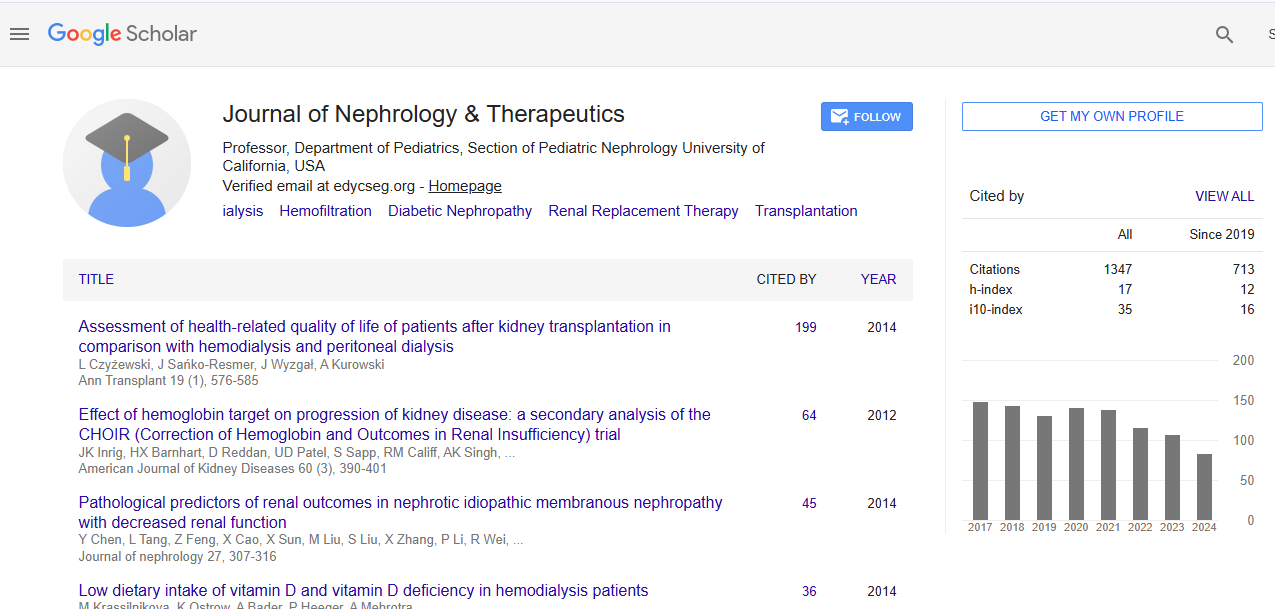
Journal of Nephrology & Therapeutics received 784 citations as per Google Scholar report