Short Communication - (127) Volume 14, Issue 2
Received: 02-Mar-2025, Manuscript No. VTE-26-180077;
Editor assigned: 04-Mar-2025, Pre QC No. P-180077;
Reviewed: 18-Mar-2025, QC No. Q-180077;
Revised: 24-Mar-2025, Manuscript No. R-180077;
Published:
30-Mar-2025
, DOI: 10.37421/2376-1318.2025.14.366
Citation: Schmidt, Oliver. ”Iron Imbalances: Global Health, Clinical Management, and Prevention.” Vitam Miner 14 (2025):366.
Copyright: © 2025 Schmidt O. This is an open-access article distributed under the terms of the Creative Commons Attribution License, which permits unrestricted use, distribution and reproduction in any medium, provided the original author and source are credited.
Iron deficiency represents a substantial global health challenge, affecting critical physiological processes such as cognitive development, immune system function, and athletic performance. Recognizing its clinical significance is paramount for ensuring prompt diagnosis and implementing effective management strategies across diverse demographics, including pregnant women and athletes [1].
Conversely, iron overload, frequently associated with inherited conditions like hemochromatosis or necessitated by frequent blood transfusions, can precipitate severe organ damage. This damage arises from the cumulative effects of oxidative stress, emphasizing the intricate balance required for maintaining iron homeostasis and the profound health consequences when this equilibrium is disrupted [1].
The neurological ramifications of iron deficiency, particularly during the formative stages of early life, constitute a pivotal area of scientific inquiry. Insufficient iron availability during critical neurodevelopmental periods can result in enduring impairments in cognitive abilities, executive functions, and motor skills, underscoring the necessity for early detection and intervention in infants and young children, as well as prioritizing maternal iron status during pregnancy to safeguard fetal brain development [2].
Disorders characterized by iron overload, such as hereditary hemochromatosis, present formidable clinical obstacles. The excessive accumulation of iron within vital organs including the liver, heart, and pancreas can precipitate serious conditions such as fibrosis, cirrhosis, cardiomyopathy, and diabetes. A thorough understanding of the underlying genetic mechanisms and diligent monitoring of iron levels are indispensable for effectively managing these conditions and averting long-term organ damage through therapeutic interventions like phlebotomy or iron chelation therapy [3].
Iron deficiency anemia (IDA) stands as a prevalent cause of debilitating fatigue and diminished physical capacity, particularly affecting women of reproductive age and individuals engaged in athletic pursuits. Beyond the symptom of fatigue, IDA can adversely impact muscle metabolism, the efficiency of oxygen transport, and cognitive function, thereby compromising daily activities and athletic achievements. Effective therapeutic approaches necessitate not only the administration of iron supplements but also a meticulous investigation and resolution of the root causes contributing to iron loss [4].
The intricate relationship between iron status and immune system efficacy is widely acknowledged. While iron is fundamentally important for the proliferation and functionality of immune cells, both its deficiency and excess can significantly compromise the body's defense mechanisms. Iron deficiency can impede the proper functioning of T-cells and macrophages, thereby increasing vulnerability to infectious diseases. Conversely, elevated iron levels can inadvertently foster pathogen proliferation and exacerbate inflammatory processes [5].
Iron deficiency during pregnancy carries profound implications for both the maternal well-being and the developmental trajectory of the child. Maternal IDA is significantly correlated with an elevated risk of premature birth, low birth weight, and excessive postpartum bleeding. Crucially, adequate neonatal iron stores are indispensable for the infant's cognitive development and immune competence. Consequently, maintaining optimal iron status throughout gestation is paramount for achieving favorable pregnancy outcomes [6].
The accurate diagnosis of iron deficiency hinges upon a comprehensive evaluation of iron status indicators. While serum ferritin levels serve as a primary marker, their interpretation can be complicated by the presence of inflammation. Employing a combination of markers, including serum iron, transferrin saturation, and soluble transferrin receptor levels, can yield a more precise assessment, particularly in scenarios where inflammatory conditions are present [7].
Iron overload resulting from chronic blood transfusions, a common occurrence in conditions such as thalassemia and sickle cell disease, demands vigilant surveillance and proactive management. Uncontrolled iron accumulation inevitably leads to end-organ damage, with the heart and liver being particularly susceptible. Iron chelation therapy emerges as a critical intervention for the removal of excess iron and the enhancement of long-term prognoses in these patient cohorts [8].
Beyond its recognized role in oxygen transport, iron plays a fundamental part in cellular metabolism, influencing mitochondrial function and the efficiency of energy production. Disruptions in iron homeostasis can lead to compromised cellular respiration and augmented oxidative stress, thereby contributing to the pathogenesis of a wide spectrum of diseases. A deep comprehension of these cellular mechanisms is indispensable for the development of innovative therapeutic strategies [9].
Public health initiatives specifically designed to combat iron deficiency, with a particular focus on vulnerable populations, are indispensable for mitigating the widespread burden of associated morbidities. These initiatives commonly encompass strategies such as food fortification, targeted supplementation programs, and comprehensive public education campaigns. The success of these interventions is contingent upon the implementation of a multi-faceted approach that carefully considers both local epidemiological data and the availability of resources [10].
Iron deficiency stands as a major global health concern, impacting cognitive development, immune function, and physical performance. Understanding its clinical implications is vital for timely diagnosis and effective management across diverse populations, from pregnant women to athletes. Conversely, iron overload, often linked to genetic conditions like hemochromatosis or requiring frequent blood transfusions, can lead to severe organ damage due to oxidative stress. This highlights the delicate balance required for iron homeostasis and the profound clinical consequences when this balance is disrupted [1].
The neurological consequences of iron deficiency, particularly in early life, are a critical area of research. Insufficient iron during neurodevelopment can lead to irreversible deficits in cognitive function, executive function, and motor skills. This underscores the importance of screening and early intervention in infants and young children, as well as addressing maternal iron status during pregnancy to safeguard fetal brain development [2].
Iron overload disorders, such as hereditary hemochromatosis, pose significant clinical challenges. The excessive accumulation of iron in organs like the liver, heart, and pancreas can lead to fibrosis, cirrhosis, cardiomyopathy, and diabetes. Understanding the genetic basis and monitoring iron levels are vital for managing these conditions and preventing long-term organ damage through phlebotomy or iron chelation therapy [3].
Iron deficiency anemia (IDA) is a common cause of fatigue and impaired physical performance, particularly in women of reproductive age and athletes. Beyond simple fatigue, IDA can affect muscle metabolism, oxygen transport, and cognitive function, impacting daily life and athletic capabilities. Effective treatment involves not only iron supplementation but also addressing underlying causes of iron loss [4].
The link between iron status and immune function is well-established. While iron is essential for immune cell proliferation and function, both deficiency and overload can compromise immune responses. Iron deficiency can impair T-cell function and macrophage activity, increasing susceptibility to infections. Conversely, excessive iron can promote pathogen growth and contribute to inflammation [5].
Iron deficiency in pregnancy has profound implications for both mother and child. Maternal IDA is associated with an increased risk of preterm birth, low birth weight, and postpartum hemorrhage. Neonatal iron stores are critical for the infant's neurodevelopment and immune function. Adequate iron status during gestation is therefore paramount for optimal pregnancy outcomes [6].
The diagnosis of iron deficiency requires a comprehensive assessment of iron status markers. While serum ferritin is a primary indicator, its interpretation can be confounded by inflammation. A combination of markers including serum iron, transferrin saturation, and soluble transferrin receptor can provide a more accurate picture, especially in cases where inflammation is present [7].
Iron overload from chronic transfusions, common in conditions like thalassemia and sickle cell disease, necessitates vigilant monitoring and management. Unchecked iron accumulation leads to end-organ damage, particularly in the heart and liver. Iron chelation therapy is critical for removing excess iron and improving long-term outcomes in these patient populations [8].
The role of iron in cellular metabolism extends beyond oxygen transport, impacting mitochondrial function and energy production. Dysregulation of iron homeostasis can lead to impaired cellular respiration and increased oxidative stress, contributing to the pathogenesis of various diseases. Understanding these cellular mechanisms is key to developing novel therapeutic strategies [9].
Public health initiatives targeting iron deficiency, particularly in vulnerable populations, are essential for reducing the burden of related diseases. These initiatives often involve food fortification, supplementation programs, and public education campaigns. Effective strategies require a multi-faceted approach that considers local epidemiology and resource availability [10].
Iron deficiency and overload have significant global health implications. Iron deficiency can impair cognitive development, immune function, and physical performance, particularly in vulnerable groups such as pregnant women and athletes. Conversely, iron overload can lead to severe organ damage due to oxidative stress. Understanding the complex interplay of iron homeostasis is crucial for effective clinical management and disease prevention. Research highlights the neurological impact of early-life iron deficiency and the challenges in diagnosing iron deficiency, especially in the presence of inflammation. Management strategies for both deficiency and overload, including supplementation, phlebotomy, and chelation therapy, are essential for preventing long-term complications and improving patient outcomes. Public health interventions play a vital role in addressing the widespread burden of iron-related diseases.
None
None
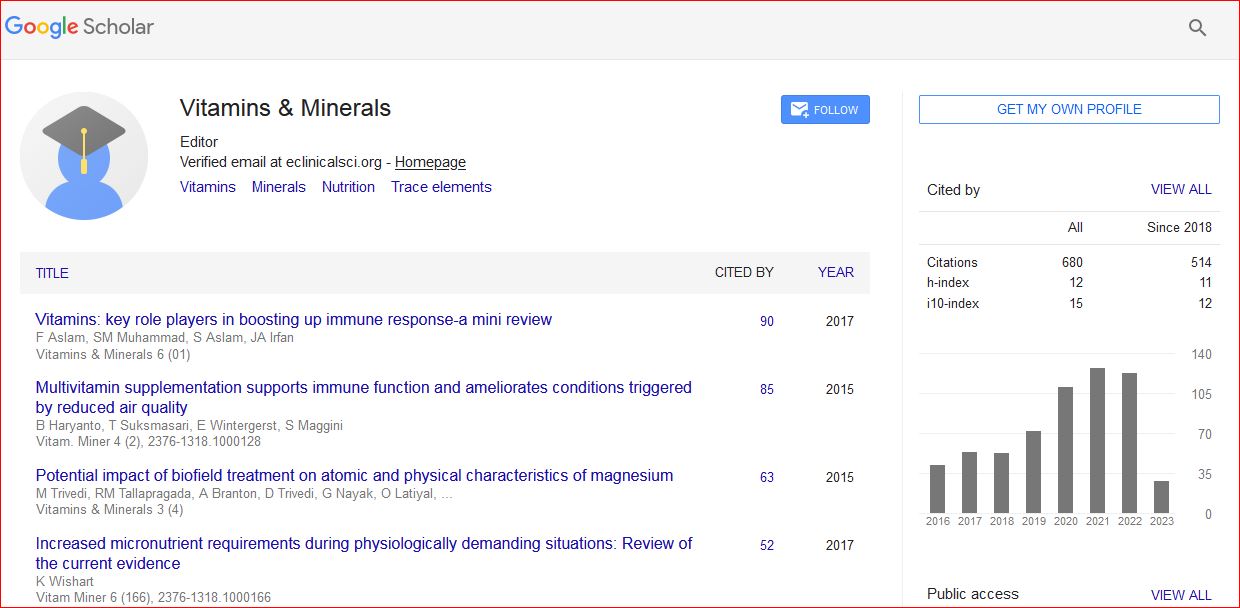
Vitamins & Minerals received 790 citations as per Google Scholar report