Perspective - (2025) Volume 14, Issue 6
Received: 01-Dec-2025, Manuscript No. jees-26-187946;
Editor assigned: 03-Dec-2025, Pre QC No. P-187946;
Reviewed: 17-Dec-2025, QC No. Q-187946;
Revised: 22-Dec-2025, Manuscript No. R-187946;
Published:
29-Dec-2025
, DOI: 10.37421/2332-0796.2025.14.209
Citation: Ramirez, Victor Hugo. ”IoT Energy Monitoring: Efficiency,
Analytics, and Sustainability.” J Electr Electron Syst 14 (2025):209.
Copyright: © 2025 Ramirez H. Victor This is an open-access article distributed under the terms of the Creative Commons Attribution License, which permits unrestricted use,
distribution and reproduction in any medium, provided the original author and source are credited.
The integration of the Internet of Things (IoT) has ushered in a new era for electrical energy monitoring systems, promising unprecedented efficiency and control. These advanced systems leverage real-time data acquisition and wireless communication to provide detailed insights into energy consumption patterns. The primary goal is to identify wastage, optimize usage, and support the development of smart grids, ultimately leading to significant cost savings and environmental benefits [1].
The development of low-cost IoT frameworks has made sophisticated energy monitoring accessible for residential applications. By utilizing microcontrollers and lightweight communication protocols, these systems enable remote access and automated control of electrical appliances. This accessibility promotes energy efficiency and enhances user awareness through intuitive interfaces, making smart home energy management a practical reality [2].
In urban environments, the need for scalable and reliable energy monitoring is paramount. Distributed IoT systems are being deployed to collect data from numerous points across smart cities. This enables centralized analysis for grid optimization and intelligent demand-side management, contributing to a more sustainable and resilient urban energy infrastructure [3].
The advent of IoT-enabled smart energy meters, coupled with cloud-based data analytics, is transforming how energy consumption is understood. These systems provide granular usage data directly to consumers, empowering them to make informed decisions. Features such as remote meter reading, fault detection, and personalized saving recommendations are facilitated by robust IoT architectures [4].
Building energy management systems are also benefiting significantly from IoT integration. By employing wireless sensors and central gateways, these systems monitor and optimize electrical loads in real-time. The identification of energy inefficiencies and the suggestion of operational adjustments aim to reduce consumption and operational costs in both commercial and residential buildings [5].
Industrial settings present unique challenges for energy monitoring, leading to the development of specialized IoT architectures. Edge computing plays a crucial role in processing data locally, reducing latency and bandwidth needs. This enables predictive maintenance by analyzing machinery energy patterns, thereby preventing failures and optimizing production schedules [6].
For household electricity consumption, intelligent IoT-based systems offer real-time monitoring and analysis. These systems enhance user awareness through mobile applications that provide detailed insights into energy usage. Machine learning algorithms are incorporated for anomaly detection and forecasting, facilitating improved energy management at the individual level [7].
The smart grid environment requires comprehensive IoT solutions for effective energy monitoring. Such solutions focus on robust architectures, efficient communication protocols, and scalable data management strategies. Key functionalities include fault detection, consumption pattern analysis, and the enablement of dynamic pricing mechanisms, all vital for grid operation and energy sustainability [8].
The development of cost-effective IoT devices is making energy monitoring more accessible to a wider audience. Utilizing readily available components and wireless communication, these devices transmit data to cloud servers. They serve as accessible tools for consumers to understand their energy usage and identify savings opportunities, supporting broader energy efficiency initiatives [9].
A critical consideration in the deployment of IoT-based electrical energy monitoring systems is security. Robust encryption and authentication mechanisms are essential to protect sensitive consumption data from unauthorized access and cyber threats. Secure data transmission and storage are fundamental to the reliable operation of these smart energy systems [10].
The integration of Internet of Things (IoT) technology into electrical energy monitoring systems represents a significant advancement, enabling real-time data acquisition through wireless communication protocols and sophisticated cloud-based analytics. This facilitates efficient tracking of energy consumption, identification of wastage, optimization of usage, and support for smart grid management. The systems also address crucial security aspects and data processing challenges, promising substantial cost savings and environmental benefits [1].
A low-cost IoT framework for monitoring and controlling electrical appliances has been presented, leveraging ESP32 microcontrollers and MQTT for communication. This allows for remote access and automated control based on energy consumption patterns. The emphasis is on providing a practical and affordable solution for residential energy management, fostering energy efficiency and user awareness via a user-friendly interface [2].
A distributed IoT system designed for real-time electrical energy monitoring in smart cities highlights scalability and reliability through architectures employing LoRaWAN for long-range communication. Data collected from various points enables centralized analysis for grid optimization and intelligent demand-side management, contributing to a more sustainable urban energy infrastructure [3].
An IoT-enabled smart energy meter, integrated with a cloud platform for advanced analytics, provides consumers with granular energy usage data. This empowers informed decision-making regarding consumption habits through features like remote meter reading, fault detection, and personalized energy-saving recommendations, all supported by a secure and robust IoT architecture [4].
The application of IoT in building energy management systems focuses on real-time monitoring and optimization of electrical loads. Systems utilize wireless sensors and a central gateway to collect data, which is then processed to identify inefficiencies and suggest operational adjustments, aiming to reduce energy consumption and operational costs in various building types [5].
Industrial environments benefit from a novel IoT architecture for distributed electrical energy monitoring that incorporates edge computing. This approach processes data locally, minimizing latency and bandwidth requirements, and enables predictive maintenance by analyzing machinery energy consumption patterns to prevent failures and optimize production schedules, with security being a key consideration [6].
Intelligent IoT-based systems for household electricity consumption offer real-time monitoring and analysis, aiming to improve user awareness and promote energy conservation. A mobile application provides detailed insights into energy usage, complemented by machine learning algorithms for anomaly detection and forecasting, thus facilitating better individual energy management strategies [7].
A comprehensive IoT solution for smart electrical energy monitoring in smart grid environments addresses architecture, communication protocols, and data management for reliable and scalable deployment. The systemâ??s capabilities in fault detection, consumption pattern analysis, and dynamic pricing mechanisms are vital for efficient grid operation and energy sustainability [8].
Cost-effective IoT devices for monitoring single-phase electrical energy consumption utilize readily available components and wireless communication to transmit data to cloud servers. The objective is to equip consumers with an accessible tool for understanding their energy usage and identifying potential savings, thereby contributing to wider energy efficiency initiatives [9].
Security is a critical aspect of IoT-based electrical energy monitoring systems. A proposed framework integrates robust encryption and authentication mechanisms to safeguard sensitive energy consumption data against unauthorized access and cyber threats, emphasizing the importance of secure data transmission and storage for the reliable functioning of smart energy systems [10].
This collection of research explores the pervasive application of Internet of Things (IoT) technology in electrical energy monitoring across various sectors. Systems are designed for real-time data acquisition, wireless communication, and cloud-based analytics to enhance energy efficiency, identify consumption patterns, and optimize grid management. Applications range from smart homes and buildings to industrial settings and smart cities, with a focus on cost-effectiveness, scalability, and user empowerment through detailed data insights. Key challenges addressed include data security and processing, with ongoing efforts to develop robust and reliable IoT solutions for sustainable energy practices.
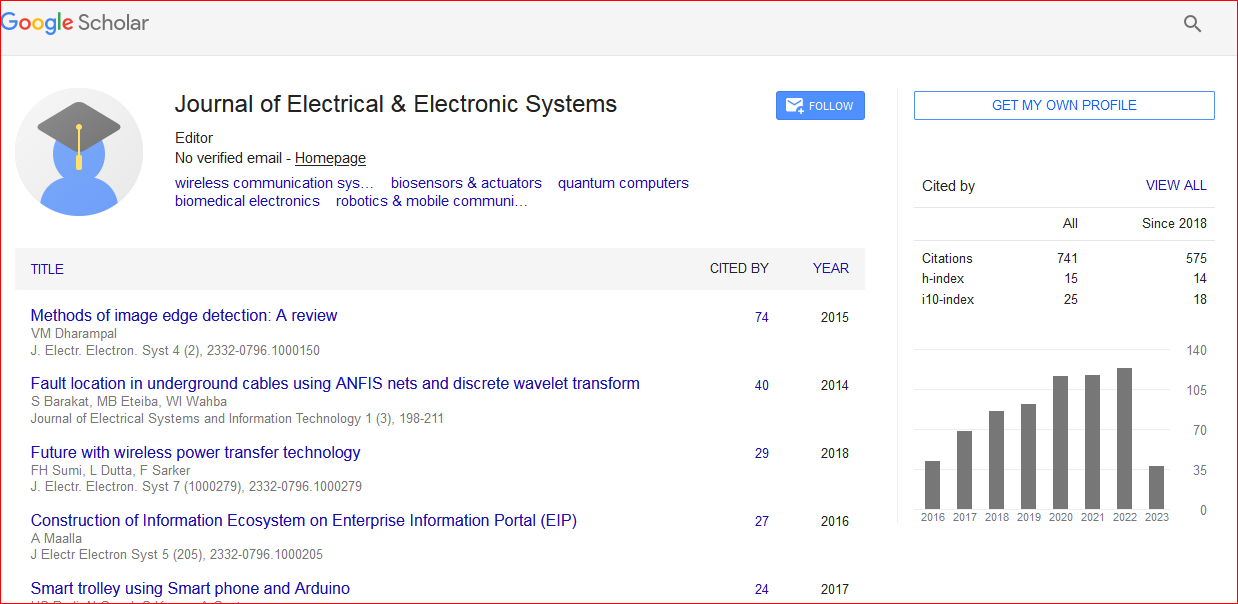
Journal of Electrical & Electronic Systems received 733 citations as per Google Scholar report