Opinion - (2025) Volume 14, Issue 5
Received: 01-Sep-2025, Manuscript No. aim-25-177773;
Editor assigned: 03-Sep-2025, Pre QC No. P-177773;
Reviewed: 17-Sep-2025, QC No. Q-177773;
Revised: 22-Sep-2025, Manuscript No. R-177773;
Published:
29-Sep-2025
, DOI: 10.37421/2427-5162.2025.14.591
Citation: Iyer, Nalini. ”Integrating Traditional Medicine for Global Health Resilience.” Alt Integr Med 14 (2025):591.
Copyright: © 2025 Iyer N. This is an open-access article distributed under the terms of the Creative Commons Attribution License, which permits unrestricted use, distribution and reproduction in any medium, provided the original author and source are credited.
This paper investigates the potential integration of traditional African medicine into modern healthcare for chronic disease management. It identifies significant barriers, such as the lack of standardization and scientific validation, alongside considerable opportunities, particularly due to its deep cultural relevance and accessibility within communities. The central argument posits that successful integration necessitates a careful equilibrium between preserving ancient traditional knowledge and rigorously applying contemporary research methodologies to establish efficacy and safety for preventive approaches [1].
A comprehensive review examines the crucial role Traditional Chinese Medicine (TCM) played in both the prevention and treatment of COVID-19 throughout China. The authors meticulously detail various TCM interventions, ranging from herbal formulations to acupressure techniques, underscoring their perceived contributions to bolstering immunity and alleviating symptoms. This study effectively demonstrates how a long-established traditional medical system can be rapidly adapted and widely deployed during a public health emergency for both proactive prevention and reactive therapeutic interventions [2].
This publication meticulously explores the foundational principles of Ayurveda, with a particular emphasis on its significant contributions to preventive health strategies. It thoroughly discusses various elements including specific dietary recommendations, comprehensive lifestyle modifications, and traditional cleansing therapies, all meticulously designed to maintain physiological balance and actively avert the onset of disease. The overarching message conveyed is that Ayurveda offers a profoundly holistic and individualized framework for wellness, proactively addressing health before illness manifests, which harmonizes exceptionally well with contemporary preventive healthcare objectives [3].
Research presents an ethnobotanical perspective on traditional medicinal plants extensively utilized within specific South African communities for both disease prevention and general health promotion. The study meticulously documents these plants, their time-honored traditional applications, and the invaluable knowledge seamlessly transmitted across generations. This investigation reveals the region's rich local biodiversity and a deeply ingrained understanding of plant-based remedies, which could profoundly inform novel drug discovery efforts or guide integrated health strategies specifically tailored for prevention [4].
A systematic review investigates the multifaceted role of traditional and complementary medicine in the prevention and control of non-communicable diseases (NCDs) across the African continent. It synthesizes existing evidence on diverse practices, illustrating their substantial potential to contribute to public health, especially in regions where conventional medical services are less accessible. The primary finding underscores that these traditional systems provide valuable, culturally resonant strategies for NCD prevention, but demand rigorous scientific evaluation and robust policy support for broader integration [5].
This scoping review delves into how traditional, complementary, and integrative health (TCIH) approaches contribute to population mental health and overall wellbeing. It identifies a wide array of practices, from herbal remedies to mindfulness techniques, employed for mental health promotion and the prevention of psychiatric conditions. A strong emphasis is placed on the potential of these diverse approaches to offer holistic, person-centered care that effectively complements conventional mental health services, extending beyond mere illness treatment to fostering resilience and promoting flourishing [6].
This review specifically focuses on Siddha medicine's distinctive approach to preventive healthcare, meticulously outlining its fundamental principles, sophisticated diagnostic methods, and comprehensive therapeutic strategies aimed at sustaining optimal health and averting disease. It highlights the system's profound emphasis on restoring balance within the body's humors and elemental forces through tailored dietary regimes, specific lifestyle adjustments, and potent herbal remedies. The article unequivocally demonstrates Siddha medicine's significant potential as an indigenous system for promoting long-term wellness within modern health frameworks [7].
A qualitative study explores the pivotal roles played by traditional healers in HIV prevention and care within rural South Africa. It illuminates how these healers function as deeply trusted community figures, providing essential counseling, vital education, and crucial referrals for HIV testing and subsequent treatment. The study unequivocally highlights their indispensable position in public health, particularly in reaching populations that often face barriers to accessing conventional medical services, thereby showcasing a critical, culturally sensitive pathway for both disease prevention and ongoing management [8].
This review explores the promising potential of traditional plant-based remedies within the realm of preventive dentistry. It compiles compelling evidence on various medicinal plants and their extracts, emphasizing their inherent antimicrobial, anti-inflammatory, and wound-healing properties directly relevant to optimal oral health. The central conclusion is that these natural compounds present affordable and highly accessible alternatives or valuable adjuncts to synthetic products for maintaining rigorous oral hygiene and preventing prevalent dental diseases, thereby opening new avenues for sustainable preventive dental care [9].
This review explores global experiences in integrating traditional knowledge and practices into maternal and child health programs worldwide. It showcases numerous examples where traditional birth attendants, specific herbal remedies, and various cultural practices significantly enhance maternal and child well-being, particularly within underserved communities. The core implication is that leveraging these existing, culturally embedded systems can substantially improve health outcomes and broaden access to care, contingent upon respectful collaboration and evidence-based integration strategies [10].
The document details how traditional African medicine can be integrated into contemporary healthcare for managing chronic illnesses. It identifies key challenges such as a lack of standardization and scientific validation, while also highlighting considerable opportunities derived from its cultural significance and widespread accessibility. The central thesis advocates for a balanced approach, combining the preservation of traditional wisdom with modern research to substantiate efficacy and safety, especially for preventive applications [1]. This review provides an overview of Traditional Chinese Medicine's (TCM) contributions to preventing and treating COVID-19 in China. It outlines various TCM methodologies, including herbal treatments and acupressure, emphasizing their perceived roles in immune system enhancement and symptom alleviation. The paper underscores how a long-standing traditional medical system can be rapidly adapted and extensively utilized during a public health crisis for both prophylactic and therapeutic objectives [2]. This paper investigates the core tenets of Ayurveda, focusing specifically on its role in preventive health. It comprehensively discusses dietary recommendations, lifestyle adjustments, and purification therapies designed to maintain physiological balance and preempt disease onset. The fundamental argument is that Ayurveda offers a holistic and personalized approach to wellness, proactively addressing health to prevent illness, aligning effectively with contemporary goals for preventive healthcare [3]. Research provides an ethnobotanical examination of indigenous medicinal plants used for disease prevention and health promotion in specific South African communities. It thoroughly documents these plants, their customary applications, and the intergenerational transfer of knowledge. This study highlights the rich local biodiversity and profound understanding of plant-based remedies, which could significantly inform new pharmaceutical discoveries or integrated health strategies aimed at prevention [4]. A systematic review examines the utility of traditional and complementary medicine in preventing and controlling non-communicable diseases (NCDs) across Africa. It synthesizes evidence regarding various practices, demonstrating their potential to contribute to public health, especially where conventional medical access is limited. The review concludes that these traditional systems offer valuable, culturally appropriate strategies for NCD prevention, but require robust evaluation and supportive policy for wider adoption [5]. This scoping review investigates the contribution of traditional, complementary, and integrative health approaches to population mental health and overall well-being. It identifies a wide spectrum of practices, from botanical remedies to mindfulness exercises, utilized for mental health promotion and the prevention of psychiatric conditions. The review emphasizes the capacity of these diverse approaches to deliver holistic, patient-centered care that complements standard mental health services, fostering resilience beyond mere illness treatment [6]. This review outlines Siddha medicine's unique strategies for preventive healthcare, detailing its foundational principles, diagnostic techniques, and therapeutic interventions aimed at preserving health and preventing ailments. It highlights the system's focus on balancing bodily humors and elemental forces through diet, lifestyle modifications, and herbal remedies. The article effectively illustrates Siddha medicine's potential as a comprehensive, indigenous system for promoting enduring wellness within modern healthcare frameworks [7]. A qualitative study explores the critical functions of traditional healers in HIV prevention and care within rural South Africa. It elucidates how these healers serve as trusted community figures, offering counseling, educational insights, and referrals for HIV testing and treatment. The study underscores their vital role in public health, particularly in reaching populations underserved by conventional medical services, thereby providing a crucial, culturally sensitive pathway for disease prevention and management [8]. This review investigates the promising application of traditional plant-based remedies in preventive dentistry. It aggregates evidence on various medicinal plants and their extracts, highlighting their antimicrobial, anti-inflammatory, and wound-healing properties pertinent to oral health. The key conclusion is that these natural compounds offer cost-effective and accessible alternatives or supplementary options to synthetic products for maintaining oral hygiene and preventing common dental issues, thereby opening new avenues for sustainable preventive dental care [9]. This review explores global examples of integrating traditional knowledge and practices into maternal and child health initiatives. It presents instances where traditional birth attendants, specific herbal preparations, and culturally embedded practices improve maternal and child well-being, especially in remote communities. The core message is that leveraging these existing, culturally relevant systems can significantly enhance health outcomes and access to care, provided there is respectful cooperation and evidence-informed integration [10].
Traditional and complementary medicine systems, originating from diverse global cultures, demonstrate significant potential for integration into modern healthcare, particularly in preventive health. Studies highlight the applications of traditional African medicine, Traditional Chinese Medicine, Ayurveda, and Siddha medicine in managing chronic diseases, responding to public health crises like COVID-19, and promoting overall wellness. Ethnobotanical research and reviews underscore the importance of medicinal plants in disease prevention, health promotion, and even specialized areas like preventive dentistry. These systems offer culturally relevant, holistic, and often accessible approaches to health, including specific dietary and lifestyle recommendations, herbal remedies, and traditional healing practices. Furthermore, the roles of traditional healers in community health, such as HIV prevention and care in rural South Africa, and the integration of traditional knowledge in maternal and child health programs globally, illustrate their critical contributions. While challenges like standardization and scientific validation exist, a growing body of evidence suggests that rigorous evaluation and policy support can facilitate their effective integration, enhancing public health outcomes by fostering resilience and addressing health needs proactively.
None
None
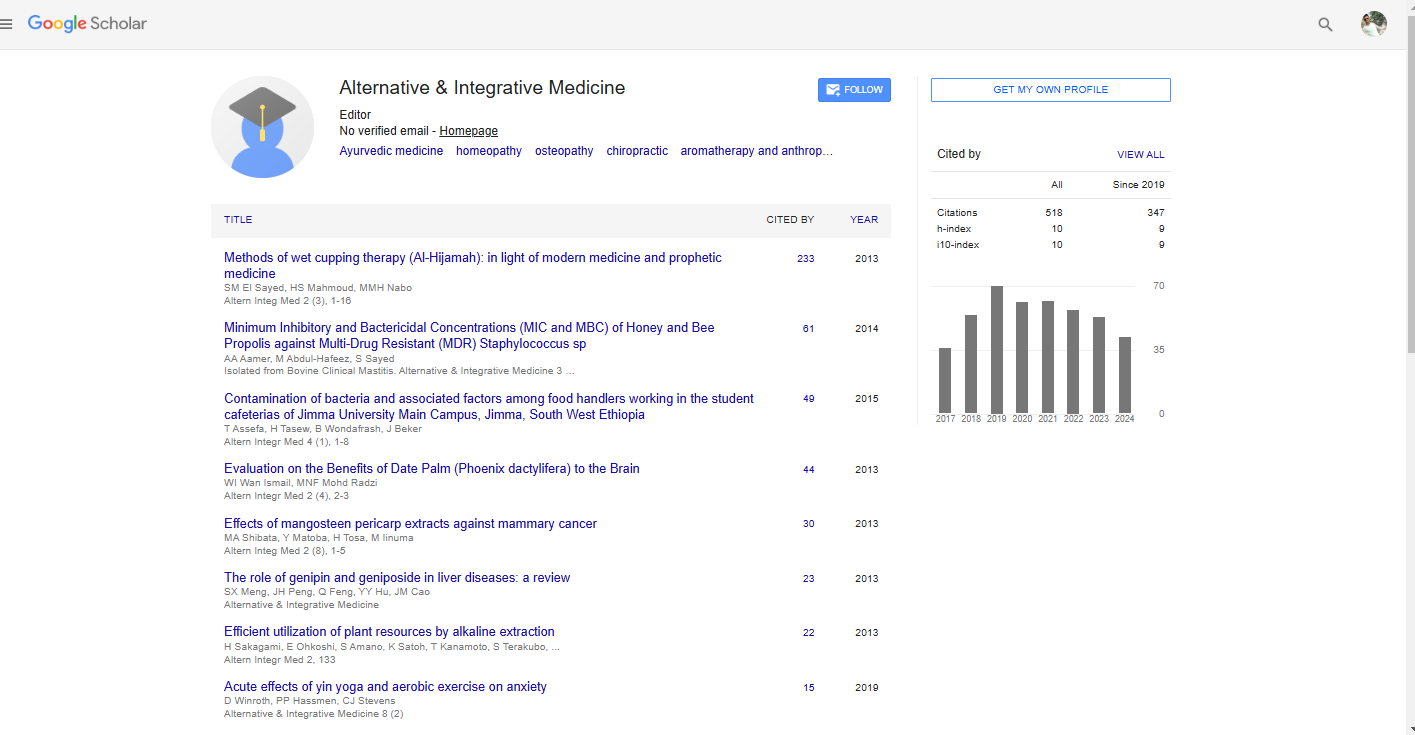
Alternative & Integrative Medicine received 476 citations as per Google Scholar report