Perspective - (2025) Volume 16, Issue 4
Received: 04-Aug-2025, Manuscript No. jar-25-177607;
Editor assigned: 06-Aug-2025, Pre QC No. P-177607;
Reviewed: 20-Aug-2025, QC No. Q-177607;
Revised: 25-Aug-2025, Manuscript No. R-177607;
Published:
01-Sep-2025
, DOI: 10.37421/2155-6113.2025.16.1077
Citation: Davila, Renata. ”HIV/STI Prevention: Progress and
Persistent Challenges.” J AIDS Clin Res 16 (2025):1077.
Copyright: © 2025 Davila R. This is an open-access article distributed under the terms of the Creative Commons Attribution License, which permits unrestricted use, distribution
and reproduction in any medium, provided the original author and source are credited.
Here's the thing about long-acting Human Immunodeficiency Virus (HIV) prevention: a phase 2/3 study clearly found that cabotegravir, administered long-term, is highly effective and notably well-tolerated among adolescents and young adults. This innovative approach is undeniably a game-changer for those needing discreet and consistent HIV Pre-Exposure Prophylaxis (PrEP), especially within populations where daily pill adherence can often be a real and significant challenge[1].
What this really means for public health is a growing and concerning disparity in Sexually Transmitted Infection (STI) rates. A recent study, thoroughly covering the period from 2010 to 2020, distinctly revealed that US-born individuals consistently experience higher rates of sexually transmitted infections compared to foreign-born persons in the United States. This vital finding strongly suggests that highly targeted prevention strategies are truly needed, focusing intently on specific demographic groups and their unique risk factors to address these imbalances effectively[2].
Let's break down the profound impact of Human Papillomavirus (HPV) vaccination. A comprehensive review and meta-analysis confirmed significant population-level benefits, including very strong and protective herd effects, observed across high-income countries. This means not only are vaccinated individuals themselves protected, but the widespread vaccination effort creates a robust shield for the entire community, drastically reducing overall HPV prevalence and related diseases like cervical cancer[3].
When it comes to sexual health, Mycoplasma Genitalium remains a persistent and evolving challenge. This troublesome organism often causes urethritis and cervicitis, and its steadily rising antimicrobial resistance is a real and urgent concern. Effective diagnosis and treatment are becoming increasingly complicated, meaning we desperately need better surveillance mechanisms and entirely new therapeutic options to manage this increasingly stubborn sexually transmitted infection with greater success[4].
Considering HIV prevention, especially for vulnerable groups, a systematic review importantly highlighted that Pre-Exposure Prophylaxis (PrEP) is effective among women who inject drugs. However, both uptake and consistent adherence unfortunately remain low in this particular population. It's clear we need tailored interventions and comprehensive harm reduction strategies to make PrEP more accessible and genuinely acceptable, ensuring this critical prevention tool reaches everyone who can truly benefit[5].
The global picture for Gonorrhea is getting tougher, frankly, because of escalating antimicrobial resistance. This classic sexually transmitted disease is becoming increasingly harder to treat with standard antibiotics, threatening to make it completely untreatable in some regions around the world. This serious situation urgently calls for new drug development efforts, improved surveillance systems, and smarter, more adaptive treatment guidelines to keep crucial pace with the evolving resistance[6].
The rising rates of congenital syphilis in the United States are a truly serious public health concern, and this paper issues a stark and unequivocal call to action. It highlights how a preventable condition is alarmingly increasing, clearly indicating systemic failures in prenatal screening processes and access to vital care. Tackling this escalating problem requires strengthening maternal syphilis screening programs and ensuring timely, effective treatment for pregnant individuals to protect newborns from severe health consequences[7].
For Herpes Simplex Virus type 2 (HSV-2), there are ongoing and significant challenges in both prevention and treatment. While antiviral medications can indeed manage symptoms and reduce outbreaks, a definitive cure or an effective vaccine regrettably remains elusive. This review critically underscores the need for continued, dedicated research into novel prophylactic and therapeutic strategies to effectively reduce transmission and alleviate the considerable burden of this common sexually transmitted infection[8].
Looking at the prevalence of Chlamydia Trachomatis and Neisseria Gonorrhoeae among young people frequently visiting sexual health clinics, it's clear these infections are widespread. This systematic review and meta-analysis reveal the continued high burden of these common Sexually Transmitted Infections (STIs) within this demographic. This finding really emphasizes the profound importance of routine screening, particularly for younger sexually active individuals, to detect and treat infections early and prevent further complications[9].
It turns out that school-based sexual health education programs play a truly critical and indispensable role. A systematic review and meta-analysis definitively demonstrated their effectiveness in preventing STIs and HIV, and in positively influencing sexual risk behaviors among adolescents. What this means is that comprehensive, well-designed education programs in schools are an essential component of broader public health efforts to promote safer sexual practices and better overall sexual health among young people[10].
Here's the thing about long-acting Human Immunodeficiency Virus (HIV) prevention; it's making significant strides. A recent phase 2/3 study found that cabotegravir, when administered long-term, is highly effective and well-tolerated among adolescents and young adults. This represents a significant advancement for individuals who require discreet and consistent HIV Pre-Exposure Prophylaxis (PrEP), especially in populations where adhering to a daily pill regimen can pose substantial challenges [1]. Furthermore, considering HIV prevention for other vulnerable groups, a systematic review highlighted the effectiveness of Pre-Exposure Prophylaxis (PrEP) among women who inject drugs. Despite this efficacy, uptake and adherence rates within this specific population remain notably low. It's clear that tailored interventions, alongside comprehensive harm reduction strategies, are essential to enhance the accessibility and acceptability of PrEP, thereby ensuring this critical prevention tool reaches everyone who stands to benefit from it [5].
What this really means for public health is a growing disparity in Sexually Transmitted Infection (STI) rates that demands attention. A detailed study spanning 2010-2020 revealed that US-born individuals consistently experience higher rates of various STIs compared to foreign-born persons residing in the United States. This finding strongly suggests an urgent need for targeted prevention strategies, which must be carefully designed to focus on specific demographic groups and their unique risk factors, in order to effectively address these significant imbalances [2]. Looking at the prevalence of Chlamydia Trachomatis and Neisseria Gonorrhoeae among young people visiting sexual health clinics, it's clear these infections are widespread. A systematic review and meta-analysis confirmed the continued high burden of these common STIs within this demographic. This finding strongly emphasizes the critical importance of routine screening, particularly for younger sexually active individuals, to facilitate early detection and prompt treatment of these infections, which can prevent further transmission and complications [9].
Let's break down the profound impact of Human Papillomavirus (HPV) vaccination. A comprehensive review and meta-analysis confirmed significant population-level benefits across high-income countries. These benefits include strong herd effects, meaning that not only are vaccinated individuals directly protected, but widespread vaccination creates a collective shield for the entire community, drastically reducing HPV prevalence and the incidence of related diseases, such as cervical cancer [3]. It turns out that school-based sexual health education programs play a truly critical role in public health. A systematic review and meta-analysis clearly demonstrated their effectiveness in preventing STIs and HIV, as well as positively influencing sexual risk behaviors among adolescents. What this means is that comprehensive, well-designed education programs implemented in schools are an essential component of broader public health efforts aimed at promoting safer sexual practices and improving overall sexual health outcomes for young people [10].
When it comes to sexual health, Mycoplasma Genitalium remains a persistent and growing challenge. This organism frequently causes urethritis and cervicitis, and its escalating antimicrobial resistance is a serious concern. The increasing complexity in achieving effective diagnosis and treatment highlights an urgent need for enhanced surveillance systems and the development of new therapeutic options to manage this increasingly stubborn sexually transmitted infection effectively [4]. The global picture for Gonorrhea is frankly getting tougher because of escalating antimicrobial resistance. This classic sexually transmitted disease is becoming progressively harder to treat with standard antibiotics, threatening to render it untreatable in some regions. This critical situation urgently calls for intensified efforts in new drug development, improved surveillance mechanisms, and the formulation of smarter, adaptive treatment guidelines to keep pace with the rapidly evolving resistance patterns [6].
The rising rates of congenital syphilis in the United States represent a serious and alarming public health concern, prompting a stark call to action. This situation highlights how a preventable condition is increasing, indicating systemic failures in prenatal screening programs and access to adequate care. Tackling this requires a concerted effort to strengthen maternal syphilis screening initiatives and ensure timely, effective treatment for pregnant individuals, thereby protecting newborns from this devastating infection [7]. For Herpes Simplex Virus type 2 (HSV-2), there are ongoing and significant challenges in both prevention and treatment. While existing antiviral medications can effectively manage symptoms and reduce outbreaks, a definitive cure or an effective vaccine remains elusive. This review underscores the critical need for continued, dedicated research into novel prophylactic and therapeutic strategies aimed at reducing transmission and alleviating the considerable burden imposed by this common sexually transmitted infection globally [8].
Recent advancements in HIV prevention include long-acting cabotegravir, proving highly effective and well-tolerated for adolescents and young adults, offering a discreet alternative to daily oral Pre-Exposure Prophylaxis (PrEP). Pre-exposure prophylaxis is also effective for women who inject drugs, although uptake and adherence need targeted interventions. The landscape of sexually transmitted infections (STIs) presents ongoing challenges, with US-born individuals showing consistently higher STI rates than foreign-born populations, necessitating specific prevention strategies. Furthermore, common STIs like Chlamydia Trachomatis and Neisseria Gonorrhoeae remain widespread among young clinic attendees, highlighting the need for routine screening. Antimicrobial resistance is a critical concern for Mycoplasma Genitalium and Gonorrhea, threatening treatment efficacy and demanding new drug development and improved surveillance. On a positive note, Human Papillomavirus (HPV) vaccination demonstrates significant population-level benefits and herd effects, drastically reducing HPV prevalence and related diseases. However, congenital syphilis rates are alarmingly rising in the US, pointing to failures in prenatal screening and access to care. For Herpes Simplex Virus type 2 (HSV-2), despite antiviral management, a cure or effective vaccine is still elusive, requiring continued research. Crucially, school-based sexual health education programs are proven effective in preventing STIs and HIV, underscoring their vital role in promoting safer sexual practices among adolescents.
Indexed at, Google Scholar, Crossref
Indexed at, Google Scholar, Crossref
Indexed at, Google Scholar, Crossref
Indexed at, Google Scholar, Crossref
Indexed at, Google Scholar, Crossref
Indexed at, Google Scholar, Crossref
Indexed at, Google Scholar, Crossref
Indexed at, Google Scholar, Crossref
Indexed at, Google Scholar, Crossref
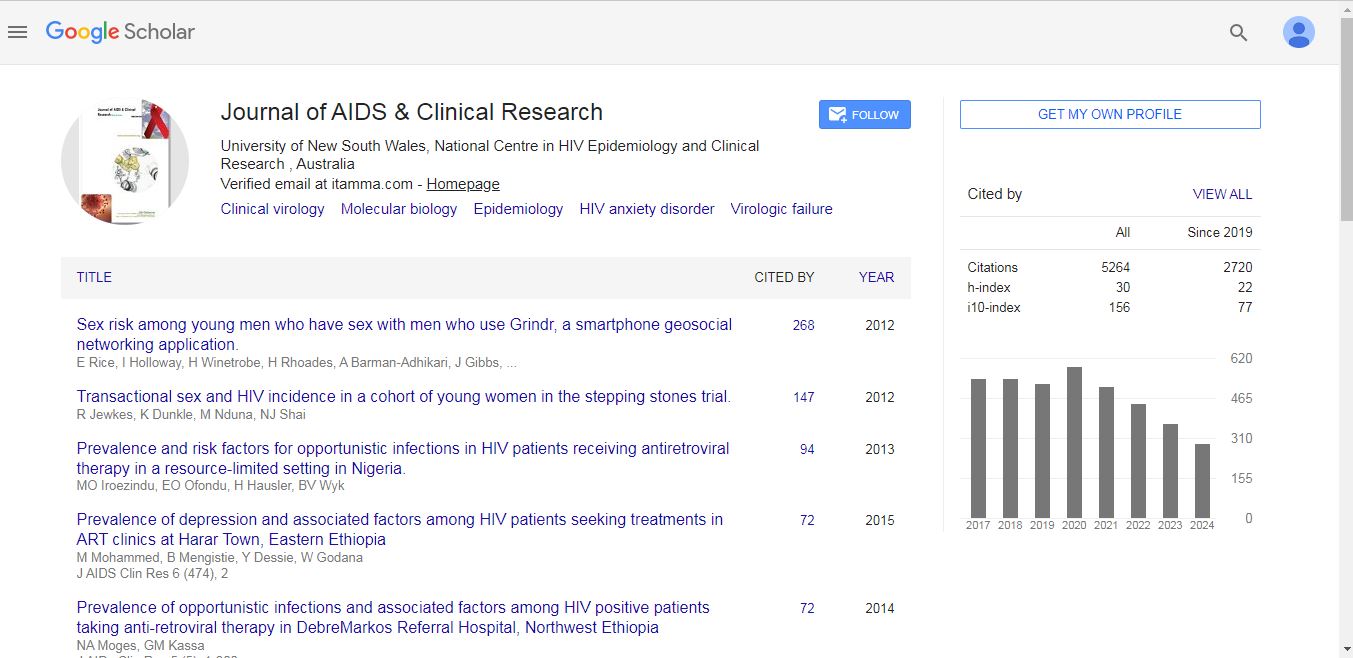
Journal of AIDS & Clinical Research received 5264 citations as per Google Scholar report