Commentary - (2025) Volume 14, Issue 3
Received: 02-Jun-2025, Manuscript No. jnc-25-171656;
Editor assigned: 04-Jun-2025, Pre QC No. P-171656;
Reviewed: 16-Jun-2025, QC No. Q-171656;
Revised: 23-Jun-2025, Manuscript No. R-171656;
Published:
30-Jun-2025
, DOI: 10.37421/2167-1168.2025.14.706
Citation: George, Florina. “High-risk Pregnancy Care: Nursing Assessment, Intervention and Patient Education.” J Nurs Care 14 (2025): 706.
Copyright: © 2025 George F. This is an open-access article distributed under the terms of the Creative Commons Attribution License, which permits unrestricted use, distribution and reproduction in any medium, provided the original author and source are credited.
High-risk pregnancies are characterized by conditions or factors that increase the likelihood of adverse outcomes for the mother, fetus, or both. These pregnancies demand heightened vigilance, specialized care and a collaborative healthcare approach to mitigate risks and ensure the best possible outcomes. Nurses are integral to the management of high-risk pregnancies, serving as primary caregivers who perform detailed assessments, deliver targeted interventions and provide essential education to patients and their families. The complexity of high-risk pregnancy care requires nurses to possess advanced knowledge and skills, critical thinking and compassionate communication to navigate the physical, emotional and psychosocial challenges these patients face. Nursing assessment is the cornerstone of care for high-risk pregnancies, beginning with comprehensive health history-taking and physical examinations that identify potential risk factors. These may include maternal conditions such as hypertension, diabetes mellitus, autoimmune diseases, infections, multiple gestations, advanced maternal age, or a history of obstetric complications. Additionally, lifestyle factors such as smoking, substance abuse, poor nutrition and inadequate prenatal care can contribute to high-risk status. During the initial assessment, nurses gather detailed information about the patientâ??s medical, obstetric, family and psychosocial history to form a holistic understanding of potential threats to pregnancy outcomes [2].
Physical assessment focuses on monitoring maternal vital signs, uterine activity, fetal growth and wellbeing. Nurses use various tools and techniques such as fundal height measurement, fetal heart rate monitoring via Doppler or electronic fetal monitoring and ultrasound imaging in collaboration with physicians and sonographers. Frequent assessment enables early detection of complications such as preeclampsia, fetal growth restriction, preterm labor, or placental abnormalities. Accurate documentation and timely communication of findings are essential to facilitate prompt medical interventions and prevent progression to more severe complications. Laboratory and diagnostic testing complement physical assessment by providing critical data about maternal and fetal health. Common tests include blood glucose levels to screen for gestational diabetes, complete blood counts, urinalysis for proteinuria and infection, blood typing and screening for infectious diseases such as HIV and syphilis. Specialized tests like non-stress tests (NST), biophysical profiles (BPP) and amniocentesis may be indicated based on individual risk factors. Nurses play a vital role in preparing patients for these procedures, explaining their purposes, addressing concerns and ensuring comfort and safety throughout the process [3].
Nursing interventions in high-risk pregnancy care are multifaceted and tailored to the specific needs of each patient. One of the primary goals is the prevention and management of complications to optimize maternal and fetal outcomes. For example, in cases of hypertensive disorders of pregnancy such as preeclampsia, nurses closely monitor blood pressure, watch for signs of worsening condition like headache, visual disturbances, or epigastric pain and assist with medication administration and adherence. In patients with gestational diabetes, nurses support blood glucose monitoring, dietary management and insulin therapy when prescribed. Educating patients about the importance of compliance and recognizing symptoms of hypo- or hyperglycemia is integral to safe management. Nurses also facilitate lifestyle modifications that promote healthy pregnancies. Nutritional counseling helps ensure adequate intake of essential nutrients while avoiding substances that could harm the fetus. Nurses guide patients on safe physical activity levels, adequate hydration and smoking cessation programs. Stress reduction techniques and mental health support are increasingly recognized as important interventions, as psychological well-being significantly impacts pregnancy outcomes. Nurses assess for anxiety, depression, or psychosocial stressors and collaborate with mental health professionals when needed [4].
Postpartum care in high-risk pregnancies focuses on monitoring for complications that may arise after delivery, including hemorrhage, infection, thromboembolism and exacerbation of pre-existing conditions. Nurses assess uterine tone, vaginal bleeding, wound healing and vital signs, while also supporting breastfeeding and newborn care. Psychological support remains important during this period, as the transition to motherhood can be particularly challenging for women who have experienced complicated pregnancies. Nurses educate mothers on recognizing warning signs that warrant medical attention and provide guidance on family planning and spacing of future pregnancies.Patient education is a fundamental component of nursing care throughout the continuum of a high-risk pregnancy. Education empowers women to actively participate in their care, make informed decisions and adopt behaviors that enhance pregnancy outcomes. Nurses provide tailored information based on the patientâ??s condition, cultural background, health literacy and emotional state. This education includes instructions on medication management, dietary requirements, activity restrictions and symptom monitoring. Patients learn to recognize warning signs such as decreased fetal movement, severe headaches, visual changes, swelling, or vaginal bleeding and understand when to seek immediate care [5].
Google Scholar Cross Ref Indexed at
Google Scholar Cross Ref Indexed at
Google Scholar Cross Ref Indexed at
Google Scholar Cross Ref Indexed at
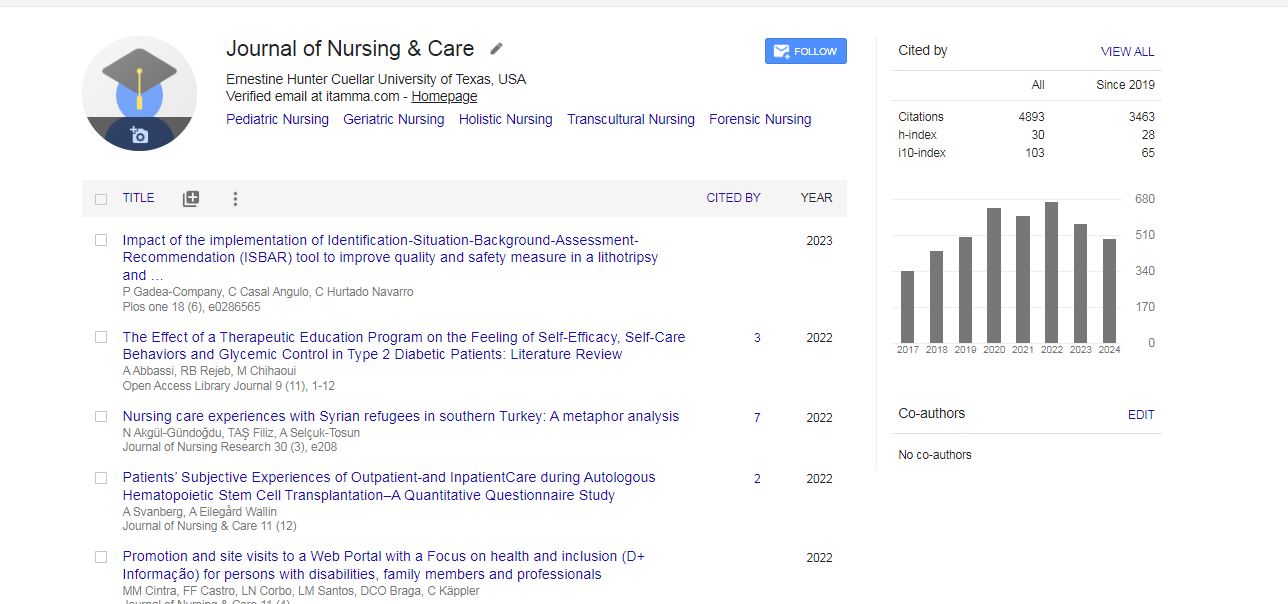
Journal of Nursing & Care received 4230 citations as per Google Scholar report