Brief Report - (127) Volume 14, Issue 2
Received: 02-Mar-2025, Manuscript No. VTE-26-180069;
Editor assigned: 04-Mar-2025, Pre QC No. P-180069;
Reviewed: 18-Mar-2025, QC No. Q-180069;
Revised: 24-Mar-2025, Manuscript No. R-180069;
Published:
30-Mar-2025
, DOI: 10.37421/2376-1318.2025.14.360
Citation: Lindström, Sofia. ”Global Vitamin Deficiencies: A Health Crisis and Solutions.” Vitam Miner 14 (2025):360.
Copyright: © 2025 Lindström S. This is an open-access article distributed under the terms of the Creative Commons Attribution License, which permits unrestricted use, distribution and reproduction in any medium, provided the original author and source are credited.
Vitamin deficiencies represent a significant global health issue, contributing to substantial illness and death worldwide. These deficiencies, particularly in essential micronutrients such as vitamin A, vitamin D, iron, iodine, and folate, disproportionately affect vulnerable populations, including pregnant women, infants, and young children. The ramifications extend from weakened immune function and increased susceptibility to infectious diseases to impaired cognitive development, the onset of anemia, and the occurrence of birth defects. Effectively addressing these pervasive deficiencies necessitates the implementation of multifaceted strategies that encompass enhanced nutritional intake, targeted supplementation programs, widespread food fortification initiatives, and comprehensive public health education campaigns to raise awareness and promote preventive measures [1].
Vitamin D deficiency is a prevalent condition with far-reaching consequences, extending beyond its well-known association with rickets. Emerging scientific research increasingly highlights its critical role in modulating the immune system, maintaining cardiovascular health, and influencing metabolic processes. The widespread global prevalence of vitamin D deficiency underscores the urgent need for heightened public awareness and the development of effective strategies to ensure adequate intake through dietary sources, judicious sun exposure, and appropriate supplementation. Various factors, including geographical latitude, individual skin pigmentation, and prevalent lifestyle choices, significantly influence an individual's vitamin D status [2].
Vitamin A deficiency continues to be a primary cause of preventable childhood blindness and a significant contributor to increased mortality rates, particularly in developing countries. Its detrimental impact extends to the crucial functions of the immune system, rendering children more vulnerable to a range of infections. Nevertheless, well-established interventions such as vitamin A supplementation, strategic food fortification, and dietary diversification have demonstrated considerable effectiveness in mitigating the substantial burden imposed by this deficiency [3].
Folate deficiency during the critical period of pregnancy is a major etiological factor contributing to the development of neural tube defects (NTDs) in newborns. Public health initiatives that actively promote folic acid supplementation both before conception and during the early stages of pregnancy have been instrumental in substantially reducing the incidence of NTDs in numerous regions. However, persistent challenges remain in ensuring universal access to these vital recommendations and achieving consistent adherence, especially within diverse socioeconomic settings and varying healthcare access landscapes [4].
Iron deficiency anemia, a direct consequence of insufficient iron intake or compromised iron absorption, stands as the most prevalent nutritional deficiency encountered globally. This condition significantly impairs cognitive development, diminishes overall work capacity, and unfortunately, elevates the risk of maternal and infant mortality. Effectively combating this widespread problem demands comprehensive approaches, including the promotion of iron-rich diets, the implementation of iron fortification strategies in staple foods, and targeted iron supplementation, with a particular focus on women of reproductive age and young children [5].
Iodine deficiency disorders (IDDs) exert a profound impact on thyroid hormone production, a process that is absolutely vital for optimal brain development and overall metabolic regulation. Classic manifestations of severe iodine deficiency include the development of goiter and cretinism. Universal salt iodization has emerged as the cornerstone strategy for the prevention of IDDs, leading to a significant reduction in their prevalence worldwide. Nonetheless, continuous monitoring and sustained fortification programs remain indispensable for maintaining adequate iodine status across global populations [6].
The intricate interplay between the gut microbiota and the absorption of essential vitamins is an increasingly significant area of scientific investigation. It is now understood that certain species of gut bacteria possess the capability to synthesize specific vitamins, while others can profoundly influence the bioavailability of vitamins obtained from dietary sources. Consequently, an imbalance in the gut microbial community, known as dysbiosis, can inadvertently contribute to the development of vitamin deficiencies, underscoring the critical importance of considering gut health within the framework of nutritional interventions [7].
Food fortification, defined as the deliberate addition of essential micronutrients to staple foods, represents a highly cost-effective and impactful public health strategy for combating the widespread prevalence of vitamin deficiencies. Numerous successful fortification programs have demonstrably led to significant improvements in the vitamin A, iron, and iodine status of targeted populations. Key challenges persist, however, including ensuring strict compliance with established fortification standards and effectively reaching remote or underserved communities with these vital interventions [8].
The impact of micronutrient deficiencies on the immune system is notably profound, leading directly to an increased susceptibility to various infections and a reduction in the overall efficacy of vaccination responses. Deficiencies in essential vitamins such as A, C, D, E, and K, along with crucial trace elements, compromise the function of multiple components of both innate and adaptive immunity. Restoring and maintaining adequate levels of these micronutrients is therefore paramount for ensuring robust and effective immune function [9].
Climate change presents an indirect yet substantial threat to global nutrition by significantly affecting agricultural productivity and the overall security of food supplies, thereby potentially exacerbating the existing problem of vitamin deficiencies. Alterations in temperature and precipitation patterns can directly impact crop yields and, crucially, the nutrient content of staple foods. Consequently, the implementation of adaptation strategies within agricultural practices and the sustained commitment to robust public health efforts are essential for effectively mitigating these evolving risks to nutritional well-being [10].
Vitamin deficiencies pose a critical global health challenge, contributing to significant morbidity and mortality worldwide. These deficiencies, particularly in micronutrients like vitamin A, D, iron, iodine, and folate, disproportionately affect vulnerable populations, including pregnant women, infants, and children. The impact spans from compromised immune function and increased susceptibility to infectious diseases to impaired cognitive development, anemia, and birth defects. Addressing these deficiencies requires multifaceted strategies encompassing improved nutrition, supplementation programs, food fortification, and public health education [1].
Vitamin D deficiency is a widespread issue, linked to numerous non-skeletal health problems beyond rickets. Emerging research highlights its vital role in immune modulation, cardiovascular health, and metabolic disorders. The global prevalence of this deficiency necessitates increased awareness and proactive strategies for ensuring adequate intake through diet, sensible sun exposure, and appropriate supplementation. A variety of factors, including geographical latitude, skin pigmentation, and individual lifestyle habits, significantly influence vitamin D status [2].
Vitamin A deficiency remains a leading cause of preventable childhood blindness and contributes to increased mortality in developing countries. Its effects extend to the immune system, making children more susceptible to infections. Interventions such as vitamin A supplementation, food fortification, and dietary diversification have proven effective in reducing the burden of this deficiency [3].
Folate deficiency during pregnancy is a primary contributor to neural tube defects (NTDs) in newborns. Public health initiatives promoting folic acid supplementation before and during early pregnancy have successfully reduced NTD incidence in many areas. However, challenges persist in ensuring universal access to these recommendations and achieving widespread adherence, particularly across diverse socioeconomic groups [4].
Iron deficiency anemia, resulting from insufficient iron intake or absorption, is the most common nutritional deficiency globally. It negatively impacts cognitive development, reduces work capacity, and increases the risk of maternal and infant mortality. Addressing this requires comprehensive approaches including iron-rich diets, iron fortification, and supplementation, especially for women of reproductive age and young children [5].
Iodine deficiency disorders (IDDs) affect thyroid hormone production, which is essential for brain development and metabolism. Goiter and cretinism are characteristic signs. Universal salt iodization has been the primary method for IDD prevention, significantly decreasing their prevalence. Ongoing monitoring and fortification programs are crucial for maintaining adequate iodine levels globally [6].
The relationship between gut microbiota and vitamin absorption is an emerging research area. Certain gut bacteria synthesize vitamins, while others can affect the bioavailability of dietary vitamins. Dysbiosis can therefore contribute to vitamin deficiencies, emphasizing the need to consider gut health in nutritional interventions [7].
Food fortification, the process of adding micronutrients to staple foods, is an effective and economical public health strategy to combat widespread vitamin deficiencies. Successful programs have shown significant improvements in vitamin A, iron, and iodine status in target populations. Challenges include ensuring compliance with fortification standards and reaching remote communities [8].
The impact of micronutrient deficiencies on the immune system is substantial, leading to greater susceptibility to infections and reduced vaccine effectiveness. Deficiencies in vitamins A, C, D, E, and K, along with trace elements, impair various aspects of innate and adaptive immunity. Restoring adequate levels is essential for proper immune function [9].
Climate change indirectly threatens global nutrition by impacting agricultural productivity and food security, potentially worsening vitamin deficiencies. Changes in temperature and precipitation can alter crop yields and nutrient content. Adaptation strategies in agriculture and sustained public health efforts are vital to mitigate these risks [10].
Vitamin deficiencies are a major global health concern, disproportionately affecting vulnerable populations and leading to serious health issues like impaired development, anemia, and increased mortality. Key deficiencies include vitamin A, D, iron, iodine, and folate, each with specific health consequences and affected populations. Addressing these deficiencies requires a multi-pronged approach involving improved nutrition, supplementation, food fortification, and public health education. Emerging research also highlights the role of gut microbiota in vitamin absorption and the indirect threat posed by climate change to food security and nutritional status. Strategies like food fortification and universal salt iodization have proven effective in combating specific deficiencies, while maintaining robust immune function is dependent on adequate micronutrient levels. Continued efforts in research, policy, and intervention are essential to mitigate the impact of these deficiencies worldwide.
None
None
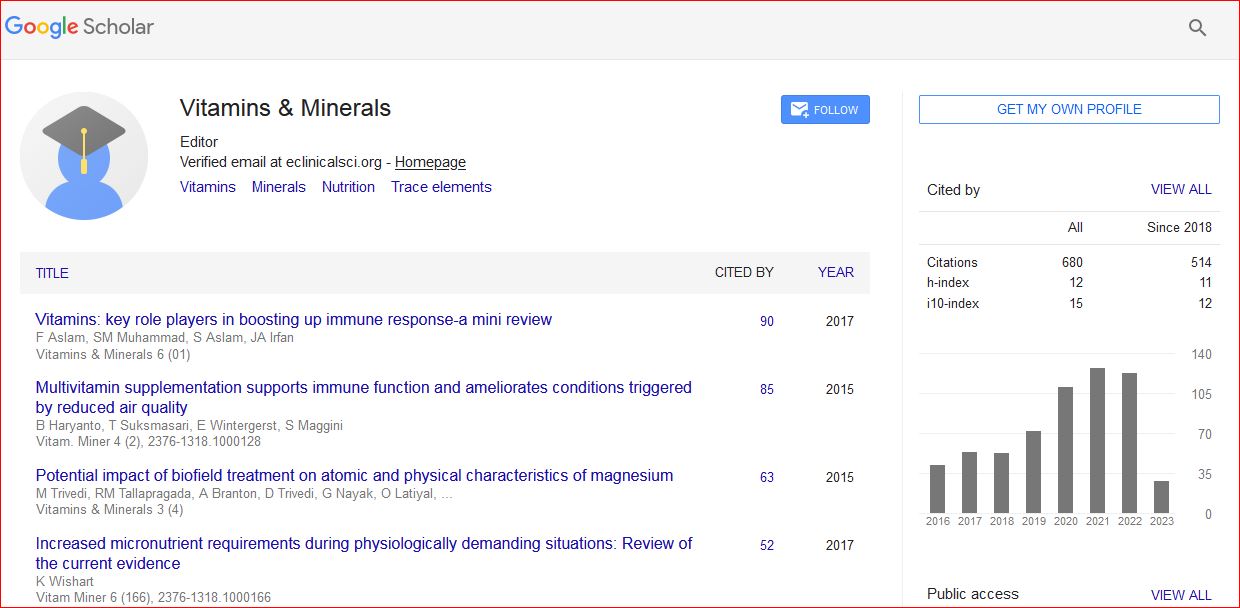
Vitamins & Minerals received 790 citations as per Google Scholar report