Short Communication - (2025) Volume 14, Issue 4
Received: 03-Aug-2025, Manuscript No. jnc-25-173970;
Editor assigned: 05-Aug-2025, Pre QC No. P-173970;
Reviewed: 19-Aug-2025, QC No. Q-173970;
Revised: 25-Aug-2025, Manuscript No. R-173970;
Published:
30-Aug-2025
, DOI: 10.37421/2167-1168.2025.14.724
Citation: Tanaka, Naomi. ”Global AMR: Interconnected Threat, Integrated Solutions.” J Nurs Care 14 (2025):724.
Copyright: © 2025 Tanaka N. This is an open-access article distributed under the terms of the Creative Commons Attribution License, which permits unrestricted use, distribution and reproduction in any medium, provided the original author and source are credited.
The fight against antimicrobial resistance (AMR) necessitates a deep understanding of how bacteria evade existing treatments. For instance, the notorious ESKAPE group of bacteria, responsible for many hospital-acquired infections, employs a range of sophisticated resistance mechanisms. These strategies include the activation of efflux pumps that actively expel antimicrobial agents from the bacterial cell, and enzymatic inactivation, where bacteria produce enzymes to break down antibiotics before they can take effect. Grasping these intricate resistance mechanisms is paramount for scientists and clinicians alike, as it directly informs the development of novel therapeutic approaches designed to circumvent the pathogens' formidable ability to render current antimicrobial agents ineffective [1].
Addressing the multifaceted challenge of antimicrobial resistance demands a cohesive and integrated strategy. The 'One Health' approach stands out as a crucial framework, emphasizing the seamless integration of human, animal, and environmental health sectors. This holistic perspective recognizes that resistance patterns are not isolated phenomena; rather, interventions in one sector, such as reducing antibiotic use in livestock, can have profound impacts on resistance prevalence across all other sectors. Therefore, advocating for a holistic global strategy is not just beneficial, but absolutely vital for effectively managing and mitigating the spread of AMR [2].
With the increasing threat of antimicrobial resistance, researchers are looking beyond conventional antibiotics to find viable solutions. Bacteriophage therapy, which utilizes viruses to specifically target and eliminate bacterial infections, is experiencing a significant resurgence. This alternative or adjunct treatment offers several advantages, including high specificity for target bacteria and the ability to replicate at the infection site. However, challenges remain, such as regulatory hurdles and potential immune responses, yet its potential role in combating AMR is substantial [3].
A cornerstone of the strategy to combat antimicrobial resistance involves the widespread implementation of Antimicrobial Stewardship Programs (ASPs). These programs are fundamental for optimizing the use of antibiotics, ensuring that these vital drugs are prescribed judiciously and appropriately. By guiding clinicians in selecting the right antibiotic, dosage, and duration, ASPs significantly improve patient outcomes while simultaneously reducing the selective pressure that drives the development of resistance. The future direction for these programs clearly points towards broader implementation and deeper integration into healthcare systems globally, signifying their critical role in public health [4].
The landscape of antimicrobial resistance calls for innovative thinking and diversified strategies beyond the traditional pipeline of new antibiotic discovery. Researchers are actively exploring several novel approaches, including the repurposing of existing non-antibiotic drugs that might possess antimicrobial properties, and the deployment of combination therapies that use multiple agents to overwhelm resistant pathogens or prevent resistance emergence. Furthermore, non-antibiotic methods, such as anti-virulence approaches which disarm bacteria without killing them, or immunomodulation to boost the host's own defenses, offer promising avenues to disarm or overcome resistant pathogens without contributing to further resistance [5].
The environment plays an undeniable and crucial role in the dissemination of antimicrobial resistance. This review particularly highlights how antibiotics and resistant bacteria, along with their resistance genes, actively spread through various environmental compartments, including water bodies, soil, and even the air. This environmental dissemination significantly contributes to the global spread of resistance, acting as a reservoir and transmission route for AMR. Consequently, understanding these pathways is vital for developing effective environmental risk assessment strategies and implementing necessary ecological interventions to curb this pervasive spread [6].
Vaccines represent a powerful and often underappreciated tool in the global effort to combat antimicrobial resistance. By effectively reducing the incidence of infectious diseases, vaccines directly decrease the need for antibiotic prescriptions, thereby lowering the selective pressure that drives resistance development. The potential of both existing and novel vaccines is immense, offering a strategy to mitigate the AMR crisis through mechanisms like herd immunity and direct protection against specific pathogens. Integrating vaccine development and deployment into comprehensive AMR strategies is thus a critical step forward [7].
The escalating threat of antimicrobial resistance carries a profound and substantial global economic impact that demands urgent attention. Reviews of current evidence reveal that AMR imposes immense burdens, encompassing not only direct healthcare costs associated with longer hospital stays and more complex treatments but also significant productivity losses due to illness and premature mortality. These direct and indirect societal burdens underscore the critical need for immediate and sustained investment in prevention and control measures to alleviate the overwhelming financial strain AMR places on health systems and national economies worldwide [8].
Understanding the diverse and interconnected drivers behind the development and spread of antimicrobial resistance is essential for effective intervention. This paper provides a crucial global perspective, detailing how both clinical practices, such as inappropriate antibiotic prescribing and poor infection control, and various environmental influences contribute to the problem. It highlights the complex interplay of these factors, ranging from the overuse of antibiotics in human and veterinary medicine to the contamination of water sources with antibiotic residues and resistant bacteria. Recognizing this intricate, interconnected nature is key to tackling the complexity of the global AMR challenge [9].
Antimicrobial resistance originating in bacteria from food-producing animals represents a significant public health concern. This issue explores the critical origins of resistance in agricultural settings, detailing the complex transmission pathways through which resistant bacteria can transfer from animals to humans, often via the food chain or direct contact. The potential impact on public health is substantial, ranging from difficult-to-treat infections to reduced efficacy of life-saving antibiotics. This underscores the urgent need for more prudent antibiotic use in veterinary medicine, coupled with strengthened surveillance and biosecurity measures within agricultural systems to safeguard human health [10].
Antimicrobial resistance (AMR) represents an escalating global health crisis, posing a severe threat to modern medicine. At its very essence, pathogens, particularly highly concerning groups like the ESKAPE bacteria notorious for hospital-acquired infections, have developed sophisticated and diverse resistance mechanisms [1]. These strategies range from the deployment of efficient efflux pumps that actively transport antimicrobial agents out of bacterial cells, to complex enzymatic inactivation processes that degrade antibiotics before they can exert their effects. A thorough comprehension of these intricate mechanisms is not merely academic; it is absolutely crucial for the innovation and development of effective new treatments and for devising methods to circumvent the pathogens' formidable ability to evade current antimicrobial agents [1]. This fundamental challenge is exacerbated by a multitude of interconnected drivers operating on a global scale. These drivers encompass both prevalent clinical practices, such as inappropriate antibiotic prescribing and inadequate infection control, and widespread environmental influences, including contamination and agricultural overuse. The complex web of these factors, spanning from the misuse of antibiotics to the pervasive pollution of water sources, underscores the profound complexity and interconnected nature of the AMR challenge that humanity faces [9].
Effectively combating the complex and pervasive issue of antimicrobial resistance requires a genuinely holistic and integrated strategy. The 'One Health' approach stands out as a foundational framework, emphasizing the crucial necessity of seamlessly integrating human, animal, and environmental health sectors [2]. This vital perspective acknowledges that resistance patterns are inherently interconnected; therefore, targeted interventions in one area, for instance, stricter regulations on antibiotic use in veterinary medicine, can have cascading and significant positive impacts on resistance prevalence across all other sectors. This truly advocates for a unified and holistic global strategy as the most effective path forward [2]. Complementing this overarching approach, Antimicrobial Stewardship Programs (ASPs) are recognized as indispensable pillars in the fight against AMR. These programs play a critical and strategic role in optimizing antibiotic use, ensuring that these invaluable medications are prescribed judiciously and only when necessary. By fostering more appropriate antibiotic practices, ASPs not only contribute significantly to improving patient outcomes but also crucially mitigate the selective pressure that drives the development and spread of resistance. The future trajectory for these programs unequivocally points towards broader implementation and deeper, more robust integration into healthcare systems worldwide, underscoring their profound importance in preserving antibiotic efficacy [4].
In the face of escalating antimicrobial resistance, the scientific community is actively exploring and developing innovative strategies that extend far beyond the traditional paradigm of discovering new antibiotics. One such promising avenue is the resurgence of bacteriophage therapy, which involves utilizing specific viruses to target and effectively eliminate bacterial infections [3]. This approach offers a potential alternative or adjunct to conventional antibiotics, leveraging natural bacterial predators. Additionally, this innovation encompasses exploring diverse methods such as repurposing existing drugs, which involves finding new antimicrobial applications for compounds already approved for other uses. It also includes the strategic use of combination therapies, where multiple agents are used together to enhance efficacy and prevent resistance. Furthermore, non-antibiotic approaches are gaining traction, including anti-virulence methods that disarm pathogens without necessarily killing them, and immunomodulation strategies that bolster the host's innate immune response to overcome resistant infections [5]. Beyond treatment, prevention is a powerful tool, and here vaccines play a critical role. By significantly reducing the incidence of infections, vaccines inherently decrease the need for antibiotics, thereby alleviating the selective pressure that fuels AMR. The potential of both established and novel vaccines is immense, offering a crucial means to mitigate the AMR crisis through widespread herd immunity and direct protection against key pathogens [7].
The environmental dimension of antimicrobial resistance represents a considerable and growing concern that demands focused attention. Scientific reviews meticulously investigate how antibiotics and resistant bacteria, along with their associated resistance genes, are extensively disseminated throughout various environmental compartments, including aquatic systems, soil matrices, and atmospheric pathways [6]. This widespread environmental propagation serves as a significant contributor to the global spread of resistance, acting as both a reservoir for resistant microorganisms and a vector for their transmission. Consequently, developing robust environmental risk assessment strategies and implementing targeted ecological interventions are absolutely essential to curtail this pervasive spread of resistance [6]. A particularly pertinent area within this environmental scope is antimicrobial resistance in bacteria isolated from food-producing animals. This challenge delves into understanding the complex origins of resistance in agricultural settings, meticulously tracing the intricate transmission pathways through which resistant bacteria can move from animals to human populations, often via the food chain or direct contact [10]. The potential implications for public health are profound and far-reaching. This reality strongly underlines the urgent need for judicious and prudent antibiotic use in veterinary medicine, coupled with significantly strengthened surveillance and biosecurity measures within agricultural systems, all designed to safeguard the broader public health [10].
The insidious and pervasive nature of antimicrobial resistance culminates in a substantial and ever-increasing global economic burden. Comprehensive reviews synthesize current evidence to illustrate this profound financial impact, which encompasses a wide array of costs [8]. These include direct healthcare expenditures, such as prolonged hospital stays, the need for more expensive and often less effective second-line treatments, and increased diagnostic costs. Beyond direct medical expenses, there are significant productivity losses across various economic sectors, stemming from prolonged illness, disability, and premature mortality among affected individuals. These direct and indirect societal burdens collectively underscore the critical and urgent necessity for sustained investment in prevention, surveillance, and control measures. Alleviating this profound financial strain on health systems and national economies worldwide is not merely an aspiration but a critical imperative for global health security and economic stability [8].
Antimicrobial resistance (AMR) is a pressing global health challenge, driven by complex mechanisms and diverse factors across human, animal, and environmental health sectors. The ESKAPE group of bacteria, for instance, employs sophisticated resistance strategies like efflux pumps and enzymatic inactivation, making it difficult to treat hospital-acquired infections. Understanding these mechanisms is foundational for developing effective new treatments. The 'One Health' approach is critical, advocating for integrated strategies that recognize the interconnectedness of health outcomes. This means coordinating efforts across human, animal, and environmental health to manage resistance patterns effectively. Antimicrobial Stewardship Programs are also indispensable; they optimize antibiotic use, which directly improves patient outcomes and slows down resistance development. These programs require wider implementation globally. Beyond conventional antibiotics, novel strategies are emerging. These include repurposing existing drugs, employing combination therapies, and exploring non-antibiotic methods such as bacteriophage therapy, anti-virulence approaches, and immunomodulation. Vaccines also represent a powerful tool against AMR by preventing infections in the first place, thus reducing the reliance on antibiotics and fostering herd immunity. The environmental dimension of AMR cannot be overstated. Antibiotics and resistant bacteria spread through water, soil, and air, contributing significantly to the global dissemination of resistance genes. Similarly, antimicrobial resistance in food-producing animals poses a substantial public health risk through transmission pathways to humans, underscoring the need for prudent antibiotic use in veterinary medicine and robust surveillance. The global economic impact of AMR, characterized by escalating healthcare costs and productivity losses, further emphasizes the urgency for sustained investment in prevention and control measures.
None
None
1. Mahon C, Gribble S, Lewis R. "Mechanisms of antimicrobial resistance in ESKAPE pathogens.".Future Microbiol. 16 (2021):847-862.
Indexed at, Google Scholar, Crossref
2. Manyi-Loh C, Ndip R, Clarke A. "One Health approach to combat antimicrobial resistance: A review.".J Global Antimicrob Resist. 21 (2020):14-23.
Indexed at, Google Scholar, Crossref
3. O'Malley P, Draper L, Ross R. "The role of bacteriophages in combating antimicrobial resistance.".Future Microbiol. 17 (2022):1061-1073.
Indexed at, Google Scholar, Crossref
4. Dyar O, BeoviÄ? B, Goossens H. "Antimicrobial Stewardship Programs: Current Perspectives and Future Directions.".Clin Infect Dis. 72 (2021):1599-1606.
Indexed at, Google Scholar, Crossref
5. Ling J, Xie H, Ma Y. "Novel strategies for combating antimicrobial resistance: Repurposing, combination therapy, and non-antibiotic approaches.".J Infect. 86 (2023):121-131.
Indexed at, Google Scholar, Crossref
6. Pal D, Mandal A, Kumar M. "Environmental Dimension of Antimicrobial Resistance: A Review on Sources, Fate, and Risk Assessment.".Water Air Soil Pollut. 231 (2020):569.
Indexed at, Google Scholar, Crossref
7. Harbarth S, Pugin J, Schrenzel J. "Vaccines as a tool to prevent antimicrobial resistance: Current state and future directions.".Vaccine. 40 (2022):2154-2161.
Indexed at, Google Scholar, Crossref
8. Naylor N, Atun R, Feasey N. "The global economic burden of antimicrobial resistance: a literature review and call for action.".J Antimicrob Chemother. 78 (2023):13-25.
Indexed at, Google Scholar, Crossref
9. Manyi-Loh C, Clarke A, Ndip R. "Drivers of antimicrobial resistance: a global overview.".Infect Drug Resist. 15 (2022):357-372.
Indexed at, Google Scholar, Crossref
10. van GH, van EP, van DE. "Antimicrobial resistance in food animals and its implications for public health.".Vet Microbiol. 241 (2020):108535.
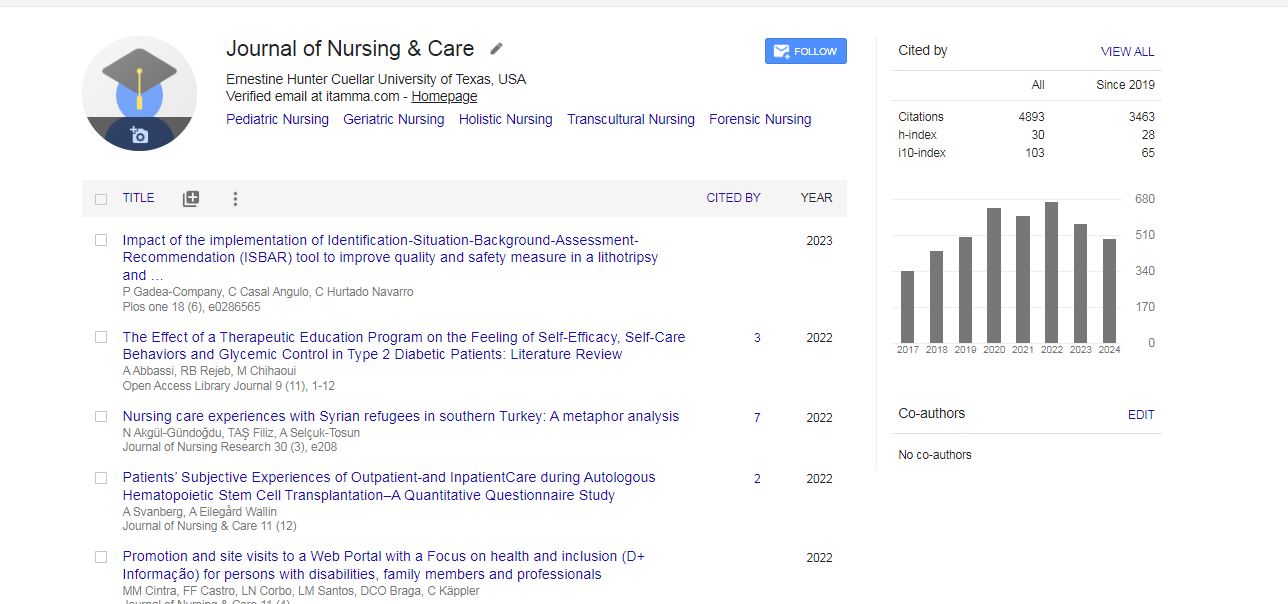
Journal of Nursing & Care received 4230 citations as per Google Scholar report