Commentary - (2025) Volume 15, Issue 3
Received: 07-Nov-2025, Manuscript No. JBL-25-174113 ;
Editor assigned: 10-Nov-2025, Pre QC No. JBL-25-174113 (PQ);
Reviewed: 24-Nov-2025, QC No. JBL-25-174113 ;
Revised: 01-Dec-2025, Manuscript No. JBL-25-174113 (R);
Published:
08-Dec-2025
, DOI: 10.37421/2165-7831.2025.15.344
Citation: Flor, Navarro, Teresa Lozano and Juan Jose Lasarte. Fueling Immunity: How Glutamine Transport Shapes CAR T Cell Success. (2025)15:344.
Copyright: © 2025 Navarro F, et al. This is an open-access article distributed under the terms of the creative commons attribution license which permits unrestricted use, distribution and reproduction in any medium, provided the original author and source are credited.
Our study, “Reprogramming glutamine metabolism enhances BCMA-CAR T cell fitness and therapeutic efficacy in multiple myeloma” [1], demonstrates how metabolic engineering can overcome CAR T cell exhaustion in the nutrient-deprived Tumor Microenvironment (TME), significantly improving adoptive T cell transfer efficacy. Despite advances in immunotherapy, Multiple Myeloma (MM) remains largely incurable. Anti-BCMA CAR T cell therapy yields strong initial responses, but relapses are common due to CAR T cell loss or functional exhaustion. Our work targets a key barrier to CAR T efficacy, the hostile TME, where metabolic competition for nutrients like glutamine impairs T cell function. Although glutamine classifies as a non-essential amino acid, it becomes conditionally essential in the TME because of its restricted availability. It is indispensable for T cell proliferation, survival, cytokine secretion and effector differentiation, while also serving as a vital substrate for tumor cells. Within the TME, tumor cells efficiently sequester glutamine, leaving activated T cells in a metabolically starved state that compromises effector function. This imbalance prompted us to investigate whether enhancing glutamine uptake directly within CAR T cells could restore metabolic competence and enhance therapeutic outcomes.
The conceptual strength of our work lies in integrating tumor immunology with cellular metabolism. Prior studies established that activated T cells rely heavily on glucose and glutamine to support activation and differentiation; however, apart from recent efforts to enhance glucose uptake [2-4], few studies have reprogrammed CAR T cell metabolism to overcome nutrient deprivation [5]. To address this gap, we genetically modified the glutamine transporter ASCT2 (SLC1A5) in BCMA-CAR T cells. The rationale was straightforward, if the TME deprives T cells of glutamine, enhancing their glutamine uptake capacity might restore metabolic balance and sustain antitumor function.
Previous metabolic strategies against tumors included systemic nutrient supplementation or tumor nutrient restriction. Yet these approaches proved insufficient. Glucose supplementation can accelerate tumor growth, while nutrient restriction often harms T cells more than tumor cells [6]. In contrast, our targeted approach enhances glutamine uptake specifically in CAR T cells, addressing metabolic competition at the cellular level and avoiding systemic metabolic side effects.
We first confirmed that glutamine deprivation impaired CAR T cell proliferation and interferon-gamma production, consistent with metabolic stress-induced dysfunction. We then engineered BCMA-CAR T cells to overexpress ASCT2, generating “metabolically enhanced” CAR T cells. These modified cells exhibited improved proliferation, elevated cytokine secretion and enhanced cytolytic activity under glutamine-restricted conditions compared with unmodified BCMA-CAR T cells. Mechanistically, ASCT2 overexpression reprogrammed core metabolic pathways, including mTORC1 signaling and mitochondrial respiration, thereby supporting the bioenergetic and biosynthetic demands of effector T cells in nutrient-poor environments. Seahorse metabolic profiling confirmed superior mitochondrial respiration and glycolytic capacity in ASCT2- overexpressing CAR T cells, validating improved metabolic fitness.
mTORC1 serves as a central regulator of T cell activation, differentiation, and memory formation by linking nutrient availability to immune function. We observed that ASCT2 overexpression enhanced mTORC1 activity and reshaped the transcriptional landscape of CAR T cells. Genes associated with oxidative phosphorylation, amino acid metabolism, and pro-survival signaling were upregulated, indicating a broad metabolic adaptation rather than a singular effect on glutamine utilization. This transcriptional remodeling allowed CAR T cells to maintain glutamine uptake, preserve effector function, and sustain persistence under metabolic stress.
In both transplanted and genetic models of MM, ASCT2- overexpressing BCMA-CAR T cells demonstrated superior tumor control and prolonged survival compared with conventional CAR T cells. These metabolically reprogrammed cells persisted longer in circulation and infiltrated bone marrow and tumor sites more effectively. This persistence correlated with reduced exhaustion and enhanced cytotoxicity. These results demonstrate that ASCT2 overexpression can provide CAR T cells with durable functional advantages in metabolically adverse environments.
We next explored clinical correlations by analyzing ASCT2 expression in patient-derived samples. Lower ASCT2 expression in MM cells correlated with improved progression-free and overall survival, consistent with ASCT2 being the principal glutamine transporter supporting tumor metabolism. Conversely, patients whose CD8+ T cells exhibited higher ASCT2 expression were more likely to achieve complete responses, highlighting the importance of T cell metabolic capacity in determining therapeutic outcomes. These observations underscore ASCT2’s potential as both a biomarker and a therapeutic engineering target. Tumors with elevated ASCT2 expression might represent ideal candidates for metabolically enhanced CAR T cell therapy.
Despite the promising findings, several questions remain. Although ASCT2 overexpression enhances metabolic fitness, its long-term effects on redox balance, reactive oxygen species accumulation and T cell differentiation remain to be fully elucidated. Increased glutamine import could theoretically fuel anabolic pathways, potentially inducing metabolic stress under prolonged activation. Nonetheless, in both murine MM models, ASCT2- overexpressing CAR T cells maintained viability and functionality up to 14 days post-transfer. Likewise, in melanoma models, ASCT2- overexpressing OT-I cells retained superior antigen responsiveness compared to conventinal OT-I cells, suggesting preserved functionality rather than premature exhaustion.
Another limitation concerns model systems. While murine models provide robust proof of concept, they cannot completely recapitulate human tumor complexity. Before clinical translation, additional preclinical validation in humanized or immunodeficient mice is essential to confirm safety and durability. In our study, we developed human ASCT2-overexpressing BCMA-CAR constructs, and ongoing preclinical evaluations are assessing pharmacodynamics, persistence, and potential toxicity as precursors to early-phase clinical testing.
Although our work focuses on glutamine metabolism, T cell dysfunction within the TME arises from multifactorial metabolic suppression, including deficits in glucose, arginine, and lipid metabolism, as well as inhibitory cytokine signaling. Targeting glutamine uptake is foundational but not exhaustive. Future studies might combine multiple metabolic enhancements, such as promoting mitochondrial biogenesis, engineering lactate resistance, or incorporating biosensors that dynamically adjust metabolic flux in response to environmental stress.
Despite these caveats, our study makes a relevant contribution to immunometabolic engineering. By demonstrating that metabolic constraints directly shape CAR T cell efficacy, we expand the conceptual framework of CAR T cell design beyond antigen specificity and signaling optimization to include metabolic competence as a determinant of therapeutic success. This aligns with growing evidence that mitochondrial fitness, memory-like metabolic states, and oxidative metabolism collectively drive CAR T cell persistence and potency. Recent approaches leveraging PGC-1α overexpression [7] or modulation of the AMPK-mTOR axis [8] demonstrated similar benefits. Our approach adds a nutrient-uptake dimension, empowering CAR T cells to compete effectively within nutrient-limited tumor niches.
The broader therapeutic implications extend beyond MM. Because antigen escape and T cell exhaustion are shared challenges across hematologic and solid malignancies, metabolic reprogramming could be applied to diverse CAR targets. Our results align with a recent study that increased the persistence and efficacy of CAR T cells targeting mesothelin in an ovarian cancer model by modifying them with another glutamine transporter, SLC38A2 [9]. Looking forward, ASCT2 and related transporters could be integrated into synthetic metabolic circuits, enabling CAR T cells to sense and adapt to metabolic stress in real time. Such adaptive designs could yield metabolically autonomous immune cells capable of sustain tumor eradication even in hostile microenvironments. Moreover, this approach could extend to transgenic TCR or Tumor Infiltrating Lympohocytes (TIL) therapies by co-transducing patient T cells with ASCT2 and tumor-specific T cell receptors. Any T cell product used in adoptive cell transfer could benefit from ASCT2 overexpression and related metabolic enhancements designed to optimize persistence and function.
[Crossref] [Google Scholar] [Pubmed]
[Crossref] [Google Scholar] [Pubmed]
[Crossref] [Google Scholar] [Pubmed]
[Crossref] [Google Scholar] [Pubmed]
[Crossref] [Google Scholar] [Pubmed]
[Crossref] [Google Scholar] [Pubmed]
[Crossref] [Google Scholar] [Pubmed]
[Crossref] [Google Scholar] [Pubmed]
[Crossref] [Google Scholar] [Pubmed]
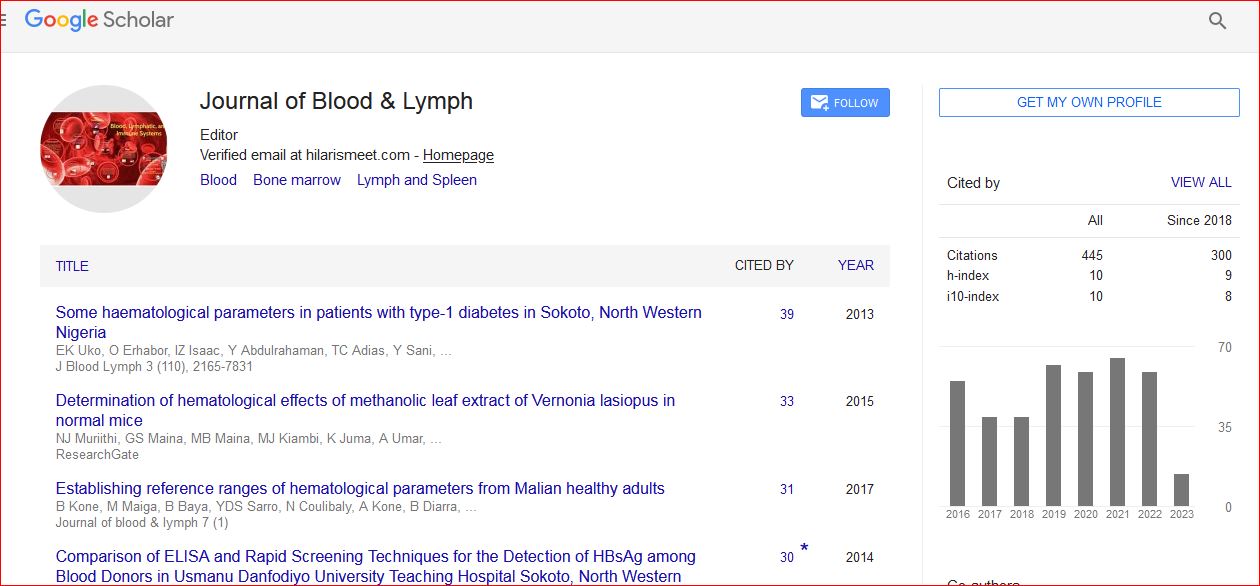
Journal of Blood & Lymph received 443 citations as per Google Scholar report